

Jiuzhen Group Combines Healthcare IT with Physical Incubators: An Innovative Path Revealed in Its IPO Prospectus
Generally, hospitals at Level II and above, including Tier III Grade A institutions, operate nearly 200 subordinate information technology subsystems. With shifts in national policies, the advancement of “Internet+,” and continuous growth in hospital operations, legacy systems struggle to support the expansion of new services. Many health IT companies lack in-depth research into core underlying technologies, leaving them ill-equipped to handle system personalization and customization, which has gradually led to their elimination from the market. For health IT enterprises, merely developing a few software packages to address specific hospital needs is akin to treating symptoms rather than root causes—resulting in only passive responses. For hospitals, this simplistic and crude approach of piling on patchwork fixes often leads to a completely distorted system architecture, ultimately resulting in total loss of control.
Nowadays, the informatization and networking capabilities of healthcare institutions are continuously strengthening. Medical big data is gradually transitioning from a conceptual term to reality, while a myriad of new technologies are constantly disrupting the evolution of the traditional healthcare informatics industry. How should informatics companies refine their core competencies and establish their market position to address increasingly complex demands? What will the future corporate landscape look like? Leveraging 13 years of accumulation, Arrcen has pioneered an open development path that integrates technology, services, platforms, and incubators.

Luo Dan, Chairman of Arrcen Group
In 1996, Luo Dan, Chairman of Arrcen Group, relocated his entire family from Chongqing to Chengdu, where he subsequently pursued his university education. As a top student in science and engineering, Luo possessed an instinctive obsession and paranoia for technology. After graduation, he worked successively at Hong Kong’s Yalisi, Neusoft Jin Suanpan, and Sichuan Aerospace Jinsui. Relying on his diligence and robust professional expertise, Luo served as a key core member at each of these enterprises. Nevertheless, despite such success, he never found a true sense of belonging.
After leaving Aerospace Golden Ear, he was faced with two very realistic choices: either continue working as an employee or start his own business. Perhaps driven by the intuition typical of a science and engineering professional, Luo Dan ultimately chose the entrepreneurial path. In January 2003, armed with tens of thousands of yuan in savings, Luo Dan partnered with his two close friends, Luo Yong and Wang Feng’en, to establish Jiuzhen Technology in Neijiang, Sichuan Province.
At its inception, Arrcen operated as a software reseller. However, the company encountered numerous practical challenges during project implementation. The most pressing issue was the lag in support from software vendors, which prevented timely fulfillment of customer needs. As Arrcen deployed products from third-party manufacturers, these vendors typically assigned only one technical representative to a given region, resulting in severe constraints on time and manpower that hindered prompt problem resolution for clients. After experiencing repeated complaints and lost orders, Luo Dan resolved to pursue a strategy integrating core technology development with high-quality service. He recognized that only by developing Arrcen’s proprietary software and mastering core technologies in-house could the company better serve its customers.
After years of dedicated effort by its technical team, Arrcen has finally launched its independently developed healthcare informatics software suite, including the “Arrcen Hospital Information Management System,” “Arrcen Community Health Service Management Information System,” “Arrcen Laboratory Information System,” “Arrcen Health Examination Management System,” and “Arrcen Electronic Medical Record Management System.” Notably, the “Arrcen Hospital Information Management System” has been designated as the sole teaching software by the National Medical Information Technology Examination Center (MILC), an affiliate of the Ministry of Health. Over 200 universities and colleges currently use Arrcen’s software for instructional purposes.
For Arrcen, the most significant turning point came in 2004. At that time, a township hospital in Zizhong County, Sichuan Province, was issuing an open tender for hospital management software. After evaluating products from numerous third-party software companies during the preliminary assessment phase, Arrcen stood out with its proprietary core technologies and responsive service support, ultimately winning the bid. This victory marked Arrcen’s entry into the healthcare informatics sector.
Arrcen’s Institutional Medical Private Cloud Built on AHC Middleware and Three-Tier Architecture
After entering the healthcare IT market, Arrcen keenly observed that it was already the fourth or fifth vendor tasked with replacing software for healthcare institutions. What lies behind such rapid turnover of software providers in the healthcare sector?
From 2006 to 2009, after undergoing three years of market research, Arrcen ultimately summarized the three most core issues: first, system security and deployment efficiency; second, difficulties in customization and untimely service feedback caused by fragmented suppliers; and third, data silos and operational challenges resulting from inconsistent standards.
First, from a technical perspective, the information systems of 99% of large and medium-sized medical institutions in China basically adopt two-tier architectures, namely C/S (Client/Server) or B/S (Browser/Server). In the C/S two-tier architecture, the core database connection password is stored on the local client machine in a specific format, which makes the C/S architecture highly susceptible to virus infections. The most significant issue this poses for medical institutions is data security.Meanwhile, the C/S architecture requires individual deployment and installation at each healthcare institution; consequently, its implementation costs and timelines increase geometrically with scale.
Therefore, many vendors have adopted the B/S architecture. Although the B/S architecture is widely used in population health platforms, healthcare information systems are characterized by frequent interactions. Given the B/S architecture’s heavy reliance on network connectivity, any network issue could potentially cause a complete system outage. For large medical institutions, such an event would have catastrophic consequences.
Secondly, hospitals are highly personalized organizational structures. Due to continuous business growth, changes in national policies, and the development of "Internet Plus," among other factors, the informatization needs of hospitals are constantly evolving.For most medium-to-large healthcare institutions, the functional requirements and customization needs for their information systems are extensive. Generally, a hospital at Level II or above, particularly a Grade A tertiary (San Jia) hospital, operates nearly 200 information subsystems. Notably, in large Grade A tertiary hospitals, customized modifications to these systems typically account for more than 30%.
Under the traditional model, healthcare institutions often need to engage multiple system vendors simultaneously. Even when procurement is centralized through a system integration general contractor, the systems are still provided by multiple vendors concurrently.
In this model, the lack of integration due to vendors operating in silos results in poor long-term sustainability. The system becomes increasingly sluggish as it undergoes constant patchwork fixes, ultimately leading to a complete collapse despite belated remedial efforts.
For healthcare IT companies, a single system is designed to address one application scenario. However, due to variations across hospitals and local regulatory policies, companies are often forced to develop and maintain multiple codebases for the same system simultaneously—a nightmare for technical staff.
Therefore, although many healthcare IT companies had established branch offices across various regions and deployed dedicated technical personnel on standby, hospital feedback indicated that issue resolution remained untimely. Vendors that fail to promptly respond to hospitals’ growing demands will inevitably be eliminated from the market.
Finally, the interfaces among different vendors form a mesh-like structure. Once issues arise, parties often shift blame onto one another, turning the maintenance process into a protracted tug-of-war that is time-consuming, labor-intensive, and costly. Furthermore, due to the lack of unified systems and standards across various platforms, healthcare institutions’ information systems suffer from fragmented data and highly heterogeneous operational workflows, resulting in exceptionally high learning costs.
These three thorny issues are not only a microcosm of the challenges in hospital information technology (IT) infrastructure development but also represent the market opportunities for arrcen. In response, arrcen’s management swiftly mobilized its core business team in 2010 to conduct a comprehensive review of hospital needs, aiming to identify the specific type of vendor that hospitals truly require.
Ultimately, the management team of arrcen, led by Luo Dan, summarized three key points:
First, why are system security and deployment progress not guaranteed? Because the legacy two-tier architecture struggles to meet the current demands of healthcare informatization development. Why do IT enterprises find it difficult to meet hospitals’ customization needs? Due to insufficient product openness, local subsidiaries are unable to adapt solutions to local conditions. Therefore, Arrcen must possess its own core underlying technologies.
Second, it is not enough for enterprises to possess only technical expertise; they must also have a deep understanding of healthcare. If a company lacks insight into medical operations, its efforts will inevitably remain superficial. According to Luo Dan, founder of Arrcen, it is sheer fantasy for an IT enterprise to provide customized and timely feedback to medical institutions if it fails to master core technologies and understand healthcare services.
Third, arrcen must build an integrated upstream platform to ultimately achieve unified hospital management, truly realizing standardization, data integration, application unification, and managerial consistency.
After weighing the pros and cons of various technologies, Arrcen ultimately chose to develop its system using a three-tier architecture. In 2010, Arrcen became the first in China to propose a theory integrating cloud computing with regional healthcare, and developed a comprehensive and advanced cloud health computing platform solution—the Arrcen Health Cloud Platform (AHC).
Subsequently, arrcen designed a proprietary AHC underlying integration technology (middleware). By abstracting the underlying business logic through the AHC middleware, it enables the deployment of AHC code to partners and operation centers, empowering them to conduct localized R&D and deliver tiered services.
This allows partners to easily customize different front-end code based on the specific needs of various hospitals, achieving personalization without affecting the core code—a win-win solution.
Corporate market operations are no different from battlefield warfare; as the saying goes, “a general in the field may refuse orders from the sovereign.” The more agile and efficient a team is, the better it can wage such long-distance campaigns. The management of Arrcen deeply understands this principle, recognizing that technology can likewise address the issue of service timeliness, as the two are fundamentally interconnected.
Healthcare IT companies must develop customized systems based on the needs of medical institutions, and thus cannot bypass the issue of professional expertise in healthcare operations. It is entirely impractical to require all R&D personnel to become thoroughly familiar with healthcare workflows before commencing development. However, failing to understand these business processes will ultimately lead to a dead end.
In response, arrcen also leverages the business abstraction capabilities of the AHC middleware. Professionals from medical and information technology backgrounds extract healthcare workflows and abstract them into a component framework. This allows developers to code directly at the underlying level without needing in-depth knowledge of medical business processes.
Taking the hospital pharmacy as an example, the medication dispensing process involves multiple data tables and business modules. However, not every programmer is familiar with all its links and workflows. With AHC, one only needs to invoke the medication dispensing component and provide an input parameter; the subsequent processing is automatically completed by the system.
This is akin to an automotive assembly line: no single worker can build a car alone, nor does any individual worker fully grasp the vehicle’s underlying technical principles. However, as long as each worker standardizes their specific task, the final product rolling off the line will invariably be a complete automobile.
Having gained operational experience with a single medical institution, the management team of Arrcen, led by Luo Dan, was not content to rest on its laurels. As the “Internet + Healthcare” model continues to gain traction, medical institutions—from large regional medical consortia to small community clinics—are increasingly eager to embrace digital transformation. Seizing this opportunity, Arrcen successfully developed and launched the Arrcen Digital Hospital Business Platform, which provides medical institutions with an “All-in-One” comprehensive hospital informatization solution.
The arrcen Digital Hospital Business Platform comprises three “Fu Clouds”: a public medical application cloud for small hospitals and clinics, an institutional private medical cloud for large and medium-sized hospitals, and a regional private medical cloud for medical consortia.
The Jiuzhen Digital Hospital Business Platform enables single sign-on and role-based workflows within a single interface, eliminating the need for repeated logins or managing multiple system windows simultaneously. This achieves true integrated management and seamless connectivity, elevating the company’s capacity for timely feedback to healthcare institutions to a new level.
In terms of stability, the arrcen Digital Hospital Business Platform ensures that hospitals can continue billing services even during internet outages, preventing critical operations from grinding to a halt. Additionally, it achieves true zero-deployment on the client side, enabling non-IT personnel to install and start using the system within one minute, thereby significantly reducing implementation costs and timelines. Compared with traditional standalone versions, the system reduces labor costs by at least 32% and time costs by at least 61% during deployment.
For small hospitals and clinics, the traditional approach of purchasing data centers, servers, and software entails prohibitively high costs. Even if they pursue medical informatization, their capabilities are often limited to basic applications and inventory management. By deploying the Jiuzhen Medical Application Public Cloud, clients can directly subscribe to Jiuzhen Medical Cloud Services through a Software-as-a-Service (SaaS) model, customizing medical application systems to meet their specific needs. This resolves the challenges faced by small hospitals and clinics in their informatization efforts, such as high costs and difficult maintenance.
For large and medium-sized hospitals, due to various reasons, the lack of unified standards among different departments and systems during previous hospital informationization processes has prevented the interoperability and sharing of medical data within the hospital, leading to the emergence of information silos.
Arrcen’s Medical Private Cloud establishes a private cloud platform within healthcare institutions, creating data communication channels across departments and systems to truly break down internal information silos and achieve data interoperability. Furthermore, it re-optimizes hospital business processes and reconstructs business systems with departments and user roles at the core, enabling single sign-on (SSO).
For medical consortiums, resolving the issue of data integration within regional healthcare systems has become the primary challenge. Currently, there are two common approaches to data integration in the industry. The first is ETL (Extract, Transform, Load) data extraction; however, due to the wide variety of health IT vendor products used within hospitals and the significant disparities in standards, this approach poses considerable difficulties for enterprises. The second approach involves replacing all existing systems within healthcare institutions, which is virtually infeasible from the perspectives of cost and implementation timeline.
Arrcen’s Regional Medical Private Cloud enables healthcare institutions within a region to operate on a unified system without the need for large-scale replacement of their existing IT infrastructure. It facilitates centralized data storage, management, and maintenance. The central hospital establishes standardized data dictionaries, including pharmacopoeia, drug formularies, fee schedules, health cards, and institutional personnel records, while subordinate hospitals simply reference these directories. This approach achieves integrated management of healthcare institutions within the medical consortium, thereby enabling effective integration and utilization of regional medical data.
As an information technology enterprise, security is naturally a top priority. To this end, Arrcen has engaged in deep collaboration with the Department of Information Management at the School of Medicine and Health Management, Huazhong University of Science and Technology, to develop a high-performance data de-identification system. Prior to Arrcen’s development of this system, the highest recall rate achieved by domestic enterprises was 94.7%, whereas the de-identification system jointly developed by Arrcen and Huazhong University of Science and Technology achieves a recall rate of 96.71%. This system can be used not only for data analysis within Arrcen’s own products but also provides platform-level de-identification services for other medical institutions and information systems, representing a leading technological advancement in the industry.
The development of mobile Internet has led to the rapid emergence of internet-based healthcare companies. At present, "Internet + Mobile Healthcare" mainly falls into two major categories:
Category 1: A tool solely for facilitating communication between doctors and patients, bypassing hospitals to directly connect doctors with patients;
The second category involves developing apps centered around hospitals. As medical services have evolved into long-term, continuous, and comprehensive care, it is difficult for a single large hospital to deliver them effectively and cost-efficiently. However, this approach fails to effectively connect the internal and external ecosystems of healthcare institutions, thus unable to fundamentally meet user needs.
“Internet + Mobile Healthcare” has also brought new opportunities to healthcare IT companies, and against this backdrop, Changjian was born.
Changjian is built upon arrcen’s information systems. In contrast to internet-plus-medical-care vendors that offer only superficial services such as doctor-patient communication and appointment registration, Changjian can access a broader range of operational data. This includes imaging test results and data from Hospital Information Systems (HIS), enabling true penetration into the core business systems for low-level data sharing and exchange. For arrcen, Changjian facilitates information interaction between doctors and patients, tightly integrating in-hospital services with out-of-hospital services.
The Three Major Components of Changjian (Built on the AHC Underlying Development Framework):
ChangeIM: Changjian Doctor-Patient Service Platform: doctor-patient communication, out-of-hospital patient services, hospital service performance, and health management;
Changjianbao: A mobile internet application for Changjian Medical and health services;
Changjian.com: Jiuzhen Health Industry Ecosystem Service Platform.
Compared with other providers of mobile health applications, Changjian’s greatest advantage lies in the fact that it is not merely a model suitable for deep integration within a single medical institution. Built upon its proprietary AHC underlying architecture and leveraging arrcen’s service collaboration tools, Changjian integrates three platforms—the Regional Population Health Information Platform, the Digital Hospital Business Platform, and the Changjian Mobile Platform—to enable data interoperability. This achieves cross-institutional collaborative healthcare, a capability that other vendors cannot deliver.
The emergence of open-source software has reduced the technical costs for software vendors and hospitals, prompting healthcare software vendors to transition toward service-oriented models. As a result, hospital software systems will become more user-friendly and efficient.Open-source software organizations will evolve into major platforms, attracting more developers who earn their compensation by providing better services to hospitals. As technical barriers disappear, an increasing number of hospitals are inclined to cultivate their own development talent to create more refined and comprehensive software solutions.
The openness of Arrcen has already been seeded technically. By leveraging the R&D system of an open-source code community to build frameworks and components, and by making source code available to partners, this approach reflects less a technical choice than a corporate mindset and attitude.Many healthcare IT companies promote the concept of “All-in-One,” but most adopt a centralized, serial integration approach to tightly retain control. Arrcen, however, takes a different path. Its AHC interaction model is an open platform; for other products integrated into the system, Arrcen does not exert control—a reason why many large enterprises are reluctant to adopt such an approach.
Technical openness and platform-based win-win cooperation seemed to enable Luo Dan and his other partners to discern the trajectory of the company’s future development. In their view, Arrcen was never an isolated entity; rather, it should be an integral part of society. Arrcen aimed not only to grow into a towering tree but also to cultivate a forest—an entire ecosystem. Therefore, in 2015, Arrcen Group established the Arrcen Smart Innovation Factory, leveraging its distinctive big health ecosystem to incubate startups in vertical sectors.
Jiuzhen Smart Innovation Incubation Nursery adopts the “industry chain + operational platform + incubation” model. In addition to providing the intermediary services, entrepreneurial training, mentorship, and investment and financing support typical of general incubators, it also offers capabilities in health concepts, medical big data, medical education, market resources, and business model incubation.
To date, Zhichuang Factory has secured 3,700 square meters of incubation space, including 2,200 square meters of office space and 1,500 square meters of public space. Integrating supporting facilities and services, it provides entrepreneurs with a comfortable working environment.
Furthermore, Arrcen has established a RMB 50 million startup incubation fund to provide financial support for entrepreneurs and foster startup incubation in the big health industry. To date, Arrcen has successfully invested in six incubated companies, with a total investment of RMB 32.456 million. Changjian is one of these portfolio companies.
In 2016, the construction plan for Arrcen’s regional operation platforms was officially launched. According to the plan, Arrcen will establish 100 regional operation centers in 100 large and medium-sized central cities across China, with each platform serving a population of 10 million, thereby building a national core backbone operational network capable of serving 1 billion people. It is expected that within two years, Arrcen will complete the construction of 30 cross-provincial and cross-regional “Internet Technology Incubation Parks,” with a total area of 30,000 square meters, which will be able to accommodate and incubate 500 seed projects or enterprises.
Reflecting on the future of Arrcen, Luo Dan remarked with emotion, “In the past, Arrcen revolved around me as the central figure; now, it serves as an incubator platform. The era of individual heroism must inevitably come to an end, but the spirit of innovation and entrepreneurship should be preserved and further developed. Therefore, I hope that more startup teams surpassing Arrcen itself will emerge from its incubator.”
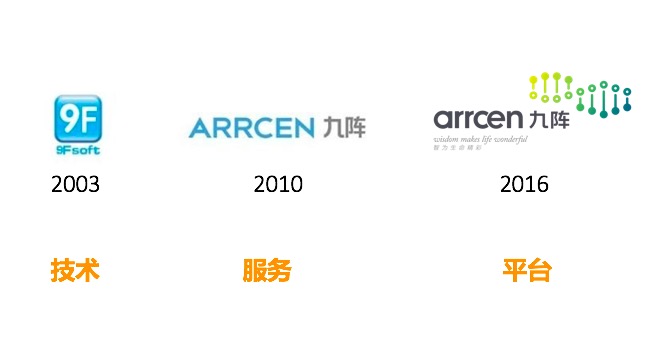
Over the past 13 years, Arrcen has grown from a software company into a group corporation with 13 subsidiaries and branches and more than 200 employees. It has certified nearly 400 joint-operation partners and localized service centers across 23 provinces, municipalities, and autonomous regions in China. More than 4,000 institutions use Arrcen’s application systems, cumulatively serving over 80 million people, with its products exported to countries including Myanmar, Singapore, and Sudan.
From technology to services, from platform to incubator, the arrcen team, led by Luo Dan, has gradually shaped arrcen with its unique vision. Its open and win-win operational model further maximizes corporate value. In this new era, as healthcare IT enterprises explore their development paths, arrcen has carved out its own distinctive way forward.