

Medimodel Aims to Revolutionize Surgery with 3D-Printed Implants and Comprehensive Medical Solutions

Puhua Capital
Venture Capital and Management Business Institutions
On October 20, 2016, the “Puhua Healthcare Hi Conference,” hosted by Puhua Capital and Puhua Healthcare Investment, and co-hosted by Zhejiang University Zijin Innovation Town, Jingxin Pharmaceutical, and CTIC Capital, was held in Hangzhou. At the conference, ten domestic and international teams presenting cutting-edge medical innovation projects participated in roadshows, covering emerging technological fields such as artificial intelligence, healthcare big data, advanced medical devices, and precision medicine.
Medvance, a company primarily engaged in the R&D of medical 3D printing, came to the roadshow event. Founder and CEO Jin Xin delivered a speech at the conference. Below are the highlights curated by VCBeat (WeChat ID: vcbeat).
Medvance was founded in Shanghai on January 1, 2015, and had the honor of being the first company invested in by Puhua Capital. Medvance has been committed to integrating medicine with 3D printing technology, establishing a platform for the translational application and research and development of 3D printing in the medical field. In fact, 3D printing has been widely applied in the industrial sector for many years, and the technology is relatively mature. Currently, due to an overall reduction in costs, the scope of 3D printing applications is expanding, and it has been widely adopted and integrated across various industries.
Medvance focuses on the implementation and application of 3D printing technology in the medical field.
Medvance positions itself as a medical device company that provides comprehensive 3D printing technology solutions to hospitals. The company’s operations encompass the research and development of 3D printing hardware, software, and materials. Its current primary business model involves delivering technical solutions for 3D printing of human organs, which has been implemented to a certain extent across China. Looking ahead, Medvance aims to obtain regulatory approval for Class III implantable medical devices, which represents the greatest challenge to its future development.
Integrating 3D printing with healthcare is no simple feat. Beyond 3D printing hardware, it requires robust support from medical-grade printing software and the research, development, and production of specialized medical materials. Medvance has firmly mastered the core competencies of medical 3D printing, standing as the only company in China to have successfully integrated and implemented every link in this value chain.
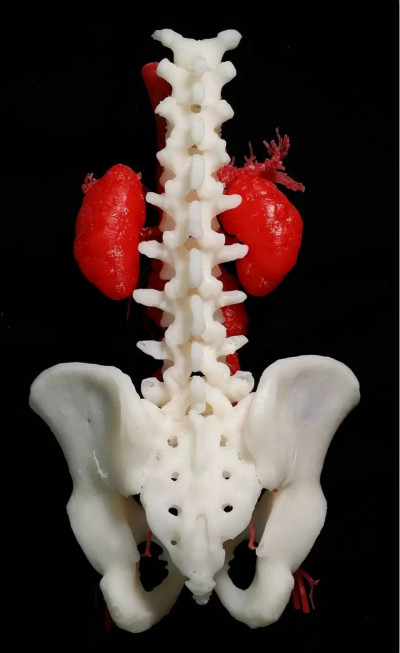
Medvance’s 3D printing solutions for hospitals primarily encompass 3D printing hardware, specialized software for medical 3D data processing, medical-grade materials dedicated to 3D printing, and follow-up engineering technical services in clinical engineering. In Medvance’s vision, every hospital will have a 3D Printing Department in the future, the establishment of which requires development across these four areas.
The Value of Medical 3D Printing for Patients and PhysiciansMedical 3D printing offers significant value to both patients and physicians, primarily in the following aspects. First, in preoperative diagnosis, 3D models can be printed for surgical simulation. Intraoperatively, it enables the fabrication of personalized surgical instruments, as well as standardized and customized implants. Postoperatively, 3D-printed teaching models can be produced for subsequent training. In each of these areas, 3D printing technology demonstrates substantial advantages.
Medvance’s 3D printing technology has achieved numerous successful cases in medical applications. For instance, in the fabrication of surgical instruments, Medvance obtains relevant data from hospital radiology departments, performs segmentation and 3D reconstruction, and conducts customized design. Finally, using 3D printing technology with biocompatible materials, the surgical instruments are printed, sterilized, and used in surgeries. In complex knee arthroplasty procedures, preoperative evolutionary models created through 3D printing can reduce surgical time by two-thirds, cut the number of surgical steps in half, and decrease the usage of surgical instruments by one-third. Furthermore, in collaboration with Changhai Hospital, Medvance printed patients’ aortas according to the requirements of vascular surgeons to create experimental equipment for simulating blood flow ex vivo, which holds significant scientific research value.
Currently, in addition to 3D printing, Medvance is developing printing materials and application models based on its existing business. In terms of printing materials, Medvance has achieved certain breakthroughs through its collaboration with the Shanghai Industrial Technology Institute in the field of metal printing. The use of metal printing materials enables the direct fabrication of implants for the human body. Medvance has also mastered the formulas, blending, and production processes for raw material processing, allowing it to print blood vessels with the highest degree of anatomical fidelity. This capability facilitates the comprehensive reconstruction of corresponding blood vessels, organs, and bones, thereby providing physicians with more thorough observation and assessment tools for diagnosis. Meanwhile, in the fields of VR and AR, Medvance leverages its advantages in 3D modeling of human organs to develop AR content by constructing environmental scenarios. AR also serves as a strong complement to the services offered by hospital-based 3D printing laboratories.
In the future, Medvance’s ultimate goal is to achieve personalized 3D-printed implants. However, regulatory breakthroughs are still required in China for the approval of 3D-printed implants, such as obtaining clearance as Class III medical devices. It is reported that administrative measures for 3D-printed implants are expected to be released by the end of this year, suggesting that China may even take the lead over Europe and the United States in terms of laws and regulations.