

Doctor Groups Under the Spotlight: Policies, Commercial Insurance, Legal Frameworks, and Internet Platforms Rally to Support Their Growth
On October 22, the “First China Doctor Group Alliance Conference” and the “First Anniversary Celebration of the Winter Lei Brain Doctor Group” were held in Shanghai. Experts from various sectors, including government, insurance, law, and investment, gathered to jointly discuss the future and development of doctor groups.

A physician group is, in essence, a business enterprise, which inevitably requires refined internal control and management. As physician groups are still a novel concept in China, their operational models remain exploratory, akin to “crossing the river by feeling the stones.” Among such groups in China, Donglei Brain Hospital has achieved rapid growth. Their approach to refined management can be summarized as: “Let professionals handle professional tasks.” This involves returning doctors and nurses to their primary role of patient care, while hiring specialized personnel to manage administrative affairs, service quality, and operations.
In terms of institutional development, physician groups lack established management models to draw upon and must therefore create their own frameworks from scratch. Currently, all policies and procedures at Donglei Brain Hospital must undergo rigorous, iterative validation through both top-down and bottom-up review processes before implementation.
Winter ThunderThe Neurology Department currently holds a weekly meeting, which serves as a mechanism for talent development. These meetings are categorized into academic and administrative sessions. Each physician is required to prepare reports and summaries in a standardized format, covering four key areas: academics, clinical operations, management, and branding. These submissions are forwarded to the Operations Manager, who consolidates them for presentation at the weekly meeting. The report must detail the completion status and completion rate of tasks from the previous week. Both the completion rate and adherence to planned execution are incorporated into Key Performance Indicator (KPI) assessments.
Dong LeiClinical Operations Administration, Branding & CommunicationsThe KPI assessments vary. Clinical KPI assessments include physicians’ compliance with institutional protocols, each supported by numerous detailed appendices covering meeting policies, dress code, business planning, factual completion records, quality of completion, and Weibo/WeChat post engagement rates. Each metric is incorporated into the KPI assessment. The final evaluation is not conducted by a single individual: Weibo and WeChat content performance is assessed by the Marketing Manager, service quality by the Customer Service Manager, and medical record quality by the Department Director.

BDG Brain Hospital Launches New Online Consultation Product with Tencent
Every physician should cultivate their own professional brand. In February 2016, nine physician groups partnered with Tencent to launch the TengAi Doctor Platform, a convenient communication tool that connects patients, physicians, and hospitals. The platform helps physicians manage their professional brands and amplify their reputation.
Tengai Doctor is an internet-based tool specifically developed for physicians. It enables the linking of departmental official accounts and allows physicians to create patient medical records through the Tengai Doctor platform, achieving seamless integration between WeChat and its mobile app. For example, Donglei Brain Hospital registered its own official WeChat account to connect doctors with patients. Patients can communicate directly with doctors via WeChat to report their conditions and seek medical advice, facilitating initial communication and mutual understanding between both parties.
Doctors can also use the app to create personalized health records for each patient, enabling long-term tracking and analysis of patient health data and providing out-of-hospital guidance. Meanwhile, Tengai Doctor has newly launched a WeChat Official Account for its Physician Group, which featuresIntelligent medical search and WeChat historical article search functions reduce doctors' workload by 70%.Physicians can also conduct online consultations via the Tengai Doctor App to enhance collaborative communication efficiency.
Donglei Brain Hospital and Tengai Doctor will jointly launch the Donglei Brain Health Online Paid Consultation Platform. From the perspective of respecting doctors’ labor and valuing their professional worth, this platform can provide physicians with additional income. On the platform, doctors have full autonomy to determine the scope of consultations and set pricing, and they may adjust these parameters at any time based on consultation volume and their personal availability.
Leveraging the platform’s advantages, more than 10,000 physicians had established their own brands on Tengai Doctor within nearly six months by June 2016.
Currently, most physician groups operate online. Regardless of how well their online services and operations are performed, patients with severe conditions and physicians still require in-person interactions for treatment, which inevitably necessitates hospitals. At present, most physician groups primarily collaborate with hospitals to perform surgeries on-site. However, some physician groups have already established their own physical hospitals, such as the Jielin Rehabilitation Hospital in Dujiangyan, Sichuan Province.
Founder Xiao Zedong established three hospitals through his own capital investment to inspire staff enthusiasm and attract talent.Jielin Rehabilitation Hospital adopts Huawei’s model, under which all employees hold shares in the hospital.
In addition to recruiting top talent, Jielin Rehabilitation Hospital places particular emphasis on service quality. According to Xiao Zedong, even friends of employees at local public hospitals choose Jielin Hospital, as they are impressed by its disease management solutions and service quality. This phenomenon fully demonstrates the competitive advantages that physician groups hold over public hospitals. Recently, Xiao Zedong is preparing to acquire another hospital.
The government places particular emphasis on advancing the Healthy China initiative through five key areas: promoting healthy lifestyles, optimizing health services, improving health security, building a healthy environment, and developing the health industry. Dr. Wu Jinglei, Director of the Shanghai Municipal Health and Family Planning Commission, stated that physician groups can continue to make progress regardless of whether the focus is on the environment, security, services, or the industry. Subject to policy permissions, the government hopes that the development of physician groups will take the following considerations into account:
First: What role will physician groups play in the process of complementing, integrating with, and surpassing the services provided by public medical institutions?
Second: We hope that physician groups will not only provide personalized services such as high-end care, but also offer general medical services to benefit the general public.
Third: In emphasizing the mainstream Public-Private Partnership (PPP) model, we must consider how to create a complementary service system that improves the accessibility of medical services. In the future, as physician groups may further integrate with healthcare payers, it is necessary to explore how social security payments can be better incorporated into physician groups and how commercial payment models can better benefit the public.
Fourth: The greatest challenge for physician groups lies in how their currently mastered technologies can better adapt to new technologies and the evolving demands for diagnosis, treatment, prevention, and rehabilitation, so as to avoid being eliminated in social competition.
Regarding physician groups and investment, Mr. Wang Hui, a renowned investor in the pharmaceutical and healthcare sector, offers the following recommendations:
Transforming a Personal Brand into an Institutional Brand: The most critical factor for a physician group is to establish a personal brand. However, individuals will eventually depart. Take the Mayo Clinic in the United States as an example: although its founders have passed on, the clinic has continued to thrive. This is because the Mayo Clinic has successfully transitioned from a personal brand to an institutional brand.
Find a business partner at your level.: Doctors emerge from hospitals with expertise in clinical practice and academic writing. However, establishing a physician group is tantamount to founding a business enterprise. Enterprises prioritize scale; if a venture fails to achieve significant growth within three to five years, it is deemed unsuccessful. Furthermore, clear division of labor is essential: commercial matters should be handled by partners, while physicians should focus exclusively on patient care and clinical duties, leaving other affairs to their respective specialists.
Find a Suitable and Outstanding Investor: During angel financing, never bring in a poor investor simply for the sake of a high valuation, as this will negatively impact your strategic vision and perspective. The early stage is fraught with excessive disputes and uncertainties; every decision made at each critical juncture will influence subsequent development. High-quality investors provide appropriate advice and resources to help entrepreneurs navigate through various challenges.
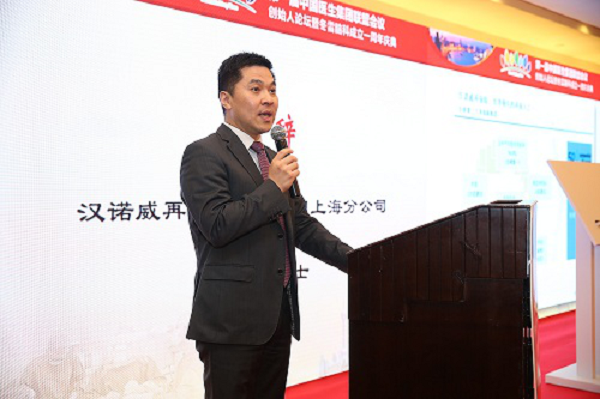
Wang Yan, General Manager of Hannover Re's Property Insurance Division in Shanghai
Physicians Leaving the Public System: Embracing Freedom While Facing Greater Risks—Physician Groups Need Deeper Collaboration with Insurers to Safeguard Medical Practice
At this conference, the Donglei Brain Doctors Group announced a partnership with Hannover Re, the world’s third-largest specialized insurance group, to launch a physician liability insurance product tailored to the specialties of neurology and neurosurgery. This product will provide risk management services to brain specialists, helping them reduce practice-related risks and supporting their independent practice. Additionally, 360 Insurance also offers insurance services for physicians practicing at multiple locations.
In short, everyone performs their respective duties. This ensures that patients feel at ease when consulting physicians, confident that any perceived technical errors will be addressed with fairness and accountability. Physicians can focus on clinical expertise, backed by insurance coverage.
A physician group becomes a true physician group only when it can be named as a defendant in a court judgment.。
Only when patients can sue the physician group directly, rather than the medical institutions with which it collaborates, will the physician group gain recognition from patients, the legal system (and by extension, the state), and insurance providers. It is only when the physician group itself becomes a legal entity capable of bearing legal liability that the needs of the served population and the relevant legal issues can be truly addressed.
There are currently no clear legal standards defining whether a physician group is a medical institution or a company, what its business scope entails, or how it is regulated by industry and commerce authorities and tax agencies. In March 2016, Shenzhen issued the first business license for a physician group in China toShenzhen Bode Jialian Doctor Group Co., Ltd., which marks the government’s recognition of the legal status of physician groups. However, other regions lack explicit legal provisions.
How Can Physician Groups Achieve Legal Breakthroughs? Currently, There Are Three Solutions:First, one can directly apply for qualifications in disease diagnosis and treatment., a physician group consists of several doctors working together, with its business scope limited to the diagnosis and treatment of diseases. It applies separately for qualifications in disease diagnosis and treatment, rather than applying for a Medical Institution Practice License.
Second, the ability to obtain certification, if this is the case, it will also change. As long as physicians are employed by a physician group and hold professional qualifications themselves, that suffices. The second option is to directly obtain a Medical Institution Practice License, which is more difficult, as the current Regulations on the Administration of Medical Institutions require physical space.
Third, physician groups establish their own outpatient departments, clinics, or operating rooms., operating rooms can obtain medical practice licenses, as companies are permitted to establish medical institutions. By using outpatient departments and clinics as physical entities to attract other physicians to register with them, the physician group can acquire qualifications for providing medical services.

Dr. Zhang Qiang
When discussing the future, Zhang Qiang believes that physician groups have emerged to address systemic issues in China’s healthcare reform that cannot be resolved through institutional means alone. “Mayo Clinic seems to be our role model. Who can create China’s Mayo Clinic? The future Chinese Mayo Clinic will certainly not originate from real estate developers or pharmaceutical companies; it will undoubtedly be built by physician groups.”