

Prelude Fertility Files for IPO to Expand Access to Cutting-Edge Fertility Preservation Technologies
Today, women are increasingly delaying childbirth. Surveys indicate that approximately one in three American women has her first child after age 30, and one in ten conceives her first child after age 35. Prelude Fertility positions its services as an insurance policy for women to take control of their reproductive choices. “We want to enable a broad range of women (or couples) to have healthy babies when they are fully prepared,” said Varsavsky.He said so.
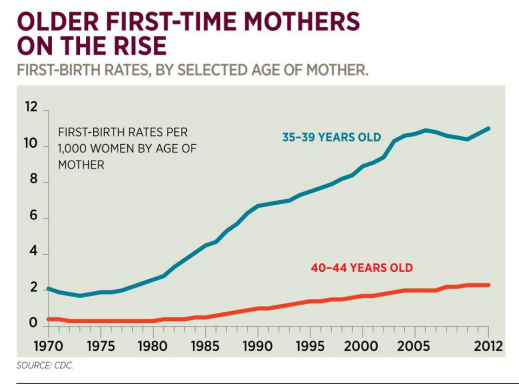
The Age of First Childbirth for Women Is Rising Year by Year
Prelude is not the first company to encourage women to consider fertility issues early on. Some critics now strongly condemn egg freezing, arguing that the procedure is risky and often unnecessary, creating a false sense of security for young women and pressuring them to prioritize their careers over family. Nevertheless, companies offering egg-freezing services have sprung up like mushrooms after rain, providing women with a range of options priced between $5,000 and $10,000 (along with subsequent options such as in vitro fertilization). Two years ago, Apple and FacebookAmong the first major corporations to include egg freezing as an employee benefit, while this year the Pentagon launched a pilot program to cover the costs of sperm and egg cryopreservation—a groundbreaking initiative aimed at retaining military talent.
This October, PreludeThe company has obtained$200 Million in Private Equity Funding. With this money,Prelude intends to fully promote the latest assisted reproductive technologies, namely in vitro fertilization and egg freezing, aiming to lead women in embracing this trend. This approach offers them the opportunity to arrange their careers and families according to their own wishes, no longer constrained by the biologically optimal window for pregnancy. Prelude’s target demographic is not women approaching the end of their reproductive years who face difficulties conceiving, but rather women around the age of 30, who still experience relatively easy ovulation and have a higher likelihood of bearing healthy children.
Even among a group of highly active tech peers,PreludeFounderMartin Varsavsky also stands out prominently. A prolific serial entrepreneur, he has achieved success in all six of his ventures. Coincidentally, he is also the father of six children. At the age of 56, this most recognizable figure in the European tech scene has welcomed two more “lucky sevens.”

Varsavsky’s Two “Lucky Sevens”
Two years ago, he moved from Spain to the United States with plans to launch his seventh company; at the same time, his and his wife’s seventh child was about to be born. The coincidence of these two “sevens” seemed astonishing. The Seventh CompanyNamedPrelude Fertility,Nurturing an ambitious plan: to completely revolutionize the field of infertility treatment.VarsavskyAsThe founder of Prelude, whose seventh child was also the first “Prelude baby.”
However, this approach is still not considered mainstream.Prelude’s goal is to increase the adoption of this practice and infuse it with Silicon Valley–style innovative energy. Varsavsky is already prepared to use his available funds to acquire AtlantaA majority stake in Reproductive Biology Associates, the largest in vitro fertilization provider in the southeastern United States. The transaction also includes affiliates of the Atlanta Center for Reproductive Medicine.My Egg Bank, China’s largest donor egg freezing center. Varsavsky’s objective in this acquisition is to ultimately establish a nationally renowned medical fertility brand.
While still at Columbia University’s graduate school, Varsavsky founded a real estate company that converted industrial buildings into residential properties for sale. Two years later, he co-founded the biotechnology firm Medicorp Sciences with his fellow Argentine César Milstein, who was awarded the Nobel Prize in Physiology or Medicine in 1984., now headquartered in Montreal, Canada, dedicated to early-stage HIV/AIDS medical care.
Starting in the 1990s, Varsavsky shifted his focus to the telecommunications industry. In 1991, he founded Viatel in New York, offering low-cost long-distance calling services, and the company went public within three years. In 1995, Varsavsky moved to Madrid and subsequently founded Jazztel, a communications network provider, which listed on the stock exchange in 1999. He then established Ya.com, a DSL technology company and web portal, which was acquired by Deutsche Telekom two years ago. Next, he launched the application services company Einsteinet, which quickly went bankrupt; however, his prior serial entrepreneurial ventures had already brought his net worth to $300 million.
After a period of low-profile hibernation, Varsavsky founded Fon, a shared Wi-Fi router brand that automatically shares broadband access with Fon members anywhere in the world. The company has received backing from Google、Skype, Sequoia Capital,With the support of Index Ventures, it has now grown to over 20 million users and turned profitable last year; consequently, Varsavsky is now planning to step back from day-to-day operations to devote himself fully to Prelude.In the company's fertility treatment business.
Varsavsky first conceived the idea of founding Prelude six years ago. When he and his wife decided to have children, she was 31 years old. After discovering they were unable to conceive naturally, they turned to in vitro fertilization (IVF) to conceive their first child and cryopreserved sperm and eggs for future use, but the entire process was excruciatingly painful. Varsavsky also learned that some couples, due to advanced age and declining sperm or egg quality, remain unable to conceive even with IVF. According to data from the U.S. Centers for Disease Control and Prevention (CDC), 12% of American women aged 15–44 experience difficulty getting pregnant.
In 2015, Prelude was founded. Varsavsky quickly realized that the typical tech company approach would not work for PreludeThis approach proved unworkable. Due to obstacles in management and other areas, he decided to directly acquire an existing fertility clinic and egg bank, which meant that private equity would be more suitable than venture capital. Ultimately, they selected Li Capital, a firm specializing in middle-market transactions with a focus on the in vitro fertilization (IVF) industry.
Private equity firms are drawn to the many advantages of the U.S. IVF market: first, in terms of scale, it generates approximately $2 billion in annual revenue; second, in terms of growth, the market expands by more than 10% each year. Not to mention that this market remains highly fragmented, with relatively outdated sales methods. According to U.S.The Society for Assisted Reproductive Technology states that approximately two-thirds of in vitro fertilization cycles fail to successfully form embryos. AndPreludeIt is advocated that women freeze their eggs while egg quality remains at a high level to improve embryo success rates. From the acquiredMy Egg BankIn terms of the company's volume of frozen eggs,“Prelude is already profitable, with annual revenue projected to reach $35 million, and the company is confident about its future profitability. ‘Prelude plans to expand across China and partner with top-tier clinics,’ said Collins Ward, a principal at Lee’s Capital.”said.
Compared to fragmented fertility services such as egg freezing, storage, in vitro fertilization, and hormonal drug therapy,Prelude favors offering a comprehensive fertility solution known as “Prelude Therapy.” This approach consists of four steps: freezing and storing eggs; creating embryos when the client is ready to conceive; conducting comprehensive genetic screening for congenital diseases and chromosomal abnormalities; and performing single embryo transfer to minimize the risk of twins or multiples (as in vitro fertilization often results in multiple embryos). For men who are not yet ready to have children, Prelude also offers sperm cryopreservation services. Additionally, Prelude plans to reduce the overall cost of the process by providing a more affordable prepaid option, with egg freezing and storage services starting at $199 per month.
Prelude believes that for young women who want to better balance their careers and childbearing, spending a few thousand dollars on egg freezing is worth considering. “If you know you still have the security of fertility, doesn’t your life open up many more options?” said Allison Johnson, a former marketing executive at Apple who was involved in the market launch of the iPhone and resolved her fertility issues through hormone therapy. The institution that provided her treatment is called West, is helpingPreludeThe company implements a market entry plan.
“Solving the fertility issue allows you to accomplish many exciting things. You can pursue a graduate degree with peace of mind, wait patiently for your soulmate, and travel around the world. Egg freezing ensures that you still have the opportunity to have children when you are ready; for me,”This technology has liberated women to an extent comparable to the oral contraceptive pills introduced in the 1960s.。”
“I felt a complete sense of liberation,” wrote 33-year-old Leila Janah, a prominent Silicon Valley social entrepreneur, in a recent piece on her decision to freeze her eggs. She noted that society places pressure on professional women not only to pursue career success but also to “settle down.” “If people expect women to be fully engaged in both their careers and personal lives, they should grant them the right to choose when to start a family.”
Oocyte retrieval and cryopreservation, also known as oocyte cryopreservation, has a history of more than 30 years and is typically used to preserve fertility opportunities for cancer patients undergoing chemotherapy. The typical procedure involves the administration of ovulation-stimulating medications, followed by the direct aspiration of oocytes from the ovaries using an oocyte retrieval needle. As oocytes are single cells with high water content, conventional slow-freezing methods often result in ice crystal formation, rendering them nonviable.
Over the past decade, a flash-freezing technique known as “vitrification” has emerged, significantly improving the success rate of oocyte preservation and prompting the American Society for Reproductive Medicine to remove the “experimental” label from this practice in 2013.
Atlanta Reproductive Biology Associates has now becomePreludethe neural center. In addition to the waiting rooms and examination rooms open to visitors, there are experts working behind the scenes in a large laboratory equipped with a range of devices, including large incubators. Using microscopes, the experts can pierce the oocyte membrane with machine-controlled syringes to achieve fertilization. Adjacent to this is a massive cryogenic storage room, where eggs and embryos are preserved at below-zero temperatures.Liquid nitrogen at -196°CIn China.
Until recently, the number of women choosing to freeze their eggs to preserve their fertility remained relatively low (6,200 in 2014), but after Apple and Facebook announced egg freezing as an employee benefit, Sofia Vergara、After celebrities such as Kim Kardashian and Taylor Swift publicly disclosed their egg-freezing procedures, the profession of fertility specialists was suddenly thrust into the spotlight.
It is indisputable that undergoing oocyte cryopreservation at an earlier stage ensures better outcomes. According to Reproductive Biology Associates in Atlanta,Dr. Zsolt Peter Nagy, a pioneer in vitrification technology, explains that a typical 32-year-old woman can produce 15–20 oocytes following ovarian stimulation with hormones. Of these, 10–14 are successfully fertilized, and approximately 4–8 develop into viable embryos. In contrast, a 40-year-old woman yields only 4–15 oocytes, resulting in no more than three viable embryos, or sometimes none at all. Consequently, within a single fertilization cycle, the success rate of embryo formation from oocytes is around 50% for a 32-year-old woman, whereas this probability drops to below 20% for a 42-year-old woman.
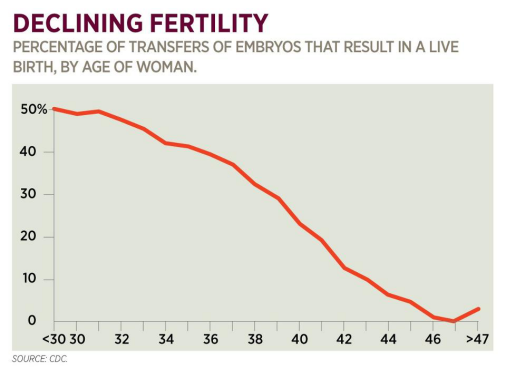
The success rate of embryo development from oocytes in women over 30 gradually declines.
Skepticism and criticism have also been vocal. Although egg retrieval and cryopreservation are safe in most cases, the procedure of retrieving eggs using a needle can lead to swelling and discomfort, with a small minority even requiring hospitalization for observation. “To retrieve multiple eggs, powerful hormonal drugs must be administered; some of these are not even clinically approved or proven for use in egg retrieval.” This critique by Marcy Darnovsky, Executive Director of the Center for Genetics and Society, has been widely cited. “Short-term side effects of egg retrieval range from mild to severe, while long-term side effects remain unclear due to insufficient research.” Other critics argue that this industry prioritizes profit over people’s safety.
Another important factor is the high cost, particularly because most retrieved eggs ultimately go unused. According to the American Society for Reproductive MedicineData collected from 90% of clinics in China; in 2014, only 1.6% of newborns in the United States were conceived through in vitro fertilization (IVF).
To some extent, however, the accusation that egg freezing is a “waste of money” may miss the point. Young women today choose to freeze their eggs not because they are certain to rely on in vitro fertilization (IVF) for future childbearing, but rather to keep their options open. This serves as an insurance strategy, freeing women from the constraints of biological clock and enabling them to enjoy career advancement opportunities equal to those available to men.
The founders realized they had ventured into a sensitive topic. Yet he firmly believed that various forms of challenges in the field of infertility urgently needed to be addressed—many families desired more children but were constrained by their reproductive age. Preludehas always maintained a lean team, except for the acquired Atlanta Reproductive Biology Associates andApart from the approximately 100 employees at My Egg Bank, there are only five other staff members, nearly all of whom have personally struggled with infertility, instilling in them a strong sense of mission. “Personal experience drives our actions.”
Prelude currently aims to use marketing campaigns to educate the public about egg freezing and in vitro fertilization (IVF), rather than fostering fear. This includes encouraging women and obstetrician-gynecologists to treat tests that assess infertility risk, such as hormone panels and anti-Müllerian hormone (AMH) testing, as more routine practices. Varsavsky is planning partnerships with clinics that can offer Prelude’s services, with advertising set to launch in November. “Prelude’s concept is viable. If we fail, it will be because we failed to show millennials the future that is already upon us,” said Varsavsky.

Prelude: Smart Reproduction
“For millennials, their defining characteristic is an insistence on getting exactly what they want, precisely when they want it—and this mindset extends to fertility as well. ‘The area of the healthcare industry that has undergone the most significant change is consumer choice; I believe Martin Varsavsky introduced this approach to the field of fertility.’” — Anne Wojcicki, founder of 23andMe and an industry associate of Varsavskysaid.
For most women, egg freezing may never be necessary, but this technology has the potential to transform the lives of many aspiring parents. The optimal age for egg freezing is between 31 and 33 years old. If American women in the new era embrace Prelude’s philosophy, this substantial demographic could well make Varsavsky’s seventh venture his largest company to date.