

Smart Insulin Pens Poised to Displace Pumps: Deep Dive into Delivery Innovation and Market Shift
Medtronic, Dexcom, Abbott, Sanofi, and Google—many large, well-known companies are heavily investing in innovations within the insulin field, and such innovations never fail to generate excitement. But inInsulin Delivery, the innovation of insulin pumps is not proportional to their target user base. Only a small fraction of insulin users utilize this delivery device.
The majority of insulin users, approximately 70% to 93% (varying by data source and geographic region), use insulin pens. These insulin pens are produced by Novo Nordisk, a leading company in the global field of diabetes research and pharmaceutical development.Novo Nordisk) and has been in use ever since. VCBeat (WeChat: vcbeat) has identified the five most mainstream insulin pen companies on the market: Companion Medical, Patients Pending,Common Sensing,Innovation Zed,Emperra: Analyzing Their Evolutions in Insulin Management and Technological Innovation.
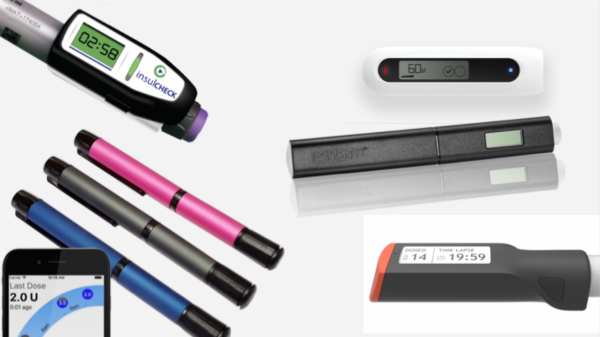
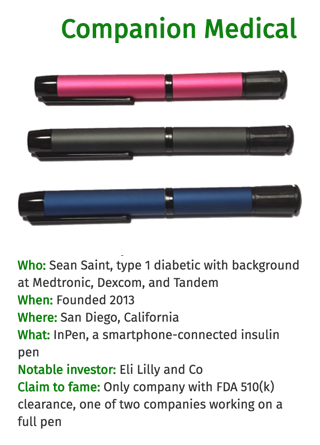
A small cohort of startups believes that now is an ideal time for medical innovation in insulin pens. One of the leaders is a company namedCompanion MedicalA San Diego-based startup, led by veterans who once served as key forces at major corporations. CEO Sean Saint previously worked at Medtronic, Dexcom, and Tandem Diabetes.
“When I was at Tandem, I asked how to get more people to use insulin pumps”This Issue“He said. ‘This is precisely the challenge Tandem faces. Therefore, we have been asking why patients are willing or unwilling to use insulin pumps. Typically, the responses we receive cite issues such as infusion sets, high costs, and complexity. Frankly, hearing these answers leaves me somewhat discouraged.’”
At that moment, Saint found himself also having to confront the issue of an insulin pump: he was diagnosed with type 1 diabetes.
“This diagnostic result made me realize that when people are unwilling to use your high-tech solutions, you shouldn’t feel discouraged. They have their own reasons. Instead, let’s reframe the question: How can insulin pumps benefit the 93% of insulin users who currently rely on pens or syringes?”
Companion Medical announced that last summer, to better benefit patients, the company obtained approval from the U.S. Food and Drug Administration. In the following months, three other companies came forward to declare that they were also working on similar products. Another company, Emperra, quietly developed its own compact insulin pen in Germany and prepared to launch it soon in other parts of the world.
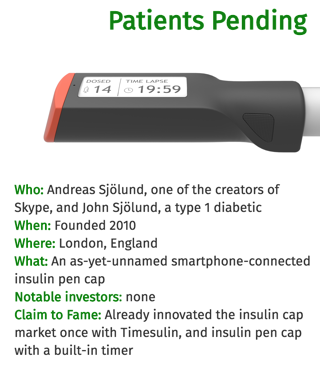
First Patients Pending, a London-based company, previously developed an insulin pen with a standalone cap called Timesulin. The company claimed it was developing a product that could connect to smartphones. Subsequently, Innovation Zed, an Irish group that had also produced non-connected insulin pen accessories, announced that it was working on a similar product. Finally, Common Sensing, a second U.S. company based in Cambridge, Massachusetts, announced a trial funded by Sanofi and led by the Joslin Diabetes Center.
What all these companies have in common is that theyRecognizing that although insulin pumps may be the focus of large corporations, they are not widely accepted by the general public。
“We have spoken with many people in this field and drawn our conclusions. First, not everyone likes insulin pumps,” said James White, Chairman of Common Sensing. “Some can afford insulin pumps but choose not to use them, while others would like to have one but cannot afford it. We are very certain that over the next five to ten years, insulin pumps will disappear from the market, and people will still not favor this device.”
“Therefore, there will not be a situation in the market where ‘everyone together’ is monopolized by any single authority. We have also communicated with pharmaceutical companies and heard many of their predictions. For most people, insulin pumps do not provide them with benefits.”
The creation of connected insulin pens represented a leap forward at the time. For instance, insulin pens manufactured by Fingerstick Glucometers Inc. could collect data but lacked the capability to store or transmit it, whereas traditional insulin pens were incapable of collecting any data at all. If patients wished to record the amount of insulin they administered, they had to carefully observe and manually document it.
Initially, connected pens were merely bundled together; however, they are poised to offer enhanced functionalities in the future. By integrating with blood glucose meters, continuous glucose monitoring (CGM) data, or self-reported dietary information, connected insulin pens can enable users to access various types of artificial insulin products. To date, this opportunity has been available exclusively to insulin pump users.
“I believe insulin data is the most critical data we need,” explained John Sjölund, CEO and Co-founder of Patients Pending. “Currently, every time you open your watch face to administer an insulin injection, that data disappears. Companies can display all blood glucose data, especially continuous glucose monitoring (CGM) data; their devices are sufficiently advanced, supported by dedicated apps that are continuously improving. However, insulin information cannot be saved. Therefore, our proposed solution focuses on data retention, with precision being the most crucial aspect.”
These companies differ in this field by addressing distinct connectivity challenges. For most startups currently, the objective is simply to collect data on the frequency and dosage of patients’ insulin use, and then link this data to other devices.
“Our product launch this week is just the first step. We are addressing the adherence rates of 60%-70% of insulin users,” said John Hughes, CEO of Innovation Zed. “Insulin users often have low adherence. When you visit a doctor, it is inevitable to find that previous test data is missing. They make diagnoses based solely on patients’ self-reports. We have collaborated with several physicians who told us that the data they typically obtain from patients is unreliable.”
The most fundamental advantage of tracking pens is that they require no connectivity at all. Timesulin, the initial product from Patients Pending, is a cap designed for insulin pens; it begins timing once removed and then replaced. This allows patients to determine the time of their last injection by simply looking at the device, thereby effectively preventing accidental double dosing.
Adding connectivity enables the device to send alerts to patients’ smartphones when they forget to inject, reminding the patient or their physician, caregiver, or coach. This was the initial value proposition identified by James White, Chairman of Common Sensing:
“Under the current circumstances, patients receive insulin from their physicians at the time of the first injection, but then have no further contact with them for the next three months,” he said. “Their data belongs to them; they look at it but do not understand what it represents, because their doctors have not taught them how to interpret it. Moreover, more than half of these patients discontinue use within the first three months of injection therapy. They return home and do not administer their insulin. They fail to follow medical advice by not using all prescribed medications or completing all required injections. The reasons are numerous: sometimes patients do not use insulin pens to administer the medication; some do not even know how to use them; others fear injecting something else by mistake; and still others simply forget the instructions provided by their physicians.”
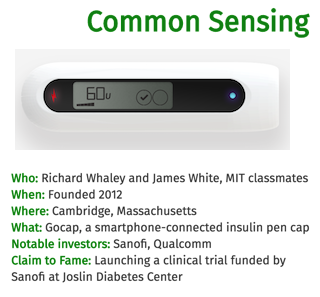
Common Sensing’s Gocap product can collect data and transmit it to a mobile app, which then forwards the data to data aggregators or caregivers. The company is dedicated to developing devices across various technological domains: some devices may encourage greater patient engagement, while others may be less favorably received in terms of design.
“We have delivered this device to many households and found that it has garnered significant public attention. Some individuals, who do not own smartphones, have relegated their inexpensive mobile data devices to a corner and begun using this hardware instead. Their primary concern is whether their data will be transmitted to their physicians,” he said. “Some users are ‘power users,’ as with other products. They want to access their data, perform precise configurations, monitor each injection, and understand the implications of accuracy and glucose readings.”
As a connected device, it readily brings to mind another medical delivery device that has shone brightly in the digital health arena: the connected sensor-enabled inhaler. Following the success of companies such as Propeller Health, connected inhalers have rapidly become a hot product in the pharmaceutical industry. In comparison, this product is in no way inferior to insulin pens.
“The reason I chose insulin and made it the company’s primary target is that, as is well known, improper use of oxygen inhalers can incur substantial costs. However, within the current healthcare system’s financial burden, the inappropriate use of insulin poses an even more severe challenge than other medical issues,” said White. “Pharmaceutical companies are losing one-third of the orders they should have secured, simply because one-third of patients never use the product. Moreover, even among those who do use it, the insulin often fails to deliver optimal efficacy. Therefore, the company can carve out a unique market position and generate profits by enhancing insulin’s effectiveness, which is why companies like Sanofi are interested in us.”
To date, at least two major pharmaceutical companies have made investments in this field: Sanofi invested in Common Sensing, and Lilly invested in Companion Medical. In both cases, the investments were made without contingencies, yet the interest rates are noteworthy.
However, Sean Saint of Companion Medical believes that the glucose pen is more innovative than the oxygen inhaler.
“Connected oxygen inhalers are data-logging tools,” he said. “This is an advantage, as we are all aware of the challenges associated with data logging. Moreover, our product fully incorporates this feature. However, the primary challenge with insulin therapy is not forgetting to administer the injection, but rather determining the appropriate dosage. Given my current blood glucose level, recent dietary intake, and previous insulin doses, how much insulin should I administer now? This is precisely the function of a dose calculator. Among companies producing connected pen or cap products that I am aware of, ours is the only one equipped with a dose calculator and the only one to have received clearance from the U.S. Food and Drug Administration (FDA).”
This is why Companion Medical obtained U.S. Food and Drug Administration (FDA) 510(k) clearance while other companies did not. (Common Sensing is registered with the FDA, but White believes that its current connected products do not require clearance prior to market launch.) By providing a dose calculator and recommending injection doses to patients, the company faces new risks, but also potentially offers greater benefits to individuals with diabetes.
The company where Saint works aims to develop a dose-learning calculator that employs the same calculation algorithms as insulin pumps, but delivers insulin via a pen rather than a pump.
“You can call it a patient’s artificial insulin calculator or an artificial insulin indicator, or whatever you like. But it uses the exact same calculation algorithms as an insulin pump and is applied to mobile injection therapy,” he said. “No one has done this before, so no one knows what benefits it will bring to patients. But we are certain that there will definitely be benefits.”
For Patients Pending and Common Sensing, these features will inevitably be included in the long run. However, they see no reason to redesign them. Once data can be accurately collected and transmitted to smartphones, third-party apps can focus on enhancing usability for end users.
“We are highly experienced in software development, but we also recognize how challenging healthcare and medical apps can be,” said Sjölund from Patients Pending. “Moreover, the market is already saturated with a wide variety of such apps.”
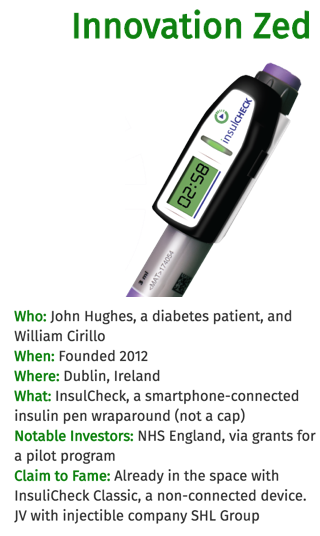
Another differentiating factor among the companies is product form. Of the five companies, only two manufacture multifunctional insulin pens, and two produce smart caps. Only one company, Innovation Zed, manufactures a unique wrap-around device that can be attached to the back of an insulin pen.
Such development strategies often lead to varied outcomes. Most companies believe that producing accessories is significantly simpler than manufacturing complete insulin pens.
John Hughes from Innovation Zed stated, “Initially, we aimed to develop a digital insulin pen. Due to our limited experience in the medical device market, we were quickly rejected by regulatory authorities for this type of device. The company estimated that developing an insulin pen could take up to seven years. Therefore, we proposed the concept of extending the technology.”
Although Companion has also decided to manufacture complete insulin pens (similar to the German company Emperra), Saint from the company expressed the same opinion.
He stated, “I can absolutely assure you that we chose to design a complete insulin pen, rather than just the pen cap, not because we found designing the insulin pen more interesting. After considering various solutions, we concluded that the only way to provide patients with a truly transparent solution is to control the overall experience. This is why we chose to manufacture the insulin pen.”
By integrating overall control into the insulin pen, Companion Medical has simplified sensor design and equipped its pens with larger batteries, enabling the devices to remain in standby mode for up to one year without requiring charging or battery replacement. In contrast, Common Sensing’s smart cap requires weekly charging, although White stated that the company is developing higher-capacity batteries. Additionally, Companion Medical’s insulin pen incorporates advanced features, such as eliminating dosing errors caused by priming (e.g., activating the insulin pen when no medication is present to remove air bubbles).
On the other hand, expanded solutions have also brought certain conveniences to users. While products manufactured by Companion are replacing durable insulin pens, devices compatible with disposable insulin pens are gradually gaining popularity.
Hughes from Innovation Zed stated, “Most diabetic patients are very conservative and dislike changing their lifestyle habits.” “Therefore, patients accustomed to using insulin injection pens are reluctant to try other medical devices. As a result, we have introduced a sleeve that wraps around the injection pen, along with a timing device that requires only a tap on the sleeve upon completion of the injection.”
Saint believes that greater added value can persuade patients to change their usage habits. The production cost of pen caps is relatively low, but if health insurance companies begin to regularly reimburse the costs of purchasing medical devices, this will become a contentious issue.
Although insulin injection pens are still an emerging industry, many companies have been conducting research for several years, and the competition has only just begun.
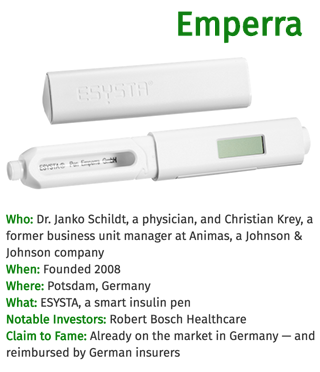
Emperra holds a significant competitive lead in the industry, yet it focuses exclusively on the German domestic market. Its CE-certified Esysta injection pen has been launched in Germany, and German taxpayers are already eligible for reimbursement.
In an email to MobiHealthNews, Emperra CEO Christian Krey stated, “Our product has been launched successfully and brought convenience to users. Now, our users can apply for reimbursement from all German health insurance companies. We have adopted unique software that connects patients, family members, nurses, and doctors through highly secure servers. We have reached special agreements with health insurers, so patients can be reimbursed not only for the hardware but also for the data they share with their doctors and for coaching sessions.”
He also stated that health insurance companies have demonstrated through field trials that the ESYSTA system can significantly reduce glycated hemoglobin levels without increasing insulin dosage.
Currently, Emperra has entered markets in other EU countries and the United States. It is reported that the company has submitted an application to the FDA, aiming to enter the U.S. market next year.
Experimental data from Innovation Zed also demonstrate that its product, developed in collaboration with the UK’s National Health Service (NHS), improved glycated hemoglobin levels. The Irish company has also established a joint venture with SHL Group, a Swedish syringe manufacturer, to rapidly bring newly developed solutions to market. The two companies plan to launch their connected products in Europe in 2017, followed by entry into the U.S. market. They aim to secure reimbursement through national healthcare systems such as the UK’s NHS and from private payers in the United States.
Recently, Common Sensing announced plans to collaborate with the Joslin Diabetes Center on clinical trials. White stated that the company’s products are ready for market launch.
He stated, “Now that our device has been fully developed, we aim to market it and its associated services to insurance companies and self-insured employers in the most effective manner.”
Similarly, Sean Saint stated that Companion Medical is planning to launch related products in 2017 and is currently awaiting approval from the U.S. FDA.
“The smart injection pen industry has yet to take shape,” he said. “As the first company to obtain sales approval for a smart injection pen, we must identify an appropriate pricing strategy for this category of products. Pricing a new device class presents a significant challenge. On one hand, our product closely resembles traditional insulin pens. On the other hand, we have good reason to believe that our product offers substantial clinical advantages over traditional insulin pens, even comparable to those of infusion pumps. Therefore, our pricing will fall between that of traditional insulin pens and infusion pumps. However, I cannot disclose the specific price point at this time.”
He stated that the company still has considerable work to do regarding reimbursement applications. However, he believes that the device will ultimately benefit from the drug coverage provisions under the prescription drug plan. White considers reimbursement approval to be only a matter of time.
“Overall, we don’t want people to have to pay for this,” he said. “No modern society should view patients as a problematic group. This means that patients should no longer bear the responsibility of solving their health issues by purchasing medications. Therefore, we believe the primary beneficiaries are insurance companies and pharmaceutical manufacturers. If insulin users decide to discontinue insulin therapy, they could incur an additional $2,500 in annual costs starting from the second year, and insurers’ costs would rise accordingly.”
In the field of diabetes, innovations are ubiquitous, ranging from artificial pancreases and AI coaches to contact lenses for glucose monitoring. For patients with type 1 diabetes who rely heavily on insulin, smart injection pens will have a significant impact on their lives. As Saint pointed out, the market for injection pens has already reached a considerable scale, and any advancement in diabetes management will be a great boon for many patients. The health economics issues involved with smart injection pens may surprise you.