

How Can Gene Sequencing Survive Under Tightening Regulatory Policies? | Policy Series Report
By Fu Haitian
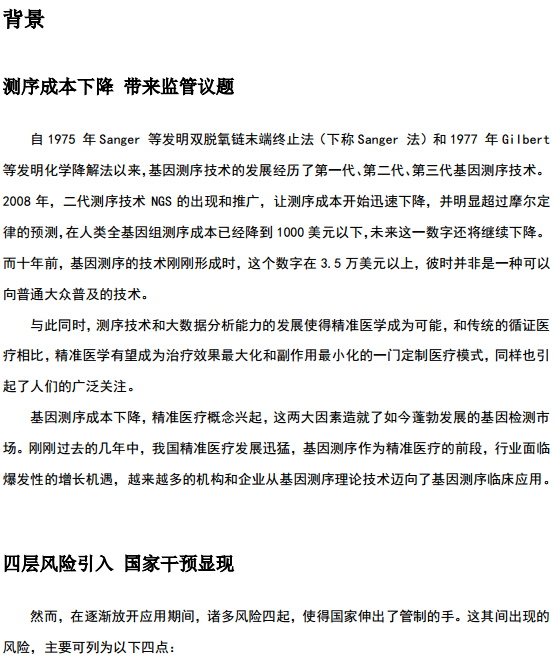
Since the invention of the dideoxy chain-termination method (hereinafter referred to as the Sanger method) by Sanger et al. in 1975 and the chemical degradation method by Gilbert et al. in 1977, the development of gene sequencing technology has progressed through first-, second-, and third-generation sequencing technologies.
In 2008, the emergence and widespread adoption of next-generation sequencing (NGS) technology initiated a rapid decline in sequencing costs, significantly outpacing the predictions of Moore’s Law. The cost of whole-human genome sequencing has already dropped below $1,000 and is expected to continue decreasing. A decade earlier, when gene sequencing technology was just taking shape, the cost exceeded $35,000, making it inaccessible to the general public at that time.
Meanwhile, advances in sequencing technologies and big data analytics have made precision medicine possible. Compared with traditional evidence-based medicine, precision medicine is poised to become a customized healthcare model that maximizes therapeutic efficacy while minimizing adverse effects, thereby attracting widespread attention.
The declining cost of gene sequencing and the rise of precision medicine have jointly fueled the booming genetic testing market. In recent years, China has witnessed rapid advancements in precision medicine. As a foundational component of this field, gene sequencing is experiencing explosive growth opportunities, with an increasing number of institutions and enterprises transitioning from theoretical and technical research to clinical applications.
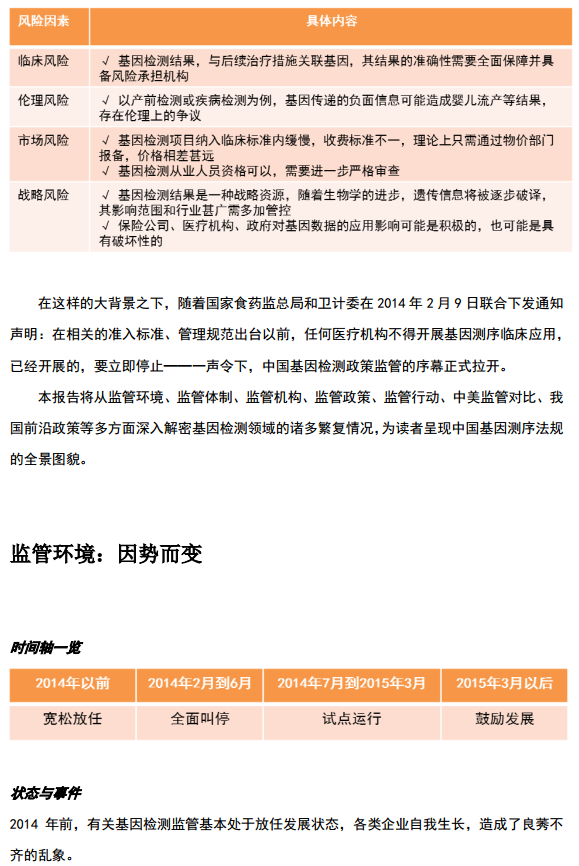
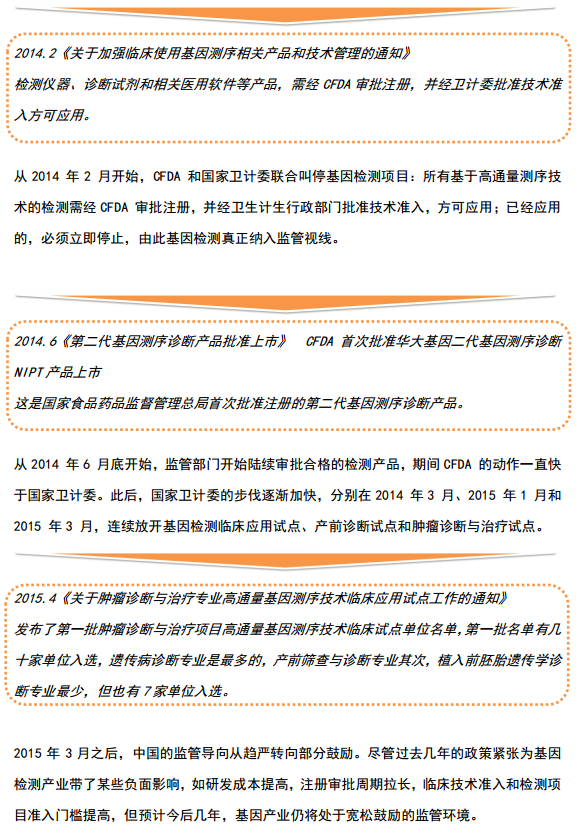
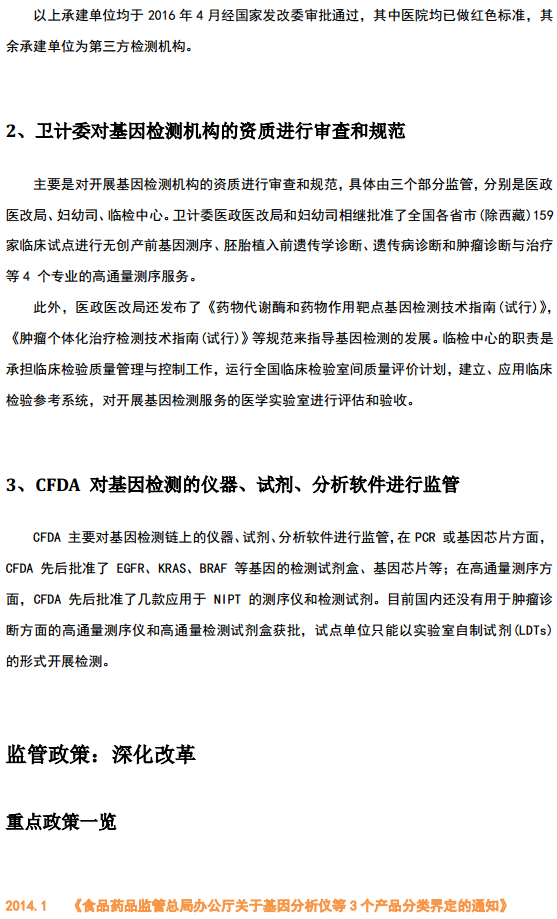
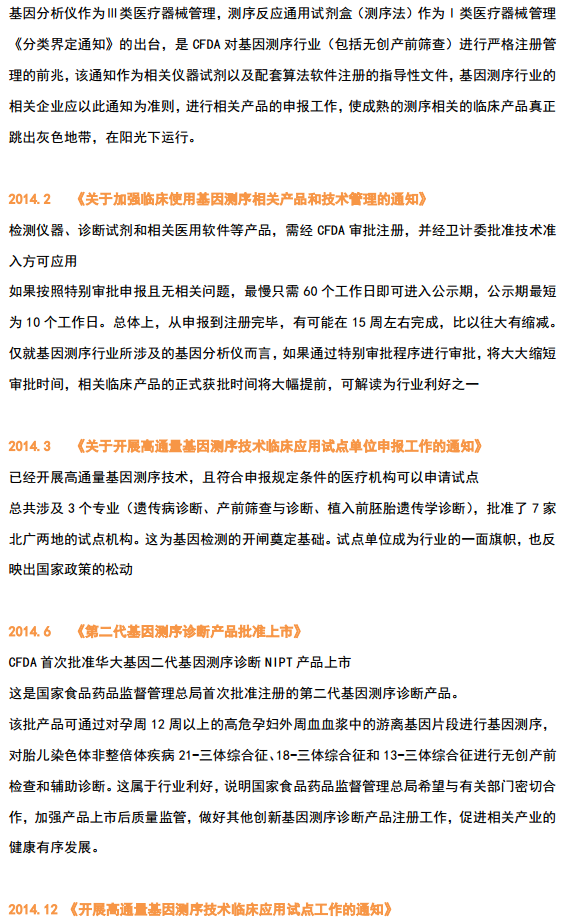
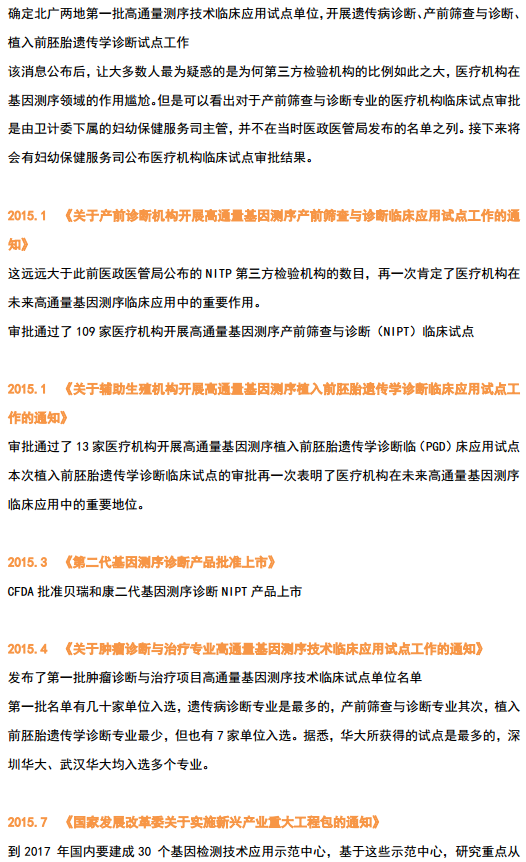
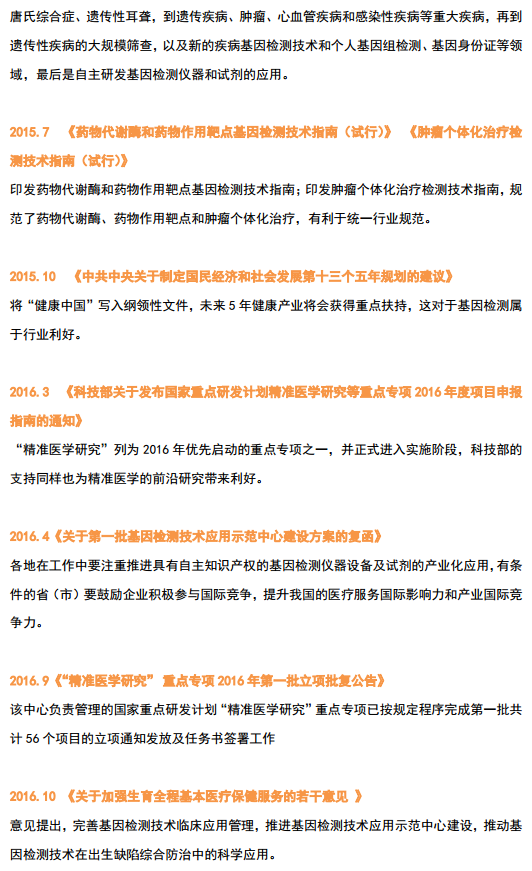
However, as applications were gradually rolled out, numerous risks emerged, prompting the state to impose regulatory controls. Against this backdrop, on February 9, 2014, the China Food and Drug Administration (CFDA) and the National Health and Family Planning Commission (NHFPC) jointly issued a notice declaring that no medical institution was permitted to conduct clinical applications of gene sequencing until relevant access standards and management regulations were established; those already engaged in such activities were required to cease immediately. This directive marked the official commencement of policy regulation for genetic testing in China.
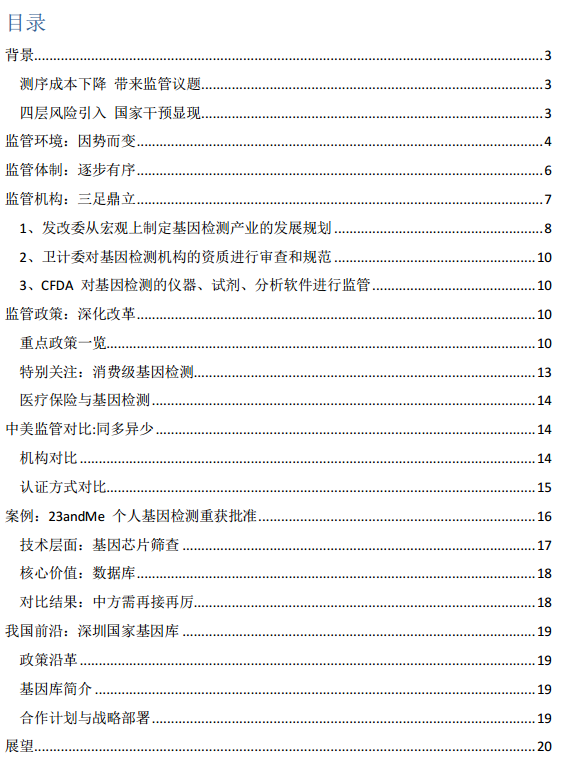
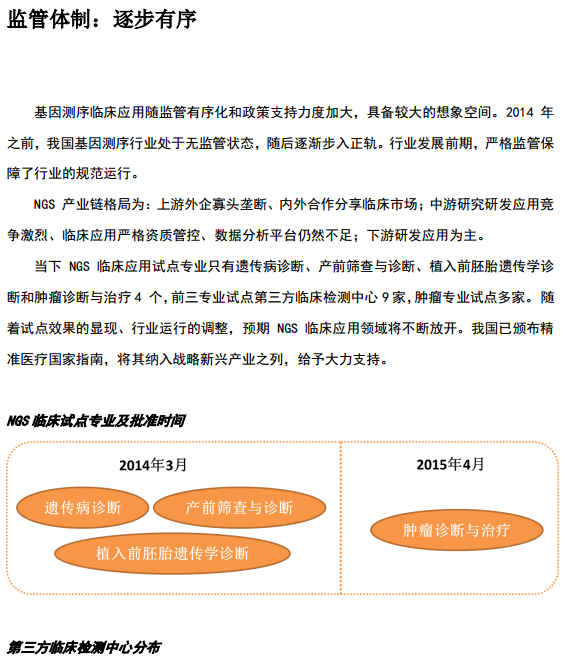
This report will provide an in-depth analysis of the complex landscape of the genetic testing sector, covering regulatory environment, regulatory framework, regulatory agencies, regulatory policies, enforcement actions, a comparison between Chinese and U.S. regulations, and China’s cutting-edge policies, thereby presenting readers with a comprehensive overview of the regulatory landscape for gene sequencing in China.



Author: VCBeat. Please credit the WeChat official account when reposting.VBResearch2016
↓↓↓
