

Deji Hospital Joins Lenovo Holdings: The Entrepreneurial Path of a Renowned Physician
Legend Capital
Early-stage venture capital and growth-stage private equity investment institutions
Starting a business is no easy feat, and it is even more challenging for renowned physicians to do so. Nevertheless, Guo Hui has finally weathered the most difficult period, and Deji Hospital, which he founded himself, has joined the Legend Holdings ecosystem, becoming part of the broader Legend ecosystem.
Recently, Legend Holdings Corporation and its subsidiary Legend Capital entered into a strategic partnership with Shanghai Deji Hospital, completing a controlling investment. Legend Holdings’ previous strategic investment in the healthcare sector dates back to June 2014, when it invested RMB 1 billion to acquire a stake in Bybo Dental. This highlights the company’s prudent approach to investments aimed at securing core assets in the healthcare industry. The investment in Deji Hospital marks Legend Holdings’ second foray into the medical services sector. Unlike its first move, which focused on specialized “niche clinics,” this time Legend Holdings has chosen a specialized hospital that integrates medical care, teaching, and research, featuring “strong specialties within a small general hospital” model.
Currently, in terms of operating revenue and asset scale alone, Deji Hospital remains relatively small. However, since its establishment in 2013, it has achieved remarkable growth momentum. More importantly, Guo Hui, the president of Deji Hospital and a physician by training, closely aligns with Legend Holdings Corporation’s investment principle of “business first, people foremost.”
According to VCBeat, prior to Legend Holdings Corporation’s equity investment, multiple healthcare-focused investors had engaged in discussions with Deji Hospital. Legend Holdings entered the fray at the eleventh hour, ultimately forging a strategic partnership with the hospital. What exceptional qualities does Guo Hui possess that prompted Legend Holdings to “snatch away” this opportunity from other suitors?
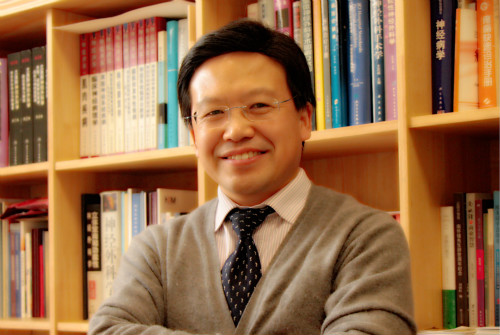
Pictured is Dr. Guo Hui, President of Deji Hospital
Sentiment
Entrepreneurship in the medical field differs from that in other sectors. Whether it is patients’ expectations of physicians or physicians’ own self-imposed standards, both imbue medical practitioners with a lofty sense of mission characterized by benevolence, dedication to healing the sick, and saving lives. Therefore, the foremost entrepreneurial ethos for founders in the healthcare sector must be a deep-seated benevolence akin to that of a compassionate healer.
Driven by this sense of mission, Guo Hui stated to VCBeat that he has long aspired to establish a hospital dedicated to serving the broadest segments of the Chinese population. The institution would provide high-quality medical services at reasonable, cost-effective prices, aiming to achieve the goals of “effective treatment, shorter wait times, and affordable/value-for-money care.” In this historic era of healthcare reform, he seeks to advocate for and promote a new professional ethos in the medical industry—centered on “healing, dedication, trust, and transparency”—through the effective management of the hospital.
Guo Hui believes that, from the perspective of hospital administrators, healthcare reform should ultimately enable all types of hospitals to abandon the misguided objective of “pursuing maximum profit.” Under the sacred mission of saving lives, hospitals should uphold professional responsibility, promote a spirit of dedication, provide standardized treatment in accordance with the objective laws of disease progression without being influenced by revenue-generation assessments, and earn only legitimate income. Furthermore, every effort should be made to eliminate information asymmetry in medical professionalism, transparently share expected treatment outcomes with patients’ families, and strengthen expectation management. By ensuring that patients and their families maintain realistic expectations, harmonious and civilized mutual trust and understanding between doctors and patients can be achieved.
Although Deji Hospital is still limited in scale, Guo Hui has set two long-term goals for the institution. The first is to strive to become one of the hospitals with the highest level of employee well-being. The second long-term goal is to establish a renowned brand as a leading clinical neurology center in China.
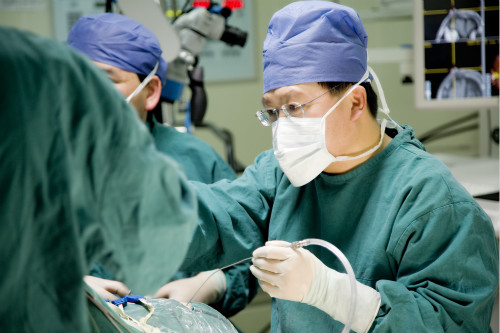
Figure: Dr. Guo Hui performing surgery on a patient
Evidently, Guo Hui’s medical ideals and aspirations align closely with those of Mr. Liu Chuanzhi, founder of Legend Holdings Corporation. In an interview with China Business Journal this January, Mr. Liu stated that for Legend Holdings, engaging in the healthcare sector means adhering to a “patient-centric” approach by focusing on delivering efficient and high-quality services, while also prioritizing charitable investments aimed at populations with low income and limited insurance coverage. It is equally important to adopt a “physician-centric” perspective by motivating doctors, ensuring they receive fair compensation for their labor, supporting the continuous improvement of their clinical skills, and ultimately helping them realize their professional aspiration to practice medicine for the benefit of society. Furthermore, it is essential to maintain sustained investment in medical technological advancements and strike a balance between ongoing investment and reasonable profitability.
Resilience
While physicians with a sense of mission are plentiful, it is rare to find one like Guo Hui, who, as a renowned doctor, has unhesitatingly devoted himself to healthcare entrepreneurship.
Guo Hui’s stature as a renowned physician is evident from his professional profile. Dr. Guo graduated from Shanghai Jiao Tong University School of Medicine, completed his postdoctoral fellowship at the University of California, San Francisco (UCSF), and served as an Assistant Professor of Neurosurgery at New York University Medical Center in the United States. Recruited back to China under the Ministry of Education’s Overseas Distinguished Talent Introduction Program, he previously held positions as Professor and Chair of Neurosurgery at Beijing Hospital and Dongfang Hospital Affiliated to Tongji University in Shanghai. He is a leading expert in functional neurological disorders and has served as Director of both the clinical ward and the laboratory.
Despite the prestige of serving as a department director at a top-tier (Grade 3A) hospital, Guo Hui relied on his intuition regarding future trends and his confidence in national healthcare reform to gradually crystallize his vision of establishing a hospital. In July 2008, when the state had not yet introduced policies encouraging private investment in healthcare, Guo Hui embarked on a career in private medical services—a full five years before the State Council issued the “Several Opinions on Promoting the Development of the Health Service Industry” (Guo Fa [2013] No. 40) in September 2013. The healthcare sector has historically been slow to respond to reforms and remains one of the most challenging areas for such changes. One can only imagine the difficulties Guo Hui encountered during those five years.
Recalling his early entrepreneurial journey, Guo Hui told Jiankangjie (Healthcare Circle) that in those days, he spent the vast majority of each day rushing around to secure funding and recruit co-founding physicians. He still vividly remembers one particular incident when, exhausted from commuting between Songjiang District and Putuo District, he pulled over to the side of the road and slept in his car overnight.
In 2008, when Guo Hui resigned from his tenured position at a Grade 3A hospital and stepped down as the department director and academic leader at a university-affiliated hospital, he did not fully realize that the poor boy from an impoverished village had quit his professorship and rushed into the business world without any financial preparation. During the week of his resignation, Guo Hui received more than 200 phone calls from concerned friends, leading him to even doubt whether he had made the right decision.
Later, he began to test the waters of “hospital management” in a neurology department at a Shanghai hospital that had been converted from public to private ownership. Starting with just six beds and three staff members—only two of whom were physicians—the department lacked neurosurgical instruments for operations, electroencephalography (EEG) equipment, and surgical microscopes. Apart from their proficient technical skills, they had virtually no resources.
During an interview at Deji Hospital, Jiankangjie spoke with the founding members who had embarked on the entrepreneurial journey alongside Guo Hui. One physician recalled with a smile that, in the early days of the venture, nearly everyone believed they had been “talked into” joining by Guo Hui and had repeatedly considered leaving, only to be “persuaded” back by him each time.
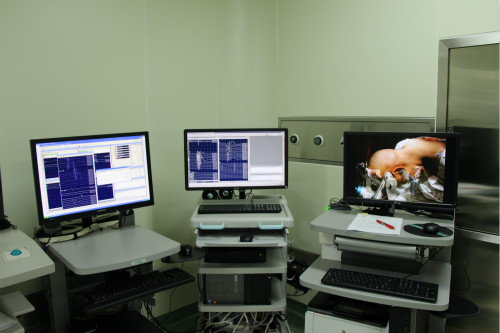
Figure: Intraoperative Neurophysiological Monitoring Device
The result of this perseverance was a gradual improvement in the department’s clinical operations, steady growth in staffing, and the acquisition of numerous pieces of equipment, ultimately establishing a well-equipped neuroscience center. Remarkably, this unassuming department became the first in China to integrate neurology and neurosurgery into a single neuroscience unit, emulating the disciplinary model of Stanford University in the United States. It was also in this modest setting that Shanghai’s largest neurophysiology laboratory was established, the city’s first ketogenic diet therapy for epilepsy was pioneered, and it emerged as the leading center in Shanghai for the volume of epilepsy surgeries performed.
Mr. Zhu Linan, President of Legend Holdings Corporation, once stated that in the investment sector, Legend Holdings adheres to the strategy of “Business First, People Paramount.” “Business First” refers to investing in promising industries, while “People Paramount” primarily focuses on backing entrepreneurs, ensuring that every invested field has corresponding leading figures.
Wei Kai, Executive Director of the Healthcare Services Investment Department at Legend Holdings Corporation, stated that President Guo Hui possesses a strong professional vision and, as a medical expert, demonstrates a pronounced entrepreneurial spirit. He also exhibits robust strategic thinking, team-building capabilities, and execution skills. Particularly in physician-led healthcare institutions, it is essential for leading figures to transition from the role of medical experts to that of leaders—a domain relatively unfamiliar to many physicians, thereby demanding exceptional learning agility.
Vision
Although early-stage entrepreneurship is extremely challenging, often plagued by cash flow crises, Guo Hui did not succumb to these pressures.
Recalling the most challenging period during the startup phase, Guo Hui remembered that an individual investor once approached him, offering an investment of RMB 8 million. However, after observing the investor’s strong orientation toward short-term gains, Guo firmly declined the funding from this “big shot.” With fundamentally divergent philosophies, Guo believed that capital driven by excessive eagerness for quick success could not deliver quality healthcare. Reflecting on this experience, Guo remarked that had he wavered and accepted the investment at that time, Deji Hospital might have ended up in a vastly different and likely unfavorable situation today. Rejecting capital accompanied by demands for short-term behavior during difficult times was not only a reflection of Guo’s inner convictions but also demonstrated remarkable foresight.
Although Guo Hui declined investment from the "big shots," he quickly secured funding from Trustbridge Partners in 2013. The capital of Trustbridge Partners primarily comes from renowned U.S. university endowments (such as Columbia University, Stanford University, and New York University), internationally prestigious investment institutions (such as Temasek Holdings of Singapore and Kerry Group Limited of Hong Kong), and influential private investors in the international capital markets. The investment from Trustbridge Partners not only addressed Guo Hui's urgent financial needs but also provided substantial support during the early development stages of Deji Hospital.
Guo Hui also demonstrated considerable foresight in selecting the site for Deji Hospital.
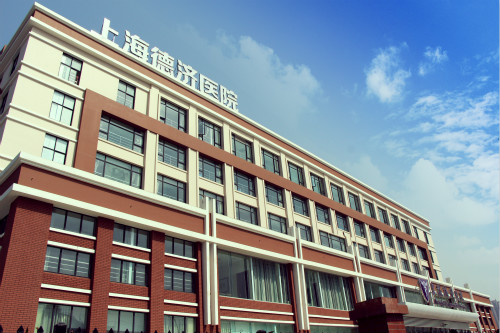
Shanghai Deji Hospital is located in Putuo District, which has a permanent population of approximately 1.4 million. The district currently has only one tertiary hospital and three secondary hospitals, resulting in insufficient medical resource supply around Shanghai Deji Hospital and significant market potential for basic medical services. Furthermore, Shanghai has designated Putuo District as a key area for future urban development, with plans to create another “Zhangjiang Hi-Tech Park.” Located in the center of Putuo District, Deji Hospital serves an area experiencing substantial population inflow; the surrounding residential population alone reaches 800,000, while the nearest emergency hospital is over 10 kilometers away. According to the Putuo District Government’s plan, the largest emergency medical center in northwestern Shanghai will be established at this hospital.
“Deji Hospital has established certain unique advantages over the past three years. President Guo and the hospital administration have made substantial investments in building the medical staff, site selection, equipment, and technology, while also placing great emphasis on medical quality and cultural development. We strongly align with these values,” said Jiang Donghui, Investment Director of the Healthcare Services Investment Department at Legend Holdings Corporation, in an interview with the reporter.
Resonance
During the arduous early stages of a startup, even a small word of encouragement can galvanize the team into a united force against common challenges. However, as the venture stabilizes and enters a normal operational trajectory, the founder’s strategic vision for the future determines the company’s direction of development.
In 2016, Deji Hospital faced another period of difficult decision-making. Guo Hui told VCBeat that, in addition to Legend Holdings Corporation, three globally renowned medical funds or investment institutions had expressed interest in making strategic investments in Deji Hospital since the beginning of the year. He himself had hesitated among these three institutions; however, the sudden entry of Legend Holdings’ investment team gave him the sense of choosing the right perch, as a good bird selects its tree.
Guo Hui believes that the sentiment of “serving the country through industry” he perceived during his exchanges with Legend Holdings Corporation, Chairman Liu Chuanzhi, and President Zhu Linan, closely resonates with his own philosophy of “benevolence as a healer.” Moreover, Liu Chuanzhi, widely acclaimed as China’s “Godfather of Entrepreneurship,” shares considerable common ground with Guo’s own experience of embarking on medical entrepreneurship despite formidable challenges. What is even more remarkable, and deeply touching to Guo, is that Legend Holdings’ investment team integrates resources from the Legend ecosystem to provide value-added services in areas such as strategy, management, culture, and resources, without interfering in the specific operational management of the hospital.
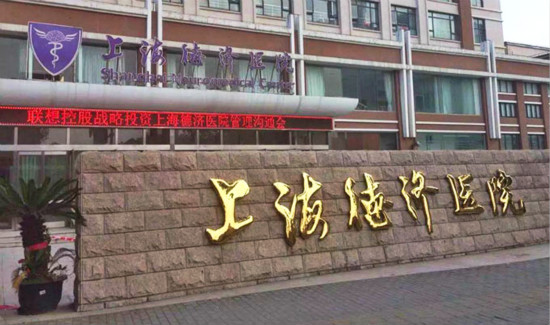
Over the past decade, there have been numerous cases where capital interference in the specific operational management by founders ultimately led to the failure of startups. Guo Hui expressed appreciation for Legend Holdings Corporation’s approach of acquiring controlling equity while still daring to delegate authority. The requirements imposed by Legend Holdings Corporation on him were not to rush for profitability, but rather to scale up operations, serve more patients, strengthen technological capabilities and brand presence, and achieve value growth—requirements that aligned perfectly with Guo Hui’s original entrepreneurial vision.
Both Deji Hospital and Bybo Dental, another enterprise under the healthcare segment of Legend Holdings Corporation, aim to establish significant scale and brand influence within their respective fields among private medical institutions. As the investor, Legend Holdings Corporation will fully leverage its existing capabilities and advantages to robustly support the growth of its portfolio companies, actively provide value-added services, and strive to enhance expertise and understanding in healthcare management. By building up medical resources and professional competence, it seeks to cement its brand as “the premier investment institution in the healthcare sector.”
This article is reposted from another website and does not represent the views of VCBeat.