

New Trends in Female Consumption: How Upgraded Consumption Drives the Rise of the 'Appearance Economy'
Market preferences for narratives are constantly evolving: first came O2O and the sharing economy, and this year it is VR and SaaS systems. During an economic downturn, it has become increasingly difficult for companies to craft compelling stories, as the market is no longer willing to pay for empty promises.
Only genuine consumer spending can endow enterprises with self-sustaining revenue-generating capabilities. In recent years, a large number of internet companies have tapped into the “consumption upgrade” trend from various angles—through cross-border e-commerce, subscription-based flower services, fitness classes, health foods, and medical aesthetics and skincare—making multifaceted efforts to cultivate and drive orders from female users.
Is Female Consumption Really as Simple as “Buy, Buy, Buy”? What Are the True Thoughts of Female Users Behind the Massive Spending? On October 26, several industry leaders shared their insights at the Gengmei Salon. VCBeat (WeChat ID: vcbeat) was invited to attend and provide coverage.
High-Quality Service Is the Major Trend in Consumption Upgrading
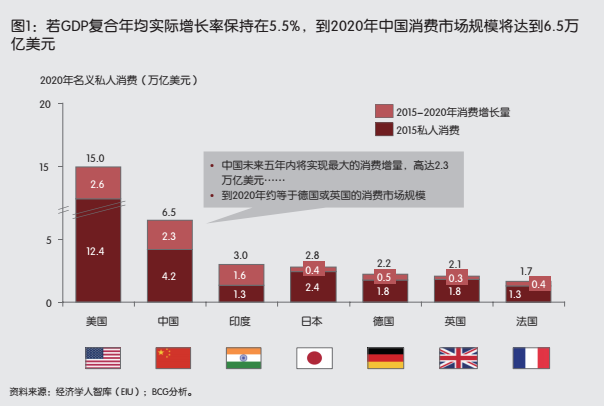
A joint report by the internationally renowned consulting firm BCG and Alibaba reveals that China’s consumer market is projected to expand by 50% by 2020, reaching a total value of $6.5 trillion—approximately 1.3 times the current size of either the German or British consumer market. Three primary forces are driving this consumption growth: upper-middle-class and affluent consumers, new-generation consumers, and online shopping.
These three groups overlap. Individuals born in the 1980s have become a core force in both the workplace and family life, while the oldest among those born in the 1990s have entered the stage of establishing careers and families. As digital natives, they are more mature consumers.
As these core consumers gradually transition from the middle class to the upper-middle class, their spending on services will double; and as the upper-middle class moves into the affluent tier, their service consumption will double again. The increasingly large cohort of China’s upper-middle class and affluent population will increasingly favor healthy, high-quality services, using them to showcase their lifestyle and define their social standing.
New Trends in Female Consumption: Investing in Appearance and Health
In 2014, driven by fluctuations in the RMB exchange rate, cross-border e-commerce gained momentum in China, spurring the first wave of consumption upgrades among women. A number of specialized cross-border shopping platforms, such as Xiaohongshu (Little Red Book), Yangmatou, and NetEase Kaola, rose rapidly, only to encounter barriers imposed by new tariff policies this year.
Liu Di stated that over the past two years, Chinese female consumers have purchased everything from cosmetics to luxury goods across the globe. In line with the patterns of consumption upgrading, spending is ultimately shifting from tangible goods to services. Industries such as medical aesthetics, weight loss and fitness, postpartum recovery, and mental health are poised for rapid growth. “These services reflect that behind women’s ‘buying spree’ lies a substantive investment in their own appearance and health.”
Taking the beauty industry as an example, Liu Di points out a clear trajectory in women’s consumption upgrading: from mass-market skincare products in supermarkets to premium international brands, and from spa treatments at beauty salons to medical aesthetic skincare. This upgrade path moves from products to services, and from low-cost standardized goods to mid-to-high-end standardized products, and finally to non-standardized offerings.
“Female consumer spending is transitioning from a sole focus on efficacy to lifestyle-oriented consumption.” Liu Di believes that the medical aesthetics industry will, in the future, provide women with more comprehensive enhancement solutions encompassing holistic body management and psychological well-being.