

Yixu Medical Advances Hypertension Precision Management with Genomic Sequencing and Big Data, Files for IPO
The important spirit of General Secretary Xi Jinping’s speech at the National Health and Wellness Conference pointed out that people’s health would be placed in a priority strategic position in China, and the “Healthy China” initiative would be elevated to a national strategic deployment. In the field of prevention, control, and rehabilitation of chronic diseases, with hypertension as a typical representative, precision medicine, as a major scientific and technological special project in China’s 13th Five-Year Plan, will undoubtedly play a profound and significant role in promoting the development of Healthy China and the translational application of innovative medical technologies, alongside the continuous emergence of innovative technologies for personalized treatment and intervention.
To further explore the pathways and trends in the translational application of innovative technologies for precision medicine, the “2016 Forum on Focused Prevention and Control of Hypertension as a Chronic Disease and Innovative Development of Individualized Rehabilitation” was held in Beijing on October 23.
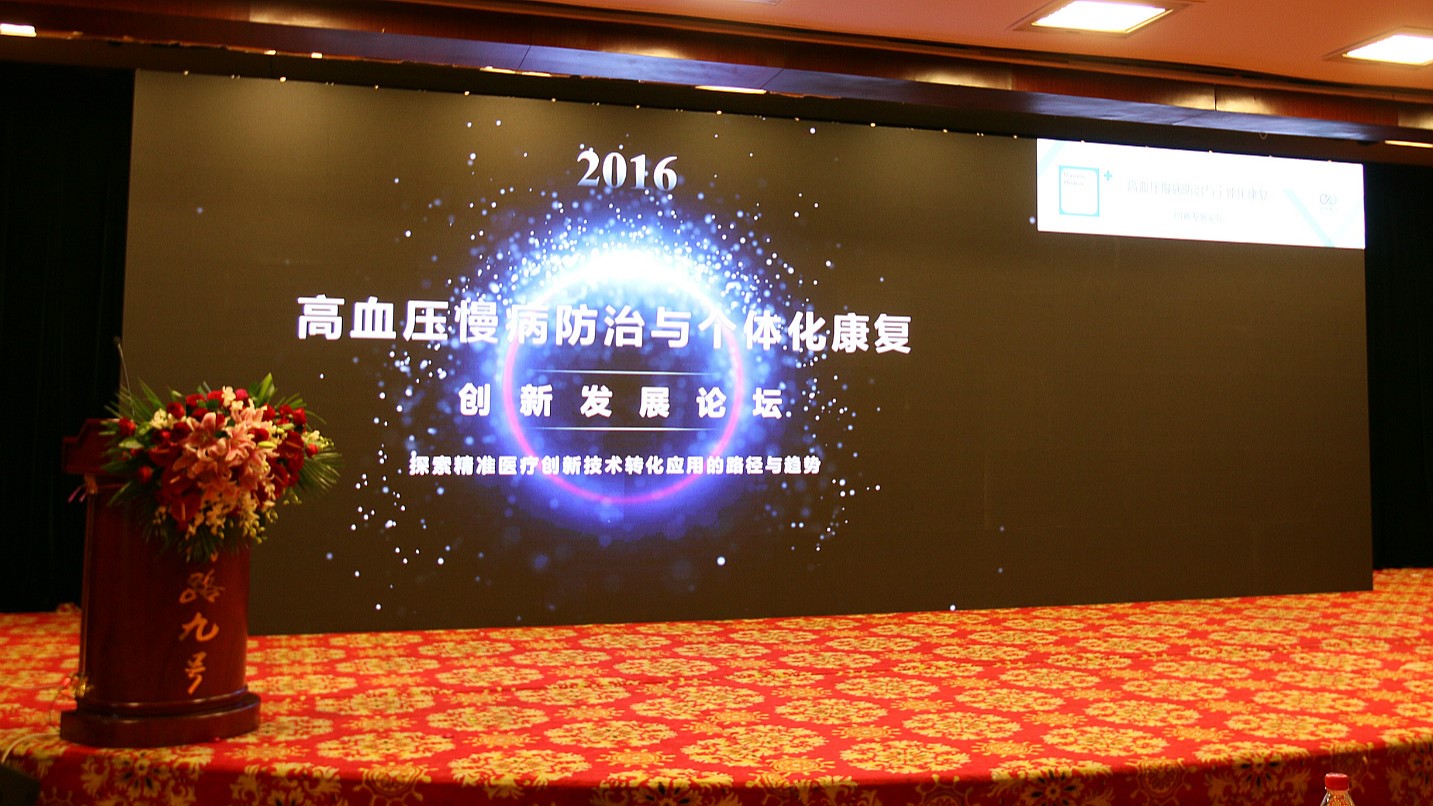
Centered on the theme of “Focusing on Chronic Disease Rehabilitation and Promoting Personalized Treatment,” this conference explored strategies to optimize rational medication use and disease course management for patients with hypertension. It aimed to foster deeper integration among industry, academia, and research, as well as the translation and application of new technologies, thereby creating a more innovative, closed-loop comprehensive medical service system for the personalized prevention and control of hypertension and chronic disease management.
Professor Zhang Xinhua, Secretary-General of the World Hypertension League and Deputy Director of the Beijing Hypertension League:
Governments worldwide have committed to reducing by 25% the proportion of individuals with uncontrolled hypertension, achieving a 25% relative reduction in salt intake, and attaining a 30% relative reduction in smoking prevalence by 2025, while also mandating a 25% reduction in premature mortality (aged 30–70 years) from chronic diseases by 2030.
As is well known, China has a large population of individuals with hypertension, with over 300 million patients. According to data from the Report on the Status of National Nutrition and Chronic Diseases in 2012, released by the State Council Information Office in 2015, the prevalence of hypertension among Chinese adults aged 18 and above was 25.2%. To achieve global targets for chronic disease prevention and control, China aims to reduce the premature mortality rate due to chronic diseases to 14.6% by 2025. Furthermore, to meet the Sustainable Development Goals (SDGs), this rate needs to be lowered to 12.9% by 2030, down from the current level of 19.4%.
To achieve the aforementioned goals for chronic disease prevention and control, the most effective approach is to strengthen prevention and control measures. The target population for preventing chronic diseases is the relatively healthy general population that has not yet entered the healthcare system, whereas hospitals primarily serve patients. Effective primary prevention can reduce the percentage of new cases in the population, while effective treatment, although it reduces mortality, increases the proportion of the population living with the disease, thereby raising the prevalence rate.
Therefore, prevention and treatment of chronic diseases should follow distinct pathways, with equal emphasis placed on both, to achieve the WHO’s 2025 disease control targets on schedule. This represents both the opportunity and challenge for innovative development in China’s fields of chronic disease prevention and control and personalized rehabilitation.
Professor Hu Songnian, Researcher at the Beijing Institute of Genomics, Chinese Academy of Sciences:
It is foreseeable that revealing and understanding the correlations and mechanisms of action among “the human body and disease, disease and drugs, and drugs and host metabolism” may be a necessary prerequisite for achieving patient-centered personalized therapy. Meanwhile, the rapid advancement of modern molecular biology techniques and the ongoing progress in genomics research are likely to serve as essential references for advancing individualized precision medicine in the future.
Professor Sun Ningling, Deputy Secretary-General and Executive Director of the Chinese Hypertension League:
Each individual’s genotype possesses unique characteristics; it is the 0.5% genetic variation among humans that determines each person’s uniqueness, while biological traits result from the combined effects of an individual’s genes and the external environment. Particularly for chronic, progressive diseases with complex etiologies such as hypertension, external environmental factors—including lifestyle, dietary habits, and psychological status—are indispensable determinants for clarifying etiology and formulating personalized intervention strategies. For the prevention and management of hypertension, controlling salt intake is one of the essential conditions for blood pressure control.
Li Xingang, Pharmacist, Department of Pharmacy, Beijing Tiantan Hospital, Capital Medical University:
Clinical practice has demonstrated that there are individualized differences in drug suitability, therapeutic efficacy, and even dosage selection among patients with different genotypes. The application of genetic testing products for assessing the body's metabolic response to commonly used medications for hypertension and related diseases will be an essential means to achieve personalized rational drug use and precise therapeutic outcomes.
Zhang Yanwei, Founder and CEO of Beijing Yixu Medical Technology Co., Ltd.:
Under the guidance of Professor Hu Songnian, a genomics expert at the Beijing Institute of Genomics, Chinese Academy of Sciences, Yixu Medical has designed and developed a gene sequencing product for personalized medication response in hypertension. Leveraging its proprietary patented technologies in next-generation sequencing (NGS), the product assesses genetic risks for primary hypertension and related cardiovascular and cerebrovascular diseases, as well as individual metabolic levels for over 40 drugs across five major classes of antihypertensive agents and their combination therapies. By integrating hotspot genes identified in Chinese hypertensive patients with pharmacological target genes, the product elucidates individualized differences in drug suitability and dosage among patients with different genotypes, thereby exploring the practical significance of gene sequencing in assisting clinical drug selection and efficacy evaluation.
As Yixu Medical launched its gene sequencing product for precision medication in hypertension, it also introduced the “100,000 Free Cases Nationwide” initiative. Leveraging local government welfare programs, clinical recruitment efforts, and the China Women’s Development Foundation’s “Health Journey” project, the company has been continuously bringing the concept and products of precision hypertension medication to the grassroots level. This approach aims to enhance treatment adherence through personalized medication, improve therapeutic efficiency and drug efficacy during the initial diagnosis phase for hypertension patients, shorten the trial-and-error period for medication adjustment to benefit the public, reduce ineffective drug use to support medical insurance cost containment, integrate intelligent testing with internet-based healthcare, establish a closed-loop service for chronic disease management, improve the primary care ecosystem for chronic diseases, and ultimately enhance people’s health and quality of life.
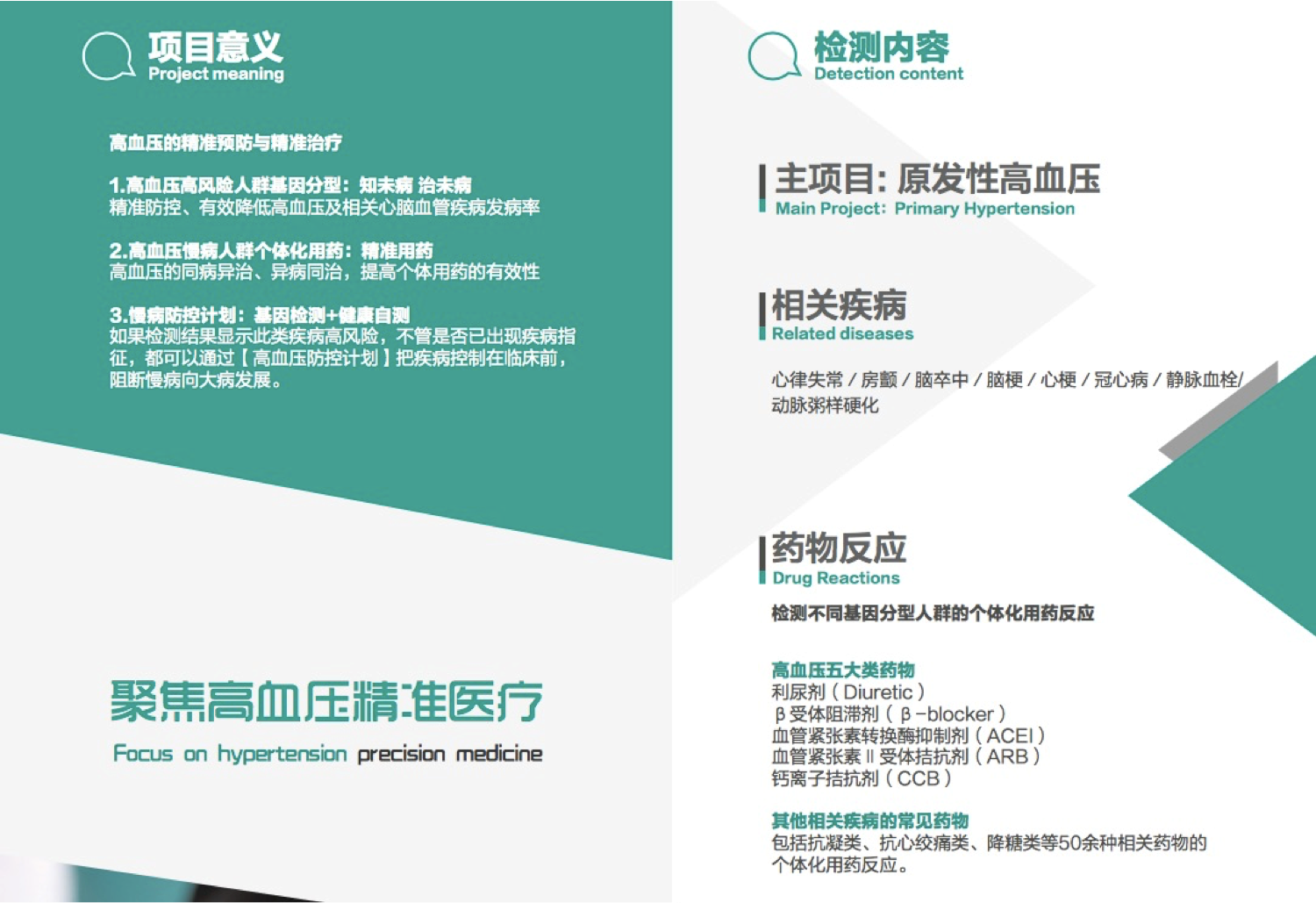
The selection of individualized treatment regimens for hypertension is not only related to individual genotyping but also closely linked to lifestyle management. Although all are antihypertensive agents, they differ in their mechanisms of action, and individuals vary in their metabolic responses. However, this does not mean that all hypertensive patients must rely solely on pharmacological interventions for blood pressure control.
Finally, with the on-site guests as witnesses, the organizer of the “Forum on Innovative Development in Chronic Disease Prevention, Control, and Personalized Rehabilitation for Hypertension,” Beijing Yixu Medical Technology Co., Ltd., jointly launched the “Hypertension Gene Cohort Database Project.” The launch was officiated by Professor Sun Ningling, Chair of the Conference; Professor Hu Songnian, Chief Scientist at Yixu Medical; Mr. Zhang Yanwei, Founder; and Mr. Qin Lei, Project Director.
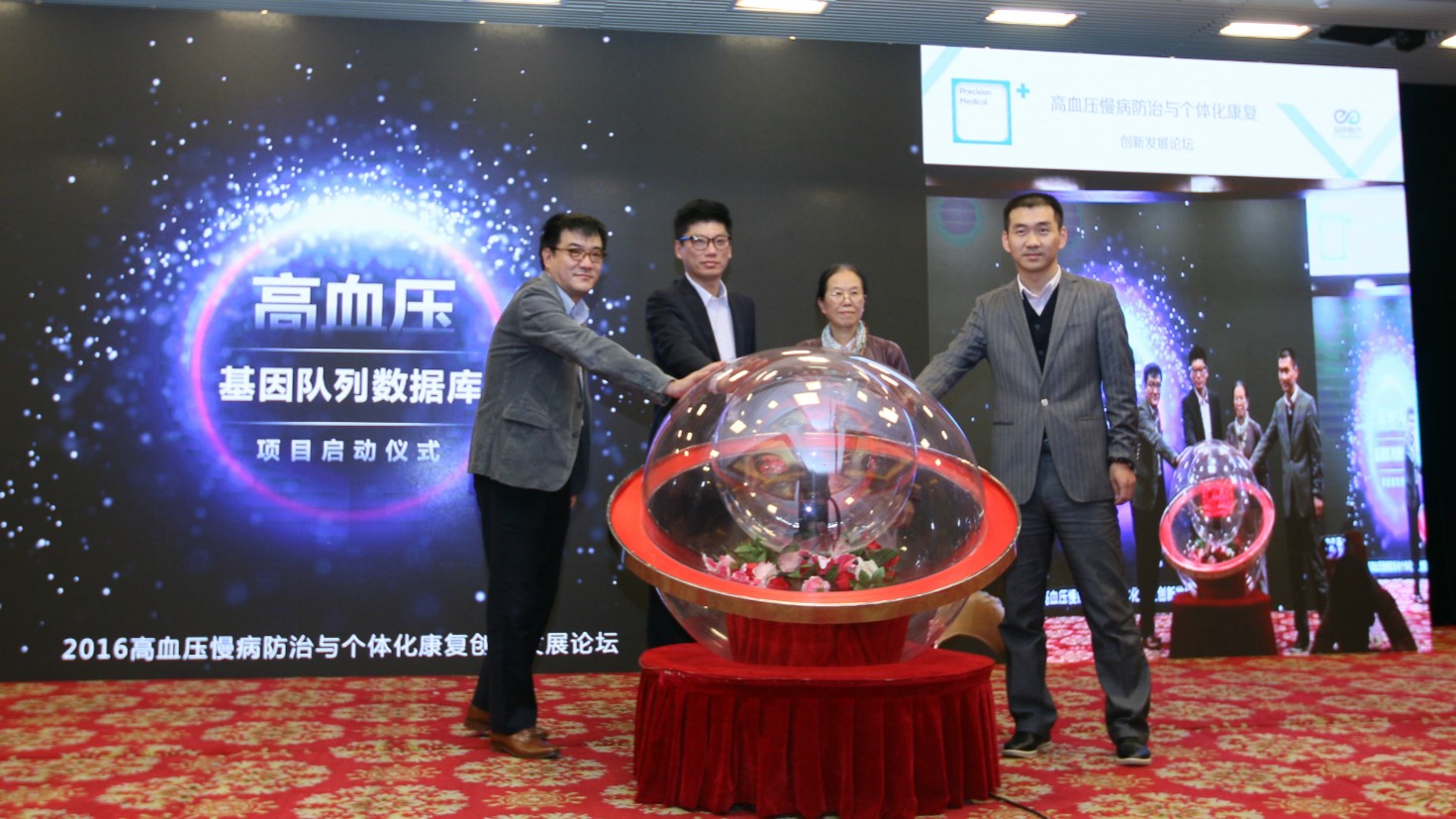
This project leverages NGS-based targeted sequencing technology to investigate the relationship between various genetic mutations and drug efficacy and safety. By conducting comprehensive omics data analysis of individual samples, it assists in guiding medication decisions. Integrated with clinical big data, the project aims to establish a pharmacogenomics database for hypertension, dedicated to mapping the genetic landscape of hypertension in China and improving the effectiveness of hypertension treatment.
Gene sequencing is not equivalent to precision medicine; however, the implementation and realization of precision medicine are inseparable from the advancement of gene sequencing technologies and the application of big data in genomics. In the future, it will better serve targeted prevention, personalized treatment, and systematic intervention for the hypertensive population in China.