

APDM Wearable Technologies Files for IPO Following $4.6M NIH Grant to Commercialize Research-Grade Motion Monitoring Devices
APDM, based in Portland, Maine, has set its sights on developing and commercializing a premier wearable device for precise monitoring of human movement. The company has secured three grants from the U.S. National Institutes of Health (NIH), totaling more than $4.6 million. These three grants correspond to three collaborative research projects with Oregon Health & Science University, at least one of which is expected to yield results that will be commercialized.
Product: Multi-Sensor-Based Human Motion Modeling
The foundational product used by APDM for these three research projects is called OPAL, which is aResearch-Grade Wearable Sensors(Unlike consumer-grade sensors found in sports watches), multiple OPAL units can be worn on different parts of the body to simulate movements with greater precision. In other words, varying the number and placement of OPAL sensors allows for the creation of different motion simulation scenarios. There are three typical configurations: The first is full-body motion simulation, which provides the most comprehensive observation of movement and requires 15 OPAL sensors; the second is lower-limb motion simulation, which monitors joint movement in the lower extremities and is ideal for studying gait patterns during walking and running, requiring 7 OPAL sensors; the third is upper-limb motion simulation, which is best suited for stroke rehabilitation research and requires 7–8 OPAL sensors.
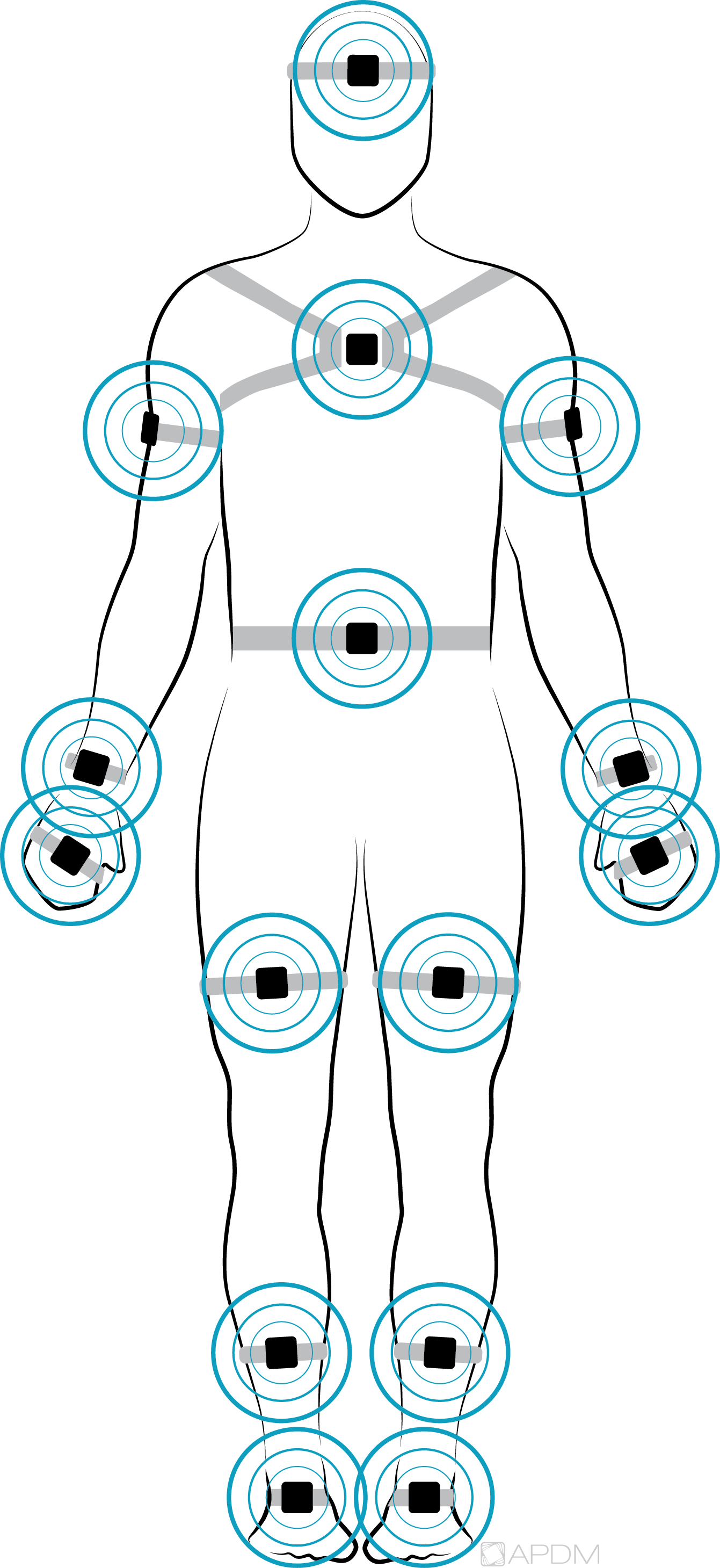
Various Combinations of OPAL Sensors Enable Diverse Scientific Research Objectives
OPAL sensors can be regarded as wearable devices with “ultimate motion monitoring capabilities,” as evidenced by the following features: First, their sampling rate is significantly higher than that of conventional wearable sensors, enabling the acquisition of more coherent and accurate raw motion data. Second, they offer a battery life of 8–50 hours. Third, they are supported by a robust software development kit (SDK). Fourth, they can synchronize with other systems. Fifth, up to 24 OPAL sensors can be used simultaneously within a single system. Sixth, they feature a gyroscope and accelerometer configuration for tracking orientation and movement.
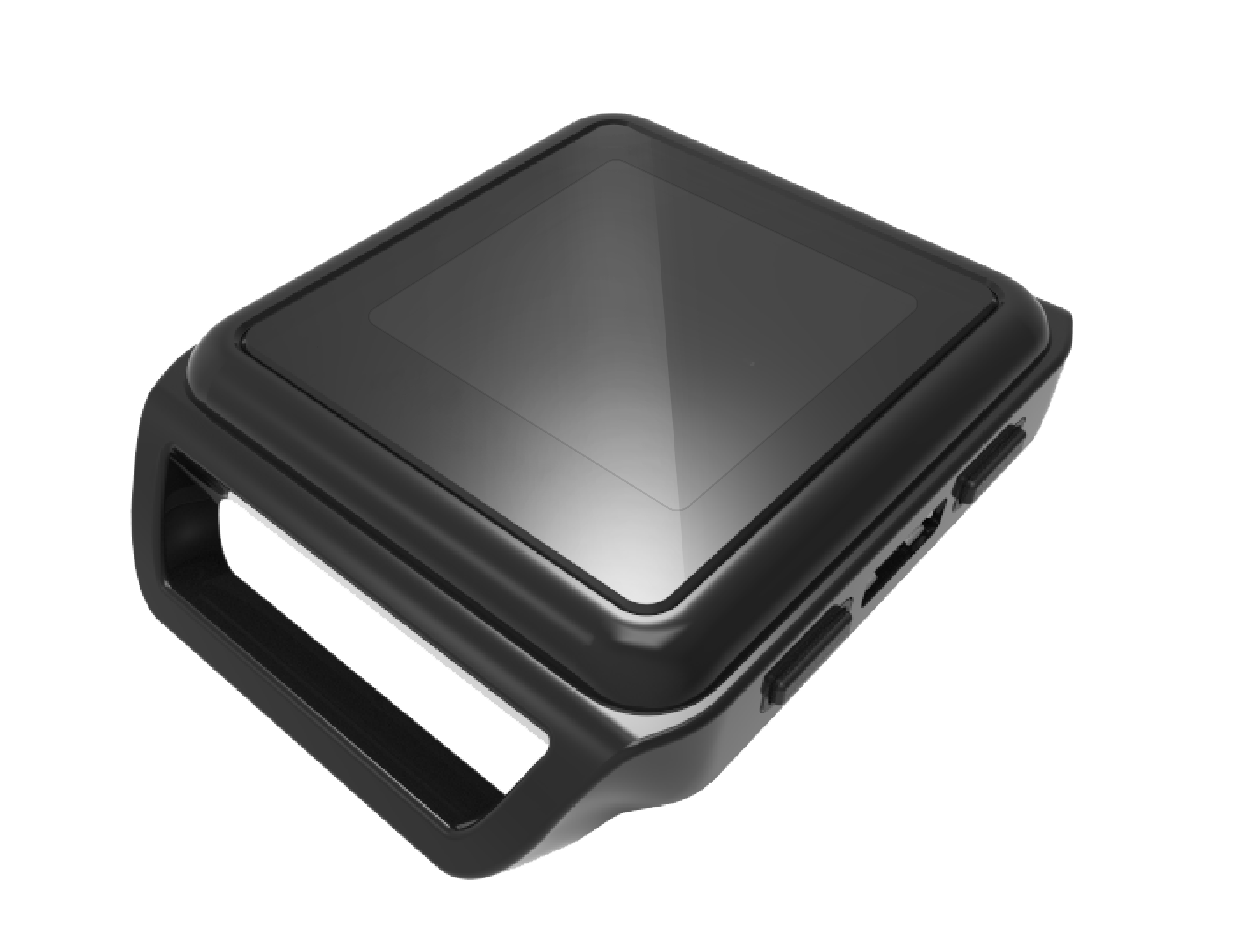
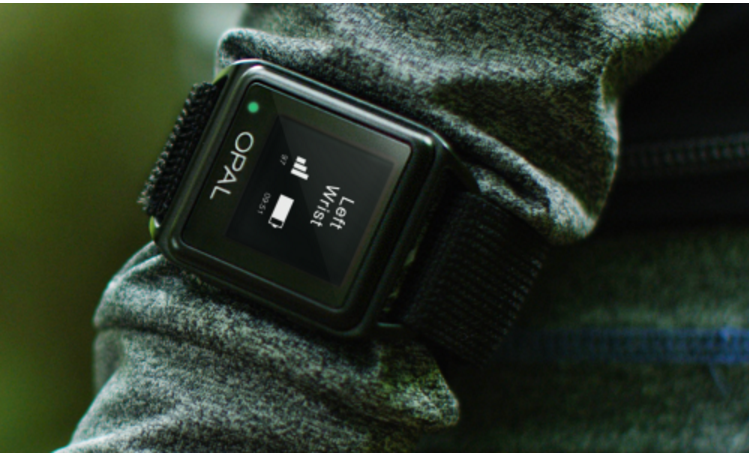
OPAL Sensor with “Ultimate Motion Monitoring Function”
Project: Achieving Three Breakthroughs Through a Two-Phase Initiative
The three studies targeted distinct populations: the elderly, cancer survivors, and patients with neurological disorders. These studies were divided into two phases—one Phase I project and two Phase II projects. The Phase II projects offer advantages over Phase I, including further optimization of hardware, the addition of visual and auditory feedback based on the Phase I system, enhanced personalized customization features, and a format closer to commercial clinical application.
Phase I Project: “MOBILITY REHAB (Mobility Rehabilitation),” funded by the National Institute on Aging under the NIHInstituteGrant support of nearly $300,000; the project is executed by three parties: APDMThe Company, the Department of Neurology at Oregon Health & Science University, and Oregon Health & Science University“Balance Disorder Laboratory” Project. This project aims toUsing Sensor Systems to Monitor the Effectiveness of Mobility Rehabilitation in the Elderly。
“Phase I aims to demonstrate the feasibility of a biofeedback system that enables physical therapists to obtain real-time biofeedback during gait rehabilitation training for elderly patients with gait disorders,” explained APDM. In addition to providing feedback, this system, called “Mobility Rehabilitation,” offers objective and robust metrics to assess patient progress, document the outcomes of physical therapy, and iteratively refine therapeutic protocols through analysis of treatment efficacy.
Phase II Project: “MOBILITY CLINIC,” under the NIH’sNational Cancer InstituteSupport, with grant funding exceeding $1.45 million, for collaboration with OregonThe School of Nursing at the University of Health and Science collaborates. They willUsing Wearable Devices to Monitor Fall Risk in Cancer Survivors。
“The ultimate goal of this project is to develop a portable medical support system that can rapidly and automatically assess the gait and balance of cancer survivors, using sensors that are easy to wear and unobtrusive,” stated APDM. “The wearable devices from the ‘Mobility Clinic’ project enable physicians to make better clinical decisions and improve the quality of life for patients with mobility impairments resulting from the side effects of cancer treatment.”

Comprehensive Gait and Balance Analysis
Another Phase II project (under the U.S. Small Business Innovation Research Program): “MOBILITY LIFE (Mobility Sketching),” by the National Institute on Aging under the NIHResearch InstituteSupported, with grant funding exceeding $2.9 million, which is also the largest amount among the three projects. In this project, APDM and OregonThe Department of Neurology at the University of Health and Science will collaborate,Study of Daily Activities in Patients with Neurological Disorders。
“After completing this study with NIH Phase II funding, APDM and Oregon Health & Science University will manufacture”The First System Capable of Continuously Monitoring Physical Activity“, and enable the description of human body turning and balance conditions while continuously monitoring movements, allowing for fall risk assessment and proactive prevention both at home and away,” APDM states on its official website. “We will also manufacture the first wirelessly synchronized ankle-worn device with built-in inertial sensors to monitor gait and subtle foot movements. Medical applications of this device include assessing changes in mobility caused by medication and evaluating the progression of neurological disorders such as Parkinson’s disease or multiple sclerosis.”
Origin: Disease Research Based on Functional Status
APDM was founded in November 2007. At that time, Dr. James McNames, who sought to study motor activity in patients with Parkinson’s disease, was looking for a wearable device capable of recording high-bandwidth data to observe human movement without being obtrusive. However, after several weeks of searching, he found no suitable solution. To meet this research need, Dr. Mateo Aboy and hardware engineer Andrew Greenberg established APDM, making the resulting wearable devices available to other researchers as well. The company’s name derives from this initial requirement: Ambulatory Parkinson’s Disease Monitoring (APDM).
To date, APDM’s wearable devices have been used to study the mobility of 25,215 individuals, resulting in the publication of 224 related articles. APDM’s devices are also widely employed in human gait and balance analysis, fall risk assessment, kinematic research, and continuous at-home activity monitoring.
Team: Transitioning from research-driven to technology-driven
APDM boasts a lean, high-caliber team of 19 members, comprising 10 engineers, 3 researchers, 1 production quality management specialist, 2 business development and brand management professionals, and 3 executives (including the CEO and Vice Presidents) responsible for operations, technology, and administration, respectively. Technical personnel account for more than half of the team and can be further categorized into hardware engineers, software engineers, embedded systems engineers, and digital signal processor (DSP) engineers.
The company’s organizational structure reveals that APDM imposes exceptionally high technical requirements on its manufacturing equipment. Notably, two of the three early founders were medical researchers. This evolution—from a research-driven founding team to a technology-led large-scale organization—mirrors the growing trend of computer technology becoming an indispensable aid to scientific research.