

Addressing Population Diversity Gaps in Genome-Wide Association Studies: Illumina and Partners Advance Inclusive Genomic Tools
The vast majority of data collected for genetic studies come from individuals of European ancestry, but researchers are striving to change this. When Kent Taylor, a geneticist at the Los Angeles Biomedical Research Institute, began drafting a grant proposal two years ago to investigate genetic risk factors for type 2 diabetes in Hispanics, he found surprisingly little research data available. He consulted all published genome-wide association studies (GWAS) listed in the GWAS Catalog and identified 19 studies on type 2 diabetes in Europeans, 14 in Asians, three in Hispanics, one in Mexicans, and one in American Indians from Arizona.
In genetic epidemiology, Genome-Wide Association Studies (GWAS) are a method used to examine all or most of the genes across different individuals within a specific species, thereby assessing the extent of genetic variation among them. Such variations give rise to diverse phenotypes, including susceptibility to various diseases.
These genome-wide association studies scan the DNA of many individuals; however, in such genomic research, large population groups—such as Africans, Latin Americans, and Indigenous or native peoples—are significantly underrepresented. Without this information, researchers may fail to identify key genetic factors that influence disease susceptibility and drug response across different populations.
Taylor explained that the GWAS Catalog is one of the most important tools in modern genetics, but it is clearly far from comprehensive. We need genomic diversity to establish a “genomic infrastructure” that enables researchers to study diseases across diverse populations.
A recent analysis published in Nature reveals that 81% of participants in these genome-wide association studies (GWAS) are of European ancestry. Individuals of African, Latin American, Indigenous, or Native descent account for less than 4% of all genomic samples analyzed. Although the overall diversity of GWAS has increased since 2009, when 96% of the data were derived from individuals of European descent, this increase is primarily attributable to a substantial rise in data from Asian populations, while the marginal growth in other populations has contributed minimally to genetic diversity.
Adeyemo, Deputy Director of the Center for Genomics and Global Health at the National Human Genome Research Institute (NHGRI), a part of the U.S. National Institutes of Health, stated that the research community tends to believe that poorer countries, such as those in Africa, Asia, and Central and South America, do not currently have a pressing need for genomic research because infectious diseases remain the leading causes of death in these regions. However, chronic diseases, such as diabetes and heart disease, are on the rise in low-income countries and require more genomic research to understand the key factors affecting different populations.
An international research consortium named the “Human Heredity and Health in Africa” (H3Africa) Initiative is working to enhance researchers’ understanding of the genetics of African populations. The project encompasses studies on 14 different diseases, collecting data from genome-wide association studies as well as individual whole-genome sequencing data, with tens of thousands of participants already enrolled.
Another effort to increase diversity in genomics research is the Hispanic Community Health Study, launched by the National Institutes of Health (NIH) in 2013. The study will include 16,000 participants and aims to establish risk factors for cardiovascular, pulmonary, and chronic diseases. However, Taylor noted that given the extensive genetic diversity among Hispanics and other Latin Americans, further research is needed. The NIH is also conducting a 30-year study on American Indian men and women, focusing on the genetic risks of cardiovascular disease.
Companies such as Illumina and 23andMe are developing new tools to help researchers involved in similar initiatives explore genetic variations across diverse populations. Illumina is collaborating with H3Africa to develop microarray chips—a laboratory testing platform used to determine differences in genetic composition within populations—with a primary focus on data from individuals of African ancestry, rather than for any other commercial purposes.
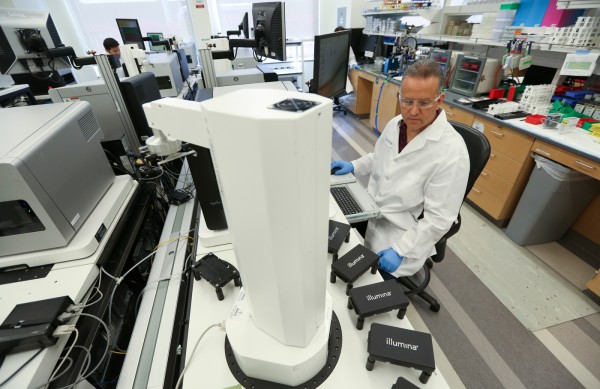
Illumina, a genetic testing company, is developing a laboratory test chip to promote further research into African genetic diversity.
The array will include 2.5 million genetic variants found in African populations, with data derived from genomic samples of 3,000 individuals collected by H3Africa. This demonstrates greater genetic diversity than Illumina’s current tests, which are based on genetic information from fewer than 700 Africans.
Last year, Illumina launched a new genotyping array designed for diverse ethnic populations. Julie Collens, Senior Manager of Market Development at Illumina, stated that an array tailored for African populations was needed due to the region’s high genetic diversity, as previous arrays captured only a small fraction of African genetic variation. Illumina currently offers a total of 28 microarray chips for human genetic research, including those targeted at specific diseases such as immune disorders and mental illnesses, as well as arrays optimized for Chinese populations.
Furthermore, 23andMe announced that it is establishing a reference database containing the whole-genome sequences of its African American customers who have consented to participate in research. Adam Auton, Senior Scientist and Statistical Geneticist at 23andMe, stated that the company aims to include sequences from more than 900 individuals in the database, which will ultimately be shared with the NIH and made available to researchers. To date, the majority of whole-genome sequencing has been conducted in individuals of European ancestry.
Although Adeyemo stated that these new tools will certainly be helpful, their introduction does not represent a major shift in genomics research. The awkward reality is that researchers must conduct studies in non-European populations, and therefore scientific organizations worldwide must provide financial support for such research. After all, without funding, all scientific projects remain mere fantasies.