

World Medical Robotics Conference 2016 to Convene Global Experts in Shenzhen
The “2016 World Medical Robot Conference” is scheduled to take place in Shenzhen, China, on October 29–30. Organized by the World Medical Robot Association, this global summit for the medical robotics industry features the theme: “Technology Transforms Healthcare, Health Leads the Future.”
This is the inaugural global summit on medical robotics, integrating scientific research, clinical practice, and industry. The event will be attended by more than 20 academicians from various countries, along with dozens of presidents of renowned hospitals worldwide and clinical experts who will deliver presentations and participate in discussions.
Guest Introduction
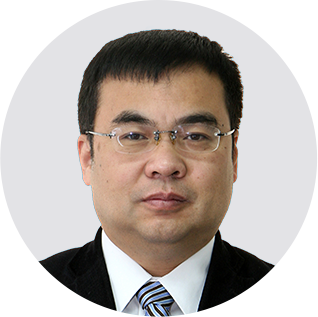
Fan Yubo
Director, National Research Center for Rehabilitation Technical Aids, Ministry of Civil Affairs
Dean, School of Biological Science and Medical Engineering, Beihang University
Fellow of the American Institute for Medical and Biological Engineering (AIMBE Fellow)
Former President of the Chinese Society of Biomedical Engineering
Chairman of the World Association of Chinese Bioengineers (WACBE)
Fan Yubo, Director of the National Research Center for Rehabilitation Technical Aids under the Ministry of Civil Affairs, and Dean of the School of Biological Science and Medical Engineering at Beihang University. He is a Chang Jiang Scholar Distinguished Professor, recipient of the National Science Fund for Distinguished Young Scholars, a member of the Ministry of Education’s Cross-Century Talent Program, a National Outstanding Scientific and Technological Worker, and a Fellow of the American Institute for Medical and Biological Engineering (AIMBE).
Leader of the Innovative Research Group on "Biomechanics of the Musculoskeletal and Circulatory Systems" funded by the National Natural Science Foundation of China; Leader of the Innovative Team on "Biomechanics of Implantable and Interventional Medical Devices" supported by the Ministry of Science and Technology; Former President of the Chinese Society for Biomedical Engineering (2008–2015); Chairman of the World Association of Chinese Biomedical Engineers (WACBE); Vice Chairman of the National Strategic Alliance for Technological Innovation in the Medical Device Industry.
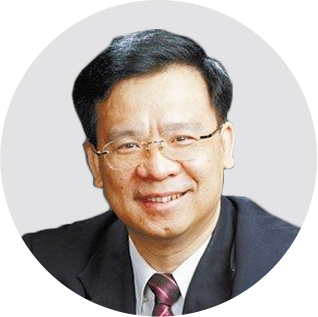
Huang Jian
Director, Department of Urology, Sun Yat-sen Memorial Hospital, Sun Yat-sen University
President-Elect, Urology Branch of the Chinese Medical Association
Vice President, Urology Specialist Branch of the Chinese Medical Doctor Association
Vice Chairman of the Laparoscopic and Endoscopic Branch, China International Exchange and Promotion Association for Medical and Healthcare
Professor Huang Jian has long been dedicated to basic and clinical research on urologic tumors, including bladder cancer and prostate cancer, making outstanding contributions to the application, innovation, and promotion of laparoscopic techniques in urology in China. He was the first in China to develop and refine novel surgical procedures such as laparoscopic radical cystectomy with orthotopic ileal neobladder, extraperitoneal approach for radical prostatectomy, and inguinal lymph node dissection for penile cancer. He pioneered high-difficulty laparoscopic surgeries, including laparoscopic radical cystectomy, various single-port laparoscopic procedures, 3D laparoscopic surgery in urology, and robot-assisted laparoscopic surgery, promoting and applying these techniques both domestically and internationally.
Professor Huang Jian has been honored with the First Prize of the Ministry of Education’s Awards for Outstanding Achievements in Scientific Research at Higher Education Institutions, the First Prize of the Guangdong Provincial Science and Technology Progress Award, the “Global Chinese Contribution Award in Urology” presented by the World Chinese Society of Urology, and the Wu Jieping Medical Award in Urology, the highest accolade in China’s urology field. He has presided over more than 20 research projects at national, provincial, and ministerial levels, published over 120 academic papers in renowned international journals and core domestic journals, co-authored more than 20 monographs, and obtained four national utility model patents.

Mohamed Bouri
École Polytechnique Fédérale de Lausanne
Head of the Robotics Laboratory
Academic Leader of the EU FP7 Robotics Project
Mohamed Bouri is a researcher at the Robotic Systems Laboratory of the École Polytechnique Fédérale de Lausanne (EPFL) in Switzerland. He has long been engaged in research on automated control of industrial robots and serves as an instructor for multiple robotics-related courses. During this period, he also acted as project manager for several robotics-related projects. In 2012, he participated in the assistive rehabilitation robot project at the Robotic Systems Laboratory of EPFL and served as the team leader for this project. Since 2010, Mohamed Bouri has filed numerous invention patent applications and published more than 80 academic papers, many of which have received Best Paper Awards and invention awards.
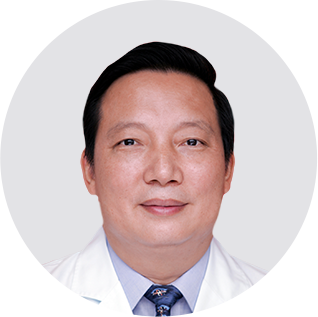
Cai Zhiming
Chief Scientist of the National “973” Program
Project Leader of the National “863” Program
Principal Investigator of the National Natural Science Foundation of China
Shenzhen Science and Technology Award “Mayor’s Prize”
“National Excellent Hospital Director” Title
Professor Cai Zhiming’s primary research focuses on the pathogenesis and translational medicine of urogenital tumors and male infertility. He has achieved notable success in applying systems and synthetic biology to investigate the relationship between genes and diseases. Professor Cai has published more than 100 SCI-indexed papers, including multiple articles as first author or corresponding author in prestigious international journals such as Nature, Nature Genetics, Nature Biotechnology, and Nature Methods. He designed a multi-gene, multi-target “composite target” microarray with independent intellectual property rights, which increased the sensitivity and specificity of urine-based bladder cancer detection from 60% to 96% and 95.5%, respectively.
Professor Cai Zhiming has received numerous awards, including the First Prize of Guangdong Provincial Natural Science Award (2016), the Second Prize of Guangdong Provincial Science and Technology Progress Award (2004, 2006, 2006), the Second Prize of the Chinese Medical Science and Technology Award (2014), the Second Prize of the Ministry of Education’s Natural Science Award (2015), and the “Mayor’s Award” of the Shenzhen Science and Technology Award (2013). He has also been honored with titles such as National Advanced Worker, Recipient of the National May 1st Labor Medal, Expert Enjoying Special Government Allowances from the State Council, National-Level Leading Talent, Pengcheng Outstanding Talent, and National Excellent Hospital Director.
Wang Ping'an
Chairman and Professor, Department of Computer Science and Engineering, The Chinese University of Hong Kong
Director, Center for Human-Computer Interaction, Shenzhen Institute of Advanced Technology, Chinese Academy of Sciences
Changjiang Scholar Distinguished Professor
Professor Wang Pingan is a Professor and Head of the Department of Computer Science and Engineering at The Chinese University of Hong Kong. He has served as the Director of the Research Centre for Virtual Reality, Visualization and Imaging at The Chinese University of Hong Kong since 1999, and as the Director of the Center for Human-Computer Interaction at the Shenzhen Institutes of Advanced Technology, Chinese Academy of Sciences, since 2006. In 2007, he was appointed as a Chang Jiang Scholar Distinguished Professor by the Ministry of Education of the People's Republic of China. In 2005, he received the “Best Paper Award” from the Institute of Electrical and Electronics Engineers (IEEE). He has published more than 350 papers, with his primary research interests focusing on surgical simulation and medical imaging.
Professor Wang holds a B.Sc. and an M.Sc. in Computer Science from the National University of Singapore, as well as an M.S. in Applied Mathematics and a Ph.D. in Computer Science from Indiana University, USA. His primary research interests include surgical simulation, medical imaging, and interactive visual graphics.

David Lau
Fellow of the Academy of Medicine, Singapore
Senior Visiting Consultant, Singapore General Hospital and Raffles Hospital
Dr. David Lau is an otolaryngologist with over 18 years of experience. He entered the National University of Singapore’s medical school in 2004 and became a Senior Visiting Consultant at Singapore General Hospital and Raffles Hospital in September 2012. From 2000 to 2002, Dr. David Lau established a laryngology fellowship at the University of British Columbia under Professor Murray Morrison.
Dr. David Lau has many years of clinical experience in otolaryngology, with particular expertise in the management of allergic rhinitis and sinus disorders. He has published numerous academic articles on laryngoscopy, otolaryngology, and head and neck surgery, earning widespread international recognition.
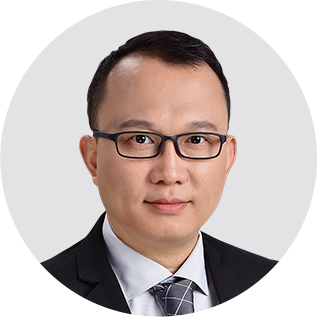
Wang Taifeng
COO, IBM Watson Cognitive Care
Mr. Wang Taifeng possesses extensive experience in IT industry financing, including but not limited to financial leasing. He is adept at structuring debt financing solutions by combining entrusted loans, trusts, factoring, and other instruments to serve emerging sectors such as IT, education, and telecommunications. Mr. Wang maintains strong professional networks, particularly within China’s rural credit cooperative system, city commercial banks, the tobacco industry, the education sector, and government agencies overseeing public security, taxation, and finance.
Mr. Wang Taifeng is deeply rooted in the development of traditional enterprise-level IT solutions. With nearly 15 years of experience with IBM products, he is well-versed in IT strategic design for big data center construction. He has developed governance, mining, and analysis solutions for more than four types of non-relational data in the context of new economies such as the internet. Mr. Wang also possesses consulting and planning experience for asset management systems in industries including banking, tobacco, and electric power. He firmly understands that the pacing, layering, and overall architecture of IT infrastructure determine the success or failure of IT initiatives.
Chee Kong CHUI
Associate Professor, Department of Mechanical Engineering, National University of Singapore
Chair, IEEE Engineering in Medicine and Biology Society, Singapore Chapter
Chee-Kong Chui is an Associate Professor in the Department of Mechanical Engineering at the National University of Singapore, where he supervises more than 20 graduate students in research projects spanning medical devices, robotics, imaging, and simulation. With over 20 years of experience in medical engineering research and development, his work encompasses mechanical, electronic, computer, and medical disciplines. The medical devices and systems he has developed have been tested in animal models and clinical trials. His interdisciplinary research has received multiple international awards, including the RSNA InfoRAD Award and the ECR CompuRAD Award.
Chee-Kong takes an integrated approach to surgical simulators and robot-assisted surgery. By leveraging advanced medical simulation systems, he develops patient-specific surgical plans that incorporate robotic manipulation. These simulation systems also play a significant role in the digital manufacturing of patient-specific medical devices. He has authored or co-authored more than 100 papers published in engineering, computer science, and clinical journals and conferences, including over 50 journal articles between 2007 and 2015. He is the inventor or co-inventor of five U.S. patents, with several additional patents pending. Chee-Kong received his Ph.D. from the Laboratory for Biomedical Precision Engineering at the University of Tokyo in 2004. Currently, he serves as the Chair of the IEEE EMBS Singapore Chapter.

Venue: Shenzhen, China
Conference Dates: October 29–30, 2016
The “2016 World Medical Robot Conference,” hosted by the World Association of Medical Robotics, is scheduled to take place in Shenzhen, China, on October 29–30. This inaugural global summit integrates scientific research, clinical practice, and industry development in the field of medical robotics. The event will be attended by more than 20 academicians from various countries, along with dozens of presidents of renowned hospitals worldwide and clinical experts who will deliver presentations and participate in discussions. Experts and scholars from prestigious domestic and international institutions—including the Swiss Academy of Technical Sciences (SAWT), the UK Royal Academy of Engineering, the Chinese Academy of Sciences, the Singapore Academy of Medicine, and the ROBO Medical Robotics Institute—will share insights on global trends in medical robot applications and research directions. They will engage in thematic discussions centered on the conference theme: “Technological Innovation Transforming Healthcare, Health Leading the Future.”