Romiplostim N01 Showcases Five Positive Studies at EHA 2026, Demonstrating Broad Potential in Platelet Management Across Multiple Clinical Scenarios

Qilu Pharmaceutical
Specialty Formulations and Active Pharmaceutical Ingredients (API) Developer
From June 11 to 14, the European Hematology Association (EHA) Annual Congress was grandly held in Sweden. At the conference,Romiplostim N01 (RuiliSheng®), a new generation of long-acting thrombopoietin receptor agonist independently developed by Qilu PharmaceuticalShowcasing Five Clinical Research Findings. The research data, spanning from hematopoietic stem cell transplantation to chemotherapy- and radiotherapy-related aplastic anemia, and further to cancer therapy-related thrombocytopenia, multidimensionally demonstrated positive signals in improving platelet engraftment efficiency and disease remission rates: the median time to platelet engraftment after allogeneic transplantation was shortened to 13 days, the cumulative engraftment rate at 60 days after umbilical cord blood transplantation reached 89.7%, and the overall remission rate at 6 months for chemotherapy- and radiotherapy-related aplastic anemia exceeded 90%. This article organizes and interprets the key data based on the research abstracts presented at the conference.
Study 1: Supportive Care for Umbilical Cord Blood Transplantation: Platelet Engraftment Rate at Day 60 Approaches 90%, with Controllable Safety (PF1117)
Principal Investigator: Zhu Xiaoyu, The First Affiliated Hospital of University of Science and Technology of China (Anhui Provincial Hospital)
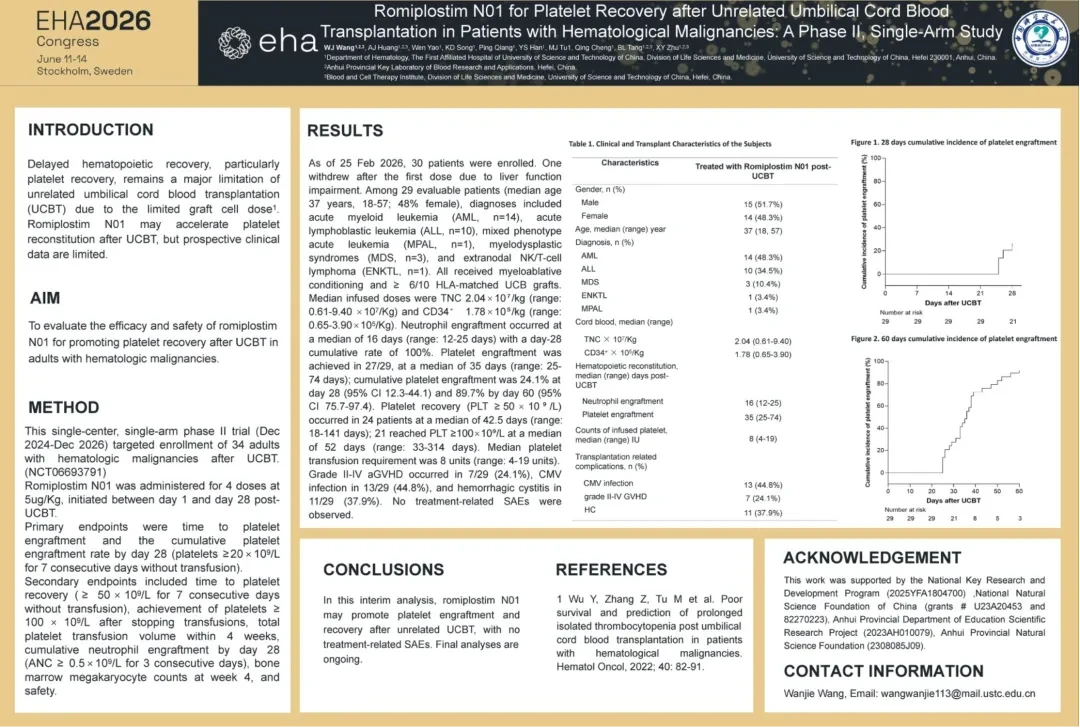
Research Content:Delayed platelet engraftment due to insufficient graft cell dose is a common challenge in unrelated umbilical cord blood transplantation (UCBT). This single-center, Phase II, single-arm study planned to enroll 34 adult patients with hematologic malignancies undergoing unrelated UCBT. Romiplostim N01 treatment was initiated 1–28 days post-transplantation at a dose of 5 μg/kg, administered for a total of four doses. The primary endpoints were time to platelet engraftment and the cumulative platelet engraftment rate on Day 28 post-transplantation. As of February 2026, 30 patients had been enrolled; one patient withdrew due to liver function impairment, leaving 29 patients eligible for evaluation. The enrolled patients presented with various hematologic malignancies and all received myeloablative conditioning followed by transplantation with umbilical cord blood units matched at ≥6/10 HLA loci. Results showed a median neutrophil engraftment time of 16 days, with a cumulative engraftment rate of 100% on Day 28. Platelet engraftment was achieved in 27 patients, with a median time to platelet engraftment of 35 days; the cumulative platelet engraftment rates on Day 28 and Day 60 were 24.1% and 89.7%, respectively. The median times for platelet recovery to ≥50×10⁹/L and ≥100×10⁹/L were 42.5 days and 52 days, respectively, with a median platelet transfusion requirement of 8 units. Regarding safety, common post-transplant complications such as acute graft-versus-host disease (aGVHD), cytomegalovirus (CMV) infection, and hemorrhagic cystitis were observed and resolved following clinical management. No drug-related serious adverse events occurred. Final data analysis for this study is currently ongoing.
Research Brief:Due to the limited cell count in grafts, hematopoietic reconstitution—particularly delayed platelet recovery—remains a key issue restricting the clinical application of unrelated umbilical cord blood transplantation. This interim data confirms that Romiplostin N01 can effectively promote platelet hematopoietic reconstitution after umbilical cord blood transplantation, with the proportion of platelet engraftment steadily increasing as the observation period extends. In terms of safety, the drug did not increase additional serious adverse events and demonstrated good compatibility with the overall transplantation treatment regimen. This study provides new practical insights for post-transplant platelet support therapy in unrelated umbilical cord blood transplantation and accumulates valuable clinical data for optimizing comprehensive postoperative management strategies for such patients. We look forward to the final study results further substantiating its clinical value.
Study 2: New Explorations in Allogeneic Transplantation: Median Time to Platelet Engraftment Shortened to 13 Days (PF1136)
Principal Investigator: Jiang Erlie, Institute of Hematology & Blood Diseases Hospital, Chinese Academy of Medical Sciences (Institute of Hematology, Chinese Academy of Medical Sciences)
Sub-Investigator: Pang Aiming, Institute of Hematology & Blood Diseases Hospital, Chinese Academy of Medical Sciences (Institute of Hematology, Chinese Academy of Medical Sciences)
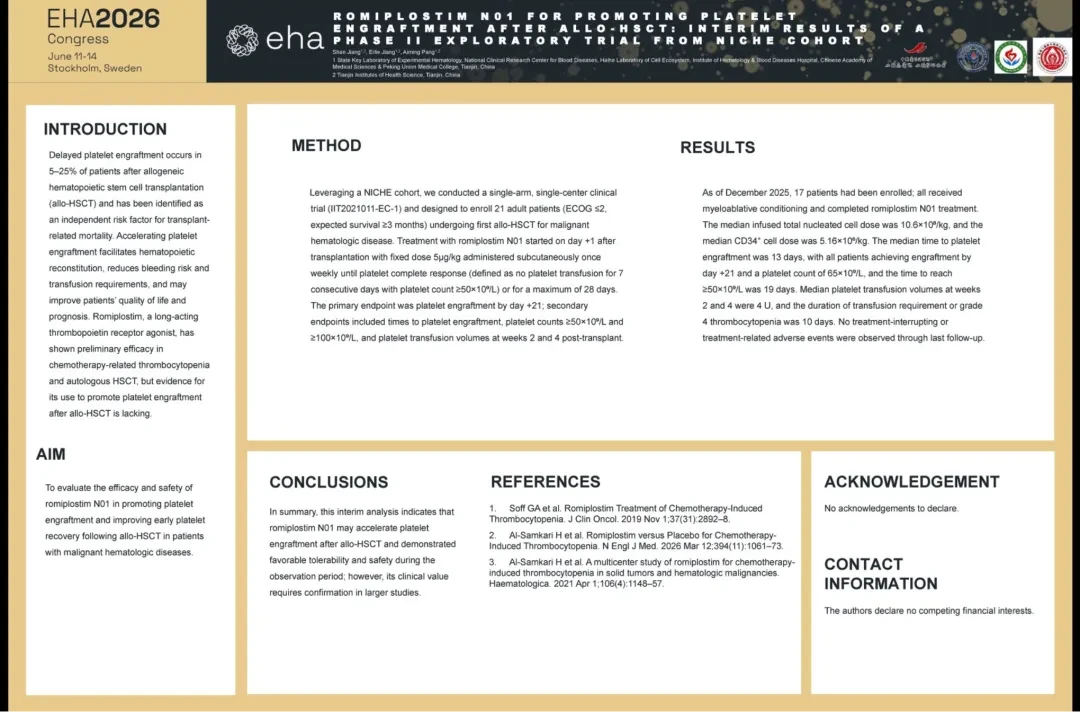
Research Content:The incidence of delayed platelet engraftment after allogeneic hematopoietic stem cell transplantation (allo-HSCT) ranges from 5% to 25%, representing a risk factor that adversely affects transplant prognosis. Evidence-based data on the use of long-acting thrombopoietin receptor agonists in this setting are relatively limited. This Phase II, single-arm, exploratory study planned to enroll 21 patients with hematologic malignancies undergoing their first allo-HSCT. Starting from Day 1 post-transplantation, patients received weekly subcutaneous injections of romiplostim N01 at a dose of 5 μg/kg for up to 28 days. The primary endpoint was platelet engraftment status on Day 21 post-transplantation. As of December 2025, all 17 enrolled patients had completed treatment, and all had undergone myeloablative conditioning. Data showed that the median time to platelet engraftment was 13 days, with all patients achieving platelet engraftment within 21 days post-transplantation. The median time to reach a platelet count ≥50×10⁹/L was 19 days. The median platelet transfusion requirement was 4 units at both Week 2 and Week 4 post-transplantation, and the median duration of platelet transfusion dependence was 10 days. No drug-related adverse events or adverse events leading to treatment discontinuation occurred during the follow-up period.
Brief Research Review:Delayed platelet engraftment significantly increases the risk of bleeding and the incidence of transfusion-related complications after allogeneic hematopoietic stem cell transplantation, while clinical experience with long-acting thrombopoietin receptor agonists (TPO-RAs) in this setting remains limited. Our data demonstrate that Romiplostin N01 effectively shortens the time to platelet engraftment and reduces the duration of platelet transfusion dependence, with a favorable overall safety profile. These exploratory findings provide valuable evidence for optimizing post-transplant hematopoietic support strategies and improving patients’ postoperative recovery. Further large-scale studies are warranted to validate its long-term efficacy and safety.
Study 3: Chemoradiotherapy-Associated Aplastic Anemia: Overall Response Rate Exceeds 90% at Six Months with Rapid Onset of Action (PS1790)
Principal Investigator: Han Bing, Peking Union Medical College Hospital, Chinese Academy of Medical Sciences
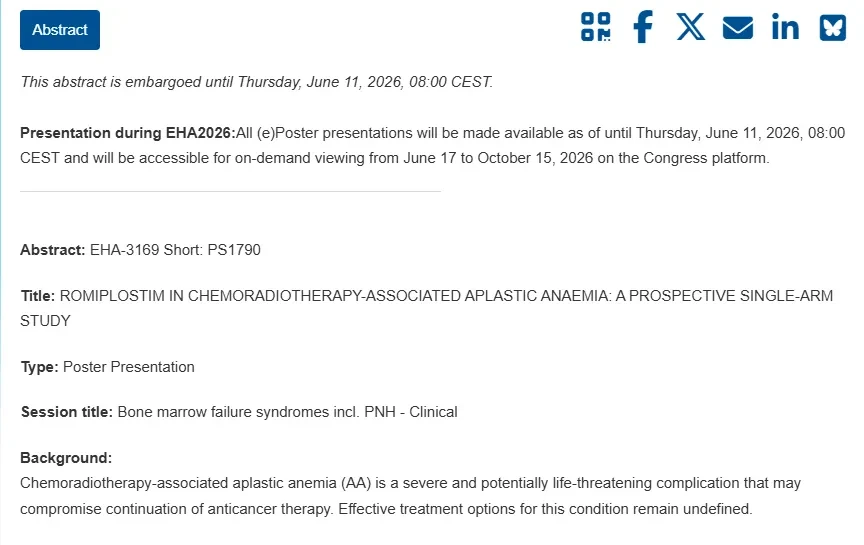
Research Content:Radiotherapy- and Chemotherapy-Associated Aplastic Anemia Is a Severe Treatment Complication Lacking Standard Therapeutic Regimens. This prospective, single-center, single-arm study enrolled 69 adult patients who developed secondary aplastic anemia at least three months after completing radiochemotherapy. Nearly half of the cases were classified as severe and non-severe, respectively, with a median follow-up duration of 16 months. The primary endpoint was the overall response rate (ORR) at six months of treatment. Results showed an ORR of 84.1% at three months and 90.9% at six months. The median time to overall response was 2.0 months, and the median time to complete response was 3.6 months. During follow-up, the relapse rate was 4.3%, with one case exhibiting clonal evolution. Adverse events were predominantly grade 1–2 arthralgia, fatigue, and myalgia. No thromboembolic events occurred, and no patients discontinued treatment due to adverse events.
Brief Research Commentary:Radiotherapy- and Chemotherapy-Associated Aplastic Anemia is a severe complication during cancer treatment, which not only threatens patients' lives but also interrupts standardized anti-tumor processes. Currently, there is a lack of standardized intervention protocols in clinical practice. The results of this study indicate that Romiplostim can rapidly improve hematological parameters, with remarkable long-term remission outcomes. Adverse reactions were predominantly mild to moderate, and overall patient tolerance was good. Addressing this challenging clinical issue, the study confirms the therapeutic potential of Romiplostim, opening up new directions for the management of radiotherapy- and chemotherapy-associated aplastic anemia. It also provides important evidence for the comprehensive management of cancer patients with severe cytopenia. Long-term prognosis data remains worthy of continued attention.
Study 4: Autologous Transplantation in Myeloma: All Patients Achieved Platelet Engraftment Within 21 Days (PB4293)
Principal Investigator: Ge Jian, The First Affiliated Hospital of Anhui Medical University
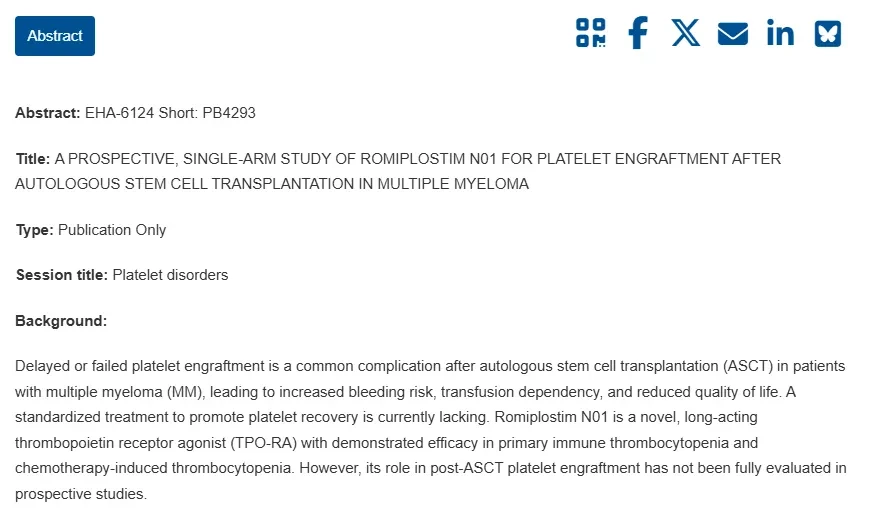
Research Content:Delayed platelet engraftment after autologous stem cell transplantation is a common complication in patients with multiple myeloma. This prospective, multicenter, single-arm study plans to enroll 100 patients with newly diagnosed multiple myeloma. Starting from day 1 post-transplantation, patients will receive weekly subcutaneous injections of romiplostim N01 at 3 μg/kg for up to 6 weeks. As of January 2026, 20 patients have been enrolled, all of whom received melphalan conditioning prior to autologous transplantation. Data show that the median time to platelet engraftment was day 13 post-transplantation, and all patients achieved platelet engraftment within 21 days post-transplantation. Platelet counts recovered to ≥50×10⁹/L in 65% of patients, with an average platelet transfusion requirement of 3.9 apheresis units. No drug-related adverse events were observed during treatment.
Brief Research Commentary:Autologous hematopoietic stem cell transplantation (auto-HSCT) is a cornerstone treatment for multiple myeloma. Suboptimal platelet engraftment post-transplantation directly compromises overall transplant efficacy and patient recovery. Current enrollment data indicate that Romiplostin N01 effectively accelerates platelet recovery in myeloma patients following transplantation, shortens the engraftment period, and significantly reduces platelet transfusion requirements, with a favorable short-term safety profile. These findings corroborate the therapeutic advantages of this agent in supportive care after auto-HSCT, offering a new option for managing platelet reconstitution in multiple myeloma patients post-transplant. Continued enrollment and follow-up will further clarify its broader clinical value in this population.
Study 5: Effective Switch Therapy: Remission Rate of 88.2% After Medication Switch in Refractory Thrombocytopenia (PB4298)
Principal Investigator: Chen Miao, Peking Union Medical College Hospital, Chinese Academy of Medical Sciences
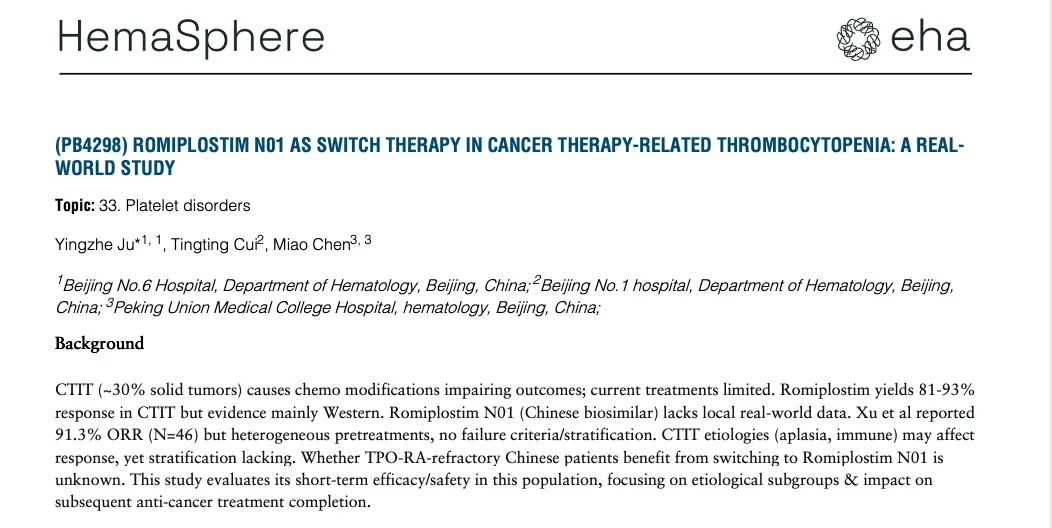
Research Content:Chemotherapy-induced thrombocytopenia often necessitates adjustments to chemotherapy regimens, and treatment options are limited for patients who have previously responded poorly to other thrombopoietin receptor agonists. This dual-center, real-world study enrolled 51 patients who had failed or exhibited an inadequate response to previous treatments with similar agents and were subsequently switched to romiplostin N01. The results showed an overall response rate of 88.2% and a complete response rate of 68.2% after four weeks of treatment; efficacy varied across subgroups with different etiologies. Some patients who initially did not respond to low doses achieved a response after dose escalation. Adverse events were mild and self-limiting, with no thrombotic events reported; only one patient discontinued treatment due to adverse events. Among the 42 patients who required continued anticancer therapy, 88.1% successfully completed subsequent treatment cycles.
Brief Research Commentary:Chemotherapy-induced thrombocytopenia (CTIT) is a highly prevalent complication in the treatment of solid tumors. For refractory patients who respond poorly to other thrombopoietin receptor agonists (TPO-RAs), clinical treatment options are very limited. This real-world study confirms that romiplostim N01, as a second-line switch therapy, can effectively increase platelet response rates, helping most patients successfully continue their anticancer treatment without serious adverse events such as high-risk thrombosis. Meanwhile, differences in efficacy among subgroups with different etiologies provide a reference for conducting etiology-stratified individualized treatment in clinical practice. This study enriches the real-world evidence of domestically produced romiplostim in the field of refractory CTIT and improves the system of hematologic management schemes throughout the entire course of tumor treatment.
Conclusion
Based on the research data presented at this year’s EHA, Romiplostin N01 has demonstrated favorable efficacy and safety profiles across multiple clinical scenarios. Currently, several studies are ongoing with continued patient enrollment and long-term follow-up. As further data accumulate, Romiplostin N01 is expected to provide richer evidence-based references for thrombocytopenia-related diseases and post-transplant supportive care. Qilu Pharmaceutical will continue to collaborate closely with clinical experts to deeply explore the clinical application value of Romiplostin N01, aiming to bring high-quality and accessible treatment options to more patients with hematologic disorders and cancers.
Layout Editor: Oncology News - jyy