

Cleveland Clinic Unveils Top 10 Medical Innovations Set to Transform Healthcare in 2017
Cleveland Clinic is one of the top integrated healthcare institutions in the United States, with most of its specialties ranking among the top ten nationwide. In the latest 2016–2017 “Best Hospitals” rankings published by U.S. News & World Report, Cleveland Clinic was ranked second in the nation.
Cleveland Clinic: Founded on February 28, 1921, and located in Cleveland, Ohio, USA, the clinic ranks among the top hospitals in the United States for the treatment of conditions related to nephrology, urology, rheumatology, orthopedics, endocrinology, and gastroenterology. As a non-profit, multispecialty academic medical center integrating clinical care, patient services, research, and education, it has become one of the busiest and most innovative medical centers in the world.
On October 27 (Beijing Time), the Cleveland Clinic unveiled its list of the Top 10 Medical Technology Innovations for 2017. The report highlighted that the emergence of smart vehicles designed to reduce accidents and injuries has significantly lowered healthcare costs; immunotherapy is further helping children conquer cancer; and bioresorbable stents that automatically degrade after fulfilling their function are among a series of “cutting-edge technologies” poised to transform healthcare and accelerate therapeutic innovation over the coming year.
It is reported that, in order to make the list as fair and forward-looking as possible, Cleveland Clinic assembled a team of more than 100 doctors and researchers, most of whom are leaders in their respective specialized fields. From nearly 200 nominations, the team selected ten innovations that possess significant clinical relevance and commercial value while benefiting a broad patient population.
Below is the list of “Top 10 Medical Technology Innovations of 2017” released by the Cleveland Clinic.
When it comes to life-saving potential and market opportunities, the gut microbiota is a “gold mine.” Trillions of bacteria form communities within our bodies—the microbiome—and, driven by market demand, their mysteries are being unraveled at a rapid pace.
Over the past decade, the most significant scientific discovery has been that our microbiota possess their own “mind.” They release chemicals that interfere with food digestion, orchestrate the absorption and utilization of medications, and even influence the progression of diseases.
Biotechnology companies that once focused on the genomics market are successively pivoting to develop new microbial diagnostic and therapeutic methods, as well as leveraging “probiotic” products to prevent harmful microbial imbalances.
Experts predict that in 2017, microbiome-related elements will be the most promising and profitable frontier for research and applications in the healthcare industry.
More than a decade ago, a new class of diabetes drugs, marketed with the promise of lowering blood glucose levels, surged onto the market. However, these agents have had minimal impact on patients with type 2 diabetes: half of them die from cardiovascular complications, and 70% of individuals aged 65 and older are affected by this condition.
In 2016, several new medications began to significantly reduce mortality rates. The SGLT2 inhibitor empagliflozin was proven to lower plasma glucose levels by inhibiting renal SGLT2, thereby reducing renal glucose reabsorption and increasing urinary glucose excretion, independent of β-cell function and insulin resistance; whereas liraglutide exerts comprehensive effects on multiple organs.
Expert Forecast: In 2017, the diabetes drug landscape will undergo a significant transformation, with further advances in research on type 2 diabetes and its comorbidities substantially improving patient survival outcomes.
In 2016, among the approximately 16,000 children and adolescents diagnosed with cancer, more than one-quarter had leukemia.
The good news, however, is that cell-based immunotherapies capable of curing leukemia and non-Hodgkin lymphoma are about to enter the market. Chimeric antigen receptor T-cell (CAR-T) therapy is a typical example of such immunotherapy, in which a patient’s T cells are extracted and genetically engineered to seek out and destroy tumor cells. These modified T cells identify specific antigens, proliferate, attack and kill cancer cells, and then persist in the body to help minimize the risk of recurrence.
CAR-T immunotherapy has left a deep impression. Some studies focusing on acute lymphoblastic leukemia (ALL) have reported a remission rate of 90%. This breakthrough therapy is expected to be approved by the FDA in 2017 and will trigger a wave of approvals for other blood cancer and lymphoma treatment products.
Experts predict that cellular immunotherapy will one day replace chemotherapy and other treatments with severe side effects, offering the body a chance at rebirth.
Oncologists have long dreamed of eliminating subjective elements from biopsy reports, and now their dream may finally come true. Blood tests known as “liquid biopsies” are used to reveal the characteristics of circulating tumor DNA (ctDNA) in patients’ bodies. This DNA is shed from tumors into the bloodstream. The advantage of ctDNA is that it is 100 times more abundant than tumor cells.
Although this research is still ongoing, the market is poised to welcome this revolutionary cancer test. Several companies have developed test kits that are set to hit the market this year, with projected annual sales reaching $10 billion.
“Liquid biopsy” has boundless applications and is hailed as the flagship technology of the U.S. federal government’s “Cancer Moonshot” initiative. Experts believe that liquid biopsy is poised to become a routine component of annual health checkups for the general population.

Among the 38,300 fatal car crashes in 2015, motor vehicle accidents remained the leading cause of death and disability, as well as the number one driver of healthcare expenditures. In the United States alone, medical costs attributable to car accidents reached nearly $23 billion in a single year.
Innovators in Detroit and Silicon Valley believe that, in the near future, medical costs resulting from car accidents will become negligible, thanks to the imminent launch of new, automated, and highly safe smart vehicles. It is projected that safe intelligent technologies will surge in 2017, advancing a broader vision: eliminating all human error from vehicular transportation.
Although safety and legal issues surrounding private vehicles, autonomous cars, and related software persist, 2017 is expected to be the year when autonomous vehicles go mainstream. Could 2017 mark the end of car accidents? It is more likely to be a groundbreaking year for safe driving.
For decades, physician appointment scheduling and hospital inefficiencies have been the laughingstock of the healthcare system. When patients face long waits for payments and insurance reimbursements, they are likely to ask, “Why can’t these departments communicate with each other?” or “Why can’t the machines within the same hospital be interconnected?”
For years, the answer has been “It’s complicated.” Digital interoperability is complex due to the need to balance privacy, security, and accuracy in healthcare delivery, which also makes communication between different systems more difficult and even poses challenges for some communication software companies seeking to enter the healthcare industry.
In 2017, we may be able to put an end to the fragmented and complex healthcare networks. FHIR (Fast Healthcare Interoperability Resources) is a new tool that not only manages clinical data such as images and medications but also focuses on administrative data, including billing and demographics. This could give rise to an entirely new approach to health information technology.

Loss of hope is a hallmark symptom of depression. Medications and therapies have advanced to help balance or modulate serotonin, norepinephrine, and other neurotransmitters. However, for one-third of patients with depression, pharmacological treatments are ineffective, leaving only alternative options such as electroconvulsive therapy or other interventions. In most cases, the ultimate outcome is suicide.
In 2013, ketamine, a commonly used anesthetic and a substance frequently consumed as a party drug in the 1960s, was found to selectively inhibit N-methyl-D-aspartate (NMDA) receptors on neurons. Preliminary studies revealed that 70% of patients with treatment-resistant depression (TRD) experienced symptom relief within 24 hours after receiving low-dose ketamine infusions. This marked the first medication capable of rapidly treating severe depression.
The FDA has granted Fast Track designation to NMDA receptor–targeting drugs similar to ketamine, such as esketamine, which received Breakthrough Therapy designation and was expected to be available for patient treatment in 2017.
Experts state that in the United States alone, nearly 43,000 people die by suicide due to depression each year, and the demand for antidepressant medications within the medical community has reached an unprecedented high.
This is a new tool about to serve surgeons, with some even calling it their “superpower.”
For years, surgeons have had to rely on microscopes or other imaging systems to perform surgical procedures. Even so, they often depend on their own eyesight and experience to carry out certain precise tasks. However, due to mental fatigue, limited peripheral vision, and muscle tension in the back and neck, this working environment is in urgent need of transformation.
Over the past year, two of the most complex surgical specialties—ophthalmology and neurology—have begun trialing high-resolution 3D visualization headsets. These stereoscopic systems can simultaneously leverage data to generate visualization templates that guide surgeons in performing corresponding procedures.
Along these lines, software companies are developing augmented reality glasses that display holographic images of human anatomy. In the future, the era of cadaver labs in medical schools will come to an end.
Expert Prediction: 2017 Will Be a Breakout Year for Virtual Reality in Medical Applications, Pushing the Boundaries of Surgical Reality.
In the mountainous regions of Ecuador, the hilly areas of Tanzania, and even rural communities in the United States, most women are helpless in the face of deadly cervical cancer. Worse still, they lack even the means to detect whether they have this type of cancer.
It is reported that most sexually active women are susceptible to human papillomavirus (HPV) infection. Certain HPV strains have a 99% likelihood of progressing to cervical cancer, which is the most common malignant tumor in women aged 35 and younger.
Despite significant advances in HPV prevention and treatment, these benefits are limited to a narrow population—namely, women who have access to HPV testing and vaccination.
Cervical cancer prevention is one of the United Nations’ Millennium Development Goals. In 2017, an ambitious care approach will be widely rolled out. Scientists have developed HPV testing kits, which include sample tubes, swabs, and instructions. Women can perform self-testing, mail the samples back to the laboratory, and receive their test results by mail.
Experts believe that 2017 will be a year of significant growth for self-administered HPV testing, marking the largest-scale strategy to date for cervical cancer prevention.
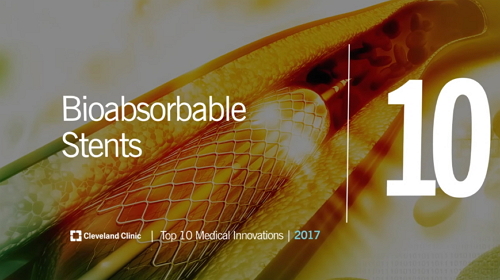
Each year, more than 600,000 metallic coronary stents are implanted in the chest to treat coronary artery blockages. In most cases, the stents remain in place permanently, even after they have fulfilled their purpose.
Undoubtedly, stents left in the body for extended periods can impede natural blood flow and lead to other complications, such as blood clots.
What if the stent could disappear? This July, the first bioresorbable stent was approved in the United States. Made from naturally dissolving polymers, the stent is absorbed by the body two years after treating arterial blockages, leaving behind a healthy, natural artery. This frees patients from anticoagulant medications and allows for a broader range of medical treatment options.
Experts believe that more bioresorbable stents will be approved in the future, and the market potential for bioresorbable scaffolds will reach $2 billion within six years. 2017 was the “year one” when this technology became a game-changer.
Reprinted from BioExplorer