

Stanford Neuroscientist-Founded BrainCheck Secures $3M Seed Funding to Expand Dementia Screening App
Concussion Medical Management Company Based in HoustonBrainCheckRecently Acquired$3 million investment, as part of its seed funding round,The investors were not disclosed; it was only revealed that one of the investors isBrett Giroir, a renowned entrepreneur in the field of strategic innovation in global biosciences. The company plans to expand its mobile neurocognitive assessment software into two markets. The app was initially developed to screen athletes for concussions; now, the company intends to enter the elderly care market by incorporating dementia screening features into the app.
BrainCheck was founded in 2014 by Stanford neuroscientist David Eagleman, with Yael Katz serving as its CEO. The principle behind its abnormal brain screening is to use game-based testing software on iPads or PCs to measure reaction time, visual processing, cognitive function, coordination, and memory, which can be completed in just a few minutes. When using this software, the app first models your baseline brain function, and then uses other features to detect signs of brain impairment after a traumatic brain injury or during treatment.
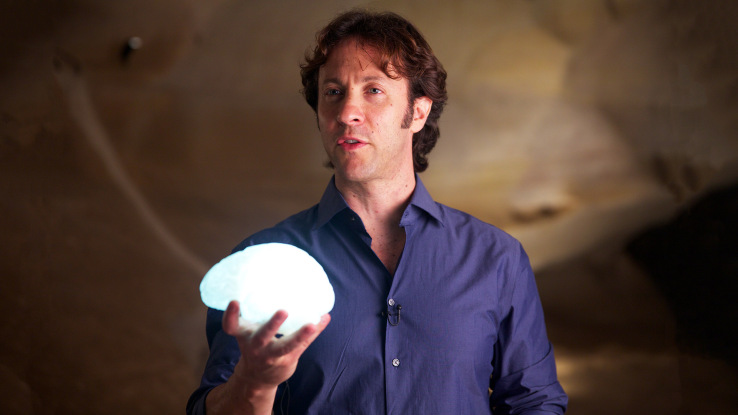

Founder Dr. David Eagleman and CEO Yael Katz
High Incidence of Concussions in Athletes Emerges as a Critical Pain Point
Dr. Eaglemen initially developed this app to prevent and control concussions in athletes, as this group indeed has a high incidence of concussions. As early as 2009, Washington State enactedZackery LystedtThe legislation stipulates that athletes who have sustained head injuries must not resume training or compete until they obtain written clearance from a physician. Consequently, Washington State became the first jurisdiction in the United States to take action aimed at reducing the incidence of concussions among student-athletes. However, current data indicate that nearly 20% of U.S. high school athletes still suffer concussions during training each year, and more alarmingly, 39% of injured athletes choose to continue training despite their condition.
Currently, BrainCheck partners with more than 40 large organizations across the United States, including schools, hospitals, the YMCA, and other youth sports organizations. Thousands of student-athletes are now using the BrainCheck app. “For professional athletes, teams have physicians who can provide diagnostic and therapeutic care; however, such luxurious resources are not available to many students and amateur athletes,” explained Dr. Eaglemen, founder of BrainCheck. Dr. Eaglemen currently serves as the company’s Chief Technology Officer and is a Professor of Psychiatry and Behavioral Sciences at Stanford University School of Medicine.
BrainCheck The usage method is as follows: young athletes undergo baseline cognitive testing before sustaining any brain injury, with the results archived in the software database; then, after a head impact or trauma, BrainCheck is used to assess changes in cognitive behavior. For athletes or individuals who have undergone long-term sports training, this tool holds substantial practical utility, as alterations resulting from brain injury can sometimes be subtle and easily overlooked, leading to delayed treatment; by the time the condition deteriorates, it may be too late for effective intervention.
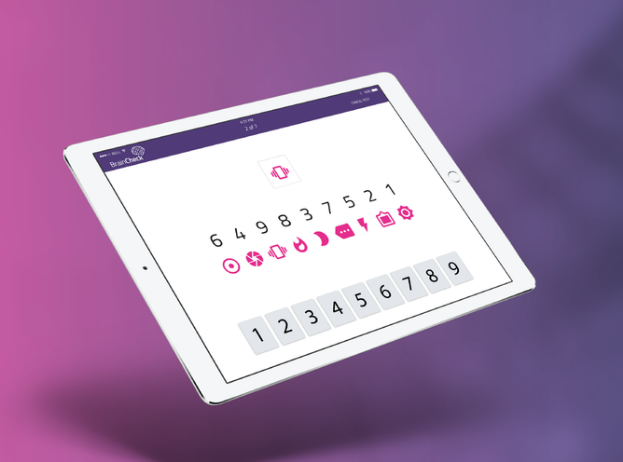
BrainCheck: An App Developed Based on Neurocognitive Assessment Principles
Now, the 2017 U.S. national budget plans to allocate $5 million for the Centers for Disease Control and Prevention (CDC) to establish a nationwide concussion surveillance system, aiming to accurately assess the population affected by mild traumatic brain injury across the country. The founder of BrainCheck stated that their software has already accumulated substantial relevant data and corresponding neurocognitive research findings, which will be utilized in this survey.
New Directions in Alzheimer's Disease Detection
BrainCheck has been focusing on concussion detection for two years. Now, the company aims to leverage its concussion assessment technology to develop new software for detecting Alzheimer’s disease, with an expected launch in January 2017. According to Alzheimer’s Disease International, there are currently approximately 46.8 million people worldwide living with dementia. Yael Katz, CEO of BrainCheck, pointed out that “this number will double over the next 20 years.”
As is well known, dementia is a slowly progressive degenerative disease, in which patients’ cognitive abilities gradually decline over an extended period. BrainCheck stated that their goal in developing Alzheimer’s disease detection is to enable long-term identification and measurement of brain changes in older adults, thereby empowering individuals with greater control over their own brain health and ultimately allowing physicians to deliver “personalized neuromedicine treatments” tailored to individual patients.
BrainCheck’s dementia screening app is more appropriately positioned at this stage as a “health status recorder” rather than a clinical diagnostic tool. However, the company is making forays into professional diagnostics and plans to collaborate with the FDA in the near future to further its research, aiming to have its brain health assessment tool classified as a Class II medical device.
“Concussions and Alzheimer’s disease are both severe brain disorders, urgently requiring the development of better treatment options,” said an early investor in BrainCheck.George McLendonAs he put it, he is the former Provost of Rice University. “BrainCheck has established a user-friendly platform that raises awareness of brain health and enables anyone to self-assess their cognitive function.”
Investors in this seed financing roundBrett GiroirIt is believed that, against the backdrop of accelerating global population aging, early detection and early treatment of dementia are critically important. The dementia screening feature currently under development by BrainCheck is poised to bring specialized neuropsychological assessment technology to the general public on an unprecedented scale.
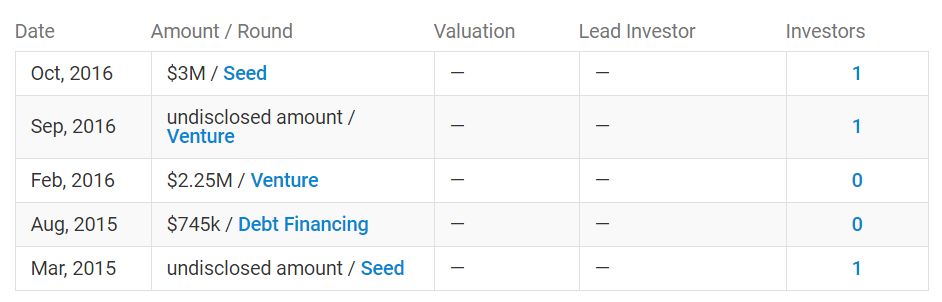
BrainCheck has raised over $5.99 million in funding since its inception
BrainCheck has raised over $5.99 million in funding to date,Investors also include seed-stage investment firms.DreamIt VenturesandTMCxAcceleratoretc.