

Haodf.com Shifts from Light Consultation to Internet Hospital: CEO Wang Hang Unveils New Strategic Vision
In early October, Haodaifu Online was suddenly hit by rumors of “large-scale” layoffs, sending shockwaves through the mobile healthcare community. The company promptly denied these claims, stating that the departure of some employees was part of routine organizational and staffing adjustments related to the establishment of its new Yinchuan Smart Internet Hospital. Meanwhile, it also posted numerous job openings for operational roles at the internet hospital.
From traditional online consultations and appointment/referral services to the genuine implementation of online diagnosis and treatment, Haodf Online has undergone a significant transformation in its business model. Why did Haodf Online venture into the field of clinical diagnosis and treatment?How can new and existing businesses be integrated? What is the actual level of difficulty in online diagnosis and treatment? With these questions in mind,A VCBeat (WeChat ID: vcbeat) reporter held a face-to-face interview with CEO Wang Hang, who elaborated on the reasons behind the company’s strategic adjustments and provided an in-depth analysis of Haodf Online’s Internet Healthcare 2.0 model as well as its future 3.0 model. These valuable insights may help the mobile internet healthcare industry identify new directions.

Haodf Online, which boasts an extensive pool of physician resources, has adjusted its strategic direction by launching an internet hospital, a move that aligns with CEO Wang Hang’s long-standing vision to develop “Internet Healthcare 2.0.”
As a pioneer in internet healthcare, Haodf Online has been in operation for ten years since its inception. Among the 2 million licensed physicians across China, Haodf Online has profiles for 470,000 doctors, 130,000 of whom have completed real-name authentication and registration on the platform to provide consultation services to patients. In April this year, Haodf Online officially signed an agreement with the Yinchuan Municipal People’s Government to jointly establish the Yinchuan Smart Internet Hospital, marking its transformation from a medical consultation platform into a genuine medical diagnosis and treatment platform.
Why make this strategic shift? Wang Hang was direct in his response to our question: it is essentially to address the long-standing challenge of profitability in the industry.
“There has long been a prevailing view in the internet healthcare sector that patient-finding and consultation services, with appointment registration and medical consultations as their core business models, are incapable of achieving profitability. For Haodf Online in the past, achieving profitability was indeed a challenge. However, since profitability is an essential goal for any enterprise, this has driven the significant strategic moves we have undertaken this year,” said Wang Hang.
The ten-year development trajectory of Haodf.com can be divided into two phases. The period from 2006 to 2012 was an exploratory phase, while the period from 2012 to 2016 marked a phase of rapid industry expansion. Founded in 2006, Haodf.com is the earliest and largest online medical consultation platform in the industry. This initial phase represented a period of foundational accumulation and learning for Haodf.com, which secured its first angel investment in 2007. In the early days, internet-based healthcare was largely unfamiliar to the public; both enterprises and investors were navigating uncharted territory, grappling with how to establish viable business models, achieve profitability, and ensure sustainable growth. With no proven benchmarks to reference, the path forward remained unclear to all stakeholders. Around 2012, Haodf.com’s board of directors and management team engaged in extensive discussions. By then, the company had been operating for six years without identifying a robust profit model. Although various ideas had been proposed, actual revenue remained minimal.
Fortunately, two favorable opportunities emerged at this juncture, alleviating some of the company’s challenges. First, the widespread adoption of smartphones triggered a surge in mobile healthcare. Compared with the PC era, the online population grew substantially, invigorating the entire capital market as the internet demographic dividend took hold. The second opportunity was the new healthcare reform initiative, first proposed in 2009 and gradually implemented starting in 2012. These two forces combined to channel investment into the mobile healthcare sector, spurring the emergence of numerous startups and thereby easing the pressure on Haodf Online to demonstrate a clear profitability model.
“Although the issue of the profitability model remains unresolved, confidence has strengthened, with a general belief that new directions will emerge as the market expands,” said Wang Hang.
After two to three years of rapid development, the entire capital market cooled down by 2016, prompting the mobile health industry to refocus on profitability. This period of rapid growth had created certain bubbles within the sector. Therefore, at this current stage, the industry must inevitably consolidate and address several key issues. First, what is the business model? Second, what is the growth model, and how can the business model be effectively implemented?
In the past, Haodf Online focused exclusively on peripheral healthcare services. Its current entry into the clinical diagnosis and treatment sector signifies a fundamental transformation of its business structure. Previously, Haodf Online merely provided patient consultations; when it came to diagnosis or prescription issuance, physicians would advise patients to seek in-person examinations and diagnoses with them offline or to consult other local physicians for clinical care. Wang Hang refers to this business model as "Internet Healthcare 1.0." But what about now? With clinical activities taking place online, physicians can proceed further to provide diagnoses and issue prescriptions. This change is substantial, indicating that Haodf Online’s operations have penetrated deeper into a new phase—what is known as "Internet Healthcare 2.0."
Patients are willing to pay for consultation services, but how much are they actually willing to spend? For most patients, the upper limit for consultation fees ranges from tens to one hundred yuan. If telephone consultations with doctors cost several hundred yuan, many patients would hesitate.“In the past, some patients would say, ‘I come to Haodf Online for medical consultations. The doctors here are national-level experts, and their advice is highly reliable. However, they cannot prescribe medications for me, so I still have to visit a hospital in person. The services provided on this platform are therefore limited—I cannot obtain prescriptions, undergo tests, or receive surgical procedures, which necessitates a trip to an offline hospital.’ This inability to complete payment for follow-up services made it difficult to establish a sustainable business cycle for online consultations.” Wang Hang candidly shared with us the most significant issue in Haodf Online’s previous business model.

Real-time Monitoring of Concurrent Consultation and Triage Data on the Haodf Online Platform
Prior to this, Haodf Online facilitated 200,000 doctor-patient interactions per day, of which 95% were free and only 5% were paid transactions. Consequently, during the 1.0 era of internet healthcare, Haodf Online’s revenue scale was limited, making it impossible to achieve a sustainable business cycle or break-even point. Even if some small-scale mobile health companies managed to barely reach break-even, they were essentially unable to generate profits.
If we enter the era of Internet Healthcare 2.0, delving deep into the diagnosis and treatment process to help patients resolve certain therapeutic issues online, then the entire healthcare-seeking experience can be fully addressed online. In this context, the value provided by Haodf Online becomes entirely different. User expenditure can expand from tens of yuan to hundreds of yuan, leading to an order-of-magnitude growth in revenue scale, thereby providing a solution to profitability challenges. Therefore, from a business model perspective, Haodf Online complements all services offered by a traditional hospital through the integration of online and offline operations.As a leading figure in the industry,Haodf OnlineBy leveraging the substantial pool of physicians and users accumulated through its 1.0-era consultation platform, it was relatively easy to subsequently utilize these resources to establish a closed-loop internet healthcare ecosystem.
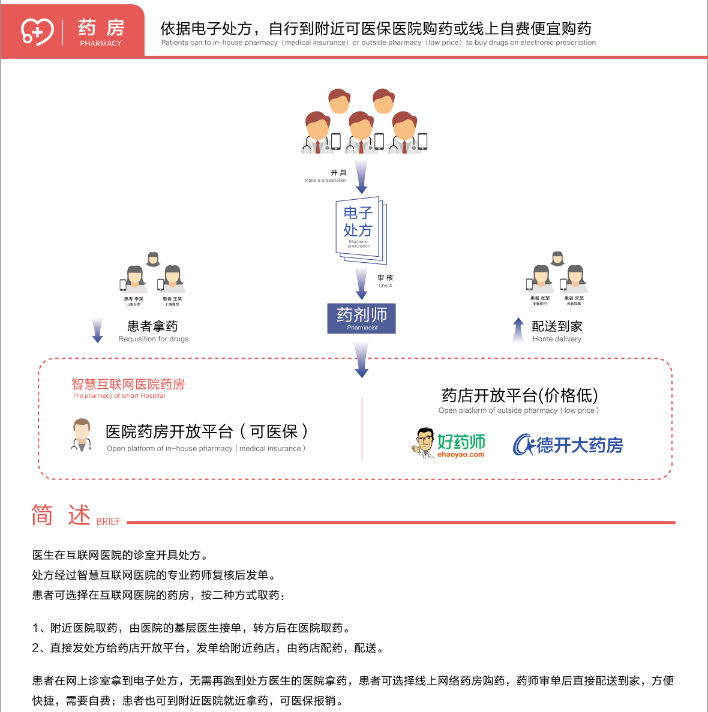
Last year, discussions on online diagnosis and treatment within the mobile healthcare industry were quite heated. In August 2014, the National Health and Family Planning Commission (NHFPC) issued the "Technical Guidelines for the Construction of Telemedicine Information Systems (2014 Edition)." On April 10, 2015, Song Shuli, spokesperson for the NHFPC, addressed the state’s stance on internet-based medical practices during a media interview, revisiting the aforementioned 2014 document. Based on the entities implementing medical services, telemedicine comprises two categories: The first involves telemedicine between medical institutions, specifically consultations among such institutions to provide remote medical services to patients. The second category, which is also permitted, entails medical institutions directly providing medical services to patients through information technology. However, since telemedicine differs from face-to-face diagnosis and treatment, the NHFPC has imposed strict requirements on relevant institutions and personnel to ensure quality and regulatory oversight in telemedicine. For instance, only licensed medical institutions are allowed to offer these services. Furthermore, institutions must possess appropriate qualifications to provide telemedicine services in specific categories or specialties; they cannot offer remote services in a specialty for which they lack accreditation. Physicians delivering telemedicine services must hold corresponding practicing credentials. Medical institutions must strictly adhere to relevant laws, regulations, and codes of conduct when providing telemedicine services to guarantee quality and safety, while also safeguarding patients’ right to informed consent.
The introduction of these two interpretations has provided clear direction for online diagnosis and treatment practices, leading to the gradual emergence of internet hospitals. What is the key focus of this national policy? It emphasizes that if diagnosis and treatment are to be conducted online, these activities constitute medical practice and must therefore be carried out by qualified medical institutions under the regulation of the Regulations on the Administration of Medical Institutions. Diagnosis and treatment activities should be strictly regulated due to their high risks and critical implications for patient safety.After April 10, many media outlets reportedofNews claiming that online diagnosis and treatment are prohibited is, in fact, one-sided. In reality, internet-based diagnosis, treatment, and prescription issuance are permissible, provided that the platform is registered as a medical institution and the physicians comply with multi-site practice regulations.Online consultations, doctor-patient interactions, appointment scheduling, and referrals—services long provided by Haodf.com—are peripheral healthcare activities that operate at the information level and do not involve core clinical diagnosis and treatment. Therefore, it is impossible for traditional internet platforms to incorporate diagnostic and therapeutic services without holding qualifications as medical institutions.

Since April this year, Haodf Online has partnered with the Yinchuan Municipal Health and Family Planning Commission to jointly build a smart internet hospital. Why was Yinchuan chosen? Because Yinchuan is located in northwest China, where medical resources are scarce. The entire Yinchuan area has only three Grade 3A hospitals.By co-establishing an internet hospital with Haodf, more professional medical capabilities can be delivered to Yinchuan.Over 100,000 specialists on Haodf.com can provide remote consultations and practice at multiple sites through internet hospitals, facilitating the downward distribution of high-quality medical resources and promoting tiered diagnosis and treatment.
Meanwhile, Yinchuan is a key node city in China’s Belt and Road Initiative (BRI). As part of the Ningxia Hui Autonomous Region, it maintains extensive exchanges with Arab countries along the BRI route. The establishment of the Yinchuan Internet Hospital enables Haodf Online to leverage Chinese healthcare capabilities as a strategic asset within the BRI framework, thereby serving the broader BRI objectives. This constitutes the background behind the creation of this internet hospital in Yinchuan.
The physical entity of this internet hospital in Yinchuan serves as its data center. Through collaboration with the Yinchuan municipal government, Haodf Online has obtained the necessary qualifications for medical institutions. All diagnostic and treatment activities and processes of the internet hospital are conducted online, and patients are not limited to those in Yinchuan. Haodf Online’s existing platform forms the foundation of this internet hospital, extending its original business model further.
After obtaining the internet healthcare license in April, Haodf Online’s primary focus in the first half of this year has been product research and development, establishing various management regulations, and standardizing business processes. In addition to its existing consultation-based products, the company has needed to bolster its online and offline management and operational staff, as well as personnel for treatment review, physician credential verification, and prescription audit, resulting in the creation of numerous new departments.HaoDF OnlineCurrently, the company has a total of 700 employees. As the company was not yet profitable, it was necessary to control scale and costs, which led to certain optimizations and adjustments in its personnel structure.
After September 15, Haodaifu Online Yinchuan Smart Internet Hospital entered its trial operation phase. The Yinchuan Operation Control Center is expected to officially open in November. Among the 130,000 physicians registered on Haodaifu Online, 15,000 have already applied to join the Yinchuan Smart Internet Hospital for multi-site practice. To date, 3,000 physicians have completed the multi-site practice registration procedures, while another 6,000–7,000 are currently undergoing the application process. Therefore, it is projected that the number of practicing physicians at the Yinchuan Smart Internet Hospital will exceed 10,000 by the time of its official opening, far surpassing the target set at the beginning of the year.

During the current trial operation phase, online consultations are already available on the Haodf Online app. By clicking the “Online Consultation” button on the homepage, patients can access specialists from across China who have been approved for multi-site practice. All these physicians bear a uniform label indicating “Online Consultation Enabled.” Patients can begin their consultation by selecting an appropriate specialist based on their medical condition. Unlike the traditional Internet healthcare 1.0 model, fees are charged starting from the initial consultation rather than being offered free of charge. Patients may choose among three consultation modes: text-and-image, telephone, and video consultations, with prices ranging from RMB 100 to RMB 500. Based on the patient’s textual and image descriptions, physicians can directly make diagnoses and issue electronic prescriptions stamped with the official seal of “Yinchuan Smart Internet Hospital.” Upon receiving the electronic prescription, patients can purchase medications through Haodf Online’s integrated partnerships with online pharmacies such as Dekai Pharmacy, Jianke Online Pharmacy, and Qilekang Pharmacy. After payment, the prescribed medications are delivered directly to the patient’s home via courier service.
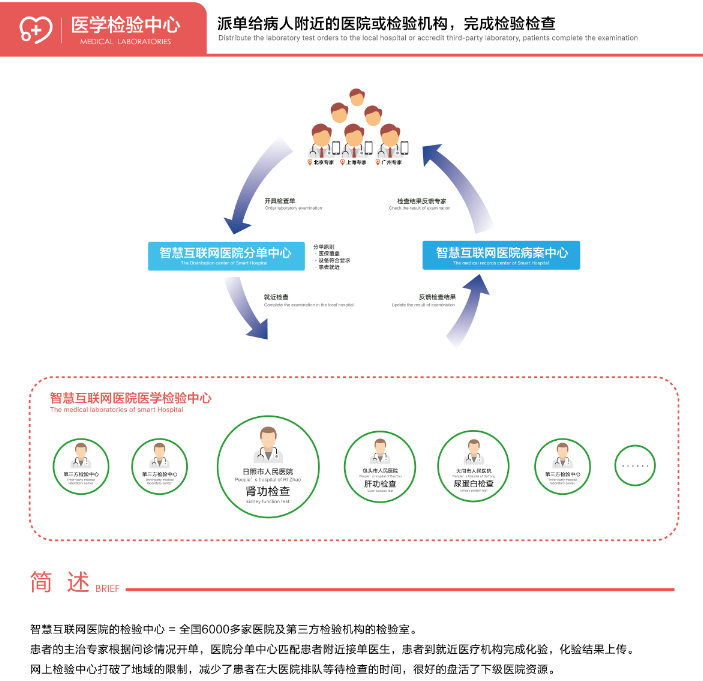
If a patient requires an in-person examination, the physician will issue a test requisition and forward it to a local offline physician. After the local physician performs the requested tests, the patient uploads photographs of the results. The internet hospital physician then prescribes medication based on these findings. In fact, the local physician can identify which internet hospital specialist referred the test request, as well as view the subsequent test results and prescription. This provides the local physician with an opportunity to learn from and communicate with specialists, while also gaining exposure to a broader range of patients and clinical cases.
If a patient requires surgery, experts from the internet hospital can be invited to participate. These experts list cities where they are available for consultations, enabling remote consultations and local surgeries through partnerships with offline hospitals. Through this innovative model, patients can not only utilize their local medical insurance but also avoid the hardship of traveling, making it easier for family members to provide care. For local hospitals, retaining patients leads to increased revenue. This creates a win-win situation for all three parties, fully aligning with the spirit of tiered diagnosis and treatment by ensuring that serious illnesses can be managed without leaving the county.
Of course, the greatest risk faced by internet hospitals is that associated with diagnosis and treatment. Haodf Online mitigates this risk through several measures. First, strict verification of physicians’ credentials helps control diagnostic and treatment risks. The physician platform already established by Haodf Online has completed real-name authentication, and sufficient trust has been built through prior collaborations. Haodf Online further screens these physicians, implementing an access mechanism requiring at least five years of experience as an attending physician—a standard stricter than the national regulations on multi-site practice. Second, Haodf Online leverages its existing triage system to determine which patients should be referred to which physicians. In cases of acute or severe conditions unsuitable for online consultation, patients are guided to seek in-person care at offline hospitals. In fact, a large proportion of hospital patients are follow-up cases; approximately 80% of them do not need to visit offline facilities for every consultation and can complete their visits and obtain prescriptions through internet hospitals. Since the clinical conditions of follow-up patients are well-established, the risks associated with online diagnosis and treatment are relatively low. Meanwhile, a significant number of follow-up patients originate from offline settings and are directed by physicians to conduct follow-up consultations online, further minimizing diagnostic and treatment risks.
The era of lightweight online consultations (Version 1.0) has passed. Haodf Online is now entering the Phase 2.0 stage of online diagnosis and treatment, refining its business model. Meanwhile, Wang Hang has already begun planning for Haodf Online’s future Phase 3.0, in which internet hospitals will be integrated with insurance products.
Wang Hang analyzed it this way: “In the 3.0 stage of internet hospitals, patients, doctors, and insurance companies form an integrated ecosystem. Patients consult doctors without making out-of-pocket payments during the consultation process, as insurers pay healthcare providers directly. Doctors provide services to patients and receive remuneration from insurance institutions. From the perspective of profitability scale for online diagnosis and treatment platforms, once insurance is integrated into internet hospitals, patients will incur little or no cost for medical consultations. This will encourage them to allow the internet hospital to manage their entire health lifecycle, and even that of their whole family. At that point, Haodf Online will become more valuable, and its revenue scale will expand significantly.”