

Seven Core Principles for the R&D and Industrialization of Medical Robotics
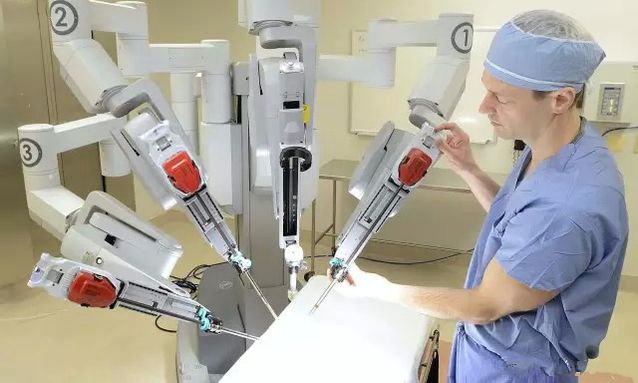
The lifecycle of a medical device encompasses innovative product research, experimentation, clinical studies, manufacturing, and market launch. At the pre-conference session of the 2016 World Medical Robot Conference, Xu Ning, Senior Advisor at the ROBO Medical Robot Institute and former Vice President of GE Healthcare China, stated that the research, development, and industrialization of medical robots in China must follow a path of introduction, learning, repetition, replication, improvement, and re-innovation. Along this journey, it is essential to safeguard valid patents and commercial trade secrets, meet market demands, prioritize safety, ensure product manufacturability, and secure highly efficient managerial talent.
In its robotics research, the company must address numerous core technologies, including robotic arm force control, core algorithms, compliance, degrees of freedom, and 3D systems. The company should invest substantial efforts in R&D, particularly given our collaborations with foreign partners through capital investment and technology-based equity stakes. It is imperative to thoroughly address patent-related issues; failure to do so would leave us without even basic legal protections.
Trade secrets and patents are often intertwined. At times, a patent does not directly reveal its value, whereas trade secrets clearly disclose commercial worth in a more intuitive manner. Currently, major corporations in the market, particularly in the United States—such as Apple and Intuitive Surgical (da Vinci)—prioritize the protection of trade secrets above all else. This approach is well-founded, as China has already learned many lessons from incidents involving such matters.
Product development at innovative medical robotics companies must be guided by specific market and customer needs to avoid creating products that stray from the right direction. However, a common misconception is that market demand simply means fulfilling one customer’s request today and another’s tomorrow. Instead, it should incorporate engineers’ practical insights and their visionary concepts developed in the laboratory, while also aggregating diverse perspectives gathered from online sources.
Furthermore, as medical robots are used on patients, patient experience must be prioritized. Physicians are the end-users of these robots; innovative companies should conduct interviews with doctors, extending beyond those at top-tier tertiary hospitals in major cities like Beijing, Shanghai, and Guangzhou to include practitioners in remote western regions and healthcare workers at community health service centers. Products should be designed from multiple perspectives, avoiding insular development or biased decision-making.
Companies must maintain a healthy respect for the market. Our products are designed to serve physicians, so we should not constantly seek to disrupt the status quo. During production, factors such as consumables, costs, and the proportion of after-sales maintenance revenue must be taken into account. For mature robotics companies, maintenance revenue typically accounts for around 30%, with some reaching as high as 50%. Therefore, these considerations should be integrated into product design.
The most challenging technical hurdle for robots entering the medical field is safety, which entails ensuring both the surgeon’s sense of security and the patient’s physical safety. The evolution from traditional open surgery to endoscopic surgery and now to robotic-assisted surgery has significantly altered the surgical experience. For the lead surgeon, this transition has shifted the visual perspective from direct observation to viewing through a monitor, and now to operating via a robotic system. The greatest challenge for surgeons is the loss of sensory feedback, including diminished visual cues, lack of haptic (tactile) feedback, and reduced situational awareness.
This challenge has led to some medical malpractice incidents, which have not been reported. The current mainstream solution involves a negative feedback approach; however, this method imposes stringent technical requirements, particularly regarding sensor technology. Sensors must be highly accurate and sufficiently miniaturized for implantation within the human body. Additionally, strict requirements for parameters such as temperature and humidity, coupled with cost considerations, make overall implementation extremely difficult, and the technology remains in the research phase.
However, there is no need to be overly discouraged. Medical robots are akin to air traffic control guidance systems; the incidence of medical accidents involving robots is comparable to, or even lower than, the probability of aircraft crashes. Therefore, everyone should remain reassured.
The ultimate goal of establishing a company is to generate profit. While striving for product perfection, we must also consider component selection, operability, manufacturability, and whether the production process can be validated and transferred. Whether producing one unit or 100 units per year poses significant challenges to the factory and is critical to the company’s survival. A prominent example is Smartisan (Hammer) Phones: in its early days, the brand prioritized design without adequately addressing industrial manufacturing issues, resulting in insufficient production capacity and failure to achieve profitability.
The recent launch of Hammer’s new products has taken this issue into account, balancing quality with industrial scalability, thereby achieving improved outcomes. In summary, the control of component quality and the requirements for product stability remain the biggest bottlenecks to the large-scale adoption of medical robots in China. Whether domestically produced medical robots can meet these targets remains uncertain; we still have a long way to go.
Leading figures must clarify issues of responsibility. For instance, if a university professor serves as the principal investigator for a project, and given that such professors often hold leadership roles in multiple projects simultaneously, it is difficult for them to devote all their time and energy to improving a single project or component.
Limitations in the Capabilities of Technical Personnel. Currently, due to historical factors, most of China’s outstanding engineering and technical professionals are around 50 years of age. It is challenging for companies to recruit employees who possess both craftsmanship spirit and practical artisanal skills. Although the government has recognized this issue and is actively cultivating such talent, a gap in the talent pipeline persists. Therefore, companies must provide ongoing, irregular training and development opportunities for their core technical staff.
The R&D team is rationally structured. The design of a medical robot involves multiple disciplines, including medicine, mechanics, robotics, and computer science, requiring a well-balanced allocation of resources by the company. Currently, established medical robotics companies such as Intuitive Surgical (developer of the da Vinci system) employ over 1,700 staff members. In its research institute, one-tenth of the personnel are dedicated to the same task. This level of focus, although entailing high investment, accelerates the pace of R&D.
Many enterprises are currently encountering difficulties in overseas mergers and acquisitions (M&A) and in introducing advanced foreign products and technologies. In particular, the challenges arising when collaborating with international partners on technologies we have acquired or on those held by our controlling subsidiaries are often unimaginable. These difficulties stem from differences in management styles, behavioral norms, and cultural mechanisms between China and other countries. Therefore, before engaging in cooperation with overseas companies, it is essential to thoroughly study their corporate culture across various dimensions to minimize potential issues.
When preparing the corporate budget, minimize deviations as much as possible and set aside reserve funds. Meanwhile, ensure that funds are earmarked for specific purposes and not dispersed. Reasonably allocate resources across all stages, including patent applications, equipment procurement, preclinical studies, clinical trials, license acquisition, construction of manufacturing facilities, validation of technology transfer for manufacturing, and marketing campaigns.
The production costs for medical robotics companies include raw materials, talent, labor, factory space, product quality, marketing and promotion, sales, and after-sales maintenance. Each step has a standard cost structure. To save costs, if products use domestically produced components, product quality is often compromised. Reducing investment in talent lowers efficiency and extends development cycles. Cutting marketing and promotion budgets fails to achieve expected results. Therefore, Chinese manufacturing should not focus solely on cost reduction. Cost-cutting measures often fail to deliver the desired outcomes.
How Can China Practice the R&D and Industrialization of Medical Robots? Xu Ning stated that we can actually learn from the well-known model of China’s high-speed rail: following a path of introduction, learning, repetition, replication, improvement, and further innovation. While paying attention to the aforementioned issues, this represents a rational approach for China to achieve leapfrog development in the field of medical robotics.