

Top 10 Success and Failure Patterns of Startups: Insights from 350 Companies Over 16 Years by Daochen Ventures
On October 28, Fortune Capital, a top-tier domestic investment firm, comprehensively analyzed 350 portfolio companies invested in over the past 16 years, decoding the secrets behind startup success and failure through highly data-driven and humorous narratives. VCBeat (WeChat ID: vcbeat) considers the article systematic and practical, and has specially compiled it for entrepreneurs as follows.
Speech | Xiao Bing, Executive Partner and President of Fortune Capital
After 16 years of development, what is Fortune Capital’s most valuable asset today?
You might attribute it to our brand, distribution channels, or team; however, I believe it is our big data capabilities. Over the past 16 years of investment activities, we have built a massive database.
What is particularly valuable is that the data sample is sufficiently large and highly accurate. Being exceptionally current and precise, it enables us to gain insight into the authentic data of these enterprises.
What truly matters is what insights we can extract from the data, what patterns we can identify, and how we can support portfolio companies or prospective investment targets.
Therefore, I volunteered to deliver a presentation on big data.
Proprietary Star-Rating Evaluation System for Analyzing Investee Companies
Over the past 16 years, we have screened more than one million companies, conducted in-depth due diligence on over 10,000 of them, and ultimately made successful investments in more than 300. With a total investment amounting to nearly RMB 13 billion across these 350 portfolio companies, our track record and scale rank among the top in China’s venture capital industry, providing a sufficiently large sample size for analysis.
The geographic and sectoral distributions are extensive. The firm has made significant investments primarily in TMT, intelligent manufacturing, and consumer services, while also maintaining a broad presence in other sectors, including healthcare, defense, modern agriculture, and clean technology. Geographically, its footprint is wide-ranging; although Beijing, Shanghai, Guangzhou, and Shenzhen receive the most investment capital, Fortune Capital has invested across other major provinces in China.
What is particularly valuable is that Fortune Capital employs a star-rating system for its portfolio companies. Each quarter, it tracks, analyzes, and reviews their operational performance and data. We classify these companies using a five-star technical rating, with each star level reflecting our assessment of the enterprise. For instance, a five-star rating indicates performance that exceeds or strongly meets expectations. A four-star rating suggests basic alignment with expectations, while a three-star rating denotes mediocre performance, or even a stagnant, “zombie-like” state. Two-star companies face significant risks and are highly likely to fail, whereas one-star companies are essentially on the verge of collapse.
Based on years of practice, the distribution of our five-star ratings is generally as follows: 75% are four- and five-star enterprises, 15% are three-star, and 10% are one- and two-star. In other words, excellent and star-performing companies account for approximately 75%, mediocre companies make up 15%, and failing companies constitute 10%. This distribution ratio has remained consistent year after year.
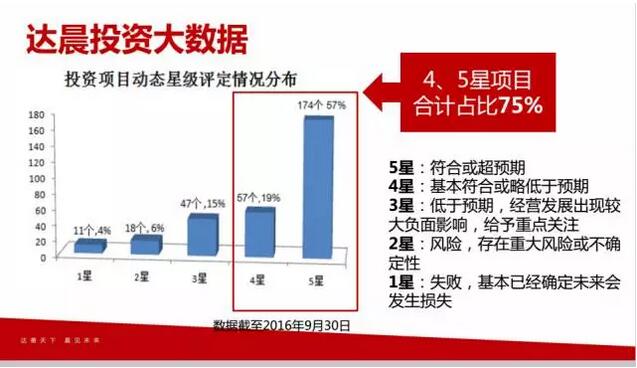
From this, we aim to distill a pattern. I find it puzzling: every company has undergone rigorous due diligence and internal decision-making processes within the Fortune Capital system. Each investment decision was made after thorough analysis by many brilliant minds; none of our investments were made arbitrarily. Fortune Capital wishes success for every portfolio company. Chinese entrepreneurs are exceptionally diligent, and the vast majority are highly intelligent. No entrepreneur sets out to ruin their company. Why, then, is there such a significant disparity in outcomes? Some companies achieve remarkable success, while others fail dramatically.
I have an original formula: successful businesses are similar, while failed businesses are each unique in their own way.
In other words, success requires the presence of every single factor, with none being dispensable; whereas failure occurs if even just one factor fails.
What Factors Do Successful Companies Share?
I compiled a profile map of all successful entrepreneurs from the Fortune Capital (Fochan) ecosystem, reviewed it repeatedly and daily, derived an algorithm, and continuously refined it.
When I evaluate a company and speak with its founder for an hour, I can generally assess their potential for success. There is an ancient Chinese saying, “Xiang You Xin Sheng,” meaning that one’s outward appearance reflects their inner state; the same applies to one’s demeanor. While these individuals may have different facial features, they share a common aura.
What specific forms do they take?
First, this entrepreneur must be like Tang Seng.He pressed on without hesitation. At a time when everyone else saw no future and began to waver, he remained resolute, ambitious, single-minded, and courageous in moving forward. He ignored the noise and simply kept advancing. Entrepreneurs must embody this spirit, much like Tang Seng.
Second, it also resembles Liu Bang.Competition among enterprises is now extremely fierce. In today’s business landscape, it is impossible to achieve success by going it alone; solitary efforts can only sustain a small-scale business. If you aspire to build a significant enterprise, you must establish a team of partners. However, critical questions remain: How do you assemble such a partnership team? Do you possess the capability to cultivate these partners? And are others willing to follow your lead? These factors are of paramount importance.
3. Long-term success depends on character.Character matters immensely. A successful entrepreneur is undoubtedly a person of good character. To become an entrepreneur in the true sense—one who is respected by society—the ultimate high achievers are invariably individuals of strong moral integrity. In our interactions with entrepreneurs, we find that truly exceptional ones are remarkably low-key, simple, and humble. They possess immense inner strength while maintaining a modest outward demeanor, and they consistently follow through on their words. These successful entrepreneurs always outperform their promises; this is a shared trait among them.
"If you cannot manage your family well and have a poor relationship with your wife, how can you effectively manage your company? Fortune Venture has observed that among couples who co-founded businesses, those who remained together achieved a 100% success rate. Initially, we were also concerned about 'husband-and-wife shops,' but it now appears that domestic harmony significantly contributes to the high success rate of such joint ventures. Therefore, we no longer feel apprehensive about husband-and-wife teams and are fully accepting of them."
Recently, there have been several incidents in which entrepreneurs suffered health issues, which is truly regrettable. Entrepreneurship is a long-term marathon; running under high pressure for an extended period is unsustainable without good health. Therefore, maintaining physical well-being may be one of the fundamental prerequisites for entrepreneurial success.
Fourth, we also observed that successful entrepreneurs share a common trait: they tend to have relatively stable emotions.It is rare to see him experience significant emotional fluctuations or dramatic highs and lows. Every interaction with him feels comfortable, as he remains calm and composed. A man’s heart grows larger through enduring greater grievances. Entrepreneurs face numerous grievances, immense pressure, and countless chaotic issues daily. If they lacked this essential quality for success, their emotions would surely become volatile, rendering them unable to cope with these challenges and leading to early failure.
Therefore, I have always believed that entrepreneurship is profoundly counterintuitive. Each of us is inherently lazy and highly sensitive; we cry when we feel like crying and laugh when we feel like laughing. However, entrepreneurs cannot afford to do so.
Therefore, entrepreneurship is about turning women into men and men into real men.Why Is It More Difficult for Women to Start Businesses? Big data indicates that it is indeed more challenging, though not impossible. This is because women are closer to the essence of human nature and are inevitably emotional.
“If she isn’t like this, then she isn’t a woman. She is bound to be sentimental and weak. It will be difficult for her to become a true entrepreneur unless she overcomes these traits—that is my conclusion. Only a real man can succeed.”
Business Focus Always Comes First
From a business perspective, I distributed a questionnaire to all of Fortune Capital’s business partners, asking: “Throughout your years of investing, what common characteristics have you observed in your business practices?” The top response was focus—always focus.
I have also examined the three most successful projects from the Fortune Capital portfolio:
The three companies with the highest market capitalizations are Focus Media, Wangsu Science & Technology, and Aier Eye Hospital.
Aier Eye Hospital has a market capitalization of RMB 36 billion and operates more than 200 hospitals. It is the only private hospital group to have gone public through an initial public offering (IPO).
Given the resources made available to him, he could theoretically practice in many other specialties, such as dentistry and cardiology, and there is significant demand for his services. Many local governments have even offered to transfer state-owned hospitals to him at nominal prices.
We also had repeated discussions, and in the end, we decided not to proceed with it. We chose to remain focused solely on ophthalmology. For many years since our IPO, we have concentrated exclusively on ophthalmology, yet our stock price has plummeted by more than tenfold.
Although Aier Eye Hospital has grown to such a large scale, its share of the Chinese ophthalmology market remains below 10%. Given the vastness of China’s market, excelling in this field is already a significant achievement. With substantial growth potential still remaining in ophthalmology, the company has chosen to maintain its strategic focus exclusively on eye care, thereby securing strong pricing power in the market.
Thanks to his unwavering focus, the company’s stock has never declined, maintaining a consistent upward trajectory.
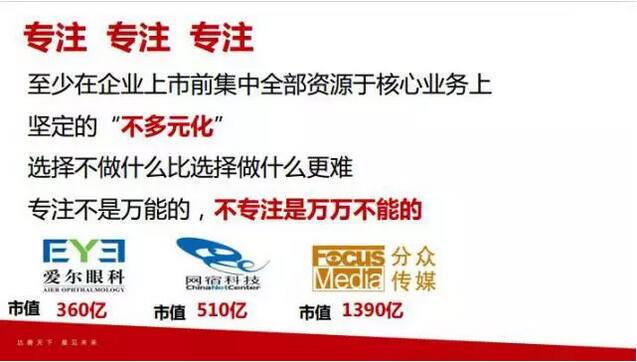
Since its IPO, Wangsu Science & Technology’s market capitalization has grown 30-fold, currently standing at RMB 50 billion, with a peak of RMB 60 billion. Back then, we could hardly have imagined the company’s potential; it was merely a very small and rather unremarkable firm.
For many years, it has focused exclusively on a single business line, growing its profits to nearly RMB 1 billion. At the time of our investment, its profits were only around RMB 30 million, representing substantial growth. Nevertheless, the company continues to concentrate on this core business to scale up and strengthen its market position.
When Focus Media was listed in the United States, Mr. Jiang acquired dozens of companies and expanded into numerous industries. What was the ultimate outcome? The company deviated from its core business, and its market capitalization plummeted. In the end, he divested all those acquisitions—shutting down every one of the dozens of acquired companies—and returned to its core elevator advertising business.
It now appears highly accurate: he has generated a profit of 3 billion, which is still growing, and his market capitalization exceeds 100 billion.
The business model is simple and clear, not complex; it can be basically explained in one sentence what the company does, and its business logic is also particularly consistent with common sense.
Seizing Opportunities in China's Capital Markets
These entrepreneurs have firmly seized the opportunities in China’s capital markets, which is also a critical factor.
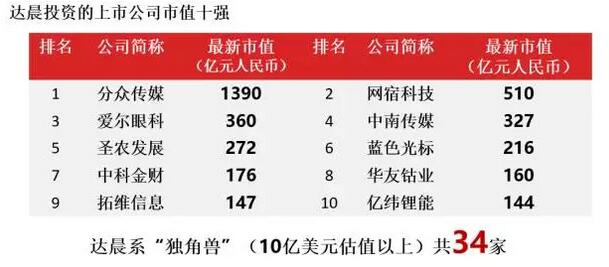
Just look at the market capitalizations of the top ten companies. Many institutions in the market boast about their investments in so-called “unicorns”—companies valued at over $1 billion—but Fortune Capital has never engaged in such claims. In fact, Fortune Capital currently holds 34 portfolio companies with valuations exceeding $1 billion. Our valuations are liquid, realizable, and substantive, rather than being inflated or illusory figures.
What is the reason? It is precisely because China’s capital markets have presented us with excellent opportunities.
Many people criticize China’s capital market, but my conclusion is that China’s current securities market is the best listing venue for small and medium-sized enterprises (SMEs). The valuations of our SMEs are the highest in the world, the post-listing market liquidity for our SMEs is the best globally, and the number of our SMEs going public each year is the largest worldwide.
Many so-called unicorn companies are unable to list overseas; even if they do manage to go public, their valuations could be as low as one-tenth of their current levels. Our enterprises have capitalized on this advantage, leveraging the capital markets to rapidly scale up through IPOs. In contrast, other entrepreneurs have chosen the alternative path by listing overseas, where going public is relatively easy.
At that time, two companies were engaged in the same business. One was Wangsu Technology. Although Wangsu ranked second in the market at the time, there was a prevailing perception in the market that Wangsu was underperforming. Many people wondered whether our company was doomed. Rumors and gossip were rampant.
However, after our IPO, buoyed by the robust Chinese market and high valuations, we continued to advance, leveraging this market effectively and executing our equity incentive plans and private placements successfully. Over the years of development, Wangsu’s market capitalization has become nearly 100 times that of another company, demonstrating that choice is more important than effort.
Successful entrepreneurs must be different from others
What Are the Common Traits of Successful Entrepreneurs?
First and foremost, innovation capability is essential. This may sound simplistic, but if your company offers no differentiation from its peers—resulting in homogenized products or services—it will lack viability in today’s fiercely competitive landscape. Such companies are inevitably forced into price wars, becoming large yet unprofitable entities.
Differentiation may stem from technological distinctions, divergent business models, or unique management approaches; in any case, it requires being distinct from competitors.
Some entrepreneurs say, “They’re in an emerging industry, so they must constantly innovate. We’re in a traditional sector—how can we innovate? There’s no way to innovate!”
Let me share a case: we invested in a chicken farm that subsequently went public. This is arguably one of the most traditional types of enterprises. The owner, who raises chickens, spends every day figuring out how to squeeze an extra cent of profit from each bird.
So, for a while, he kept saying that certain parts of our chickens were sold very cheaply, while others commanded high prices. Chicken wings, for instance, fetched a premium, whereas chicken bones were essentially disposed of as waste. While others might sell chicken bones for 10,000 yuan per ton, ours were likely sold for only 1,000 yuan per ton, treated as scrap material.
He decided that he must sell the chicken bones at a high price. But what if no one wants them?
He independently organized the research and development of a product called "Bone-in Chicken Bites," transforming chicken bones into a marketable item. He pitched this product to KFC and McDonald's, demonstrating how they could sell chicken bones in this format. Eventually, the selling price of these bone-in pieces exceeded that of the chicken meat itself, as "Bone-in Chicken Bites" enjoyed a period of immense popularity. In doing so, he maximized the value derived from each chicken.
Therefore, innovation is ubiquitous; it does not necessarily have to be high-end or sophisticated, such as IT technology or software development. Innovation opportunities can be found in every detail of a company’s operations. It is essential to differentiate yourself from others to establish a competitive advantage through differentiation.
Entrepreneurs Must Maintain a Steady Sense of Rhythm
Fortune Capital’s sample size is sufficient. There are 11 one-star enterprises, which are complete failures; 18 two-star enterprises, which are near failure; and 47 three-star enterprises. Although the total number appears substantial, amounting to billions, our fund has delivered strong returns because our overall portfolio scale continues to expand.
What insights do these enterprises and samples offer us? I would also like to share my perspectives.
First, rhythm is crucial.Some companies operate with effortless grace, maintaining a smooth rhythm where every step lands precisely on beat. Others, despite being hardworking, intelligent, and diligent, seem perpetually out of sync—either misstepping or exhausting themselves in the process.
The rhythm varies in intensity, urgency, and pacing.The so-called “asset-light” versus “asset-heavy” approach—knowing when to pursue an asset-light development strategy and when to adopt an asset-heavy one—is a rhythm that must be carefully mastered.Mistakes could be fatal and are highly dangerous.
Knowing when to accelerate and when to decelerate, stepping back decisively when the timing is wrong, and charging forward decisively when the time is right; many enterprises also get this wrong.
Running a business is a marathon. When you are running in a pack, some may be sprinters who start off fast. You might get distracted by them or thrown off by your competitors’ pace, which disrupts your own rhythm and leads to chaos—resulting in failure for both parties. Therefore, maintaining composure and staying true to your own pace is essential.
Moreover, the company has performed exceptionally well, with its fundraising rounds precisely timed. Although its operational performance has not been as strong, each step of its financing strategy has been accurately executed.
The pace of R&D and market launch applications is also the same.Entrepreneurs must calmly consider the issue of pacing.
Blindly Imitating Large Corporations: A Typical Cause of Startup Failure
There is another typical pattern of failure: the vast majority of companies fail. We see many books about large corporations in airport bookstores, which are bestsellers and purchased by entrepreneurs eager to emulate them—thinking, “We’ll do exactly what Huawei did,” or “We’ll follow Google’s playbook.”
However, I believe that learning should not be blind; it must be adapted to local conditions and the specific timing. In particular, we should study how large enterprises operated when they were small, rather than how they operate after becoming large. Once a company has grown, it is often surrounded by a halo effect, and blindly emulating its current practices could well lead to our demise.
Fortune Capital has invested in so many companies, with a particularly diversified portfolio, yet none have succeeded to date; all have failed.

Entrepreneurs with a strong impulse to diversify are particularly endearing. They are undoubtedly the smartest, as they are always brimming with creativity, and the most diligent, as they can never stay idle. Boasting the best physical stamina, they wish they could work 24 hours a day. Every time you visit their company, they announce yet another new project; just a couple of days later, another one is launched. With five or six projects underway simultaneously, they are unwilling to confine themselves to a single line of business.
With abundant opportunities and exceptional personal capabilities, he finds a single business line insufficient to satisfy his ambitions. He possesses strong managerial skills and a remarkable ability to mobilize resources. He stated that every one of his projects would secure financing, with each eventually going public: one on the SME Board, another on the Main Board, and yet another listing in the United States—a dream shared by many entrepreneurs.
When a company diversifies, I ask three questions:
1. Is your current business sufficiently secure?
It is certainly wrong for many companies to launch new businesses while their core business is still struggling, facing intense competition, and at risk of failure.
2. Is your business currently ranked first in the industry?
"Many enterprises have not yet become the industry leader, but they have already started to launch new projects."
3. Is there still room for growth in your industry?
Has the ceiling already been reached? In fact, the industry is vast, with substantial markets in China and globally. Why launch so many new projects?
Less is more. Especially those exceptionally smart and diligent entrepreneurs must remain vigilant: avoid blind aggression within the team, and do not generate too many ideas; those with an excess of ideas rarely achieve success.
More companies die from overindulgence than from starvation; especially after securing financing, it is crucial to manage the pace of spending.
"Several companies were doing quite well before raising funds, making profits with healthy cash flows, and their bosses were living comfortably."
After completing the financing round, the sudden influx of capital fueled impulsive decisions to expand rapidly. The company’s footprint grew from a single province to dozens, and its workforce ballooned from 100–200 employees to 1,000–2,000. This unchecked expansion led to a loss of control over management, operations, and various other aspects, resulting in substantial losses and a broken capital chain.
Therefore, after securing financing, it is crucial to maintain a controlled pace and avoid overextending beyond one’s capabilities. Particular attention must be paid to cash flow and the integrity of the capital chain.
Those who set challenging BAT as their goal are basically doomed.
We have also observed a pattern: several companies that declared their ambition to become a certain type of enterprise, with the goal of defeating or challenging BAT (Baidu, Alibaba, and Tencent), have essentially failed.
These entrepreneurs focus exclusively on grand and ambitious endeavors, disregarding any opportunities for minor profits that could be commercialized and monetized along the way.
Some companies are particularly intriguing: they overlook numerous opportunities that could be monetized and generate profit, dismissing them by saying, “Why bother with such small money? We aim to build a great company.”
“If you disregard these small amounts of revenue and rely solely on fundraising, believing that investors will always support your grand vision—‘I have such a great idea; investors will surely back me’—you often end up failing. By never pursuing modest profits, you become vulnerable to shifts in the capital market, which can quickly lead to your downfall.”
In the aftermath of this round of capital bubbles, including the so-called O2O hype, the market is returning to business rationality and fundamentals. The primary imperative is survival; if a company cannot survive, there is no point in discussing ambitions of becoming a large enterprise. First ensure the company’s survival, then strive to build it into a great one.
We have invested in a few companies with particularly complex business models. At the time, they were beyond our comprehension; we simply couldn’t understand them. The companies themselves presented their models in an abstruse and mystifying manner. We sometimes wondered whether our own intellectual capacity was insufficient, especially seeing that other investors had participated. Should we also join in? Yet, how exactly these companies generated profits remained unclear, as their business models were never articulated with clarity. In the end, most of these companies ultimately failed. After paying such a high price for these lessons, we have now chosen to stay disciplined and stick to our principles.
Personality Is the Deciding Factor: Entrepreneurs Must Pay Attention to Their Blind Spots
There is also the issue of personality. A common pattern exists: failed entrepreneurs are fundamentally plagued by personality issues. As long stated, “character is destiny.”
Some entrepreneurs appear overly dominant, wielding absolute authority within their companies where no dissent is tolerated. Acting like emperors, they treat their words as imperial edicts. Such companies are inevitably doomed to fail.
Another type is the particularly weak and vulnerable entrepreneur. I have encountered a few such individuals who lack any independent ideas, consulting their investors on every matter, both major and minor—even trivial issues. I believe this is definitely problematic, as it reflects an inability to make decisions.
There is another category: individuals with a scholarly temperament, who are deeply sentimental and highly idealistic, always talking about their sentiments and ideals.
Later, we decided to put a stop to it. We would not dwell on sentimental nostalgia this time. Every meeting used to be about feelings; this time, we would focus on numbers, financial statements, and the progress of our project. We held weekly meetings every week, monthly meetings every month, and conducted quarterly reviews to evaluate project progress. Everything was ultimately reflected in the financial reports.
He considers such matters too vulgar. When you talk about money, I talk about sentiment and ideals. Entrepreneurship is a rather mundane affair; it requires grinding away step by step, earning profits bit by bit. Every day, you must keep an eye on your cash flow, financial statements, inventory, and the Consumer Price Index (CPI). If you neglect these fundamentals and spend all day dreaming about lofty ideals, your business will fail.
Entrepreneurs and investment institutions should each fulfill their respective roles. In capital operations, missteps by some companies have led to vastly different outcomes. There is a type of entrepreneur who believes strongly in their own learning ability, considers themselves omnipotent, and regards themselves as experts who have mastered all aspects of the capital market. As a result, they make many strategic decisions unilaterally, without consultation or discussion with their investors.
Some entrepreneurs choose intermediaries based solely on their own instincts or the advice of friends, disregarding our recommendations and failing to consult with professional agencies. As a result, they often select entirely unreliable and unsuitable partners, ultimately paying a steep price for these costly lessons.
There is another category of companies that are particularly hesitant on these issues: Should we go public? Do we have to pay so much in taxes? The queue is so long—should we wait in line? The review process is so stringent—should we proceed? We’ve heard that factors like connections also need to be considered. Filled with fear and hesitation, one or two years pass, then two or three years, and they are still undecided. Meanwhile, another company submits its application materials without hesitation, waits in the queue, and within two years, it’s done.
Because capital market dynamics are overly complex. As a professional institution, Fortune Capital has paid substantial tuition fees and reviewed numerous cases, establishing ourselves as the most professional. I believe the best approach for companies is to trust the advice of professional investment institutions, focus on their own operations, excel in their business and performance, follow professional guidance, and improve step by step. This is the optimal path.
Because everyone has their own blind spots.
Why Do Entrepreneurs Always Have Blind Spots? Whether highly successful or unsuccessful, every entrepreneur must pay their dues along the way. Each has their own blind spots; no one is exempt from making mistakes during the entrepreneurial journey. The key differences lie in whether the tuition paid is high or low, whether the missteps are fatal, whether timely adjustments are made to allow for recovery, or whether one stubbornly persists down a dead-end path to ultimate failure.
Therefore, entrepreneurs must remain agile in addressing these matters, break through their own limitations, and avoid rigidity. They should recognize that they are not omnipotent nor infallible, and embrace this mindset.
At the same time, we must engage in extensive learning. But what should we learn? We should focus more on learning from failure rather than success. Studying failure and even death is meant to help us live better. I have looked at books available on the market, and I have not found a single one that discusses failure. Teacher Wu wrote a book titled The Great Defeats, which examines how small and medium-sized enterprises fail. Why is this topic so rarely addressed?
"In fact, our industry is in the best position to speak out. However, the venture capital (VC) industry operates this way: good news travels far, while bad news stays hidden. Everyone keeps their own affairs under wraps, and what gets circulated are only those few success stories."
Every day, venture capitalists on stage only highlight successful case studies, spinning them in an overly glamorous light. No one summarizes the failures; people are unwilling to engage with them. As a result, entrepreneurs keep paying the price of trial and error, experiencing repeated failures, with the same mistakes recurring time and again.
Entrepreneurs should use leverage with caution.There is another category of companies that operate through leverage. China’s financial system is intriguing in that it is bank-dominated; banks tend to offer umbrellas when the weather is sunny but retract them when it rains, engaging in cyclical loan recalls.
This year has been no different. With data in hand, entrepreneurs have repeatedly raised concerns: “Banks are calling in loans again; we’re on the brink of collapse. Can our existing loans be preserved?” Companies that were fundamentally sound and problem-free have been turned into troubled firms simply due to these loan recalls, causing even non-performing assets to turn into bad debts.
It is rare for commercial banks to offer long-term loans. Proceed with caution.
How Can Enterprises Transform Amidst Major Changes?
Over the past three to five years, China’s traditional industries have faced unprecedented upheaval, under immense pressure—greater than ever before—with comprehensive strain and even disruptive blows.
In traditional sectors such as consumer goods, many once-celebrated brands have suddenly found themselves struggling. Why? The core consumer demographic has shifted to those born in the 1980s and 1990s. This group does not watch CCTV, so the former “CCTV advertising kings”—brands that relied heavily on mass-media ad spending—have rapidly lost their relevance.
P&G’s sales have plummeted, and the traditional market has undergone a sudden upheaval. New phenomena, such as internet celebrities and e-commerce, are booming. The post-80s and post-90s generations are consuming new products, and we are failing to keep pace with their consumption trends.
The manufacturing sector is facing unprecedented shocks. Rising costs have essentially eliminated profit margins; businesses that were once profitable are no longer so. Many are unable to withstand the pressure due to insufficient innovation capabilities. Our brick-and-mortar stores have been impacted by e-commerce, while mobile internet has reshaped numerous business models. The pressure is immense, marking an unprecedented period of profound transformation.
The companies invested in by Fortune Capital three to five years ago are under enormous pressure. While their performance was strong at the time of investment, pivoting thereafter has proven exceedingly difficult. Only a minority have succeeded.
The companies we have invested in over the past three years have performed exceptionally well. These are not legacy businesses undergoing transformation; rather, they are startups that have organically grown and matured. This trend is quite encouraging. It demonstrates that Chinese entrepreneurs remain remarkably intelligent and diligent, offering genuine cause for optimism. In this environment, failure to evolve means certain demise.
Another issue is blind bandwagoning in transformation—jumping on the “Internet Plus” trend one moment and O2O the next—abandoning all their traditional strengths, tearing everything down to start from scratch, and ultimately failing. They were previously managing reasonably well; although not as prosperous as before, they could still survive. Yet they precipitated their own demise. Such cases do exist, and we have encountered them ourselves.
We had some project-based companies and some cyclical companies. They were performing well at the time, but they failed to transform into a sustainable growth business model during their peak periods, which ultimately led to their decline.
Entrepreneurship is not easy; cherish every step of the journey.
Text | Liu Quan, Wang Longjuan
Source: Chazuo Academy