

Six Years of the Affordable Care Act: Achievements and Shortcomings (Part I)
The Affordable Care Act (ACA), commonly known as Obamacare, is a federal law signed by U.S. President Obama in 2010. The primary purpose of the act is to increase health insurance coverage among the American people and reduce healthcare costs in the United States under the leadership of the U.S. government.
Under the ACA, the U.S. federal and state governments will establish Health Insurance Exchanges, allowing individuals and small businesses to purchase health insurance for individuals/families and employees, thereby extending coverage to 30 million uninsured Americans. Implementation of this law will increase national healthcare spending while reducing expenditures on federal Medicare programs.
The Commonwealth FundThe Commonwealth Fund is a private foundation in the United States, established in 1918, and has remained active in areas such as healthcare policy. Its mission is “to promote a high-performing health care system that achieves better access, improved quality, and greater efficiency for society’s most vulnerable, including low-income individuals, the uninsured, minority Americans, young children, and the elderly.” In late October 2016, the Commonwealth Fund released research findings on the Affordable Care Act (ACA).
The aim of this study was to compare the growth in costs of employer-sponsored health insurance before and after 2010 (the year the Affordable Care Act [ACA] was enacted) and to contrast these cost changes with changes in employee income. The article collected and analyzed data from the Medical Expenditure Panel Survey (MEPS) released between 2006 and 2015, summarizing cost trends over this ten-year period. VCBeat (WeChat ID: vcbeat) has compiled the key findings of this study to help you understand the achievements and shortcomings of U.S. healthcare reform. Due to the extensive content and length, we will publish the article in two parts. First, let us examine the research conclusions regarding premium contributions by employers and employees.
Since the enactment of the Affordable Care Act (ACA), much commentary and research has focused on health insurance plans sold through government-run marketplaces. In reality, however, a larger number of Americans obtain coverage through their employers: in 2015, more than half (57%, approximately 154 million) of Americans under the age of 65 received health insurance through their own or a family member’s employment, while only about 10 million purchased plans through the marketplaces.
At the outset of the ACA’s enactment, many industry insiders predicted that numerous employers would cease providing health insurance to their employees in response to the reform mandates. However, since the ACA took effect in 2010, the share of the non-elderly population covered by employer-sponsored health plans has remained virtually unchanged.
Although the ACA has not yet caused financial losses to employers in terms of health insurance, some critics of the law argue that it has increased the cost of medical insurance for both businesses and employees. In response to this criticism, the Commonwealth Fund compared health insurance cost trends from 2006 to 2015 and presented their findings.
Through this report, you will gain key insights into the following points:
1. Six years after the implementation of the ACA, although the goals of the legislation have not yet been achieved, does the ACA still subject businesses and employees to higher premiums and deductibles? Have nationwide healthcare costs in the United States declined since the implementation of the ACA?
2. Why do many Americans with health insurance still consider healthcare costs prohibitively high and unaffordable? What are the fundamental drivers of premiums in the health insurance market?
3. Since more Americans obtain health insurance coverage through their employers, how have employer-sponsored premiums changed since the ACA took effect? What is the situation in each state?
4. How has the growth rate of premiums paid by employees changed, and are employees required to pay more for family health insurance? Has the premium growth rate decreased in most states?
5. Among which income group in the United States has the health insurance deductible grown the fastest? What is the proportion of household health insurance out-of-pocket maximums and deductibles relative to income?
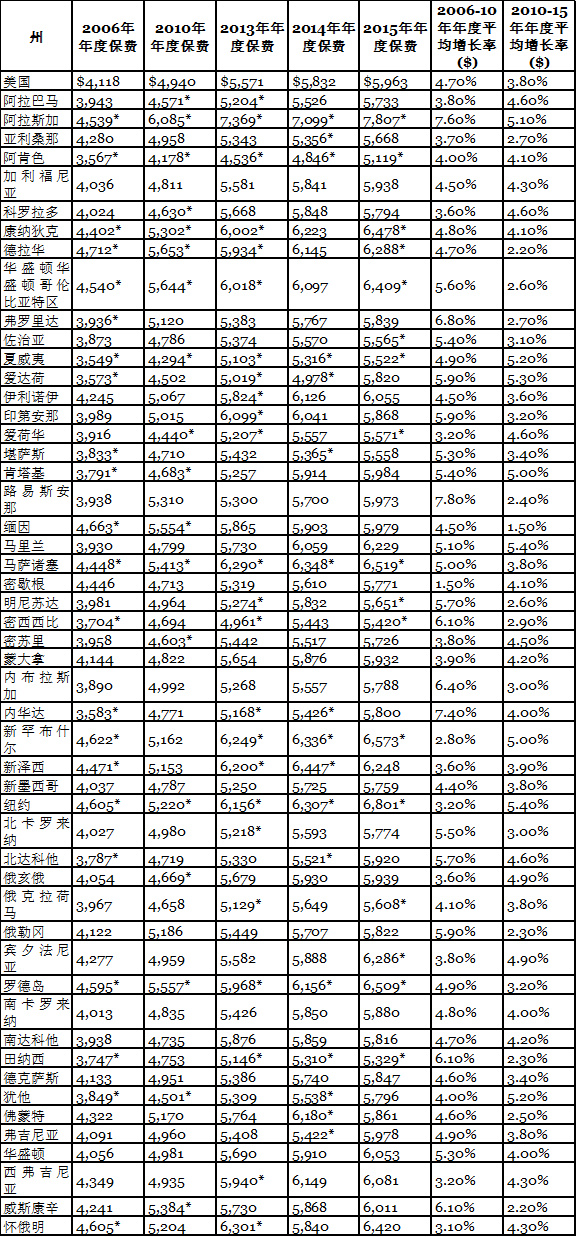
Since the enactment of the Affordable Care Act (ACA) in 2010, the annual average growth rate of premiums for employer-sponsored health insurance plans has slowed. For single-coverage plans or those covering only employees without any family members, the national average premium growth rate from 2010 to 2015 was 3.8%, lower than the 4.7% recorded from 2006 to 2010 (see Figure 1, Table 1a).
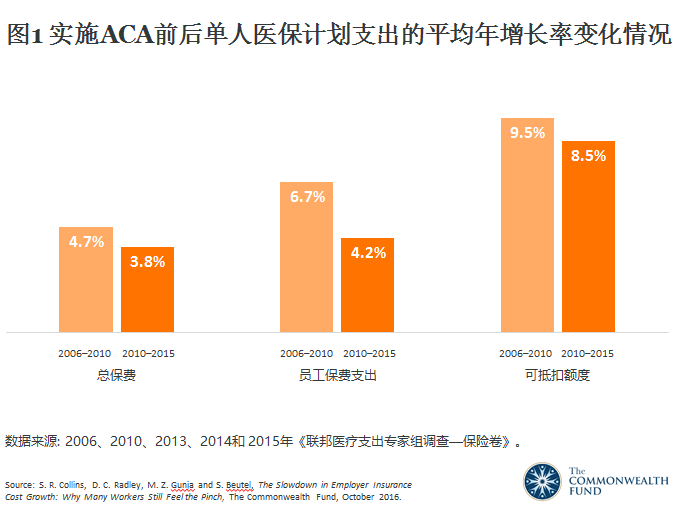
Table 1a Average Premiums for Employer-Sponsored Single-Coverage Health Insurance Plans Across All U.S. States in 2006, 2010, 2013, 2014, and 2015
Note: Premium data are sourced from insurance policies held by U.S. private-sector employers.
*Indicates a statistically significant difference from the national average (p < 0.05).
Data source: Medical Expenditure Panel Survey—Insurance Component, 2006, 2010, 2013, 2014, and 2015.
Across the states, single-person health insurance premiums have grown more slowly since 2010 in 33 states and the District of Columbia compared with previous years (see Figure 2 and Table 1a). Louisiana experienced the slowest average annual premium growth, with its rate declining from 7.8% per year between 2006 and 2010 to 2.4% between 2010 and 2015. In nine other states—Florida, Maine, Minnesota, Mississippi, Nebraska, Nevada, Oregon, Tennessee, and Wisconsin—as well as the District of Columbia, the annual premium growth rate decreased by at least 3 percentage points.
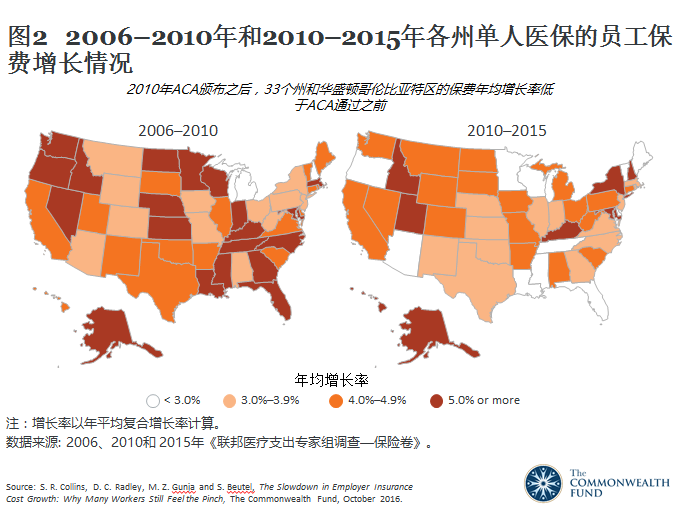
Premium growth rates remained relatively high in eight states (Alaska, Hawaii, Idaho, Kentucky, Maryland, New Hampshire, New York, and Utah), averaging 5% or more annually from 2010 to 2015. Among these, five states (Alaska, Hawaii, Idaho, Kentucky, and Maryland) had growth rates above the national average prior to 2010 (see Table 1a).
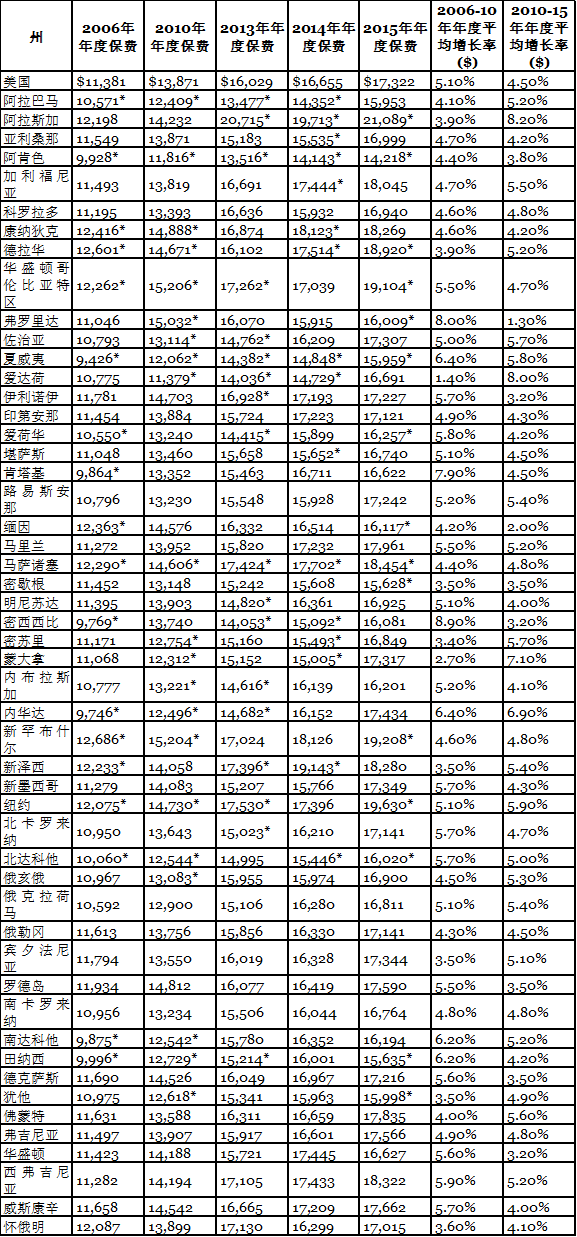
There are also substantial variations in the actual magnitude of employer-sponsored insurance premiums across states. In 2015, the national average annual family health insurance premium was $17,322. The five states with the lowest premiums (Alabama, Arkansas, Hawaii, Michigan, and Tennessee) ranged from $14,218 to $15,959, whereas the four states with the highest premiums (Alaska, Delaware, New Hampshire, and New York) and the District of Columbia ranged from $18,920 to $21,089 (see Figure 3, Table 1b). Annual family health insurance premiums exceeded $18,000 in nine states and the District of Columbia.
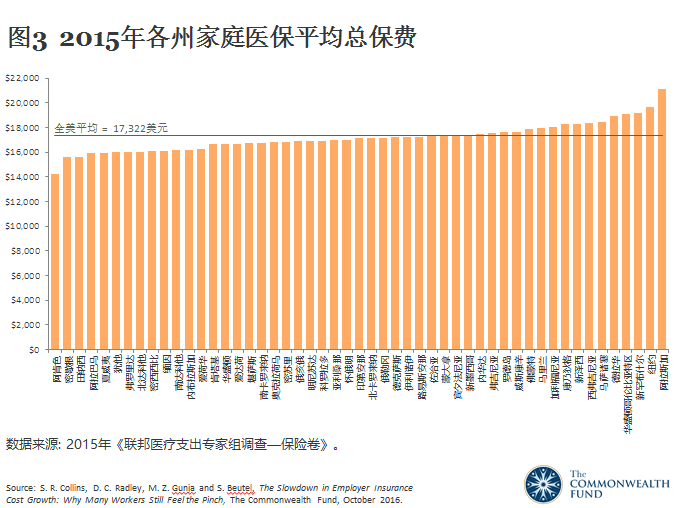
Table 1b. Average Premiums for Employer-Sponsored Family Health Insurance Plans by State Across the United States in 2006, 2010, 2013, 2014, and 2015
Note: Premium data are derived from policies held by U.S. private-sector employers.
*Indicates a statistically significant difference from the U.S. national average (p < 0.05).
Data source: 2006, 2010, 2013, 2014, and 2015 Medical Expenditure Panel Survey—Insurance Component.
Employee-paid premium growth rates are climbing slowly, while employee incomes remain stable.
In single-coverage health insurance plans sponsored by employers, the employee’s share averages 21% of the total annual premium. In 2015, this amount was $1,255 (see Figure 4, Table 2a). This percentage has remained unchanged since 2010 but represents an increase from 19% in 2006, when the average employee premium contribution was $788. In 11 states—Connecticut, Kansas, Louisiana, Maryland, Massachusetts, Minnesota, Nebraska, New Hampshire, New Jersey, South Dakota, and Tennessee—employees are required to pay 24% or more of the premium on average. In Connecticut, the employee’s premium cost for single coverage reaches as high as $1,652 per year.
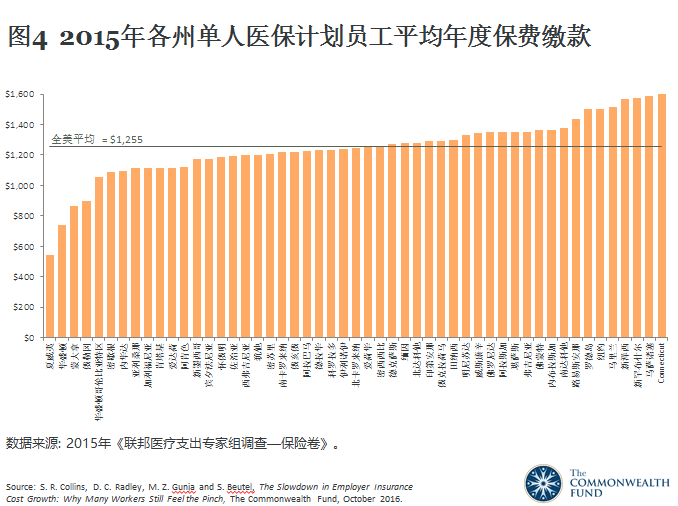
Table 2a Average Employee Share of Premiums for Single Coverage in Employer-Sponsored Health Insurance by State, 2006, 2010, 2013, 2014, and 2015

Note: Premium data are sourced from insurance policies held by U.S. private-sector employers.
*Indicates a statistically significant difference from the national average (p < 0.05).
Data source: Medical Expenditure Panel Survey—Insurance Component, 2006, 2010, 2013, 2014, and 2015.
As shown in Table 2b, compared with single-person medical insurance,Employees are required to contribute more toward family health insurance, with their contribution accounting for 27% of the total premium., based on nationwide data, the amount is $4,710. Similar to single coverage, this percentage remains the same as in 2010 but is higher than the 25% recorded in 2006, when the average contribution was only $2,890. In 16 states, employees are required to contribute 30% or more of the total premium for employer-sponsored health insurance plans; among these, Maryland has the highest average employee contribution for family coverage, at $6,365.
Table 2b Average Employee Contributions to Employer-Sponsored Family Health Insurance Premiums by State, 2006, 2010, 2013, 2014, and 2015

Note: Premium data are derived from insurance policies held by private-sector employers in the United States.
*Indicates a statistically significant difference from the national average (p < 0.05).
Data Source: 2006, 2010, 2013, 2014, and 2015 Medical Expenditure Panel Survey—Insurance Component.
As with the total cost of employer premiums, compared to the five years prior to the passage of the ACA,Employee Contributions for Single and Family Health Insurance Plans Grew More Slowly in the Five Years Following the Passage of the ACAThe average annual growth rate of single-premium contributions was 4.2% from 2010 to 2015, compared with 6.7% from 2006 to 2010 (see Table 1 and Table 2a). For family premiums, the contribution growth rates were 4.8% and 6.5%, respectively, in the five years before and after the passage of the ACA (see Table 2b).
Following the passage of the ACA, employee premium contribution rates for single-coverage health insurance plans grew slowly in 31 states and the District of Columbia; similarly, rates for family-coverage plans increased at a slower pace in 30 states and the District of Columbia (see Tables 2a and 2b). In the remaining states, the growth rates of employee premium contributions for both single and family plans were equal to or higher than those observed before the ACA’s enactment. For example, in New York State, the average annual growth rate of employee premium contributions for single-coverage plans was 6.7% from 2010 to 2015, significantly higher than the 3% recorded from 2006 to 2010.
Although the growth in employee premium contributions has generally slowed, persistently sluggish wage growth since 2014 means that premiums still account for a larger share of income than in previous years.
Although there were signs of a modest recovery in revenue growth in 2015, the situation had not undergone any substantive change. In 2015, household health insurance premium contributions accounted for 5.8% of median household income, compared with 4.2% in 2006 (see Figure 5 and Table 5). In 2015, the percentage of median income contributed by employees toward total health insurance premiums varied significantly across states, ranging from a low of 4.2% in Hawaii to a high of 9% in Mississippi. Seven additional states had premium contribution rates exceeding 7%, namely Alabama, Arizona, Florida, Louisiana, New Mexico, Oklahoma, and Texas.
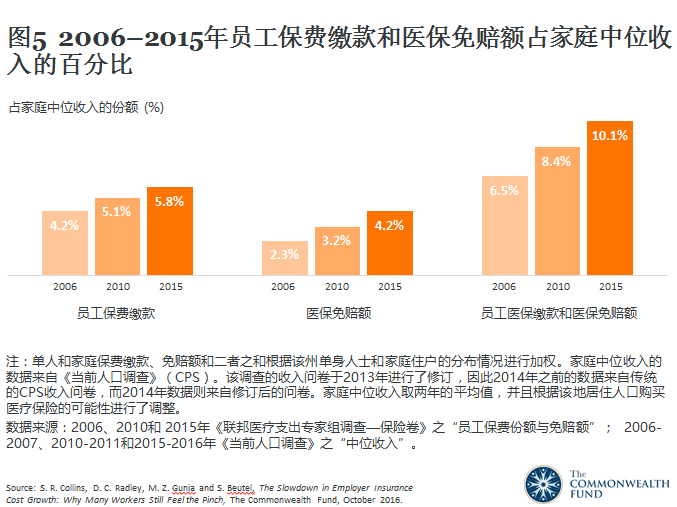
Table 5. Average Employee Insurance Premium Contributions and Deductibles as a Percentage of Median Household Income by State in 2006, 2010, and 2015

*Individual and family premium contributions, deductibles, and the sum of both are weighted based on the distribution of single-person households and family households in the state.
(a) Data on median household income are derived from the Current Population Survey (CPS). The income questionnaire of the survey was revised in 2013; therefore, data prior to 2014 are based on the traditional CPS income questionnaire, while the 2014 data are based on the revised questionnaire. Median household income is calculated as the average of two years and adjusted for the likelihood of residents in the area having health insurance coverage.
Data sources: “Insurance Cost-Sharing” from the Medical Expenditure Panel Survey–Insurance Component (2006, 2010, and 2015); “Household Type Distribution and Income” from the Current Population Survey (2006, 2007, 2010, 2011, 2014, 2015, and 2016).
Of course, there is a positive side to the situation. From 2014 to 2015, the growth rate of employee contributions for single-coverage health insurance plans dropped to less than 2% (data not shown). This means that, on average, at least in the recent period, the growth rate of median income for employees nationwide will still be higher than the cost of single-coverage health insurance.
Research findings indicate that since the enactment of the Affordable Care Act (ACA) in 2010, premium growth rates have continued to slow in most states, reflecting a nationwide decline in healthcare costs following the ACA’s implementation. The results also suggest that U.S. businesses have found the employer mandates under the ACA relatively easy to comply with, including metrics for health insurance coverage among large corporations, provisions allowing young adults to remain on their parents’ family plans, and preventive care services covered with no cost-sharing.