

PatientsLikeMe Files IPO Prospectus to Advance Patient-Centric Data Platform

With the emergence of concepts such as “Big Health” and precision medicine, the traditional healthcare sector has also embraced the wave of digitalization. The internet healthcare market is highly competitive, striving to reduce information asymmetry between physicians and patients while meeting users’ personalized medical needs.
Unlike traditional healthcare models, the presence of effective data collection and analysis capabilities is a key indicator for assessing whether an internet healthcare enterprise has significant growth potential. Traditional medical data primarily originates from hospitals’ internal information systems, which suffer from numerous drawbacks such as closed and non-open architectures and low utilization efficiency. The integration of the internet expands data source channels while enriching the dimensions and breadth of available data. Further data analysis can give rise to diverse business models, enabling companies to monetize the value of their data.
Furthermore, both international experience and domestic development trends indicate that the cultivation of patient communities is becoming increasingly important in internet healthcare. The significant information asymmetry among hospitals, physicians, and patients has led to low levels of mutual trust. Online patient communities enable individuals with similar conditions to connect, allowing them to find peers with comparable diagnoses or those who have achieved successful recovery, thereby facilitating the exchange of experiential insights. Additionally, these platforms support discussions on medication management and provide shared experiences for selecting hospitals, departments, and physicians, thus addressing patients’ long-tail needs and sustaining user engagement on the platform.
PatientsLikeMe
PatientsLikeMe, an online platform for sharing patient case data, is a peer-support community that leverages community sharing and interaction, research, and case data analysis to provide patients worldwide with services such as similar-case searches and relevant treatment information. Adhering to a patient-first mission, the website is dedicated to offering the most effective methods to help patients regain their health.
PatientsLikeMe was founded in 2004 by James Heywood, an engineer from MIT, and his younger brother. Five years earlier, their second brother had been diagnosed with ALS (amyotrophic lateral sclerosis), a rare neuromuscular disease in which patients gradually lose all ability to move while remaining fully conscious. In the pharmaceutical industry, few companies were willing to invest in developing treatments for this condition because, although devastating, it offered little profit potential. Consequently, they began searching for case references worldwide but were deeply disappointed by the lack of authoritative information and support available online.
This inspired them to launch a case-search platform and build a health data-sharing platform through team collaboration. The founders believe that such a data platform can change patients’ destinies, enabling more patients to find solutions by referencing similar cases. Currently, the community has over 400,000 members, allowing users to ask questions, interact, and share experiences online. Covering more than 2,500 disease types, it has become the largest patient community platform in the United States. As a robust source of information for disease treatment, PatientsLikeMe has co-published research on more than 70 topics with other research institutions.
The website features a granular classification of structured data. For instance, when searching for a specific disease, users can access comprehensive information on fellow patients with the same condition, including their treatment regimens, physician-prescribed medication plans, and even data on populations experiencing side effects. Additionally, the website boasts a clear user interface, offering a visualized disease tracking system and standardized testing protocols. It helps patients answer a critical question: Given their current individual circumstances, what are the optimal outcomes and treatment approaches achievable post-therapy?
To date, PatientsLikeMe has developed its own business model. The core values upheld by the website are patient-centricity, enhancing transparency in disease treatment, and promoting an open platform for information exchange. The platform’s primary model is peer-to-peer online consultation, where patients can proactively record and share their physical conditions and treatment experiences, seek reference from similar case data, and thereby help improve users’ health outcomes and quality of life. Meanwhile, the website collects and analyzes vast amounts of valuable medical data from its user base, selling this data to pharmaceutical companies and research institutions as a revenue stream, thus monetizing the value generated by its users. PatientsLikeMe bypasses traditional hospitals and research institutes in a novel way, empowering patients to assist one another as the central actors in the treatment process. By aggregating large volumes of valuable patient data, the platform has broken the monopoly previously held by institutions over medical data.
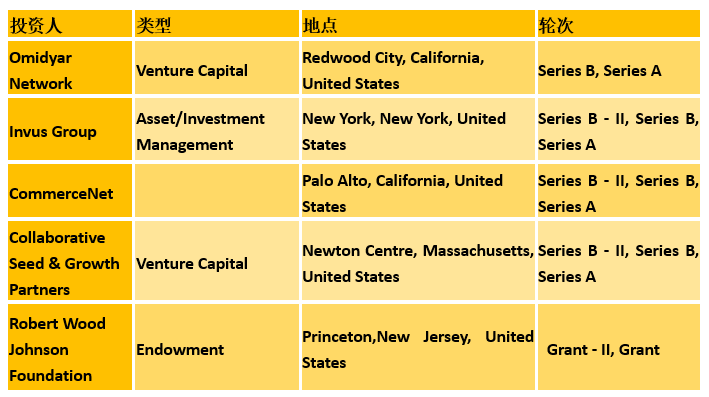
Financing History
Series A:2007/2/21
Series B:2010/10/14
Grant:2013/2/25
Series B - II:2013/6/9
Grant - II:2016/3/2
Business Model
PatientsLikeMe describes itself as “a company not just for profit.” The website steadfastly refuses advertising services, with its primary revenue model centered on collaborating with pharmaceutical companies and research institutions. It leverages the medical data collected on its platform to build a proprietary database, generating income by selling access rights. Pharmaceutical companies and institutions can obtain anonymized user data to support the development and evaluation of new products. Research projects conducted in partnership with these corporations and institutions are typically of significant importance to both patients and the industry, facilitating a deeper understanding of diseases, identifying novel therapeutic approaches, and generating insights to improve pharmaceutical companies’ drug products and services. Typical commercial services include optimizing the design of clinical trial protocols, publishing new research findings based on patient-reported outcomes (PROs), and investigating symptom manifestations across different diseases. The list of corporate and institutional partners collaborating with the website is publicly transparent.
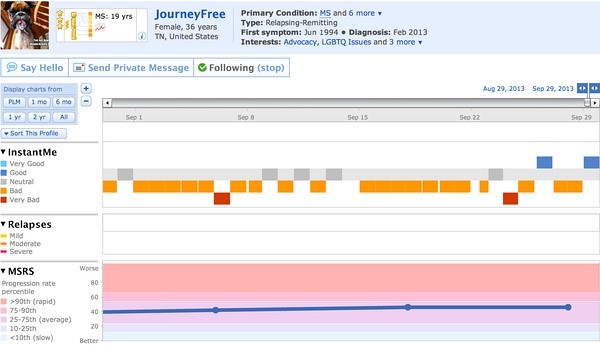
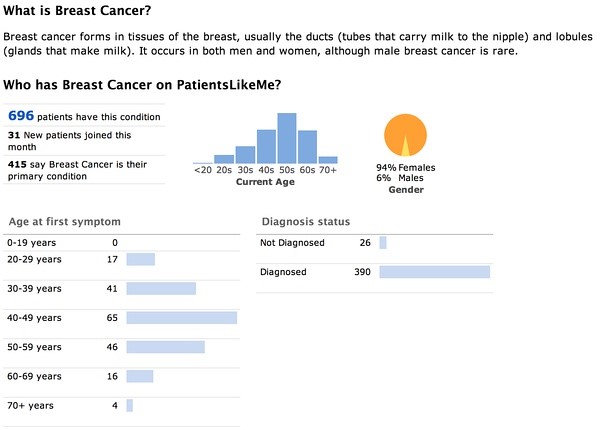
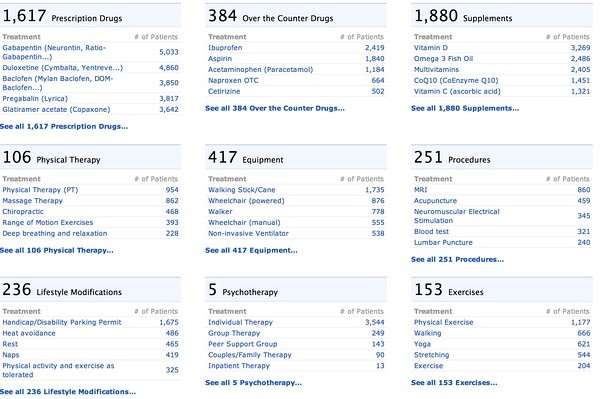
PatientsLikeMe users predominantly suffer from chronic conditions characterized by diverse disease types and prolonged treatment courses, enabling the platform to build a long-term, accumulated database of case records. When users create their profiles, they first complete a concise yet comprehensive survey that collects multifaceted information, including age, physical condition, symptoms, treatment methods, and medical history. Each user can click on a specific treatment method to access relevant detailed data, gaining insights into other patients’ treatment experiences, medication dosages, and concurrent symptoms. If users regularly input their health status on the website, they can generate a well-structured and data-rich visualized health record that documents symptom severity, helps identify potential triggers, tracks treatment efficacy, and monitors emerging side effects. The platform’s backend automatically visualizes individual data through charts and presents the current status of data across various disease categories, making each case’s status accessible and facilitating medical research.
Meanwhile, PatientsLikeMe’s large user base can serve as a patient-led medical research platform. In clinical trials, PatientsLikeMe has established an online tool called the Open Research Exchange (ORE), which can rapidly generate patient-reported outcomes and establish correlations between symptoms and diseases. This tool enables the collection of substantial volumes of patient self-reported medical data within a short timeframe. Medical experts at PatientsLikeMe are responsible for monitoring the entire experimental process. Leveraging complex data models, they can clearly identify any subtle deviations from predicted outcomes for each patient. From the patient’s perspective, this approach evaluates treatment efficacy through dynamic monitoring of healthcare quality, providing decision-makers with first-hand information and significantly enhancing the efficiency of research and evaluation of novel therapies. PatientsLikeMe aims to unlock the true scientific value of data, supporting frontline medical research and accelerating the pace of clinical trials.
Personal Case Data Visualization
Digitization of Individual Case Status Data
Digitization of Individual Cases
Database
Development Advantages
As a link in the internet healthcare industry chain, the commercial value brought by patient social platforms cannot be ignored. In particular, the aggregation of patients with similar conditions through online communities can generate substantial amounts of personalized data, offering significant potential for further development and innovation based on these data.
1. A Reliable Patient Community. Through this website, patients can connect with numerous members who have similar conditions for peer-to-peer communication. They can also help others cope with their illnesses by sharing personal medical journeys, healthcare experiences, and answering questions online. Users gain advice from the platform and contribute their own experiences in return, fostering a positive community atmosphere that sustains user engagement.
2. Abundant data resources. PatientsLikeMe now boasts over 400,000 users covering 2,500 diseases, generating a substantial volume of data. This wealth of data serves as a critical core competitive advantage for the platform, underpinning its business model of selling user data and treatment outcome insights to pharmaceutical companies and research institutions.
3. Comprehensive User Features. PatientsLikeMe has designed a wide range of user features to provide patients with a holistic understanding of their current health status, potential future progression, and effective treatment recommendations. Its user-friendly experience encourages individuals to willingly share their personal information on the platform.
Issues Identified
As an open social platform, users can share their personal circumstances and experiences with minimal restrictions. Accurately identifying and quantifying this information poses a significant challenge in data collection, necessitating further consideration of the technical approaches required to extract meaningful insights from such data.
The authenticity of information on social platforms is also a concern; preventing the spread and sharing of false information is a key prerequisite for maintaining user stickiness. Furthermore, there is still a long way to go in ensuring patient privacy and data security during the process of data sales.
Similar Platforms Abroad
Sermo.com: This is a free social networking platform built specifically for physicians. Sermo hosts more than 600,000 verified physicians from around the world. On this platform, physicians can anonymously share medical insights, engage in knowledge exchange, and seek treatment recommendations for clinical cases from their peers. Sermo charges pharmaceutical companies for access to member information and online interaction data.
My Health Teams: This is a patient community website focused on chronic diseases, where users can share stories and exchange experiences with fellow patients. To date, it has established 21 mutual-aid social groups for different types of chronic conditions, with design priorities leaning toward enhancing social interaction and fostering emotional connections among users.
Domestic Patient Social Platform
In China, similar patient community platforms include the “Tongbingxianglian” Community and “Manyoubang,” among others. The development of domestic patient communities is still in an exploratory phase and requires further maturation over time. Only a few internet-based patient community platforms have clearly defined their operational models, such as the medical referral platform model or the healthcare decentralization model, while the business models of other products or platforms remain unclear. However, integrating internet-based patient communities with disease-specific treatment databases to provide services to enterprises could potentially drive rapid growth for these communities. Additionally, incorporating commercial health insurance as a supplementary service may offer a viable path toward swift commercialization for patient communities.

Based on several long-established online patient communities in China, the main operational characteristics are as follows:
1. Disease-specific approach. Implement vertical community operations tailored to specific disease categories. Patients sharing the same diagnosis have a solid foundation for interaction, fostering long-term engagement. By aggregating patients according to their specific conditions, efforts can be more precisely focused.
2. Psychological Intervention. Psychological support plays a highly positive role for patients, as nearly all patients have varying degrees of psychological needs. Taking an online patient community as an example, the platform has established a dedicated forum for psychological intervention and introduced online lectures by physicians to help patients overcome psychological barriers. Meanwhile, through patient journey narratives, it encourages patients to share their personal experiences and emotional journeys.
3. Integrate Effective Information. The information shared within patient communities is sourced from a wide range of targeted channels and integrates physician resources, supplemented by professional medical consultations to help patients identify information tailored to their specific conditions.
Although the aforementioned online patient communities have accumulated a certain number of initial users and integrated corresponding medical resources in an attempt to establish a social-based closed-loop ecosystem, they currently face the following issues:
First, product designs are often cumbersome, with poor privacy protection and limited convenience. Most existing patient social networking products on the market are offered as a combination of mobile apps and PC websites, requiring users to register or log in via WeChat or QQ to access community discussions. This creates issues such as privacy leakage and cumbersome login procedures, which hinder user convenience. Furthermore, the authenticity of online information is a growing concern; users struggle to distinguish between true and false information, making them susceptible to misinformation that can lead to serious consequences. To address this, internet platforms must provide reliable identity verification processes, and treatment methods shared on these platforms should be vetted by professional institutions.
Second, patient social products retain PC-era designs, resulting in poor real-time performance. Although patient community products have established a presence on mobile platforms, most still adhere to the BBS design paradigm of the PC era, with interactions primarily occurring through online posting and replying. This leads to issues such as low timeliness in addressing patients’ concerns and fragmented information. The product-level issues are merely superficial; the underlying essence is that patient communities lack mature operational models. Only by continuously refining their positioning can these platforms identify core, profitable business models.
Third, platforms have not yet fully recognized the importance of medical data. They lack the technical capabilities for data collection, making it difficult to integrate, analyze, and process large volumes of real-world information in detail. If effective monetization of community users cannot be achieved, companies will lack the incentive to further improve and develop their platforms.
Data
1.Data Source
PatientsLikeMe creates a transparent information platform for patients by fostering community engagement, enabling the sharing of experiences. Within this community, patients share their symptoms, treatment journeys, and personal experiences, while also referencing the treatment outcomes of other patients with similar conditions to inform their own decision-making. Such communities break down the information asymmetry between doctors and patients, allowing patients to gain a clearer understanding of their own health status and receive both physiological and psychological support.
The large user base accumulated by PatientsLikeMe serves, to a certain extent, as a testament to the platform’s authority and reliability, encouraging patients to seek solutions and advice on the site. This substantial user foundation also enhances user stickiness.
Patients can record their disease experiences in daily life and their responses to various medications. PatientsLikeMe digitizes the exchange and sharing of patient experiences, breaking down symptoms and treatment processes into concrete data points that serve as real-world evidence for treatment. This makes disease descriptions specific, comparable, analyzable, and easier to manage. All this information is openly shared among patients on an open scientific platform. On PatientsLikeMe, each patient lists key personal medical information on their profile page—including medical history, symptoms, medication lists, dosages, timing of administration, reasons for discontinuation, and disease progression—and updates it regularly. The website’s backend software converts these data into bar charts and line graphs in real time, allowing users to clearly observe changes in condition, treatment processes, and symptom relief. Over time, these accumulated data form a living database of disease treatment and patient experiences, offering first-hand, real-time, and openly accessible information. After analyzing the database, PatientsLikeMe provides users with a standardized self-assessment model to monitor the rate of disease progression and investigate potential missing triggering factors, such as insomnia or alcohol consumption.
Beyond its database, PatientsLikeMe hosts a forum where members can share various information and recommendations, offering more detailed feedback on specific medications or treatments. This forum differs from typical medical forums because it is integrated with the database; any information posted by an individual in the forum can be corroborated at any time by the data on their personal profile. Patients can connect with members who have similar conditions for peer-to-peer communication, sharing personal healthcare journeys, medical experiences, and participating in online Q&A. Additionally, physicians from around the world provide professional answers on the platform.
PatientsLikeMe has also gradually incorporated various new data applications, such as the “Time Machine.” By aggregating data from patients with similar symptoms, it can map out the disease progression and life stages a patient is likely to encounter, thereby providing them with adequate psychological preparation. For patients whose conditions do not follow the patterns predicted by the “Time Machine,” PatientsLikeMe investigates these outlier cases to determine what factors have led to their deviations.
PatientsLikeMe has designed various user-friendly features, cultivated an authoritative community structure, and accumulated robust data support, thereby generating sufficient appeal to motivate both patients and physicians—particularly patients—to provide data.
2.Data Value
Although the medical data accumulated by PatientsLikeMe is provided free of charge by users, it is highly valuable because it consists of high-quality real-world data that cannot be collected through conventional clinical trials. Raw data gathered via internet platforms feature low collection costs, massive volume, diverse sample characteristics, and a wide range of study variables. These attributes make such data highly conducive to analyzing the effects of various factors and uncovering potential correlations, such as those involving age, gender, and lifestyle habits.
The cost of conducting a single clinical trial for pharmaceutical companies is extremely high, with the per-patient cost for each phase typically starting at tens of thousands of dollars. Moreover, such trials generally involve only hundreds of patients, making it difficult to predict all potential side effects that may arise once the drug enters widespread circulation. In contrast, PatientsLikeMe holds data from tens of thousands of patients with chronic conditions, representing a vast resource in the eyes of many pharmaceutical companies. PatientsLikeMe has established multiple patient communities, with the largest focused on fibromyalgia, multiple sclerosis, and amyotrophic lateral sclerosis (ALS). According to previous statistics from the U.S. Department of Health and Human Services, at least 60% of patients nationwide are active on PatientsLikeMe, sharing their disease stages, treatment outcomes under different therapies, and recovery progress with little reservation.
Meaningful medical data should be clinically valuable, collected in real time, and continuous. While historical data is certainly valuable, continuously collected data is even better, with the optimal approach being integration into homes and communities. On PatientsLikeMe, these data characteristics are all met, while also providing additional avenues for analysis. Patient-generated data enables research institutions to gradually observe patients’ daily lives and healthcare-seeking behaviors, thereby gaining a clearer and more comprehensive understanding of the benefits and risks of medications.
For example, in studying adverse drug reactions (ADRs), large-scale data can be leveraged to determine whether observed reactions represent a general pattern or isolated cases. Further analysis can investigate potential drug–drug interactions, assess patient adherence to prescribed regimens, and evaluate whether patients have correctly understood the instructions for use. This multifaceted approach enables a comprehensive understanding of ADRs from various perspectives.
3.Value Realization
PatientsLikeMe primarily collaborates with pharmaceutical companies and research institutions through two approaches. First, it sells access to its existing database to pharmaceutical companies and healthcare organizations, with all patient personally identifiable information de-identified in the provided data; an example of this is its collaboration with the biopharmaceutical company Genentech. Second, it serves as a platform for pharmaceutical companies to recruit volunteers for clinical trials and proactively collect experimental data, thereby enhancing the efficiency of clinical trial programs; an example of this is its partnership with Merck, a leading pharmaceutical giant.
Additionally, PatientsLikeMe has entered into a preliminary collaboration with the U.S. Food and Drug Administration (FDA), which will assess the feasibility of using the PatientsLikeMe platform as a channel for reporting adverse drug reactions. After drugs enter the market circulation phase, the FDA aims to regulate medications through this new digital channel. On medical social networking platforms like PatientsLikeMe, the FDA can observe adverse drug reactions more comprehensively and precisely, helping to confirm that such reactions are indeed caused by the evaluated drug.
Despite various privacy laws protecting patient data, PatientsLikeMe, based in Cambridge, Massachusetts, is still able to package and publish its online information. The company adopts a fully transparent approach to this issue. It explicitly informs members about how their data will be used, to whom it is disclosed, and for what purposes, thereby addressing the privacy dilemmas faced by most companies. The company believes that this approach serves a greater good: leveraging these data to produce more beneficial outcomes, including more effective targeted drugs and higher-efficacy medical devices.
Collaboration Cases
(1) Tech
PatientsLikeMe has entered into a deep strategic partnership with the biopharmaceutical company Genentech. As part of the agreement, Genentech will have access to PatientsLikeMe’s entire database for the next five years. This marks the first large-scale, in-depth collaboration between a patient social network and a pharmaceutical company. Genentech was acquired by Roche in 2009. While this is not the first time a life sciences company has partnered with PatientsLikeMe, it is the most extensive collaboration to date. Previous partnerships were somewhat limited in scope, often focusing on specific diseases. Under this new agreement, Genentech will be able to access all information posted by PatientsLikeMe users. Even if Genentech adjusts its research direction midway, it will not need to renegotiate or sign a new agreement with PatientsLikeMe. In exchange for access to PatientsLikeMe’s data, Genentech will pay a fee to the platform. During data access, Genentech will not see personal privacy information such as patients’ names or email addresses.
(2) AstraZeneca
British pharmaceutical giant AstraZeneca (AZN) has signed a five-year collaboration agreement with PatientsLikeMe, gaining access to the latter’s global network. AstraZeneca stated that it will leverage patient-reported data from PatientsLikeMe to shape future pharmaceutical research and development and improve patient health outcomes in key therapeutic areas. The initial focus areas of this partnership include respiratory diseases, lupus, diabetes, and oncology. This collaboration will help AstraZeneca utilize critical patient perspectives and real-world, real-time evidence to support relevant research and drug development projects.
(3) Merck
Merck has partnered with PatientsLikeMe to recruit clinical trial volunteers through its website, adopting a model akin to a “listing fee,” whereby PatientsLikeMe charges recruitment fees. The drugs under investigation include treatments for lung cancer and arthritis, among others.

By VCBeat. Please credit the WeChat official account when reposting:VBResearch2016
↓↓↓


