

Klara Files for IPO, Aiming to Become the 'WhatsApp of Healthcare' as Patient-Provider Communication Emerges as Critical to Treatment

Klara
Doctor-Patient Communication Platform
In the Q3 2016 digital health industry report by StartUp Health, the Patient/Consumer Experience category ranked first in terms of investment and financing volume both in the United States and internationally. VCBeat (WeChat ID: vcbeat) will provide special coverage of foreign companies in this category, analyzing their products, business models, and financing activities to offer insights for investors and entrepreneurs in China.
This article introduces Klara, a systematic healthcare communications company that connects patients with stakeholders across all stages of the care journey. This platform greatly facilitates doctor-patient communication, enables healthcare providers to better understand their patients, and enhances the overall patient experience.
As the industry’s focus continues to shift toward patients, their expectations of healthcare providers are growing increasingly demanding. Meanwhile, healthcare providers are eager to listen more closely to patient feedback to enhance their operational efficiency. Identifying a suitable platform to facilitate effective communication has become a genuine and shared need for both parties.
Klara, a company developing a communication platform, positions itself as the “professional healthcare version of WhatsApp.” The platform is accessible via both a mobile app and a web interface. However, its founders emphasize that Klara should not be viewed simply as a messaging app. “We are not just a SMS app, but a systematic healthcare communication tool ultimately designed to serve patients.”
Medical "Central Nervous System"

Klara’s Mission: Building the Central Nervous System of Healthcare
Klara was founded in 2013 by Simon Bolz and Dr. Simon Lorenz, and currently maintains offices in New York and Berlin. In 2014, the company launched the Klara platform, initially as a B2C telehealth messaging service for patients. It has since successfully transformed the platform into a B2B2C healthcare communication hub. The company states that its goal is to establish the “central nervous system” of the healthcare industry. “We view healthcare as a network, aiming to connect everyone involved in patient care.” This includes primary care physicians, medical specialists, clinicians, administrative staff, health insurance companies, care coordinators, and, of course, the patients themselves.
“To achieve digitalization in healthcare, advancing communication methods is a key priority. Therefore, we aim to create software that both doctors and patients are happy to use on a daily basis, enhancing effective communication, which will ultimately translate into improved patient experiences and higher standards of medical care,” said Simon Bolz, Co-founder and CEO. He further noted that phone conversations are time-consuming and prone to misunderstandings. Moreover, due to concerns over patient data security, healthcare providers cannot rely on email or similar channels for information exchange. Secure, highly private instant messaging is the optimal solution. This is the core issue that Klara was founded to address.
Achieving Multiple Functions Under Information Security Assurance
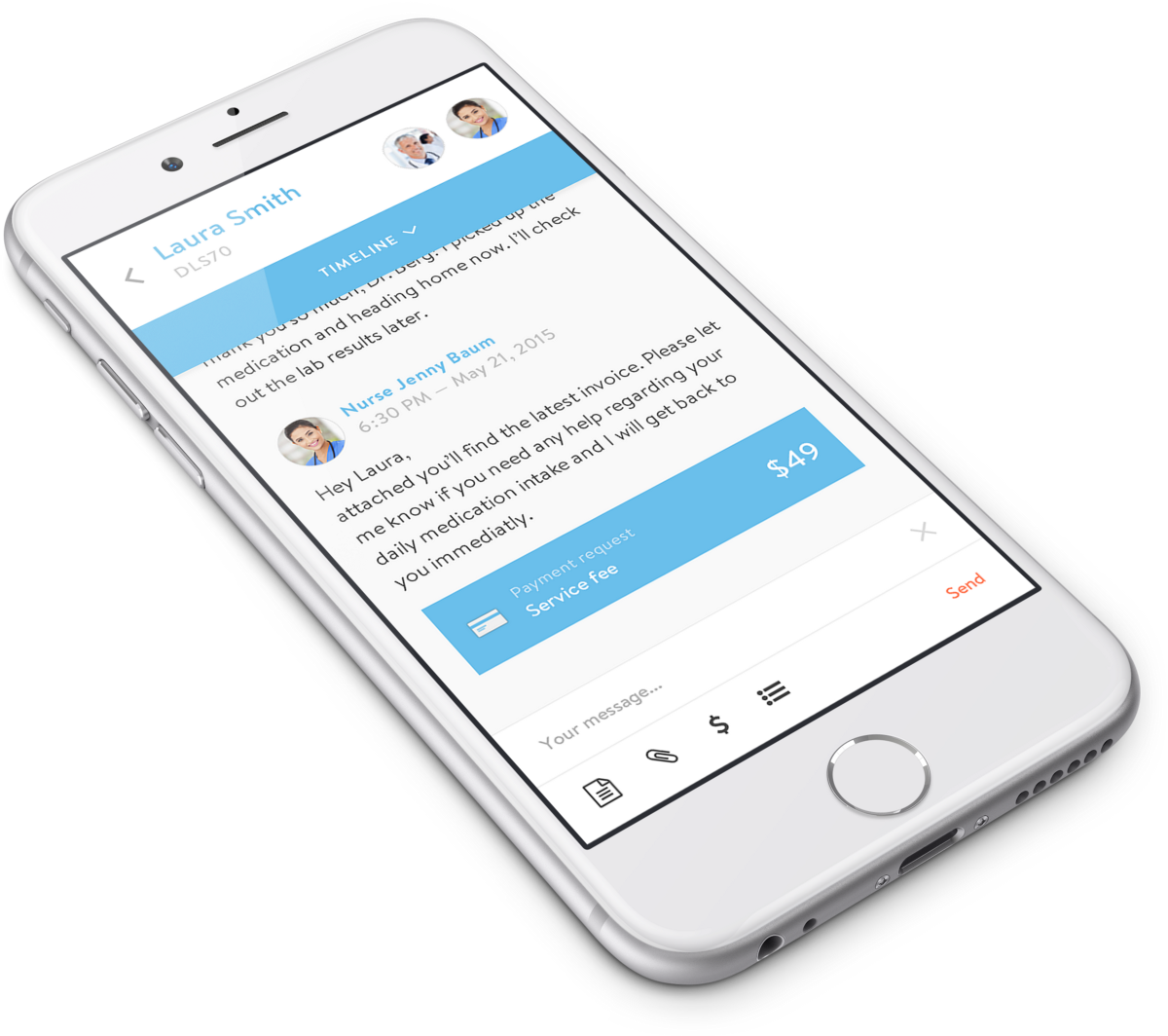
Future Possibility of Paying Medical Bills via the Klara Platform
As Klara is a platform that extensively transmits medical information, it has applied for HIPAA (Health Insurance Portability and Accountability Act) compliance. While ensuring external privacy, the platform offers considerable openness within its base of verified users: all verified users can read and share clinical diagnosis and treatment records, treatment schedules, and other specific patient details; all members of the medical team can send messages, laboratory results, and images to patients, who can also reply via the platform, with all transmitted content being archivable or exportable to the patient’s Electronic Health Record (EHR); additionally, healthcare teams can assign patients to staff members, send internal team messages, or transfer patients to another colleague.
Their future plans also include integrating billing and e-prescribing systems, with the billing system enabling patients to pay medical bills through the Klara platform. The platform now offers automated referral services from primary care physicians to specialists and provides insurance pre-authorization.
Seamless Experience Gains Traction Among Users and Investors
The company has partnered with several health tech service providers, including medical software company Epic Systems and healthcare cloud services provider athenahealth.
Lorenz stated that the Klara platform currently has 500,000 active patient users, with approximately 500 clinical care teams as its daily active users. Mount Sinai Health System in New York is one of its key clients. The company has signed agreements with all specialty pharmacies in New York, as the expansion of the pharmaceutical network benefits all parties involved in the platform. Moreover, pharmaceutical companies have been consistently driving specialty pharmacies to adopt apps like Klara.
According to user reports, the Klara platform has improved the quality of communication, thereby enhancing the quality of care. Investors consider instant messaging services in the healthcare industry to be a critical segment of the mobile health market, as industry reports indicate that physicians believe such apps play a pivotal role in patient recovery. “My first encounter with the platform was when I needed to schedule an appointment with a doctor. The ease of use of Klara was surprisingly seamless, prompting me—rarely—to reach out to the company myself to explore investment opportunities,” said Taylor Greene, a partner at New York-based venture capital firm Lerer Hippeau Ventures, in a statement.
Investment and Financing Overview
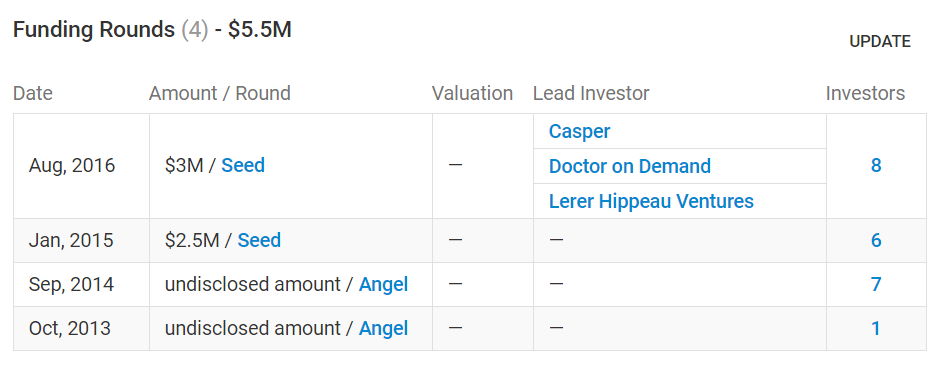
Klara has completed its seed funding round, raising a total of $5.5 million. The most recent tranche of $3 million was closed in August this year, led by Casper, Doctor on Demand, and Lerer Hippeau Ventures, with participation from Berlin-based early-stage investor Atlantic Labs, tech media outlet BuzzFeed, and others, bringing the total number of investors to eight.