

Independent Medical Imaging Centers: An Emerging Growth Driver in China's Trillion-Yuan Medical Imaging Market
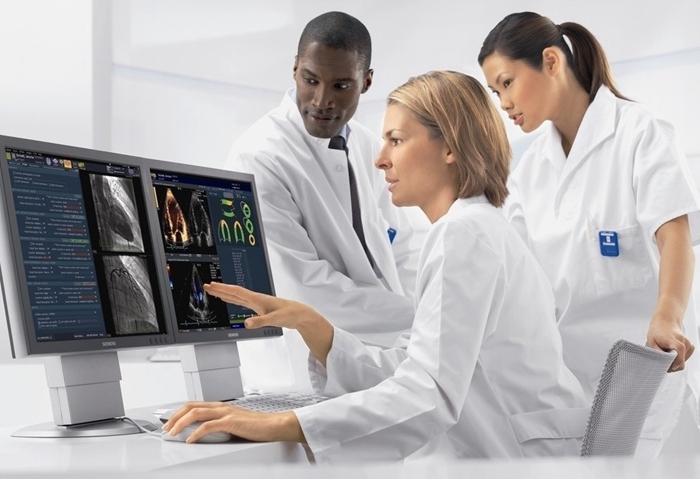
Driven by advancements in imaging technology and the growing demand for medical diagnostics, an increasing number of imaging devices are being deployed in clinical settings. Clinicians are increasingly recognizing and relying on medical imaging as one of the primary diagnostic modalities. Meanwhile, a growing number of patients are becoming aware of the importance of imaging examinations in early disease screening and intervention, coupled withPopulation AgingThis has also led to an increasingly strong demand for medical imaging examinations.
Three Key Drivers Behind the Rapid Growth of the Tele-radiology Industry
In recent years, the telemedicine imaging industry, powered by internet technologies, has gradually grown into a force to be reckoned with, making remote diagnostic and therapeutic imaging an inevitable trend in the sector.
The primary reason lies in:
1) Traditional medical imaging departments cannot meet domesticRising Patient Demand, particularly in primary care hospitals, where there is a significant shortage of radiology technicians with adequate professional competence for image acquisition and radiologists capable of interpreting images for diagnosis;
2) The telemedicine imaging diagnosis and treatment industry, backed by internet healthcare, serves as the vanguard of medical digitalization within the “Internet+” initiative due to its inherent industry characteristics. In recent years, with the acceleration and deepening of healthcare reforms,A Series of Favorable Policies Have Been Introduced Successively, with intensified efforts to promote medical insurance, the time has come for the internet to enter the healthcare industry;
3)The development of mobile internet, the widespread adoption of smart hardware devices, and the improvement of internet infrastructureIt has provided fertile ground for explosive growth in the integration between healthcare providers and patients in the telemedical imaging industry.
40% of the U.S. Market Contribution Comes from Independent Imaging Centers, Presenting Significant Opportunities for the Chinese Market
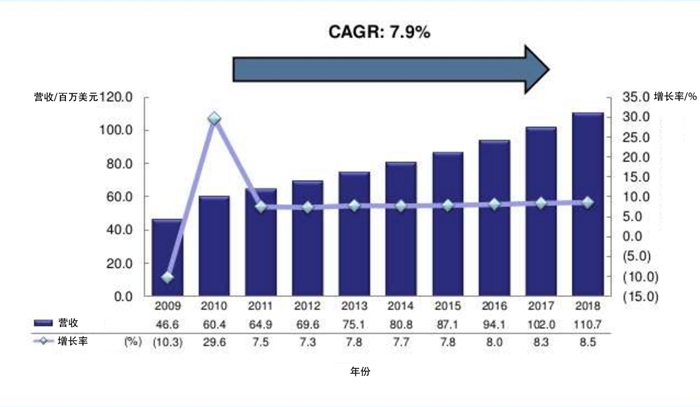
U.S. Medical Imaging Market Size Forecast (Source: Sinolink Securities Research Institute)
Based on this, the medical imaging industry has undoubtedly entered a fast lane, with medical imaging centers becoming a focal point. Taking the United States as an example, there are more than 6,800 imaging centers, and approximately 11 million telemedicine consultations were conducted in 2015. These services are primarily B2B-oriented, including around 5 million inter-hospital imaging diagnoses (covering X-ray, CT, and MRI).From 2009 to 2015, the U.S. medical imaging diagnostics market expanded from $4.66 billion to $8.71 billion. Of this, 60% of the market contribution came from healthcare institutions, while 40% came from independent imaging centers.
In China, the core value of medical imaging lies in addressing the shortage of radiology specialists at primary-care hospitals. This helps hospitals reduce labor costs and minimizes medical disputes arising from misdiagnosis. For patients, it eliminates the need for long-distance travel to seek care elsewhere, making them more willing to remain within their local primary-care settings. With the advancement of tiered diagnosis and treatment, restrictions on new equipment acquisitions by large public hospitals, and the relaxation of policy constraints on independent imaging centers, opportunities for independent medical imaging centers have emerged. According to a report by Guojin Securities, the current domestic medical imaging market exceeds RMB 200 billion, with provincial capital cities accounting for RMB 25–30 billion and county-level cities exceeding RMB 30 billion.
Offline Medical Imaging Centers Are the Gateway for Patient Traffic
A review of case studies from medical imaging centers both in China and abroad reveals that the in-depth development of such centers relies on offline facilities as patient access points, diagnostic support from physician groups, and the application of new technologies to enhance diagnostic efficiency.
Offline medical imaging centers serve as patient acquisition channels., cloud-based image interpretation platforms backed by imaging centers hold an advantage over purely asset-light cloud-based image interpretation platforms. Independent medical imaging centers undertake clinical diagnosis and premium health check-ups; only with a stable customer base can they establish a stable, high-quality team of experts.
For asset-light remote image interpretation platforms, key challenges include acquiring high-value imaging studies, delivering standardized services, and convincing hospitals or patients to pay for pure service offerings. The primary difficulty for such platforms lies not in technology, but in securing a stable supply of high-value-added imaging cases.
In terms of establishing offline medical imaging centers to create patient traffic entry points,Alliance Healthcare Services, Inc.(Alliance Healthcare Services) offers a model that is highly worthy of reference and adoption by the Chinese market. As the largest provider of mobile diagnostic imaging services, on-site hospital imaging services, and stereotactic radiosurgery services in the United States, it serves hospitals and medical institutions nationwide, demonstrating strong offline operational capabilities.
As of December 31, 2015, Alliance serviced and managed 563 diagnostic imaging and radiation therapy devices, 116 of which were deployed in hospital-based radiology centers across various U.S. states. Meanwhile, the company operated related treatment facilities through 32 radiation oncology centers. Alliance has established long-term strategic partnerships with more than 1,000 hospitals, medical institutions, health management organizations, and physician associations across 45 U.S. states, delivering patient care services through its team of 2,430 professional healthcare providers.
Collaborating with Physician Groups to Deliver Diagnostic Support
Modern medicine relies on the collection and interpretation of specific data, with imaging conclusions serving as a critical component that influences clinicians’ formulation of treatment strategies and plans. As a significant branch of medical science, medical imaging involves in-depth research and discussion on the acquisition, evaluation, analysis, and interpretation of various imaging modalities. Radiologists play an irreplaceable role in determining the nature of complex diseases and assessing prognosis.
Medical imaging services can be fully digitized, enabling deep integration with the Internet.There are no obstacles to data transmission via the internet or platform-based visualization. Consequently, the diagnostic process can be entirely decoupled from the patient’s physical presence, relying instead on imaging data and the expertise of remote physicians to assess and evaluate the progression, nature, and prognosis of diseases.
For medical imaging centers, merely possessing equipment as a patient acquisition channel may not be sufficient,Only by enabling more physicians to participate can the utilization efficiency of medical equipment be effectively improved., leveraging the advantages of medical resource allocation at the Medical Imaging Center.
Imaging Advantage, the largest radiology cloud service platform in the United States, partners with a large number of radiologists to provide comprehensive medical imaging solutions for medical centers and medical imaging organizations. The company has expanded its coverage to more than 26 states and collaborates with over 500 board-certified, highly specialized radiologists, achieving an average image interpretation turnaround time of 23 minutes.
In China, there are also noteworthy cases of medical imaging centers collaborating with physician groups to provide professional medical imaging diagnostic support. For example, Huiyi Huiying establishedHuiyi Huiying Imaging Physician Group, providing imaging diagnostic report consultation and educational services specifically for its imaging platform. The product platform has contracted with 100 international, national, and provincial experts, as well as approximately 1,000 routine outsourced radiologists, to deliver rapid-response and outsourced image interpretation services.
On one hand, physician groups can provide doctors with a relatively stable demand for medical imaging consultation services, enabling affiliated physicians to offer remote consultations on cloud-based images during their spare time and thereby creating additional sources of income. On the other hand, these groups can organize various activities—such as peer exchanges, multidisciplinary consultations, and lectures—to establish career advancement pathways and support professional development. Furthermore, since image interpretation and diagnostic work in radiology generally do not require face-to-face patient interaction and can be conducted remotely via the internet, physician groups specializing in medical imaging can play a more significant role within medical imaging centers compared to many other specialties, delivering more pronounced clinical benefits to patients.
Big Data and Artificial Intelligence Drive Intelligent Diagnosis
In an era marked by the relentless emergence of new technologies, more accurate diagnostic reports generated by large-scale medical imaging equipment integrated with big data analytics, image recognition, and artificial intelligence (AI) are becoming increasingly accessible. The breakthrough advancements in AI technology have had a significant impact on computer-aided detection and diagnosis in medical imaging.
In 2016, Imaging Advantage announced a collaboration with the Massachusetts Institute of Technology, Harvard Medical School, and Massachusetts General Hospital to focus on AI-based analysis of X-ray images. This initiative was named “Singularity Healthcare.”
“Singularity Healthcare” technology is expected to be deployed within the next few months. The algorithm will learn from Imaging Advantage’s archive of 7 billion medical images, analyzing X-rays to identify potential areas of disease. If successful, “Singularity Healthcare” will transform traditional radiology by making diagnostics more efficient, cost-effective, and accurate.
Regarding the current development status of third-party imaging centers in China, although they started late, they are developing rapidly. Among them, Huiyi Huiying, as the first online third-party imaging center in China, is also leveraging its technological advantages to deeply develop technologies related to intelligent diagnosis of medical imaging.
Huiyi Huiying’s founding team hails from Stanford University in the United States and Tsinghua University. The company possesses core technologies in deep learning for medical imaging and has developed products such as the Intelligent Imaging Cloud Platform and the Precision Radiotherapy Cloud Platform, accumulating substantial technical expertise in the research and promotion of intelligent diagnosis and big data analytics for medical imaging.
By leveraging Amazon’s distributed cloud storage technology, Huiyi Huiying enables real-time online access and high-concurrency retrieval of massive volumes of medical imaging data.Meanwhile, it leverages cloud computing engines to perform high-performance image processing computations such as deep learning, automated segmentation and registration, and Monte Carlo simulations, thereby laying the technical foundation for commercialized intelligent imaging diagnosis.
Intelligent diagnosis is becoming increasingly important in the field of medical imaging diagnostics, with medical imaging equipment relying more heavily on data analytics. Clinical analytics leveraging big data and analytical methods, along with the application of artificial intelligence algorithms to learn from data and make predictions, will be a key area of focus. By utilizing AI-based image recognition technology, physicians can make professional judgments more efficiently, patients can access medical services more rapidly, and healthcare institutions can reduce costs. The continuous evolution of technology plays a noteworthy role in driving the development of medical imaging centers.
Trend: China’s Independent Medical Imaging Centers Are Poised for Rapid Growth
Drawing on the U.S. experience, where evidence-based medicine is highly prioritized, diagnostic imaging holds a relatively prominent position. In China, the development of medical imaging centers has been relatively slow due to a historical emphasis on treatment over diagnosis. However, with growing attention to diagnostic imaging and the gradual establishment of multidisciplinary consultation systems, and by referencing the developmental trajectory of independent imaging centers in the United States, independent medical imaging centers are poised to become the future trend in the third-party remote diagnostic imaging industry in China, driven by favorable factors such as tiered diagnosis and treatment, healthcare reform, and multi-site practice policies.Foreign-invested enterprises, state-owned enterprises, and large hospitals in China are entering this market from various angles, and a large number of independent medical imaging centers will usher in a period of rapid development.