

Kangantu Files IPO Prospectus as Market Leader in India-Based Hepatitis C Treatment, Holding Over 60% Share in Niche Segment
Yang Chen, founder of Kangantu, told a reporter from VCBeat (WeChat ID: vcbeat) that the Lu Yong case revealed to him that the price difference for certain drugs between China and India could be as high as 100-fold, which became the initial inspiration for establishing Kangantu. Subsequent research indicated that new specialty drugs are launched in India and the United States almost simultaneously, whereas approval by China’s National Medical Products Administration (NMPA) requires repeated clinical trials, resulting in a delay of 3–5 years. Furthermore, while developing countries like India benefit from compulsory licensing for generic drugs, China, despite having an ample supply of patented medicines, faces prices more than ten times higher, with many such drugs not covered by national medical insurance. Meanwhile, India accounts for 40% of global pharmaceutical exports, ensuring reliable quality control.
Why focus on hepatitis C? With 20 to 40 million patients in China and 200,000 new cases annually, this vast patient population lacks access to advanced treatment options. Many current regimens in China remain outdated, dating back 15 years and failing to keep pace with medical advancements. Moreover, 95% of hepatitis C cases can be completely cured within three months of treatment. For the remaining 5%, subsequent therapeutic strategies can be tailored based on precise drug-resistance profiling and high-sensitivity viral testing. This is precisely why Yang Chen founded Kangantu.
Since overseas proxy purchasing of medications is illegal, Kangantu has chosen to integrate medical treatment with tourism, allowing patients to seek care in a pleasant and relaxed manner.
Kangantu is the first company in China to professionally guide patients to India for hepatitis C treatment using the latest regimens. To date, it has organized more than 70 hepatitis C treatment groups, with over 700 patients traveling abroad with Kangantu for hepatitis C therapy. The company is backed by a team of PhDs from the Shanghai Institutes for Biological Sciences, Chinese Academy of Sciences, who have long been at the forefront of hepatitis C research. Its founder, Dr. Yang Chen, holds a PhD from the Shanghai Institutes for Biological Sciences, Chinese Academy of Sciences, and other partners also hold doctoral degrees from prestigious institutions such as the Chinese Academy of Sciences and Tsinghua University.
1. The user takes photos of the hepatitis C patient's medical records and sends them to Kangantu to consult on whether the new hepatitis C medication is applicable.
2. If the new drug is deemed appropriate, Kangantu will sign a formal service agreement with the user.
3. The user pays the advance payment.
4. The user completes all 11 required laboratory tests, takes photos of the results, and sends them to Kangantu, which will translate the patient’s medical records into English.
5. The user provides a passport, and Kangantu handles the application for an Indian visa on behalf of the user.
6. Kangantu arranges appointments with specialists at renowned hospitals in India for patients and books round-trip airfare between major provincial capital cities in China and Delhi.
7. The user pays the remaining balance.
8. At the designated time, patients will gather in Hong Kong to form a group with Dr. Kang Antu and other patients, boarding the same flight to India.
9. Dr. Kang Antu provides full accompaniment throughout the medical treatment, daily life, and tourism in India, and returns to China together with the patient.
10. After returning to their home country, the patient shall adhere to the prescribed medication regimen and undergo testing at a hospital in accordance with the Indian physician’s instructions. The test results should be submitted to Kangantu for professional consultation by its team of physicians. In the event of adverse drug reactions, Kangantu can also consult the attending physician in India to provide recommendations for subsequent treatment.
11. Three months after completing the medication and discontinuing treatment, undergo testing at a hospital; if no virus is detected, hepatitis C is considered completely cured.
12. Current new hepatitis C medications achieve cure rates exceeding 95%, enabling complete eradication of the virus. In the rare event of treatment failure or relapse, Kangantu, in collaboration with the Shanghai Institutes for Biological Sciences of the Chinese Academy of Sciences, provides free precision drug-resistance testing and high-sensitivity viral load assays to affected patients, along with recommendations for subsequent treatment regimens.
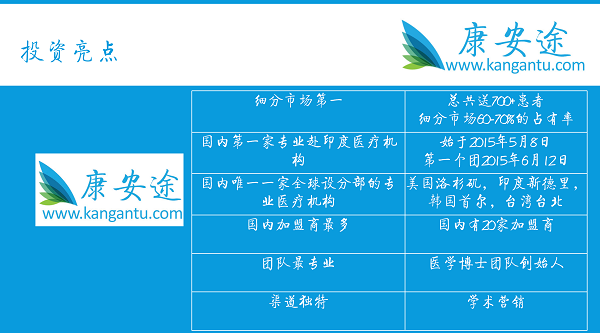
Compared with other cross-border medical service platforms, such as Shengnuo Yijia, Chunyu International, Hope Ark, and Tianjianxing, Kangantu has served more than 700 patients in the field of hepatitis C treatment since its establishment in 2015, accounting for over 60% of the entire niche market. This significant advantage is primarily due to Kangantu’s offering of hepatitis C treatment in India at a price of only RMB 38,000. This fee covers comprehensive services including hepatitis C treatment in India, assistance with Indian visa applications, round-trip airfare booking, full-process accompaniment by a PhD-level specialist for medical consultations and medication pickup, as well as accommodation, meals, and local transportation. The PhD team also provides free follow-up consultation services on medication management.
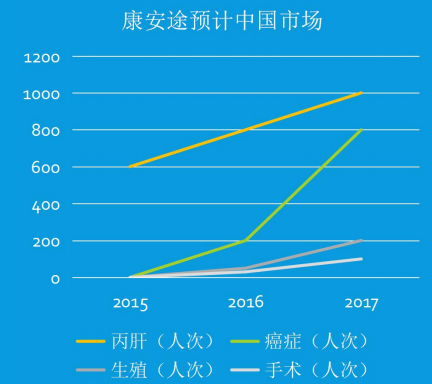
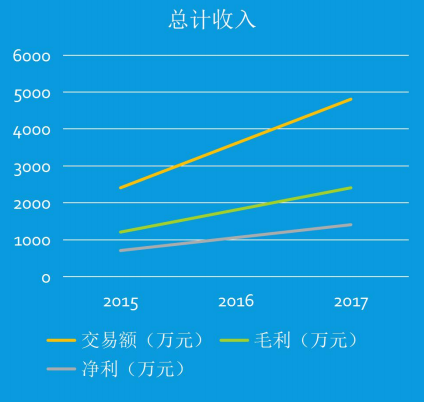
Seeking medical treatment in the United States costs at least RMB 600,000, while going to Japan starts from RMB 200,000; even within China, the cost is around RMB 80,000. This significant price advantage has attracted inquiries from more patients. The number of individuals served throughout 2016 is projected to reach 800. Even with a price tag of only RMB 35,000, Yang Chen told reporters that they still maintain a 50% profit margin, and Kangantu’s revenue for 2016 is expected to reach RMB 35 million.
In terms of operations, unlike most other companies that rely heavily on the internet, Kangantu’s majority of customers are acquired through offline channels. Kangantu has more than 20 franchisees across China, located in Beijing, Shandong, Jilin, Wuhan, Tianjin, Nanjing, Yangzhou, Zhengzhou, Guilin, Anhui, and other regions. Meanwhile, it leverages academic marketing to establish collaborations with hospitals.
Most patients worldwide seek high-quality, affordable medical care. Therefore, the services offered by Kangantu are attractive not only to Chinese nationals but also to international patients. Leveraging its cost advantages, Kangantu has established professional medical service branches globally, with offices currently located in Los Angeles (USA), New Delhi (India), Seoul (South Korea), Taipei (Taiwan), and Bangladesh. The newly established overseas division has already served more than 10 international patients.
In addition to providing services for hepatitis C treatment in India, Kangantu has also launched dedicated channels for lung cancer patients seeking medical care in India, as well as offering services such as assisted reproductive technology in Thailand and childbirth in the United States.
In September 2016, Kangantu completed its Series A financing round of RMB 10 million. The investors were not disclosed. The funds will be used to build international marketing channels, including establishing international branches, constructing a big data platform, and recruiting employees in India. Additionally, the funds will also be allocated to building domestic sales networks and promoting the domestic market.
The company expects to serve 1,000 individuals in 2017, establish partner institutions across 37 provinces in China, and seek collaborations with insurance companies.