

Hailiwin Medical Files IPO: Chairman Yu Hai Emphasizes That IT Advancements Must Align with Medical Principles
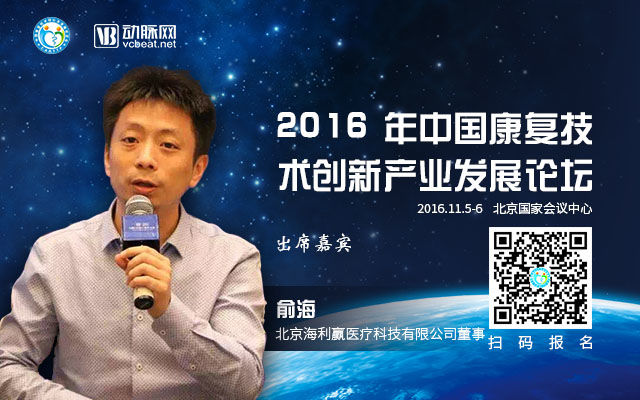
Yu Hai, Chairman of Beijing Hailiying Medical Technology Co., Ltd.
The realization of tiered diagnosis and treatment relies not solely on informatization
As the most critical component of the nation’s further deepening of healthcare reform, tiered diagnosis and treatment is a key challenge currently being jointly addressed by all stakeholders involved in healthcare reform.
Tiered diagnosis and treatment is the foundation of healthcare reform, while information technology serves as the bedrock of tiered diagnosis and treatment. The implementation of tiered diagnosis and treatment requires innovation in information technology. Many technical professionals believe that it suffices to simply extend information technology infrastructure to primary care settings; however, this is a significant misconception. Currently, many primary care institutions within tiered diagnosis and treatment systems have already achieved robust health informatics infrastructure, yet the core medical services remain suboptimal. What accounts for this discrepancy? Traditionally, hospital-based health informatics focused on integrating internal data to streamline physicians’ workflows. In contrast, the current model aims to establish a new healthcare ecosystem by connecting county, township, and village levels into a multi-tiered network. Since the tiered diagnosis and treatment system did not previously exist, it is now necessary to integrate these three administrative levels. Relying solely on information technology is akin to having meridians without a brain. It is also essential to deploy hardware suited to primary care, software systems designed for tiered management, and clinical pathways tailored to tiered medical services.
In clinical medical practice, clear criteria must be established for upward patient referrals, accompanied by standardized operational protocols. Furthermore, a comprehensive management framework tailored to primary care institutions is essential, encompassing standards for physician management, performance evaluation, competition, professional title assessment, and promotion, thereby incentivizing physicians’ enthusiasm. Finally, policy support is crucial, including the establishment of reasonable payment models and fee schedules, to align the interests of tertiary medical institutions and enable truly integrated operations. Only through these measures can a genuine tiered diagnosis and treatment ecosystem be realized.
Three Characteristics of China's Healthcare Landscape
Current medical conditions in China are characterized by three features: first, a large population of patients with chronic diseases; second, a shortage of specialist physicians; and third, a substantial number of primary care physicians who nonetheless lack sufficient clinical competence. These three characteristics dictate that China must implement a tiered diagnosis and treatment system and expand both the scale and quality of primary healthcare, which is impossible without informatization. In many foreign countries, community physician and family doctor systems are widespread, yet they do not rely entirely on informatization. This is because, abroad, the professional competence of family and community doctors is equivalent to that of specialists; they simply operate in different domains. In contrast, in China, the public lacks trust in primary care physicians and tends to seek care at large hospitals. The maturity of internet technology enables the optimal utilization of our limited medical resources. Through informatization, physicians can implement tiered patient management, with repetitive and simple tasks fully automated by software, thereby extending their service capacity from dozens of daily outpatient visits at a single hospital to covering an entire county-level region. Informatization levels vary across regions in China; township health centers in southern regions generally exhibit higher levels of informatization. Therefore, the national tiered diagnosis and treatment system should not adhere to a uniform standard but should be tailored to the specific characteristics of each region. Nevertheless, the core principle remains the same: leveraging regional development to drive coordination among grassroots medical institutions.
Technological Advancements Must Align with Medical Principles
The healthcare system is resistant to disruption, unlike other sectors such as retail and taxi services, which have been significantly impacted and declined due to the rise of the internet. However, this industry can still benefit from advancements in information technology. Improvements and innovations in information technology and medical devices by engineering professionals must align with medical principles, achieving a deep integration of medicine and engineering. Through academic exchanges with physicians, it is essential to gain a profound understanding of their needs and drive technological innovation from the physician’s perspective. Modern medicine consists of two components: the first is clinical medicine itself, encompassing medical practices such as prescribing, diagnosis, and surgery; the second is biomedical engineering, which refers to the tools used by physicians. Only by closely aligning with the core of medicine based on the needs of clinicians can these innovations gain acceptance among physicians. If innovations do not address the essence of medicine and merely represent advancements in IT, they will remain peripheral to healthcare informatization and struggle to penetrate the core of medical practice.
To further explore the development trends in technological innovation and translation within the healthcare industry, the China Association for Promotion of Rehabilitation Technology Translation and Development held the “2016 China Forum on Industrial Development of Rehabilitation Technological Innovation & The Third Member Representative Congress of the China Association for Promotion of Rehabilitation Technology Translation and Development” at the Beijing National Convention Center from November 5 to 6, 2016.
Centered on the theme of “Focusing on Healthy China, Promoting Innovative Industries,” and adhering to the conference’s mission of “Learning, Communication, Discussion, and Exchange,” this forum will delve into hot topics such as driving innovative development in medical and health industry technologies and fostering deeper integration among industry, academia, research, and technology transfer. It will also interpret and discuss key issues, policies and regulations, guiding principles, and development models related to the implementation of the “Healthy China” national strategy.
Related Reading:
Gao Hongjun of the 307 Hospital: Precision Medicine Brings New Breakthroughs in Cancer Treatment
Hailiying Yu Hai: Advances in Information Technology Must Align with Medical Principles
Zhang Hao from Beijing Bo'ai Hospital: Intelligent Rehabilitation Is the New Hope for Rehabilitation