

Ruoshui Doctor Launches China's Only Clinically Deployed AI Triage Robot to Optimize Specialist Resource Utilization
“AI + Healthcare” was the most eye-catching topic in the second half of 2016. Following IBM’s announcement of its “Cognitive Healthcare” entry into China and Baidu’s recent release of its AI-powered “Baidu Medical Brain,” the intelligent triage robot “Kangbao”—currently the only one in China approved for clinical use—and the intelligent clinical diagnosis and treatment decision-support expert system “Banruo” made their debut at the “2016 National ‘Internet + Healthcare’ Innovation and Entrepreneurship Conference” held in Chengdu.
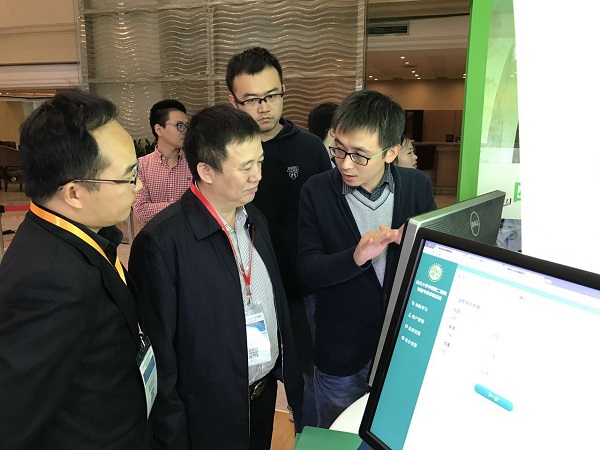
Zhang Lin, President of West China Women's and Children's Hospital, Inquires About the "Prajna" System
Zuo Xiao, Founder and CEO of Deep Spring Technology, stated that “Kangbao” and “Banruo” were jointly developed by Chengdu Deep Spring Technology Co., Ltd. (Ruoshui Doctor) and West China Second University Hospital. Their core technology is an intelligent diagnostic system built upon data analysis and machine learning, leveraging deep learning from clinical guidelines, literature, evidence-based experience, and clinical diagnosis and treatment cases from West China Hospital.
Dr. Lei Shundong, Director of the Information Management Department at West China Second University Hospital, also pointed out in his keynote speech at the hospital sub-forum of the conference that “only through the extension of such information technology can we truly achieve the decentralization of high-quality medical resources, comprehensively improve physicians’ diagnostic and treatment capabilities, and establish a new healthcare delivery pattern characterized by the separation of acute and chronic care management and coordinated collaboration between tertiary and primary care institutions within medical consortia.”
VCBeat (WeChat ID: vcbeat) has learned that the robot “Kangbao” features five major functions, including intelligent triage, hospital navigation, and procedural inquiries. These capabilities enable more efficient utilization of hospitals’ expert resources and comprehensively enhance patients’ healthcare experience in the critical “first 100 meters” prior to consultation.
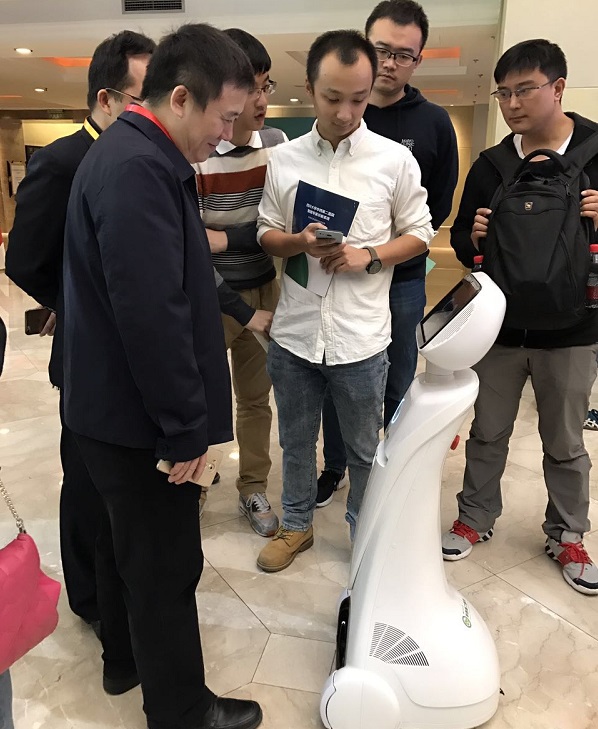
“Kangbao“Intelligent Triage Robot
Among them, the number of users of the intelligent triage system has increased significantly since its launch in September this year.Daily visits have exceeded 8,000.“Kangbao” not only achieves the level of manual triage but also features remote triage, real-time updates, and integration with appointment registration, earning recognition from experts at West China Second University Hospital.
The “Prajna” Intelligent Expert Diagnostic System has also attracted widespread attention from participating physicians and experts.It primarily features four core functions: Clinical Decision Support, Simulated Patient Consultation, Graphical Learning, and Latest Guidelines and Literature.
Clinical Decision Support: By collecting clinical case data from patients and leveraging an experience-based medical reasoning engine system, the platform analyzes, provides feedback, and optimizes consultation strategies in real time, offers optimal diagnostic recommendations, and automatically generates comprehensive reference treatment plans, thereby achieving a navigated workflow from consultation to treatment.
Simulated Symptom Consultation: Starting from symptoms or targeting specific diseases, it provides a simulated clinical environment with focused instruction on patient history taking to help users gain clinical experience.
Graphical Learning: Visualize the expert's diagnostic reasoning to help users quickly grasp key consultation points and enhance collaborative diagnosis and treatment.
Recent Guidelines and Literature: Aggregates recent domestic and international guidelines, consensus statements, and literature; provides interpretations of guidelines and consensus; features high-quality, high-impact-factor clinical research articles; updated in real time.
According to reports, the “Prajna” system can rapidly disseminate novel diagnostic and treatment protocols developed by experts at West China Hospital, assist physicians within the medical consortium in making clinical decisions, reduce missed diagnoses and misdiagnoses, and enhance physicians’ professional competence and clinical reasoning skills.
Currently, the “Banruo” system has completed its Phase I clinical validation by experts at West China Second University Hospital and has been gradually introduced into clinical use in pediatric departments across multiple medical institutions in Chengdu.
In recent years, the country has accelerated the application of big data in health and medical care, and Sichuan Province has also been speeding up the establishment of a tiered diagnosis and treatment system. “Kangbao” and “Banruo” may serve as catalysts, propelling pediatric and gynecological medicine in Sichuan into a new era of “intelligent healthcare.”