

MeiYi Internet Hospital Files IPO Prospectus: A Hybrid Model of Self-built and Partner Hospitals Enabling Tiered Diagnosis and Treatment
Meiyi Internet Hospital is one of the earliest institutions in China to obtain an internet hospital license. It is dedicated to building a multi-site practice platform for doctors across China, covering offline clinics and hospitals, as well as online appointment registration, e-prescriptions, online follow-up visits, and doctor-patient connectivity.
The company’s team consists entirely of seasoned professionals from the pharmaceutical industry, each with over a decade of experience and nationwide distribution channels. Although both the company and its wholly-owned subsidiary are headquartered in Hainan, Hainan boasts the most extensive scope for cross-provincial direct settlement of medical expenses among all regions in China.
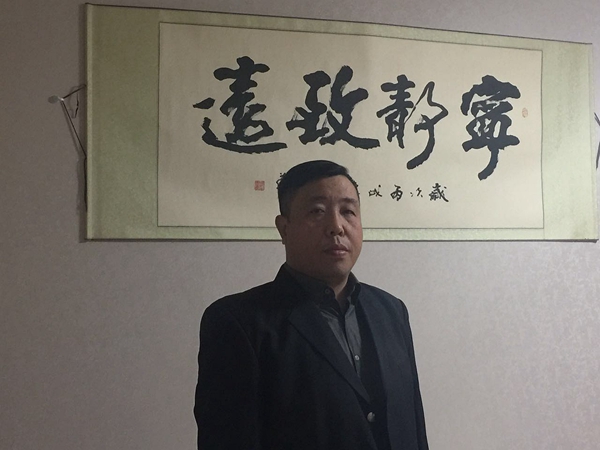
Li Haifeng, Founder of Meiyi Internet Hospital
In just three months, how did Meiyi Internet Hospital deliver such impressive results? What are the key features of its business model? VCBeat (WeChat ID: vcbeat) interviewed Li Haifeng, founder of Meiyi Internet Hospital, to analyze the company’s business model.
Since the birth of the Internet in Wuzhen, although “Internet hospitals” across China have sprung up like mushrooms after rain, and BAT has been busy collaborating with renowned Grade A tertiary hospitals nationwide to build Internet hospitals, user demands remain unmet.
On December 7, 2015, the official website of Wuzhen Internet Hospital and the Wuzhen Hospital APP were launched. The Tongxiang Municipal Government and several academicians from medical academies participated in the launch ceremony in Wuzhen. The initiative aimed to establish a “National Internet-Based Tiered Diagnosis and Treatment Innovation Platform” within the Wuzhen Internet Innovation Development Pilot Zone, leveraging internet information technologies to optimize the allocation of medical resources and enhance the efficiency of the healthcare service system, thereby enabling residents—including those in remote mountainous areas—to benefit from the dividends of internet development. However, this model, which emulates the U.S.-based Kaiser Permanente, is not suited to China’s national conditions.
In January 2016, Alibaba Health partnered with Wuhan Central Hospital to establish the Alibaba Health Internet Hospital. However, limited to rural areas and unable to integrate with medical insurance systems, it faced challenges in user acquisition and failed to benefit the general population. In February of the same year, the First Affiliated Hospital of Zhejiang University launched its Internet Hospital as a supplementary tool to its offline tertiary Grade A hospital services. It still struggled to address home medication delivery issues and could not provide patients with closed-loop services. According to statistics from China.org.cn Finance, 17 internet hospitals had been officially established across China this year.
Following market research, Li Haifeng concluded that building an internet hospital requires offline physical hospitals, home delivery of medications, online appointment registration, electronic prescriptions, online follow-up consultations, and doctor-patient linkage. Only with these elements can we truly leverage the internet to connect hospitals, doctors, patients, the pharmaceutical supply chain, and medical insurance systems across China, thereby establishing a new smart healthcare service platform.
In fact, Li Haifeng’s decision to establish the Meiyi Internet Hospital was largely a matter of chance; his initial intention was simply to create a platform for outpatient consultations. At that time, he was engaged in pharmaceutical sales across China, where customers purchasing medications also had healthcare needs. For instance, clients in Shanxi and Inner Mongolia hoped that specialists from Beijing would provide local consultations, but geographic constraints made this impossible. “Only physicians affiliated with our partner hospitals or co-established institutions were permitted to conduct outpatient visits.”
With the adjustment of national policies, multi-site practice for physicians is gradually being liberalized, trending toward a transition to freelance practice. At this juncture, Li Haifeng envisioned: If we establish an online platform where users can schedule appointments via the internet whenever they require medical care, physicians would be able to provide consultations without geographical restrictions. Previously, physicians in Beijing were limited to practicing within Beijing and could not provide services in other regions such as Hebei or Jiangsu. However, with the establishment of the Meiyi Internet Hospital platform, physicians would be able to provide consultations anywhere.
Consequently, Li Haifeng began planning the establishment of Meiyi Internet Hospital and its self-built physical entity. Operations commenced in late July, and the business license for the Internet Hospital was obtained on August 16 this year, with its registration located in Hainan Province; the construction of the physical hospital is still underway. He aims to first establish the physical hospital, achieving self-sufficiency through the sale of prescription drugs to sustain its operations and serve Hainan’s population of 9 million, before expanding to other regions across China.
If hospitals across China were to rely solely on self-built facilities, operating costs would be prohibitively high. Li Haifeng aims to expand Meiyi Internet Hospital through a two-pronged approach: initially establishing self-owned hospitals and subsequently partnering with reputable medical institutions. Currently, medical talent in China is heavily concentrated in Beijing, Shanghai, and Guangzhou, with over 50% of physicians holding practicing credentials at Grade A tertiary hospitals. Directly decentralizing these medical resources to prefecture-level and county-level cities would not only facilitate patient access to care but also alleviate the burden on Grade A tertiary hospitals. At present, medical resources within community healthcare settings remain relatively scarce.
He hopes to leverage the Meiyi Internet platform to enable specialists from tertiary hospitals to conduct consultations directly at community hospitals, based on the latter’s needs. This initiative aims to provide high-quality medical resources to primary healthcare institutions and establish a platform connecting physicians across tertiary hospitals.
In simple terms, if specialists from Grade 3A hospitals are available to provide consultations at primary care institutions on Saturdays or Sundays, community hospitals will pay the specialist consultation fees directly to the specialists, with Meiyi Internet Hospital taking no commission. Additionally, certain county-level hospitals, despite having medical equipment and facilities identical to those of Grade 3A hospitals, lack lead surgeons. These hospitals also use the Meiyi Internet Hospital platform to schedule surgical specialists.
So, how does Meiyi Internet Hospital generate profits? Li Haifeng told reporters that their revenue model is actually quite simple, primarily involving the sale of prescription drugs and earning margins on the price difference. Since one of the company’s partners owns its own pharmaceutical sales company and holds a Class B license for online pharmaceutical e-commerce, the company maintains an annual cash flow of approximately RMB 3–4 billion. Therefore, there remains some profit margin as medications move from manufacturers to patients, and Meiyi Internet Hospital has agreements in place with certain pharmaceutical manufacturers.
For example, Meiyi Internet Hospital acts as an agent for five or six pharmaceutical product lines from manufacturers, covering therapeutic areas such as oncology, cardiovascular and cerebrovascular diseases, pediatrics, and gynecology. By providing online marketing services and facilitating sales through its internet hospital channel, the company captures a portion of the price differential, which contributes to its operational profits.
Of course, the sale of prescription drugs is only one aspect of profitability. As profit margins for pharmaceuticals continue to shrink, Meiyi Internet Hospital leverages its deep partnerships with physicians and medical institutions to generate additional revenue. Physicians collaborating closely with the platform require medical devices and consumables during consultations or surgical procedures. Similarly, county-level hospitals and primary care institutions—also key partners—have substantial demand for such equipment and supplies. By providing these medical devices and consumables, Meiyi Internet Hospital secures an additional stream of profit.
Because the company’s entire operations team was previously composed mainly of medical device and equipment sales personnel, Meiyi Internet Hospital’s medical resources were also sourced through pharmaceutical and medical device distributors. The hospital is currently applying for a C-license for pharmaceutical e-commerce and establishing its own logistics network. Users who purchase medications online through Meiyi Internet Hospital can enjoy the convenience of home delivery services.
Meiyi Internet Hospital is dedicated to providing comprehensive, personalized medical services to doctors and patients in China. It operates multiple products and business lines, including the Meiyi App, Meiyi House Calls, and Meiyi Cloud Hospital, among other systems and platforms that are interconnected and mutually supportive.
Through the diverse products offered by Meiyi Internet Hospital, physicians can engage in case sharing, academic discussions, and clinical exchanges, as well as participate in multi-site practice activities such as surgical consultations and patient referrals. Hospitals and clinics can also leverage Meiyi’s R&D management system platform to facilitate more efficient medical administration. Furthermore, pharmaceutical companies and medical device manufacturers can utilize Meiyi’s platform for highly efficient and precise academic promotion. As an innovator and reformer in China’s internet healthcare sector, Meiyi is continuously connecting doctors, hospitals, patients, pharmaceutical companies, and medical device manufacturers, providing comprehensive services to both healthcare providers and patients.
According to Li Haifeng, the majority of the company’s team members are from the post-1970s generation and are seasoned entrepreneurs. Although each of them owns their own independent company, they have also devoted substantial time and energy to Meiyi Internet Hospital. As the General Manager of Meiyi Internet Hospital, Li Haifeng previously successfully managed Quan-e-Bao, an internet insurance project (which has already been launched), and established Hainan Yiyun Agricultural Technology Service Co., Ltd. to operate Hainan’s internet agriculture projects. Another co-founder is a former Director of Government Affairs at Fosun Group, a Senior Government Relations Advisor at an internet healthcare company, and currently serves on the Hospital Medical Insurance Professional Committee of the Hospital Association.
Our entire team comes from pharmaceutical backgrounds, with over a decade of accumulated expertise. We possess not only extensive industry resources but also rich practical experience. Over the years since we started our venture, we have noticed that our competitors are becoming increasingly younger. In the past, when I left my hospital position to work in sales and later founded my own company, the high barriers to entry meant that most competitors were around my age. Now, as these barriers have lowered, we face much younger rivals—some even in their teens—who often have overseas work experience and demonstrate strong learning capabilities. Nevertheless, thanks to our multiple entrepreneurial experiences, we have developed strong resilience under pressure, whereas many entrepreneurs become discouraged after just one failure.
“Regarding fundraising capabilities, our team’s ability to secure funding is relatively weak. The planned fundraising amount is RMB 5 million in exchange for a 10% equity stake, which will be used for team building and improving market channels.”
Currently, Meiyi Internet Hospital is in its trial operation phase. The plan for the first year is to accumulate users and content, expand the company’s size to 20–30 employees, complete the rapid establishment of the hospital and platform development, and commence both offline and online clinical services. Additionally, we aim to establish Haikou Meiyi Hospital and partner hospitals in Sanya. Next year, we plan to achieve real-time settlement with certain provincial medical insurance platforms, attain profitability, launch an internet hospital in the Northeast market (with real-time settlement in Sanya), and gradually improve the APP for consultations and outpatient visits. Furthermore, we will secure software copyrights and file patent applications for our core technologies.
In the third year, Meiyi Internet Hospital achieved real-time settlement across China, completed its joint-stock reform, distributed employee shares (which became transferable and tradable), established at least 10 Meiyi Hospitals (either self-built or through partnerships in various provinces), formed a data analytics team, initiated independent data collection, surpassed 30,000 registered physicians, maintained a daily outpatient volume of over 200, and solidified its position as the leading internet hospital brand in China.