

Barriers to Medical Record Accessibility: OMAHA White Paper on Personal Health Data Openness
In China, the primary channels for patients to access their personal medical information currently include: photocopying or printing at the medical records department of healthcare institutions, self-service printing via kiosks at healthcare institutions, online queries through healthcare institution portals, and regional health information query platforms. Based on the definition of “opening medical record information to individuals,” evaluation dimensions for openness were derived, revealing that there are currently virtually no healthcare institutions or platforms in China that meet the criteria for “openness.”
The primary reason for the insufficient openness of personal medical record information in China is the lack of incentive among stakeholders, including healthcare institutions, patients, and vendors. Secondly, there is inadequate supporting infrastructure and health informatics capacity related to medical record openness. Finally, the restriction of medical data and the development of the data application industry mutually inhibit each other, resulting in a suppressed ecosystem for data openness.
The Open Knowledge Foundation (Open Knowledge) defines “open data” as follows: “Open” means that anyone can freely access, use, modify, and share; “data” refers to units or items of knowledge being conveyed, including but not limited to databases, music, images, videos, literary works, web pages, and software.
“Open Data” must meet the following four requirements:
Open License:Data should be provided under open licensing terms, and any additional clauses attached to such data (e.g., terms of use or patent rights held by the licensor) shall not conflict with the executed licensing terms;
Accessibility:Data should be provided in its complete form, with only a one-time reasonable cost for production charged, and should be available for free download via the internet. Any additional information required by the license must also be provided along with the data;
Machine Readability:Data must be provided in a machine-readable format, accessible and modifiable by individuals;
Open format:Data must be provided in open formats that can be processed by at least one free and open-source software tool.
Based on the aforementioned attributes of “open data,” the provision of “medical record information” by healthcare institutions to patients constitutes targeted openness and is not subject to the requirement for “open authorization”; however, the three requirements of “ease of access,” “machine readability,” and “open format” must be met.
Therefore, the definition of “opening medical record information to individuals” is: healthcare institutions make the medical record information they hold available to patients in a format that is convenient, machine-readable, modifiable, downloadable in full with a single action, and free from restrictions (legal, economic, or technical), thereby enabling patients to download their personal medical records anytime and anywhere via internet technologies for subsequent reuse.
Currently, due to the lack of sound laws and regulations in China, inadequate technical infrastructure, and weak patient awareness of health management, neither objective nor subjective conditions sufficiently support the open sharing of personal health data. Patient accessibility to medical record information remains at the stage of mere acquisition, failing to meet the standards for open data. The fragmented data obtained by patients cannot satisfy the needs for data reuse.
A Review of the Evolution of Patient Access to Personal Medical Records in China: Four Primary PathwaysThe journey of patients in China accessing their personal medical record information has generally evolved through four main channels: photocopying and printing at medical institution medical records departments, self-service printing via kiosks at medical institutions, online inquiry platforms provided by medical institutions, and regional health information platforms. Currently, these various access methods coexist for the general public.
Mode | Access Channels | Primary Objective | Retrieve Content | Acquisition Format |
Decentralized Acquisition | Medical Institution Medical Record Room Copying/Printing | Voucher Function | Medical Records as Stipulated by Law | Paper Version |
Self-Service Printing Kiosks in Healthcare Institutions | Improving Diagnostic and Treatment Efficiency | Examination and Laboratory Report | Paper Version | |
Online Query Platform for Medical Institutions | Improve Patient Satisfaction | Review of Laboratory Reports and Outpatient Visits Cost Breakdown | View Online | |
Semi-Centralized Acquisition | Regional Health Information Platform | Convenient Services | Examination and Laboratory Test Data | View Online |
Primary Channels for Individuals in China to Access Medical Records
Medical record information serves as an indispensable credential for patients and their families when seeking medical security and economic benefits from employers and insurance departments, as well as when undergoing medical technical and forensic appraisals. Article 10 of the Regulations on the Handling of Medical Accidents, which came into effect in China on September 1, 2002, explicitly stipulated for the first time that patients have the right to photocopy or reproduce their outpatient medical records, inpatient admission notes, temperature charts, physician order sheets, laboratory test reports, medical imaging examination data, informed consent forms for special examinations, informed consent forms for surgery, surgical and anesthesia records, pathological data, and other medical record materials. Since then, medical institutions have begun providing patients with services to photocopy or print paper-based medical records, resulting in a year-on-year increase in the number of individuals requesting such copies.
The practice of photocopying medical records has historical roots. Over a decade ago, the level of informatization in healthcare institutions was relatively low, and medical records were primarily maintained in paper format. Meanwhile, the electronic infrastructure of health insurance payment systems was still in its early stages of development, making direct integration with healthcare institutions difficult. Consequently, nearly 70% of patients requested photocopies or printed versions of their medical records to facilitate reimbursement processes for social or commercial insurance.
Against this backdrop, the process for copying medical records in hospitals is plagued by issues such as procedural complexity, delays, patient passivity, and poor service awareness among institutions, falling far short of meeting the needs of the vast majority of patients. While patients can obtain their medical records from hospitals, access is restricted to objective medical data only. Furthermore, the process is cumbersome and inconvenient: patients must complete an application form, and only after approval by the Medical Affairs Department can they proceed to the Medical Records Room to handle the necessary formalities and obtain copies. A 2012 survey of nine hospitals in a certain region revealed that 67.1% of patients spent two days or more copying their medical records, 69.4% felt the waiting time was excessive, and 70% perceived the quality of the hospital’s record-copying service as unsatisfactory.
China faces a shortage of medical resources, a large patient volume, and highly concentrated peak hours for medical visits. Consequently, report collection windows have become one of the most congested areas in the patient care process. Under conditions conducive to implementing self-service medical solutions, hospitals have begun offering self-service printing of examination and test reports to improve efficiency and enhance the patient experience. The self-service report printing platform features low operational costs, convenient and rapid usage, and protection of patient privacy. As an important supplement to manual distribution counters, it holds significant application value.
Currently, the "one-stop self-service system" is widely used in medical institutions. Patients can connect to in-house self-service terminals by swiping their cards or scanning barcodes to print all examination and test reports simultaneously. However, the content available for self-service printing remains predominantly focused on laboratory and imaging reports, with the primary aim of enhancing managerial efficiency in healthcare facilities by automating certain manual tasks. Consequently, although patients can access some objective medical record data, the information lacks comprehensiveness. The incompleteness of medical record information and its paper-based format result in low reusability of the data.
The development of internet information technology has provided enhanced management capabilities and greater room for innovation, a trend also evident in the healthcare sector, where patient access to their medical records is gradually transitioning from paper-based to electronic formats. Currently, decentralized openness among healthcare institutions remains the predominant model, with the approach of querying personal data through institutional portals gaining momentum.
Online Inquiry via Medical Institution Portal Website
With the widespread adoption of the internet, an increasing number of healthcare institutions have begun to publish diagnostic and treatment information through new media and micro-platforms, leveraging online queries via mobile devices to reduce patient queueing frequency and shorten waiting times. Beijing, Shanghai, and Hangzhou boast a strong foundation in medical informatization, offering multi-channel access to medical record information via the internet. Therefore, we investigated the availability of online query services for examination and test reports provided by 66 Grade A tertiary hospitals in Beijing, Shanghai, and Hangzhou.
Overall, some medical institutions have gradually begun to leverage mobile internet channels—such as apps, WeChat service accounts, and Alipay service windows—to provide patients with access to certain information, thereby meeting the demand for more efficient healthcare processes within the traditional medical system. However, the fragmented nature of the data accessible to patients has yet to fundamentally change the current state of secondary use of medical record information.
On the open platforms of these Grade A tertiary hospitals, the specific items available for inquiry include laboratory test results (such as blood tests, body fluid and excreta analyses, biochemical tests, immunological tests, and pathogen tests) and imaging examination results (such as CT, MRI, X-ray, and ultrasound). Generally, queryable data does not include emergency reports, inpatient reports, pathology reports, or puncture reports.
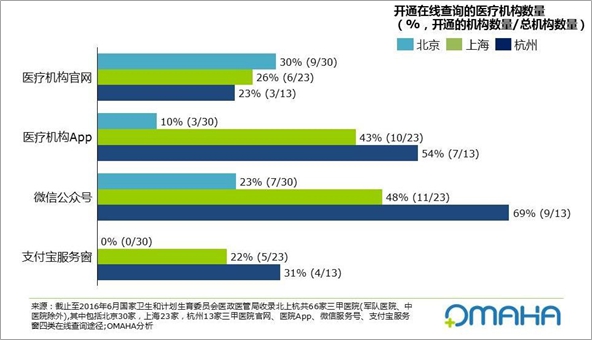
Online Access to Personal Medical Records via the Official Websites of Top-Tier (Grade 3A) Hospitals in Beijing, Shanghai, and Hangzhou
In-Hospital Self-Service Kiosk Inquiry
In 2008, the 251st Hospital of the People's Liberation Army, followed by Xi'an Chang'an Hospital in 2011, took the lead nationwide in implementing the disclosure of both subjective and objective medical records. By using their treatment IC cards and passwords, patients can access their electronic medical record (EMR) content on electronic touch-screen displays located throughout the hospital’s outpatient and inpatient buildings. In addition to so-called objective records—such as basic medical histories and laboratory/test results—patients can also instantly view subjective records, including preoperative discussions, consultation notes, preoperative summaries, and ward round records. This barrier-free, on-demand access to medical record information during the care process enables patients to stay informed in real time while encouraging physicians to document medical activities promptly, objectively, and accurately. This initiative has provided a strong guarantee for medical quality and fostered more harmonious doctor–patient relationships.
Although online access to medical records helps reduce information asymmetry between doctors and patients, such records are currently limited to in-hospital inquiries. This approach only fulfills the obligation to inform patients and obtain their consent, but still fails to effectively meet patients’ needs for timely access to and exchange of their medical record information.
In April 2009, the Central Committee of the Communist Party of China and the State Council, in their “Opinions on Deepening the Reform of the Medical and Health Care System,” proposed to “establish a practical and sharedof the healthcare information system”Listed as“Eight Major Pillars”one of. As of2015 In 2026, China 134 prefectures and 397 various counties and districts to varying degreesto a certain extent, regional health information platforms have been established; however, the development of regional health information systems by medical institutions is still in its infancy. phase, only in China11.04%Tertiary hospitals and 5.53%Regional health information systems have been implemented in hospitals below the tertiary level. Shanghai and Zhejiang took the leadXianshiPresentPublicTotalWeiBirthLetterBreathSystemSystemWith MedicineHospitalLetterBreathSystemSystem、DistrictDomainWeiBioinformatics息FlatPlatformofMutualJointInterconnectivity.
However, although some cities have established regional health information platforms and are gradually integrating medical data, many challenges remain, preventing the effective utilization of such data. Regarding the content and format of open personal health and medical data, access is limited to online queryable laboratory and diagnostic test results, which precludes data reuse.
Item | Shanghai Yilian Engineering | Hangzhou Regional Health Information Platform |
Information Platform | Shanghai Shenkang Hospital Development Center | Hangzhou Municipal Health and Family Planning Commission |
Coverage | 38 Grade A Tertiary Hospitals in Shanghai | 10 Municipal Hospitals in Hangzhou |
Get Content | Laboratory Test Report | Laboratory Test Reports, Physical Examination Reports |
Report Time Range | January 1, 2010–Present | May 1, 2013 – Present |
Access Channels | Website inquiry, “YiLian Cloud Health” App | Website inquiry, “Hangzhou Smart Healthcare” App |
System Vendor | Wonders Information | B-Soft |
Comparison of Regional Health Information Platform Projects in Shanghai and Hangzhou
Making medical record information accessible to individuals must meet their common needs for personal health or disease management across various scenarios. The medical records'The requirements stipulate that patients must be able to download their complete medical records in a single operation via the Internet at any time and from any location, while ensuring the integrity of the medical records.requirements for comprehensiveness, continuity, and machine readability. However, an analysis and comparison of the current methods available for patients to access their own medical records reveals that printing or photocopying paper-based inpatient records from the medical records department remains the primary means for individuals to obtain their personal health information. Online query services are limited to laboratory and diagnostic test results; they are neither comprehensive nor downloadable for integration, thereby creating obstacles for patients’ subsequent analysis and reuse of their personal data.
Based on the definition of “opening medical record information to individuals,” three evaluation dimensions for openness are summarized, revealing that no model currently meets the criteria for “openness.”
Open Evaluation Dimensions | Medical Records Department of Healthcare Institutions Copy/Print | Medical Institutions Self-Service Printing | Healthcare Institutions Online Query Platform | Region Health Information Platform |
Accessible anytime, anywhere via mutual Download via internet connection | Not Satisfied | Not Met | Not Met | Not Met |
Can be downloaded completely in one go Medical Records | Not met | Not met | Not met | Not Met |
Data Format Machine-readable support | Not Met | Not met | Not met | Not Met |
“Open” Standards | Not met | Not Met | Not met | Not satisfied |
Assessment of the Accessibility of Personal Medical Records for Patients in China
The United States, the United Kingdom, and the Hong Kong and Taiwan regions have opened up medical record information to individuals to varying degrees, allowing individuals to log in to websites and download them anytime and anywhere.Data such as medical history, clinical visit records, medication usage, and test results facilitate patients’ subsequent self-health management, medical consultations, and healthHealthcare Consultation. Although countries prioritize different aspects of data openness in the healthcare sector due to variations in health system organizational structures, judicial environments, and historical and political contexts, their ultimate goals remain aligned: enhancing the transparency of healthcare services, facilitating patient access to care, and fostering innovation among both public and private healthcare institutions.
Based on the definition of open medical record information, no medical institutions in China have truly implemented the practice of providing patients with access to their personal medical records. The fundamental reason for the disparity between domestic and international environments regarding data openness is that China has not yet established a comprehensive and orderly ecosystem for healthcare services. The specific factors are as follows:
Medical Institution
Healthcare institutions neglect patient engagement and overlook the role of data openness in enhancing doctor-patient rapport.The establishment of data platforms such as resident health records and regional health information platforms has largely been driven by the need to effectively manage medical institutions, facilitate statistical reporting, and enable data interoperability. However, this approach has overlooked the principle that “individuals are the primary agents of their own health,” neglecting the importance of healthcare quality and health management. As a result, individuals have consistently remained in a disadvantaged position throughout the entire process, facing severe information asymmetry.
In fact, from the patient’s perspective, open access to medical records represents a deeper realization of the right to informed consent, significantly enhancing patient compliance. For healthcare providers, real-time oversight encourages medical staff to improve their professional competencies and clinical standards. For hospitals, it promotes the development of medical ethics and professionalism, thereby strengthening overall institutional capacity. From a societal standpoint, it helps alleviate the currently severe tensions in doctor-patient relationships. However, given the prevailing strain in doctor-patient relations, healthcare institution decision-makers rarely view this trend positively and lack sufficient understanding of the benefits of information transparency.
The low quality of electronic medical records has led to resistance from healthcare providers toward opening up medical records.The initial motivation for establishing electronic medical records (EMRs) in hospitals in China was primarily to meet their own needs for information-based management, rather than to provide additional value to patients themselves. A 2014 survey conducted among healthcare professionals and patients at a tertiary Grade A hospital in Shanghai showed that 70.81% of healthcare professionals disagreed with opening up EMR information [96]. Currently, given the realities of untimely EMR documentation, simplistic copy-and-paste entries, irregular medication practices, and missing critical records, hospitals are concerned that granting patients access to their medical records may expose them to excessive diagnostic and treatment information as well as deficiencies in the records. This could not only increase doctor-patient disputes but also easily place healthcare providers in a passive position during dispute resolution.
Clinical diagnosis and treatment results among medical institutions lack mechanisms for mutual acceptance and recognition.The healthcare industry lacks standardized processes and criteria. From formats to categories, there is significant inconsistency across hospitals in documents such as laboratory and diagnostic test reports and electronic medical records (EMRs). Mutual recognition of laboratory tests, diagnostic examinations, and medical imaging results among hospitals remains rare. Compounded by practical financial interests, even when medical institutions provide patients with their medical record information, cross-institutional recognition and reuse of such data are difficult to achieve, leading to widespread redundant testing.
Patient/Individual
The patient has not yet recognized the importance of "personal involvement."Collecting one’s own data is, first and foremost, a matter of awareness—specifically, the awareness that “patients should participate in their treatment.” The currently accepted definition of health literacy is that provided by the World Health Organization (WHO): it refers to the process by which individuals obtain, understand, and adopt health information and services, and use such information and services to make informed judgments and decisions that promote their own health. The first national survey on health literacy among Chinese residents, conducted in 2008, reported an overall health literacy level of 6.48%, with the lowest literacy observed in chronic disease prevention, at only 4.66%. Although many patients express interest in accessing their medical records, few actually take the initiative to request them due to limited access to health information and a lack of corresponding support services. This contradiction between interest and insufficient access to necessary information indicates substantial room for improvement in public health literacy.
Medical Insurance
Healthcare payers struggle to oversee the delivery of medical services and lack bargaining power.The fundamental objective of payers is to control and regulate healthcare costs, and the primary means to achieve this is by enhancing the oversight of medical services within health insurance systems. However, at present, neither social insurance nor commercial insurance can effectively control the medical care process. On one hand, health insurance funds are administered locally, with management agencies primarily engaged in basic cost administration. These agencies lack a deep understanding of clinical diagnosis and treatment, making it difficult to establish a scientific evaluation model that correlates therapeutic efficacy with costs.
On the other hand, the volume of data generated from the diagnosis and treatment processes, examination records, and medication information for both inpatient and outpatient medical insurance patients is enormous. This data lacks fundamental standards, with much of it being disorganized or fragmented. Furthermore, many regions still rely primarily on manual oversight methods, resulting in a massive workload for medical insurance audits.
Therefore, payers have not yet exercised effective oversight over the medical care process, resulting in a disconnect between payment and the quality of medical services. Transparent and open access to patients’ medical records is fundamental to ensuring the quality of medical care, yet the most significant stakeholders have failed to play their due role in this regard.
Medical Information Technology Provider
Standardization of medical information is the foundation for the interoperability of various healthcare information systems. The lack of standards has resulted in numerous information silos and compatibility issues both within and outside hospitals.Currently, China has not yet established a mature standard system for the construction and operation of healthcare information technology. Coupled with low market entry barriers and the absence of mandatory requirements for enterprise standards, industry concentration remains at a relatively low level compared to the United States. As market competition is still characterized by regional fragmentation, companies tend to prioritize control over resources, lacking negotiation mechanisms and service systems that facilitate connectivity, data sharing, and collaborative cooperation.
Meanwhile, constrained by fragmented systems and inconsistent business processes across medical institutions, enterprises must undergo extensive customization to align with each hospital’s specific workflows when entering these institutions. This fragmented information management has resulted in suboptimal operational efficiency and quality of care. Healthcare IT providers lack fundamental incentives to build a healthcare service ecosystem centered on medical data interoperability, thereby failing to establish timely, centralized patient data repositories.
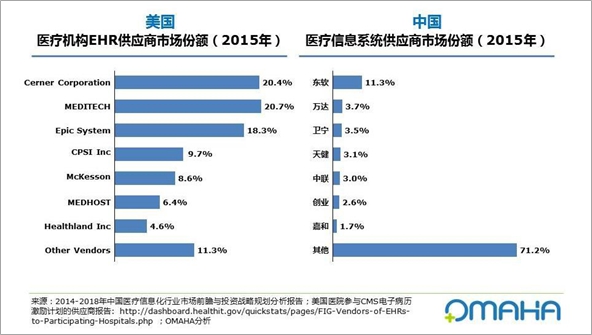
Comparison of Enterprise Concentration in the Healthcare IT Markets of the United States and China (Top 7)
Policy Support
There is a lack of corresponding laws and regulations to protect patient privacy and data security.The U.S. HIPAA, the UK Data Protection Act, and Germany’s Federal Data Protection Act explicitly stipulate that individuals have the right to access their personal health and medical information, including genetic data, medical records, examinations, diagnoses, and treatments. Apart from physicians directly involved in treatment and care, any other doctors, experts, academic institutions, or commercial entities must obtain patient authorization before accessing such information.
Although China’s “Regulations on the Handling of Medical Malpractice” stipulate that patients have the right to photocopy or duplicate their medical records through proper legal procedures, relevant laws, regulations, and policy safeguards concerning electronic medical record privacy are currently absent or inadequate. This deficiency fails to ensure the authenticity, integrity, and availability of private information within medical information systems, thereby proving insufficient to support an orderly environment for medical record access.
The development of medical information standards and regulations in China is relatively lagging.In July 1997, the Ministry of Health promulgated the “Administrative Measures for the Review and Management of Hospital Information System Software (Trial)”; in April 2002, it issued the “Basic Functional Specifications for Hospital Information Systems”; and in January 2009, it announced the “Basic Architecture and Data Standards for Electronic Medical Records (Trial),” which covered the data structure of electronic medical records, clinical document information models, data group and data element standards, as well as basic template and dataset standards. Although these policies provided a relevant basis for further standardizing technical specifications, there remained room for improvement in terms of resource disclosure and management. The lack of follow-up and assurance for subsequent supervision and corresponding outcomes made it difficult to ensure the smooth implementation of decisions.
The legal validity of electronic medical records is unclear.Article 2 of the Electronic Signature Law, implemented in April 2005, states: “An electronic signature refers to data contained in or attached to a data message in electronic form, used to identify the signatory and indicate the signatory’s approval of the content therein.” Article 14 further explicitly stipulates that “a reliable electronic signature shall have the same legal validity as a handwritten signature or seal.” This clarifies that reliable electronic signatures hold the same legal validity as handwritten signatures or seals in traditional medical records. However, according to the relevant provisions on evidence rules in the Civil Procedure Law, medical records, as evidentiary materials, must possess authenticity, legitimacy, and relevance. Currently, CA (Certificate Authority) authentication technology for electronic medical records remains imperfect, making it difficult to verify the authenticity and security of such records. Thus, although electronic medical records have acquired legal recognition, their corresponding legal status remains difficult to fully realize.
HIT Infrastructure Level
Low integration of patient personal information.To ensure the completeness of patient information, medical records should encompass comprehensive data from various aspects, including outpatient visits and hospitalizations, by integrating data from Hospital Information Systems (HIS), Laboratory Information Systems (LIS), Radiology Information Systems (RIS), and Picture Archiving and Communication Systems (PACS) into a unified whole. However, most systems currently deployed in hospitals are developed in isolation, resulting in low levels of information integration. This fragmentation hinders effective hospital management, prevents coordinated planning, and impedes information sharing and exchange, thereby creating information silos.
Medical information technology is not standardized.Electronic medical records emphasize patient-centered information integration within hospitals and among healthcare institutions. Currently, various hospital information systems often originate from different vendors and employ disparate underlying technologies. Only through information standardization can seamless connectivity between electronic medical record management systems across different platforms and medical devices be achieved, thereby enabling barrier-free exchange of medical data and facilitating data interoperability and resource sharing. Although relevant international and domestic information standards such as HL7, CDA, and DICOM exist, their localization and application in China remain less than satisfactory.
The information lacks effective security safeguards.In medical information systems, to ensure the authenticity, integrity, and non-repudiation of information, all electronic medical data should be encrypted based on ownership attributes to enable secure storage, transmission, and access. Currently, identity authentication still relies on the traditional “username + password” method, which offers weak security and makes passwords susceptible to theft; furthermore, the information system cannot verify whether operators are authenticated, legitimate users. The security of information transmission between CIS terminals and servers over local area networks is often overlooked, with most information stored in plaintext on database servers. Consequently, sensitive and confidential information and data may be intercepted or tampered with by unauthorized users during transmission.
The lack of direct and effective data applications has hindered the formation of a mature data industry ecosystem, resulting in lagging supporting capabilities.China has insufficient accumulation of medical big data, with key medical information databases still in the early stages of development. There is a lack of compelling, data-analytics-driven health service solutions to motivate individuals to access and manage their personal health and medical information.
Data Storage Platform:The vast volume and complex formats of medical information, coupled with stringent security requirements, have led to a lack of specialized platforms and application models in China capable of storing massive amounts of medical data. While enterprise and personal cloud platforms can accommodate general data storage, they currently struggle to meet the specific needs of health and medical data. Technical requirements such as privacy security, server performance, and operational maintenance capabilities must adhere to higher-level standards. Furthermore, a key bottleneck for specialized health and medical data storage platforms is the lack of backend scenario-based applications to drive product interactivity. In 2007, Microsoft pioneered HealthVault, enabling users to integrate health data from various sources—including medical history, laboratory and diagnostic test results, medication treatments, and other types of healthcare data—and store it securely in the cloud.
In 2008, Google launched Google Health, allowing users to consolidate their disparate medical records onto the Google Health platform by either manually entering data or linking accounts from partnered healthcare institutions. However, due to the product’s lack of social features and its failure to secure sufficient partnerships with insurance companies, hospitals, and other stakeholders, it failed to achieve broad user adoption. In June 2011, Google Health announced the suspension of its services.
Data Processing Techniques:Health data, sourced from medical institutions’ information systems, undergoes big data processing and analytical mining to generate new knowledge that supports decision-making or the automated, intelligent operation of business processes. However, the absence of an open data environment hinders the application and validation of emerging technologies. Consequently, throughout the entire value chain of big data—from source acquisition and analytical mining to final value realization—each stage faces varying degrees of technical challenges, thereby stifling the development of downstream industries.
Data Service Platform:Personalized health and medical data applications may represent an effective approach to unlocking the value of health data; however, it remains uncertain whether this pathway can currently open the tightly sealed doors of medical data. Apple has successively released HealthKit and CareKit for individual users, and iOS 10 supports the HL7 CCD document format. These initiatives not only facilitate the collection and analysis of users’ health data but also advocate for patient empowerment, thereby supporting clinical decision-making in medical diagnosis.
However, at least for now, such data application services or tools targeted at individuals have yet to establish an effective reverse-pressure mechanism, playing a limited role in fostering an open data environment within medical institutions. While there is considerable potential for future development, this remains to be validated over time.
· The lack of direct and effective applications for medical data within the industry has constrained the development of the application sector, creating a vicious cycle that keeps medical data siloed and hinders its revitalization, thereby impeding the open development of the industry.
Looking at the international market, information openness has a long history, and the exploration of business application models and data utilization is relatively mature. Based on open data, many high-value applications can be derived; however, current data silos hinder the deployment of many excellent applications. The main related open applications include:
- Application of clinical decision support systems to assist in disease diagnosis;
- Personalized intelligent medication management;
- Health assessment and disease screening for populations;
- Application of Scientific Models for Health Insurance Cost Control;
- Research and development of new drugs and novel therapeutic regimens, etc.
Future Trends in Open Access to Medical Records
Despite significant resistance from various quarters to the opening of medical records, the proliferation of the internet and mobile devices driving democratization, the advancement of information technology in healthcare, and the enhanced voice and capabilities of patients will inevitably empower patients to take charge of their own health and leverage data to guide their personal health management.
Based on current initiatives by healthcare institutions regarding patient access to information, the focus is gradually shifting from being “process-centric” to “patient experience-centric.” With regard to individual access to medical records, future developments are likely to follow these trends:
Information Flow: From Passive to Active.As healthcare service providers, medical institutions are shifting from a passive to a proactive approach in providing patients with their personal medical data. Although the practice of obtaining medical records through photocopying at medical record departments will persist for some time, the associated procedures and processes are bound to be further streamlined. Meanwhile, with the digitization of medical records, internet-based access will fundamentally facilitate the proactive flow of information from medical institutions to individuals. In the future, as patients’ health awareness increases, it will also drive medical institutions to open up information to individuals in a more proactive manner.
Information Format: From Decentralized to Centralized.Although some large general hospitals have begun to implement self-service systems to streamline patient care processes, their current functionality is limited to printing laboratory and diagnostic test reports; other medical record documents still need to be copied at the Medical Records Department. With the interoperability of electronic health records (EHRs) within hospitals and heightened patient health awareness, healthcare institutions are starting to provide patients with comprehensive and complete medical data through a centralized, one-stop service model to optimize care processes and enhance patient experience. Currently, the data remains incomplete and cannot be downloaded or integrated for secondary use. In the future, as data aggregation capabilities strengthen and appropriate administrative measures are implemented, the completeness of personal medical record information will be significantly improved.
Information Value: From Information Acquisition to Information Utilization.Internet-based information sharing is not constrained by time or space. With the standardization of medical informatization in China, the improvement of relevant laws and regulations, and the establishment of privacy and security assurance systems, patients have increasingly higher demands for the speed, content, and quality of accessing medical information. Medical institutions and local regional health platforms will open up medical information in a patient-centered manner and build personal health records. This will not only enable patients to fully understand their own health status but also generate high value through the effective reuse of data, thereby truly enhancing individuals’ health management capabilities.
This excerpt is from the OMAHA White Paper, Issue 1, July 2016, titled “Research on Healthcare Institutions Providing Personal Access to Medical Record Information.” For the full report, please follow the official WeChat account of the “OMAHA Alliance.”
Original author:OMAHAThe Digital Healthcare Research Team does not represent the views of VCBeat (WeChat Official Account: vcbeat). This article was exclusively first published by VCBeat after editing; please cite the source when reprinting. If you have more great ideas and perspectives on internet healthcare, we welcome you to share them with us.