

Exclusive Interview with Deng Shaoping, President of Sichuan Provincial People's Hospital: Medical Consortium Trusteeship Model Facilitates Tiered Diagnosis and Treatment
At the 2016 National “Internet + Healthcare” Innovation and Entrepreneurship Conference, co-hosted by the Chinese Health Information Association and the Sichuan Provincial Health and Family Planning Commission, the Sichuan Provincial Health and Family Planning Commission, the China-US Health Summit organization, the Sichuan Provincial People’s Hospital, and Proactive Healthcare Management Co., Ltd. formally signed the Strategic Cooperation Agreement on Promoting a Human-Centered Proactive Health Service Model. Subsequently, the Sichuan Provincial Health and Family Planning Commission, the China-US Health Summit, CETC Software Information Service Co., Ltd., and Sichuan Railway Investment Information Technology Industry Investment Co., Ltd. signed the Strategic Cooperation Agreement on Advancing Proactive Health Big Data. The signing of these two agreements marked the establishment of China’s first Proactive Health Industry Alliance.
Sichuan has become a national hub for medical innovation and entrepreneurship in China. From the Sichuan Provincial Committee of the Communist Party of China and the Sichuan Provincial People's Government, to state-owned enterprises, local enterprises, capital, and international experts, all have gathered in Sichuan. The Active Health Alliance is precisely an important engine for medical innovation and entrepreneurship in Sichuan.
It is understood that the Proactive Health Industry Alliance is committed to innovating Sichuan’s local healthcare model. By researching and integrating advanced transformation experiences from both domestic and international sources, the alliance actively advocates for institutional, model, and technological innovation. Adhering to principles of openness, integration, co-construction, and sharing, it aims to build a forward-looking “Proactive Health” service system, thereby supporting the development of the health industry in Sichuan and across China.
Seizing this opportunity, VCBeat (WeChat ID: vcbeat) will launch a series of related articles, providing detailed coverage ofThe Digital Health Industry Alliance, along with its member companies, government bodies, and experts, continues to closely monitor the progress of medical innovation and entrepreneurship in Sichuan. For ongoing updates, please follow VCBeat.
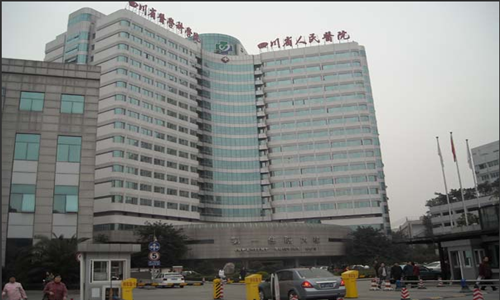
Figure: Sichuan Provincial People's Hospital
Enhancing regional medical and healthcare service capacity is both a government priority and a demand from grassroots communities. How can large hospitals support primary care institutions and respond to the national initiative promoting tiered diagnosis and treatment? According to Deng Shaoping, President of Sichuan Provincial People’s Hospital, “As early as six years ago, our hospital began exploring ways to support grassroots healthcare through the development of medical consortiums.”
So, what achievements has Sichuan Provincial People’s Hospital made in supporting grassroots hospitals over the past seven years? As the only public hospital to join the Active Health Industry Alliance, what benefits does this bring to medical innovation in Sichuan?
As early as 2009, Sichuan Provincial People's Hospital began exploring long-term mechanisms for medical consortiums to support grassroots healthcare facilities. It has carried out a series of effective initiatives centered on the development of medical consortiums. To date, the hospital has established a comprehensive, multi-tiered, and relatively well-developed service model for medical consortiums.
According to Deng Shaoping, medical consortium assistance encompasses grassroots community healthcare institutions, county-level hospitals, municipal general hospitals, and regional collaborative partnerships. In terms of organizational structure, it is categorized into two types: tightly integrated medical consortia and loosely affiliated medical consortia.
Specifically, in the tightly integrated medical consortium model, the hospital assumes trusteeship of county-level hospitals, granting them the right to use the brand of Sichuan Provincial People’s Hospital, with the entrusted hospitals becoming branch hospitals of Sichuan Provincial People’s Hospital. In the loosely integrated medical consortium model, hospitals at various levels form a loose hospital group with this institution, and each participating medical institution adopts the title “Sichuan Academy of Medical Sciences & Sichuan Provincial People’s Hospital (Group) Hospital.”
Regional collaboration refers to the hospital signing regional cooperation agreements with local governments or health authorities, and providing assistance and fostering partnerships among different medical institutions within the region through the form of a medical consortium.
However, the medical consortium model faces numerous constraints in the integration of personnel, finances, and resources. The Sichuan Provincial People's Hospital adopted a trusteeship model for its medical consortium. In the initial phase of trusteeship, the "Seven Unchanged" principles were implemented, namely: the administrative affiliation of the entrusted hospital remains unchanged; the nature and ownership of assets remain unchanged; the channels and methods of government funding remain unchanged; the scope of medical practice and the nature of operations remain unchanged; the primary entity bearing medical liability remains unchanged; the employment status of incumbent staff remains unchanged; and the management approach for retired employees remains unchanged. A dean responsibility system was implemented, wherein the dean is nominated by the Sichuan Provincial People's Hospital, subject to approval and appointment by the local Party committee and government, and exercises managerial and operational authority over the entrusted hospital on behalf of the Sichuan Provincial People's Hospital.
Meanwhile, in taking over the management of county- and district-level hospitals, Sichuan Provincial People’s Hospital looked beyond the development of the individual institutions under its stewardship, aiming instead to build and drive the establishment of a “1+1+N” regional three-tier healthcare system. The hospital explicitly required these managed hospitals to establish Departments of General Practice. The provincial hospital assumed responsibility for training general practice faculty at the county level, while the county hospitals were tasked with providing continuing medical education for all general practitioners in township health centers within their respective regions. This pragmatic, region-wide approach further underscores its scientific rigor. The initial management period was set at three years, allowing ample time for integration and granting all parties involved full autonomy in their future choices.
Data show that Chongzhou People’s Hospital, Xinjin County People’s Hospital, and Wenjiang District People’s Hospital, which were placed under trusteeship, along with member units of the medical consortium, all achieved rapid development during the first cycle.
In 2014, Xinjin County People's Hospital recorded 620,200 outpatient visits, representing a 42.3% increase from 2011; inpatient admissions rose by 27.07%, and the number of surgical patients also increased by 27.07%. The hospital introduced multiple new Level III and IV procedures, including radical resection for spinal conditions and hilar cholangiocarcinoma, as well as pancreaticoduodenectomy (Whipple procedure), enabling patients to receive effective treatment locally. In the 2013 and 2014 medical service and quality evaluations, the hospital ranked 16th among 98 municipal and county-level healthcare institutions in Chengdu, and 1st among Class II Grade A general hospitals.
“Over the past seven years, our medical consortium has developed remarkably well. Currently, there are more than 100 member institutions in the consortium, with over ten forming close-knit partnerships. If internet-based tools are further integrated into healthcare delivery, the operations of the medical consortium will become even more efficient. This is particularly true for the decentralization of high-quality medical resources, including the continuing education of healthcare personnel at primary care hospitals, which will significantly enhance their professional competencies and clinical technical skills.”
In Deng Shaoping’s view, as a professional within the healthcare system, he believes the model should be “healthcare + internet,” rather than “internet + healthcare.” This is because the healthcare industry, being highly specialized, does not have low entry barriers like industries such as apparel, food and beverage, or ride-hailing. Nevertheless, the internet can still penetrate certain aspects of healthcare.
“Leveraging internet technology to safeguard and promote the efficient operation of healthcare, facilitate the decentralization of high-quality medical resources, enhance convenience for the public, and reduce healthcare costs. As a healthcare professional, I first and foremost embrace and welcome the internet, proactively integrating its concepts and applying internet-driven thinking to foster the rapid and healthy development of the healthcare sector.”
On this occasion, Sichuan Provincial People’s Hospital, the Sichuan Provincial Health and Family Planning Commission, the China-US Health Summit Organization, and Active Healthcare Management Co., Ltd. formally signed the “Strategic Cooperation Agreement on Promoting a People-Centered Active Health Service Model.” This initiative aims to implement the Sichuan Provincial Government’s policy of vigorously developing the health service industry and advancing the corresponding “Seven Ones” project construction. Following consultations, the four parties have agreed to establish a long-term, stable strategic partnership, integrating their respective resources to jointly build the “People-Centered Active Care (PCAC)” model. This collaboration seeks to drive the transformation of Sichuan Province’s health service system toward an “active health” paradigm and foster the development of the health industry.
So, what are the specific areas of collaboration among these four parties within the Active Health Industry Alliance?
(1) Research on the transformation of health service systems and the health industry towards “proactive health.”
The four parties will integrate their respective resources to establish a specialized research institution focused on the transformation of health service systems based on “Proactive Health.” They will assemble a world-class research team comprising top domestic and international experts, apply for special research projects, and systematically review, study, and integrate experiences and theories related to the transformation of medical models both in China and abroad. The goal is to construct a theoretical framework for the “Proactive Health” service model, guide the implementation of pilot programs, and strive to gradually form by 2018 a set of experiences and a theoretical system for service system transformation that can be promoted throughout Sichuan Province, thereby contributing Sichuan’s experience and theoretical insights to the national transformation of health service systems. Meanwhile, guided by research on the “Proactive Health” service model and the goal of comprehensive health, they will conduct in-depth studies on the development pathways and planning of Sichuan’s health industry, providing a blueprint design for the overall future development of the province’s health sector.
(II) Implementation of Provincial Comprehensive Active Health Service ModelsPilot Programs and Demonstrations。
The four parties will jointly select one or more prefecture-level cities or urban districts to establish pilots and demonstration projects for proactive health service models. Guided by systematic theoretical research and supported by provincial-level medical resources, they will implement systemic innovations encompassing institutional, service model, and technological advancements. These efforts include innovations in health insurance payment mechanisms and the integrated development of healthcare, health insurance, and pharmaceuticals (the “Three Medicals”). Comprehensive pilots and demonstrations of proactive health service models will be established for two major population groups: urban residents and rural residents (including those in counties, townships, and villages). Social capital will be actively introduced to enable corporate-style operations, while deep collaboration with public medical institutions will be fostered to jointly carry out pilots of proactive health service models, thereby forming a relationship of complementarity, mutual advancement, and cooperation with the existing healthcare system.
Launch the operation of at least two comprehensive urban pilots and five rural pilots by the end of 2017, striving to ensure that by 2018, the demonstrative experience of the “proactive health”-based service model in comprehensive pilots is ready for province-wide promotion. By the end of 2020, establish a new proactive medical and health service network that basically covers the urban population of the main city and counties with a rural population of over 300,000.
(3) Guide the research on demand and industrial development of mobile medical devices and wearable equipment based on the "proactive health" service model.
Based on the proactive health service model, this study examines the application scenarios and requirements for key mobile medical devices and wearable products. By leveraging demand to drive manufacturing and industrial upgrading, it provides application scenarios and requirement standards for manufacturers of mobile medical devices and wearables. This initiative guides key device and equipment producers to collaborate with novel proactive health service providers in joint innovation and product development, thereby attracting key manufacturers to establish operations in Sichuan and stimulating the growth of related industries in the province.
Sichuan Provincial People's Hospital participates in research on proactive health service models within the Proactive Health Industry Alliance, provides brand and technical support to pilot medical institutions, and collaborates with social enterprises through various partnership models to vigorously promote the development of new-type healthcare institutions based on “proactive health.”
Deng Shaoping told reporters, “The Active Health Industry Alliance represents an excellent approach. It aligns perfectly with the national government’s vigorous promotion of the ‘Big Health’ concept, which centers on patients and prioritizes prevention as a breakthrough, while also helping to reduce healthcare costs for the general public.”
For large brick-and-mortar hospitals, the internet can be leveraged to optimize the workflows and efficiency of medical staff. This must involve an integration of online and offline services, as well as virtual and physical care; a purely virtual internet hospital is certainly not feasible. According to Deng Shaoping, the ideal state of healthcare is patient-centered, ensuring the accessibility, equity, and public welfare nature of medical resources. While medical costs should be affordable, the most ideal scenario is one where people fall ill less often or not at all. Perhaps through the Proactive Health Industry Alliance, this idealized vision of healthcare can be realized in the future.