

Zhang Qiang Doctor Group and Biotimes Bio Enter Strategic Collaboration to Pioneer a New Model of 'Doctor Groups + Scientists'
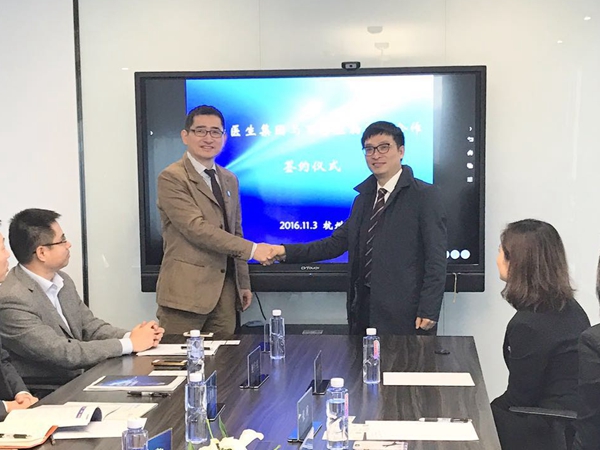
VCBeat (WeChat ID: vcbeat) exclusively learned yesterday that the Zhang Qiang Doctor Group has officially signed a strategic cooperation agreement with 100Biotech, the first scientist team in China’s medical field. The two parties will engage in in-depth scientific research collaboration in areas such as venous disease research.
Physician Group + Independent Scientist Team: A Powerful Alliance
Established in July 2014, the Zhang Qiang Doctor Group is China’s first and currently the most well-known physician group operating outside the public healthcare system. The group aims to build a platform for independent practice for physicians who have left the public system. It has consistently explored ways to transform doctors’ extensive clinical experience and data into standardized, replicable, cutting-edge scientific achievements. The group advocates for the integration of clinical and research teams, with each fulfilling their respective roles, to create practical and grounded scientific outcomes—a model commonly adopted in the international healthcare industry.
100Biotech, the first large-scale medical research consulting and technology service company in China, has signed a cooperation agreement with Dr. Zhang Qiang’s Doctor Group. All team members at 100Biotech hold master’s degrees or higher and possess extensive backgrounds in medical research; more than 50% are PhDs or postdoctoral fellows from prestigious universities, achieving comprehensive multidisciplinary coverage in fields related to medical research. To date, 100Biotech has successfully served approximately 5,000 renowned physician teams at leading tertiary hospitals across China, earning widespread recognition from clinical experts. This partnership represents a strong alliance between two industry leaders.
A Major Trend in Future Medical Academic Research
Dr. Guo Lei, founder of 100Biotech, believes that medicine is a profession requiring lifelong learning, and that academic and research capabilities are a key indicator for evaluating high-quality medical institutions. As an emerging model, physician groups must integrate with academic research and foster a corresponding research-oriented culture or mechanism to ensure their long-term development.
“As physician groups continue to develop, scientific research is becoming increasingly important. Only by continuously acquiring new knowledge and expanding innovative thinking can we ensure the rapid growth of the entire physician team. Whether practicing outside or within the public healthcare system, physicians must continually explore medical research to overcome medical challenges and translate these advances into clinical practice,” said Dr. Guo Lei regarding this collaboration.
Dr. Guo Lei further cited examples, noting that top-tier medical institutions worldwide, such as the Mayo Clinic, place great emphasis on academic and research endeavors. This commitment is essential to maintaining their authoritative industry standing and their appeal to elite medical talent. Therefore, for physician groups in China, positioning themselves with high-level academic aspirations and leveraging these to integrate scarce industry resources will undoubtedly foster core competitiveness and influence in specialized fields, thereby ensuring their high-value, long-term, and sustainable development.
Dr. Zhang Qiang strongly endorses this view. Several years ago, while still working within the public healthcare system, he engaged private scientists to collaborate on scientific research. More recently, Dr. Zhang introduced a novel concept—“Shared Specialty Medical Services”—which aims to fully leverage social and industry resources by integrating all elements of the medical industry chain, including specialists, medical data, and third-party laboratory and imaging services, to deliver the highest-quality specialty care to patients. Academic collaboration and resource sharing constitute a key component of this model.
However, physicians practicing outside the public healthcare system often focus primarily on clinical work, dedicating less effort to scientific research. Collaborating with independent scientist teams to conduct joint research on key topics in specific fields, and then applying the findings to clinical practice, can not only advance clinical techniques but also ultimately benefit patients. With the development of physician groups, scientific research has become increasingly important. Continuously acquiring new knowledge and fostering innovative thinking are essential to ensuring the rapid growth of the entire physician team.
“We are willing to share our resources with society and welcome doctors from both within and outside the public healthcare system to engage in joint exchange, learning, and growth,” stated Dr. Zhang Qiang. He emphasized that, beyond its own development, the physician group bears significant social responsibilities. “Our research is not influenced by utilitarian factors such as professional title promotions or quantitative research targets; our intrinsic motivation is to overcome challenges in medical diagnosis and treatment. I believe that our collaboration with 100Biotech will undoubtedly drive major breakthroughs in clinical medicine, particularly in the treatment of venous diseases.” Following the signing of a strategic partnership with 100Biotech, he expressed even greater conviction that collaboration with independent scientific teams will become a major trend in future medical academic research.
Meanwhile, Dr. Guo Lei also stated, “Clinicians are the best participants in scientific research; however, research management differs from clinical management, and clinicians face certain disadvantages in conducting research. At the same time, physician groups operating outside the public healthcare system, as an emerging independent force, are still in the exploratory stage regarding scientific research and thus require greater support from independent research teams.”
Advancing Scientific Research with “Research 5.0”
Recognizing the importance of scientific research for clinicians, Dr. Guo Lei pioneered the concept of "Research 5.0" at the 3rd Nobel Laureates Medical Summit and the China-US Academicians Forum in 2016. This initiative aims to establish a highly efficient model for scientific research by connecting and integrating individuals or organizations with technological capabilities or resources, operating on the principles of direct market and user participation, voluntary engagement, and mutual benefit. (See details:100Biotech Proposes “Research 5.0,” Potentially Leading Medical Research to Solve Various Medical Challenges)
Following the sequential signing of strategic cooperation agreements with the Dayi Alliance Physician Group and the Zhang Qiang Physician Group, 100Biotech has become the independent scientific team supporting China’s two leading physician groups. In the future, 100Biotech aims to help more clinicians enhance their research capabilities, making medical research more accessible and ultimately benefiting patients.