

Rehabilitation Assistive Devices Market Set to Reach RMB 700 Billion Amid Innovation and Industrial Transformation
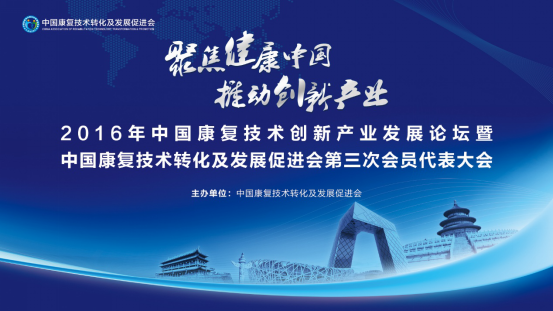
In the golden autumn season, the 2016 China Rehabilitation Technology Innovation and Industry Development Forum, concurrently with the Third Member Representative Congress of the China Association for Promotion of Rehabilitation Technology Translation and Development, was successfully held in Beijing. Since its establishment, the Association has strictly adhered to the strategic decisions and deployments of the CPC Central Committee and the State Council. Upholding the philosophy of development and service, it has been committed to advancing the national big health industry platform. By closely aligning with the “Healthy China 2030” Planning Outline, the Association has provided a superior platform for the translation and development of rehabilitation technologies across China, laying a solid foundation for the integration of China’s health industry with international standards.
Distinguished attendees of the conference included leaders from various national ministries and commissions, academicians and experts in the medical field, as well as representatives from enterprises and investment and financing institutions in the industry. During the conference, academicians of the Chinese Academy of Sciences and the Chinese Academy of Engineering, including Ba Denian, Yu Mengsun, Li Lanjuan, and Wu Zuze, delivered keynote speeches on relevant topics. The Special Committee on “System Engineering for Tiered Diagnosis and Treatment,” composed of Academicians Yu Mengsun, Li Lanjuan, and Yao Jianquan together with other top-tier experts, was officially established. Meanwhile, the unveiling ceremony for the “Center for Health and Elderly Care Research,” jointly founded by the Promotion Association and the China Institute for Income Distribution, was also held.
The conference features one main forum and 11 sub-forums, covering hot topics such as precision medicine, precision diagnosis and oncology rehabilitation, tiered diagnosis and treatment alongside healthcare reform, tiered diagnosis and treatment with IoT applications, precision prevention and control of hypertension, autism rehabilitation, intelligent rehabilitation, the comprehensive rehabilitation system, and assistive devices for barrier-free environments. Participants engaged in discussions and interpretations on the implementation of the “Healthy China” national strategy and the translation of scientific and technological achievements in these key areas.
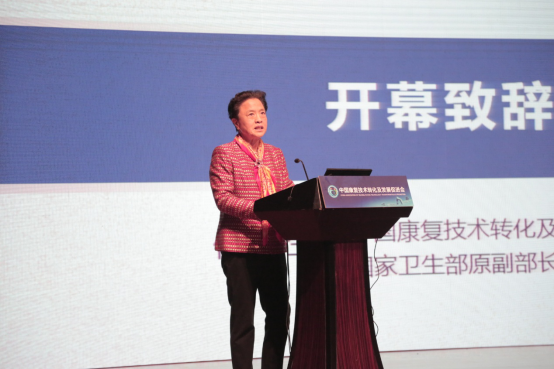
He Jiesheng: Market Size of Rehabilitation Assistive Devices Industry to Reach 700 Billion Yuan
At the opening ceremony of the conference, Mr. He Jiesheng, Honorary President of the China Association for the Promotion of Rehabilitation Technology Transformation and Development and former Vice Minister of the Ministry of Health of China, delivered the opening address. Minister He stated that the China Association for the Promotion of Rehabilitation Technology Transformation and Development is a first-tier association directly registered with the Ministry of Civil Affairs of China. It serves as a vital force in developing the rehabilitation medical industry by gathering and organizing research institutions, medical facilities, and enterprises in related fields. Within rehabilitation medicine, the assistive devices sector has become the area with the largest number of individuals in need and the biggest market size; its market scale was projected to reach RMB 700 billion in 2020, making it a significant component of industrial upgrading during the 13th Five-Year Plan period. At the recent National Conference on Hygiene and Health, President Xi Jinping pointed out that “without universal health, there can be no comprehensive well-off society,” emphasizing that people’s health should be prioritized in strategic development. He underscored the grand goal of safeguarding people’s health through early diagnosis, early treatment, and early rehabilitation, covering all aspects and the entire life cycle. This has sounded the clarion call for the development of the broader health industry. The Association will actively coordinate with industry peers to jointly seize opportunities, meet challenges, and fully leverage the favorable domestic and international environments and timing to advance China’s medical industry.
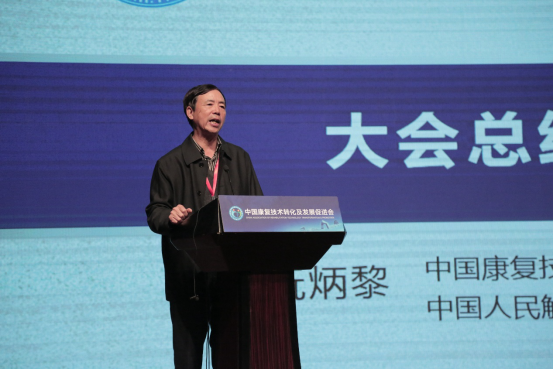
Ruan Binglei: This meeting has four tasks.
During the subsequent Academician Forum, Academician Ba Denian—Member of the Presidium of the Chinese Academy of Engineering, Foreign Associate of the U.S. National Academy of Sciences, former President of the Chinese Academy of Medical Sciences, and former President of Peking Union Medical College—delivered a keynote address titled “Promoting the Construction of Healthy China to Lay a Solid Foundation for Realizing the Chinese Dream.” He provided an in-depth analysis of the development and current status of China’s healthcare sector over the past three decades. As one of the experts involved in formulating the Healthy China 2030 policy, Academician Ba expressed his hope that the government would further increase healthcare insurance expenditure, ultimately achieving universal free medical care, continuing to improve China’s health indicators, and reaching the advanced levels of developed countries. By 2030, China’s key health indicators are expected to see further improvement.
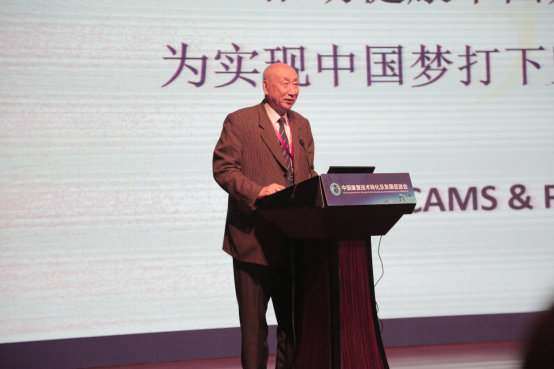
At the conference, Academician Ba Denian also delivered an insightful speech, analyzing the development and current status of China’s healthcare sector over the past three decades. Major health indicators in China have improved significantly: average life expectancy rose from 68.6 years in 1990 to 73 years in 2005; the infant mortality rate decreased from 61 per 1,000 live births to 18.5 per 1,000; and the maternal mortality ratio dropped from 80 per 100,000 live births to 34 per 100,000. As one of the architects of the “Healthy China 2030” policy, Academician Ba expressed his hope that the Chinese government would further increase healthcare expenditure, ultimately achieving universal free healthcare, while continuing to improve national health indicators to reach advanced levels comparable to those of developed countries. Over the past decade, the establishment of the New Rural Cooperative Medical Scheme (NRCMS) has played a substantial role in expanding healthcare access across China. Per capita funding for the scheme increased from RMB 10 in 2002 to RMB 300 in 2012, and is projected to reach RMB 600–700 by 2020. Under the “Healthy China 2030” initiative, China’s key health indicators are expected to continue improving, with average life expectancy reaching 79 years, the infant mortality rate declining to 6 per 1,000 live births, and the maternal mortality ratio decreasing to 12 per 100,000 live births.
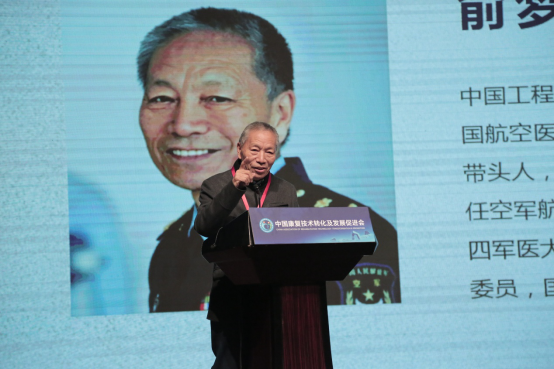
Academician Yu Mengsun, an academician of the Chinese Academy of Engineering, Director of the Aviation Medical Engineering Research Center at the Air Force Institute of Aviation Medicine, and the founder of aviation biomedical engineering in China, stated in his address to the conference that at the recent National Conference on Health and Wellness, President Xi Jinping clearly proposed shifting the focus of health work from disease treatment to people’s health. The concept of “people’s health” serves as a measure of individuals’ health status. Diseases arise from suboptimal health levels; as people’s health status improves, the incidence of disease naturally declines. Traditional medicine focused primarily on diseases rather than on maintaining the body’s inherent homeostatic health balance. In contrast, the current policy, centered on people’s health, offers a more effective approach to addressing disease-related challenges.
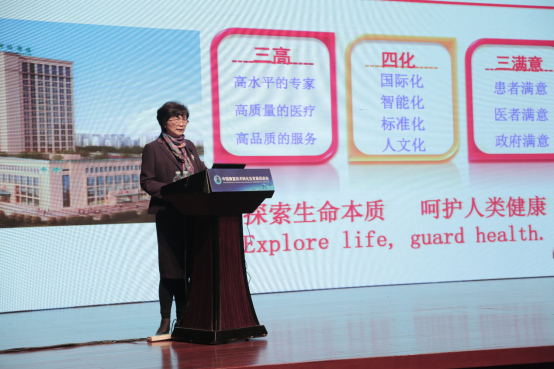
Academician Li Lanjuan, an Academician of the Chinese Academy of Engineering, Professor at the Zhejiang University School of Medicine, and Director of the State Key Laboratory for Diagnosis and Treatment of Infectious Diseases, delivered a lecture titled “Advances in Intelligent Healthcare Research,” elaborating in detail on the significant importance of intelligent healthcare. China’s per capita GDP remains relatively low, and prominent challenges include population aging, the prevalence of infectious and chronic diseases, birth defects, and an uneven distribution of medical resources. By connecting healthcare personnel, information, equipment, and resources to facilitate positive interactions, artificial intelligence (AI) provides more convenient, diverse, and efficient medical and health services, thereby making it easier for people to access medical care. Furthermore, the integration of AI and related technologies can enhance the precision of clinical diagnosis and treatment through precise medical practices, help standardize diagnostic and therapeutic procedures, promote the transformation and development of healthcare-related industries and the economy, accelerate the benefits derived from technological innovations in medical care and health management, and fundamentally reshape the healthcare model.
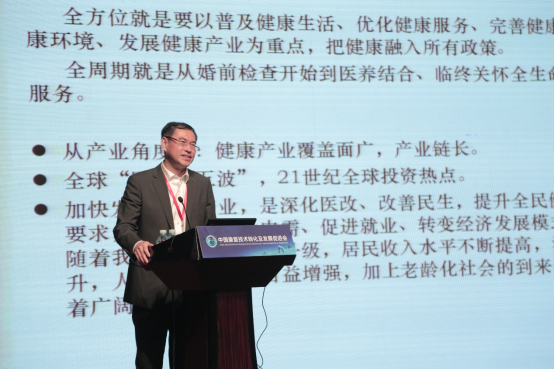
Lai Shiqing, National Health and Family Planning Commission Inspector under the State Council’s Office of Healthcare Reform and Deputy Director of the Fujian Provincial Development and Reform Commission, delivered a speech titled “Seizing Opportunities to Promote Innovative Development of the Health Industry.” Director Lai stated that the National Conference on Health and Wellness put forward a policy to safeguard people’s health in all aspects and across the entire life cycle, setting forth new requirements for the health sector in terms of both scope and temporal coverage. Accelerating the development of the health industry is an inevitable requirement for deepening healthcare reform, improving people’s livelihoods, and enhancing the overall health literacy of the population; it is also a significant measure to further expand domestic demand, promote employment, and transform the model of economic development. With the continuous upgrading of China’s industrial structure, rising household income levels, and ongoing optimization of consumption patterns, public demand for health services is growing steadily. Coupled with the advent of an aging society, the health industry faces broad prospects for development.
2016 was a year full of reforms and opportunities. With the introduction of the 13th Five-Year Plan, "Healthy China" has become a national priority development strategy. On August 26, 2016, at a meeting of the Political Bureau of the CPC Central Committee, President Xi Jinping presided over and approved the Outline of the "Healthy China 2030" Plan, emphasizing that it serves as the action guide for advancing the construction of a Healthy China over the next 15 years. Alongside the issuance of the Action Plan for Promoting the Transfer and Commercialization of Scientific and Technological Achievements, the continuous advancement of the National Science and Technology Innovation Plan during the 13th Five-Year Plan period, and the official release of the Outline of the "Healthy China 2030" Plan, China's medical rehabilitation industry has continued to develop and attract increasing attention. The ongoing technological innovation in the healthcare industry will serve as a key driving force for the construction of a "Healthy China."
Against this backdrop, the China Association for the Promotion of Rehabilitation Technology Translation and Development hosted this forum. Centered on the theme “Focusing on Healthy China, Promoting Innovative Industries,” and adhering to the conference’s mission of “Learning, Communication, Discussion, and Exchange,” the event brought together clinicians, academic researchers, and industry companies to engage in in-depth discussions on key issues such as fostering innovative development in healthcare technologies and strengthening the integration among industry, academia, research, and technology translation. The forum also provided interpretations and discussions on hot topics, policies and regulations, guiding principles, and development models related to the implementation of the “Healthy China” national strategy.