Tongdu Insight: Smart Health Entrepreneurship and Investment Analysis Report (2016Q3)

Report Source: Tongdu Capital (Tongdu Capital is a venture capital firm focused on innovation and entrepreneurship opportunities in the healthcare sector, committed to research and investment practices in this field. Against the backdrop of government-led healthcare reforms, startups have emerged in large numbers, while traditional enterprises are actively transforming and strategically positioning themselves. Tongdu aims to systematically review key information and representative events in this sector, particularly investment activities related to startups, with the hope of providing insights for industry practitioners and entrepreneurs.)
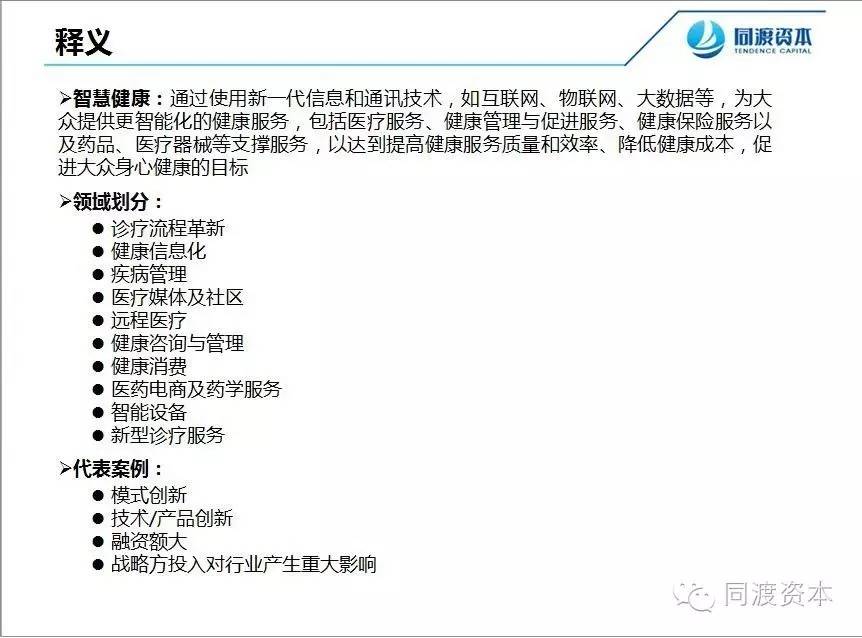
Tongdu defines “Smart Health” as the provision of more intelligent health services to the public through the use of new-generation information and communication technologies, such as the internet, the Internet of Things (IoT), and big data. These services encompass medical care, health management and promotion, health insurance, and supporting services including pharmaceuticals and medical devices, with the aim of improving the quality and efficiency of health services, reducing health-related costs, and promoting the physical and mental well-being of the general population.
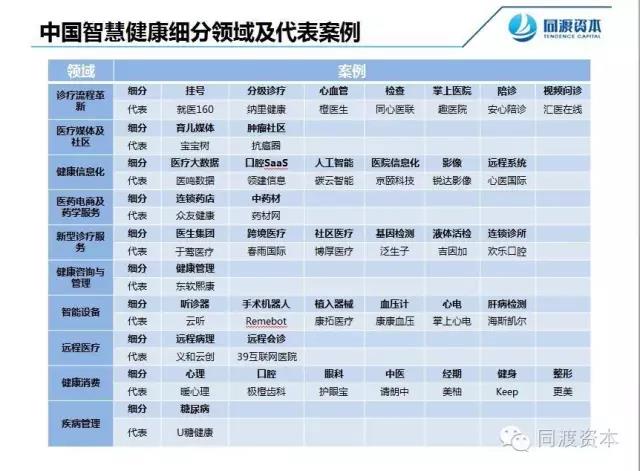
Additionally, to facilitate research, smart health has been segmented across dimensions such as users, business models, and payers, primarily encompassing ten sub-sectors: innovation in diagnosis and treatment processes, health informatization, disease management, medical media and communities, telemedicine, health consultation and management, health consumption, pharmaceutical e-commerce and pharmaceutical services, intelligent devices, and novel diagnostic and therapeutic services.
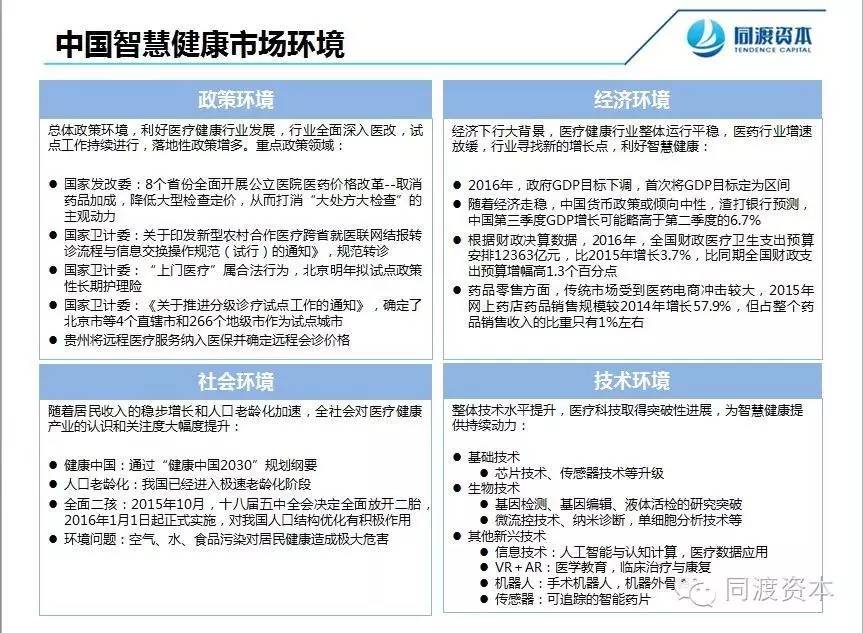
In Q3 2016, the policy environment remained favorable: the Outline of the Healthy China 2030 Plan was approved, pilot programs for tiered diagnosis and treatment were expanded, reforms of medical service pricing were intensified, long-term care insurance was expected to be rolled out initially in selected regions, and health insurance schemes gradually began to cover new service models such as telemedicine. Against the backdrop of an economic downturn, the healthcare industry experienced relatively slow growth, with transformation and innovation becoming the norm, thereby creating favorable conditions for the development of smart healthcare.
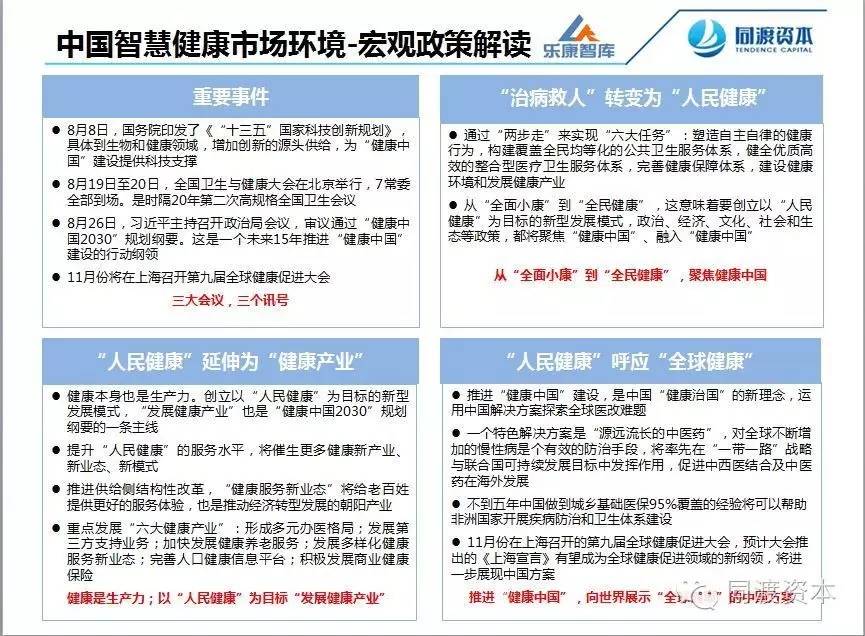
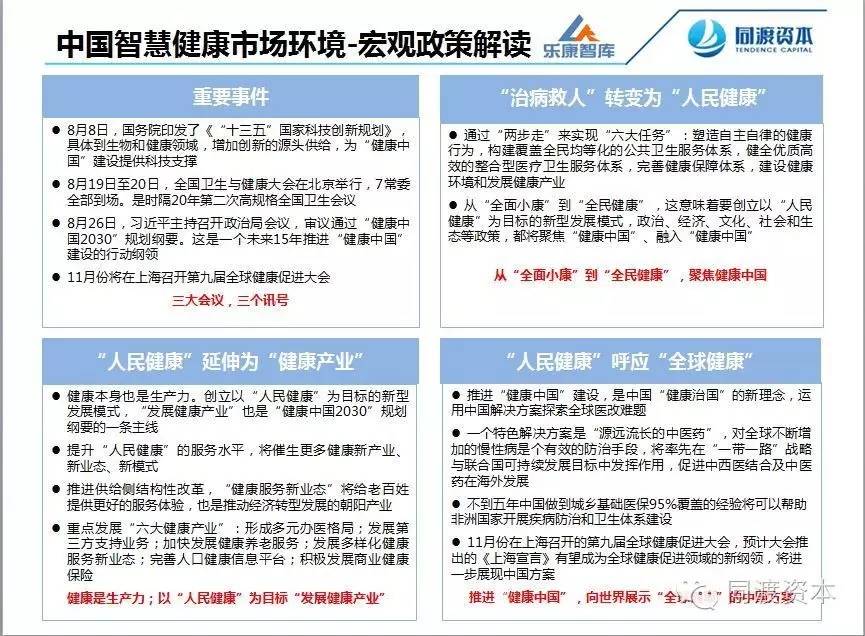
Technological Innovation + High-Specification Conference + Action Agenda: Opening a New Chapter in “Governing the Nation Through Health”
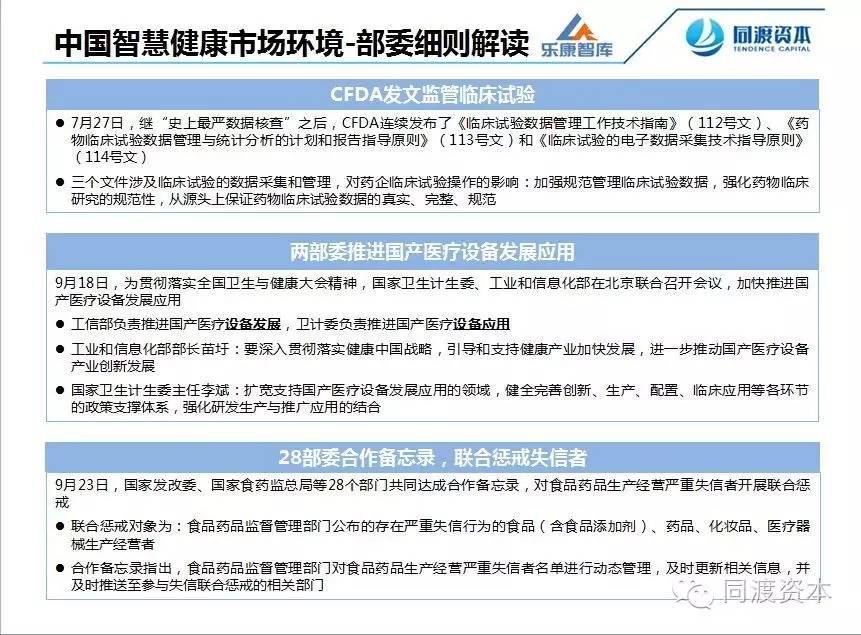
Strict oversight of clinical trials and joint disciplinary actions against untrustworthy entities will drive greater standardization within the industry. Chinese-made medical devices are poised to seize development opportunities propelled by supportive policies.
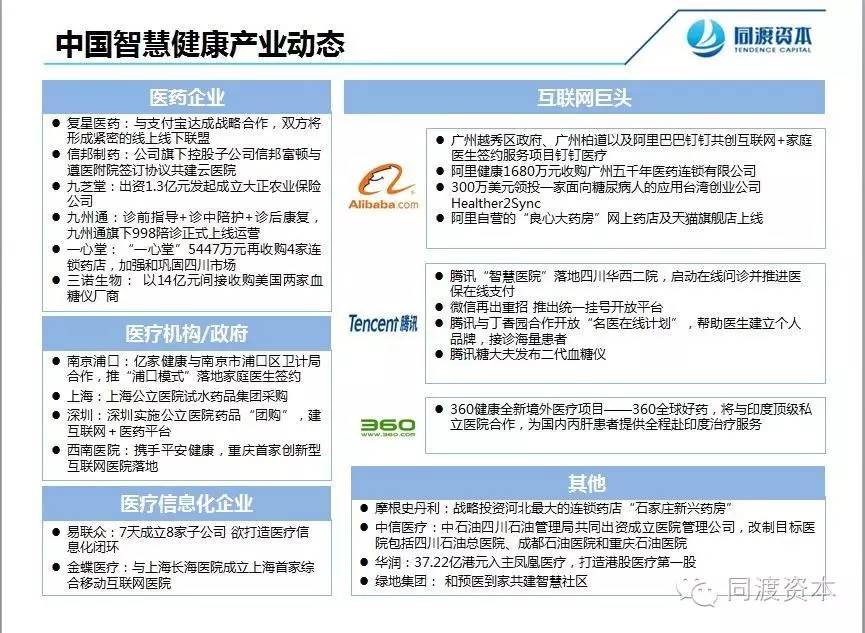
In Q3 2016, industry giants continued to actively expand their presence in smart health, leveraging their respective strengths to enter the market from different angles and form powerful alliances. The online-to-offline “Internet+” model remained a key focus.
In Q3 2016, according to publicly disclosed information, a total of 62 financing and investment events occurred, primarily distributed across fields such as novel diagnostic and therapeutic services, innovation in diagnostic and treatment processes, health consumption, and health informatization. The funding stages were predominantly angel rounds and broad Series A rounds. Beijing, Shanghai, and Shenzhen exhibited significantly higher levels of financing and investment activity compared to other cities. The highest financing amount this quarter reached RMB 3 billion, with a total of 17 companies securing over RMB 100 million in funding.
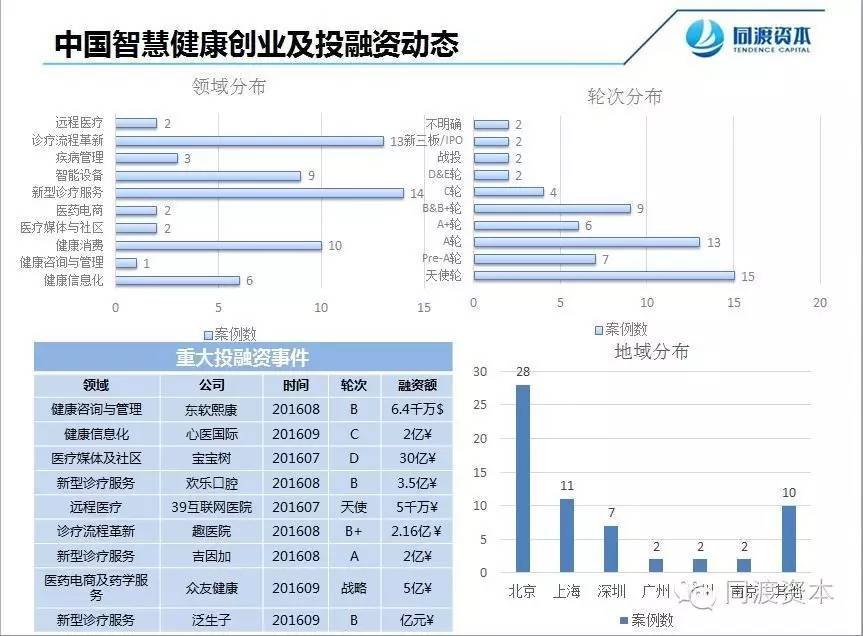
In Q3 2016, against the backdrop of the national promotion of tiered diagnosis and treatment systems and the encouragement of medical technology innovation, novel diagnostic and therapeutic services—represented by community healthcare, physician groups, and liquid biopsy—continued to attract capital investment. Medical big data and surgical robots also garnered significant attention.
The overall landscape of smart health in the United States has remained largely unchanged compared to Q2. Google continues to maintain its enthusiasm for the healthcare sector.
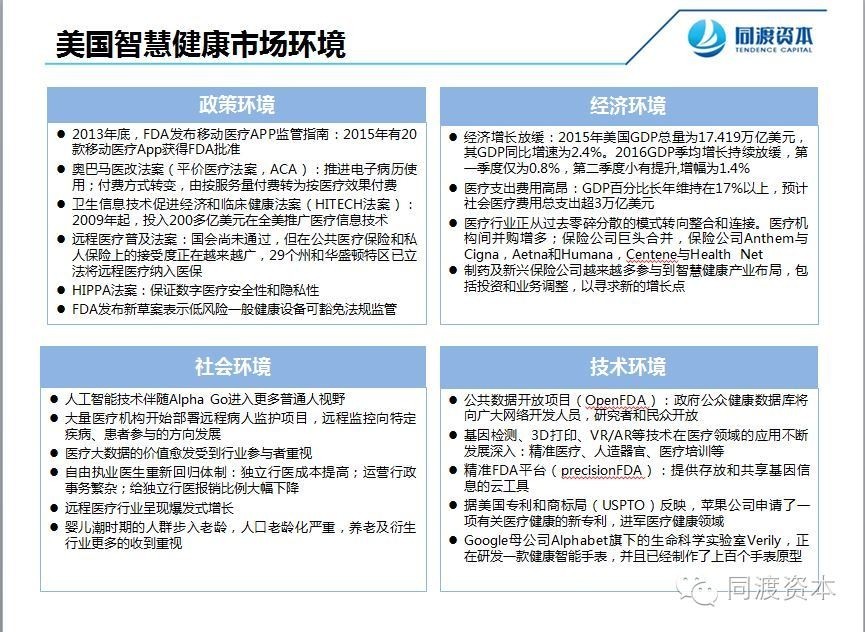
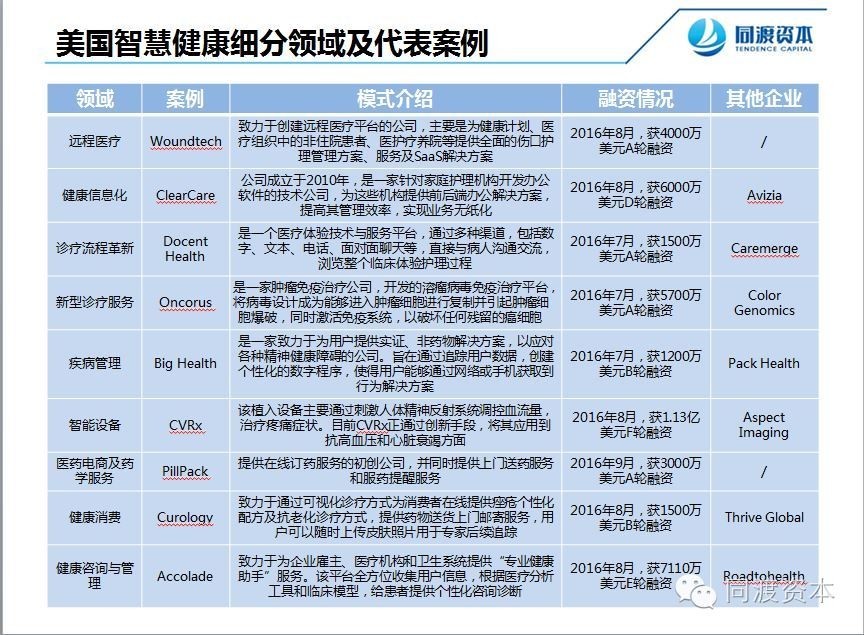
Representative companies in various sub-sectors of smart health in the United States have also gained support from major capital investors. Although there are differences in healthcare systems, their business models and development strategies offer valuable insights for Chinese enterprises.