

OrthoPediatrics Files $75 Million IPO to Expand Pediatric Orthopedic Leadership
Currently, there are several specialized orthopedic medical device suppliers worldwide. However, only one company, OrthoPediatrics, has dedicated itself to studying the physiological characteristics of children’s bones to manufacture pediatric orthopedic devices. Since its establishment in 2006, it has remained the world’s sole company exclusively focused on pediatric orthopedic equipment, significantly improving the lives of many children with orthopedic conditions.

OrthoPediatrics: The World’s Only Pediatric Orthopedic Device Company
The company’s headquarters, known as the Orthopedic Center, is located in Warsaw, Indiana, USA. Upon entering through the front door, visitors are immediately greeted by a photograph of Dr. Peter Armstrong, the Chief Medical Officer, alongside a young boy named Gideon. Gideon, a former patient of Dr. Armstrong, was born without arms and with severe deformities in both feet. Following orthopedic corrective procedures performed by Dr. Armstrong, Gideon’s feet have recovered remarkably well. Now in his twenties, he is able to use his feet to perform tasks nearly as effectively as hands would. Hanging beside the photograph is a portrait of Gideon’s girlfriend, painted by him using his feet—a silent yet powerful testament to OrthoPediatrics’ mission to help children with orthopedic conditions regain their health and lead active, fulfilling lives.
Targeting Pediatric Orthopedics, Setting the Industry Benchmark
In just ten years, OrthoPediatrics has become the global gold standard for pediatric orthopedic products. By single-handedly creating a new niche industry, the company has shifted the focus of the orthopedic device market away from its exclusive obsession with adult hip and knee implants, thereby pioneering a new frontier in pediatric orthopedics.
Initially, the company produced simple devices, such as screws and plates designed to stabilize fractured bones in children of varying ages and body types. Gradually, it developed more advantageous innovative products based on existing market offerings, and even launched entirely new product lines, such as an anterior cruciate ligament (ACL) reconstruction system suitable for pediatric surgery. OrthoPediatrics focused its primary efforts on the innovative design of novel grafts and related instruments, while outsourcing high-precision manufacturing to specialized companies in other fields.
OrthoPediatrics stated in its press release, “Children are not just small adults.” There are significant differences between pediatric and adult skeletons; beyond being smaller in size, children’s bones exhibit greater curvature, and, more importantly, their growth plates require careful protection. Therefore, their orthopedic devices are not merely scaled-down versions of adult implants but are designed to comprehensively address the diverse needs of smaller-statured patients and their surgeons. For instance, most implants used in adult orthopedic surgeries are made of titanium alloy to promote fibrous tissue growth around the implant. In contrast, for pediatric patients, the opposite is often required, as implants may need to be removed later in life. To prevent excessive fibrous ingrowth, stainless steel materials that inhibit such growth are utilized instead.
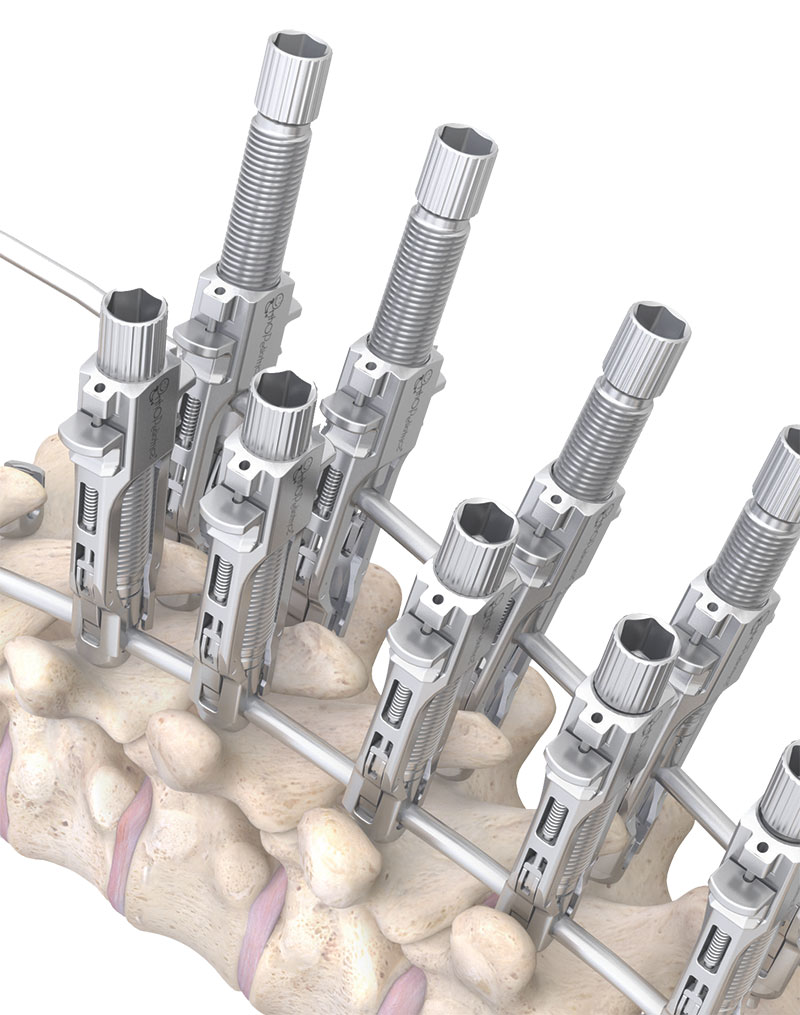
OrthoPediatrics’ RESPONSE™ Spinal Correction System
OrthoPediatrics maintains close collaboration with approximately 3,000 pediatric orthopedic surgeons worldwide, gathering insights on intraoperative challenges to drive product improvements. Mark Throdahl, the company’s CEO and Chairman, stated that because pediatric surgical pathologies differ significantly from those in adults—and given that most adult orthopedic procedures focus on the hip and knee joints—OrthoPediatrics must conduct extensive independent research to truly “understand the needs of pediatric surgeons” and make beneficial product enhancements. To expand its study of orthopedic cases, the company has secured exclusive research access to the Hamann-Todd Human Osteological Collection at the Cleveland Museum of Natural History, the world’s largest human skeletal collection. By scanning a large number of skeletal samples, the company aims to leverage the resulting data to develop new products.
Overcoming Challenges, Promoting Best Practices: FDA Facilitates Review
The company’s products have achieved FDA (U.S. Food and Drug Administration) clearance at a remarkable pace, with new product submissions approved in less than 60 days. In contrast to the approximately one-year regulatory approval process typical for most conventional orthopedic products, the FDA explained that this expedited timeline reflects its intention to help pediatric orthopedic surgical products reach the market as quickly as possible. The first product received FDA approval in 2008, just over a year after the company’s establishment. To date, OrthoPediatrics has obtained FDA 510(k) clearance for 18 surgical product sets, including surgical instruments and implants, with several additional devices currently under review. All current products are categorized into three primary therapeutic areas: trauma and deformity correction, complex spinal deformity surgery, and anterior cruciate ligament (ACL) reconstruction.
OrthoPediatrics is advancing surgical treatment solutions for osteogenesis imperfecta. Osteogenesis imperfecta is a genetic disorder that causes children’s bones to be fragile and prone to fracture. The company’s portfolio includes a tibial implant capable of lengthening in tandem with bone growth, along with numerous other product initiatives currently at the conceptual stage. OrthoPediatrics’ R&D pipeline is facilitating regulatory clearance for its osteogenesis imperfecta devices, with approximately one new large-scale system receiving FDA approval each year.
To broaden the adoption of equipment and practices suitable for pediatric orthopedic surgery, the company is collaborating with pediatric surgical centers and devoting significant resources to training surgeons on product usage. Over the past year, it has conducted more than 240 workshops across various hospitals. The company also sponsors continuing medical education (CME) courses to enable more surgeons to master its surgical systems and has established a committee to train physicians participating in these educational programs.
Still Awaiting Profitability, Filing for IPO to Expand Market
In 2015, the company’s annual revenue reached $31 million, a 30.9% increase from 2014. However, OrthoPediatrics has not yet achieved profitability, reporting a net loss of $7.9 million in 2015. The company’s products are sold worldwide, with 20% exported to more than 29 countries overseas. Orthopedic implants and bone fixation devices for the treatment of traumatic deformities accounted for 73% of the company’s 2015 revenue, representing a 16-percentage-point increase from 2014.
Their largest investor to date is Squadron Capital, a private equity firm specializing in small-scale medical devices, which invested $37 million in OrthoPediatrics in 2014.

OrthoPediatrics Financing Overview
In June this year, OrthoPediatrics filed for an initial public offering (IPO) seeking to raise $75 million, with the aim of expanding sales, supporting new product development, and solidifying its position in this niche market. While the final amount raised may vary depending on circumstances, the company stated in its prospectus that it is capable of securing at least enough funding to meet its needs for the next two years.
Expanding the Product Line to Face Fierce Competition in the Orthopedics Market
The company’s competitors include medical device manufacturers such as DePuy Synthes (a subsidiary of Johnson & Johnson), Medtronic, Smith & Nephew (UK-based), and Zimmer Biomet, which is also headquartered in Warsaw, Indiana. OrthoPediatrics noted that although none of these companies specialize in pediatric orthopedics, some pediatric patients still use orthopedic products designed for adults and are reluctant to switch to unfamiliar new products, even when OrthoPediatrics’ offerings are more suitable. Furthermore, some large, well-capitalized companies may develop pediatric-specific devices in the future, leading to direct competition.
To maintain its competitive edge, OrthoPediatrics has decided to expand its product portfolio while continuing to focus on its core business of pediatric orthopedic surgical devices. Potential growth areas include the treatment of sports-related injuries affecting the foot, ankle, hand, wrist, pelvis, clavicle, and other anatomical regions. OrthoPediatrics plans to launch a new surgical system annually in the “foreseeable future.” The company also indicated that it may consider using proceeds from its IPO to pursue acquisitions aimed at enhancing its technological capabilities and expansion capacity.