

Apple's Aggressive Healthcare Push: All Roads Lead to One Bold Ambition
In recent months, Apple has been signaling its ambition to make a significant impact in the healthcare sector. The tech giant has recently conducted four high-profile recruitment drives to expand its medical team and has established partnerships with major healthcare institutions, including clinical trials with Beth Israel Deaconess Medical Center and a precision medicine initiative with the Scripps Research Translational Institute in California. VCBeat (WeChat ID: vcbeat) here brings you insights into Apple’s recent moves in the healthcare field, tracking the medical strategy of this world-leading technology company.
As early as last April, Apple joined forces with IBM, Johnson & Johnson, and Medtronic to create the “Watson Health Cloud,” a super cognitive computing platform that provides customized data analytics services for physicians and secure cloud data for the HealthKit, ResearchKit, and CareKit platforms.
In August, Apple confirmed its acquisition of Gliimpse, a personal health records company. Gliimpse aggregates all health data onto a compliant digital medical record platform, significantly enhancing the interoperability of medical information. This acquisition is particularly strategic for Apple, which has been seeking to establish medical credentials for its HealthKit, ResearchKit, and CareKit products. Brian Eastwood, an analyst at Chilmark Research specializing in consumer engagement and consumer-centric care models, stated, “Apple aims to possess a ready-made ecosystem for collecting personal health records.”
In September, Apple Watch secured a major contract with Aetna. Aetna will allocate significant funds to purchase Apple Watches for key large employers and individual customers, while also distributing them free of charge to nearly 50,000 employees to enhance overall corporate health and promote the company’s medical reimbursement program.
A close examination of Apple’s medical advancements inevitably leads to a discussion of three types of “Kit” data platforms. A detailed analysis of each platform’s functionalities and achieved outcomes reveals Apple’s strategic objectives for delivering highly integrated and mutually reinforcing healthcare services.
All “Kits” are data and application module tools designed for developers: first, HealthKit, released with iOS 8 in 2014, which popularized Apple’s concept of interoperable public health data; its built-in modules for physical metrics, nutritional intake, and other health-related features form the foundation of today’s common health applications. Second, ResearchKit, introduced at the spring 2015 launch event, builds upon HealthKit’s data interoperability to enable researchers to access large volumes of primary data for scientific studies. Third, CareKit, unveiled at the spring 2016 launch event, is a patient-centric, one-on-one patient service framework developed on top of the previous two platforms, facilitating shared health data between patients and healthcare providers.
The opening mentions Apple’s collaborations with multiple healthcare institutions, bringing to mind a report released last May by MIT Technology Review: Apple is partnering with several U.S. research institutions to develop applications that collect and organize users’ DNA data. This initiative is based on ResearchKit. It first requires users to provide saliva samples; once genetic data are generated, they are stored in ResearchKit’s cloud computing platform. Hospitals and other researchers can then access the ResearchKit platform to obtain large volumes of research samples, thereby significantly easing the traditionally arduous process of primary data collection.
Numerous apps developed by research institutions on the ResearchKit platform have already achieved significant results. For instance, mPower, jointly launched by the University of Rochester and Sage Bionetworks, assesses the severity of Parkinson’s disease through mini-tests, simple questions, and tasks requiring patients to move their limbs. To date, it has engaged more than 10,000 participants, marking the largest clinical study on Parkinson’s disease in history. In terms of influence, technology, and resources, Apple is indeed the premier choice for conducting population health data research.
Recent hiring moves are quite telling. In early November, Apple recruited Ricky Bloomfield, a Ph.D. from Duke University and former Director of Mobile Strategy, into its health technology team to help implement the HealthKit and ResearchKit mobile application platforms. This past September, Dr. Mike Evans from the Li Ka Shing Knowledge Institute was hired as its Head of Digital Preventive Medicine.
Earlier, Apple hired Rajiv Kumar, a pediatric endocrinologist at Stanford University, to oversee diabetes management features for the HealthKit platform; and Stephen Friend, Chairman and Co-Founder of Sage Bionetworks, to lead software system development for the ResearchKit platform.
According to Politico, a political news outlet, Apple has recently hired a business development lead with a background in corporate health management and a data visualization expert to develop software capable of accessing user health data while safeguarding personal privacy. Previously, Apple posted and swiftly removed a public job listing seeking a legal counsel with experience in FDA compliance and health data privacy.
Now, their medical technology team has grown to over 100 members, with experts hailing from the fields of medical devices and medical sensors. It appears that Apple is no longer content with merely developing health apps; instead, it is confidently advancing into specialized healthcare domains, such as regulated medical technologies and clinical support systems.
According to IDC’s Health Insights report, it is projected that by 2018, 70% of healthcare organizations worldwide will invest in consumer-oriented mobile applications, wearable devices, remote health monitoring, or virtual care products, with a significantly heightened emphasis on leveraging data analytics to support population health management.
Many companies already offer wearable devices that track daily activities and help users achieve their health goals. Newer devices tend to have more comprehensive or specialized features. For instance, Biotricity’s BioLife device, from the biometric medical company Biotricity, can monitor heart rate, respiration, body temperature, physical activity, and calorie expenditure, while also transmitting data to healthcare providers for analysis and feedback. On the more specialized end, Medtronic, a leading medical device manufacturer, has developed an abdominal-worn sensor that connects to a smartphone app for diabetic patients, enabling prediction of hypoglycemic episodes.
Apple is also striving to stay ahead in the wearable device market. A recent study published in JAMA Cardiology indicates that the Apple Watch outperformed three other wearable devices—the Fitbit Charge HR, the Mio Alpha, and the Basis Peak smartwatch—in heart rate measurement accuracy, achieving 90% accuracy.
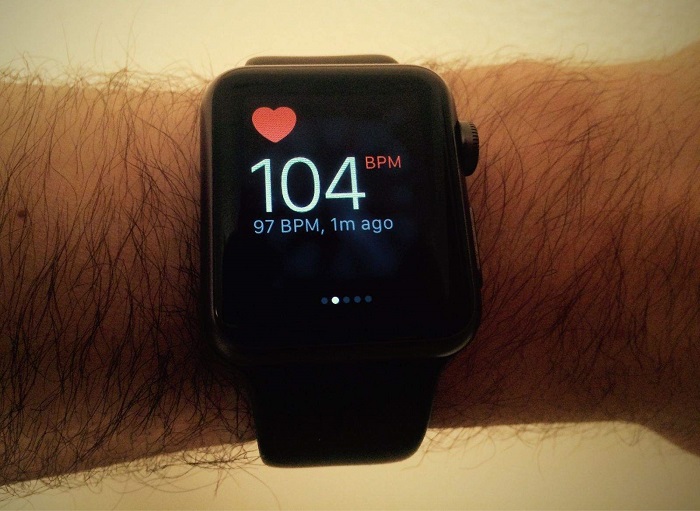
Apple Watch Heart Rate Measurements Demonstrate High Accuracy
According to Fortune magazine, Apple has a patent application pending approval for a new type of wearable device that can be worn on various parts of the body to accurately measure electrocardiogram (ECG) information and provide usable data for doctors. Typically, generating an ECG requires simultaneous monitoring with multiple electrodes to obtain more accurate data. Apple’s patented device employs pressure-sensing technology to capture data from different areas of the body, thereby achieving more precise monitoring results. Once launched, this device will further expand the range of health data-tracking products beyond the existing Apple Watch and iOS-exclusive health apps.
According to medical research consulting firm Decision Resources Group, Apple’s electrocardiogram (ECG) measurement device is scheduled for release in 2017. The firm also noted that an ECG-capable product is already available on the market: the Kardia mobile ECG monitor from AliveCor, a San Francisco-based company.
As Apple accelerates its progress in the healthcare sector, it is also raising the entry barriers for health and medical apps on the iOS App Store. In the “iOS App Store Review Guidelines” released at the beginning of the year, Apple warned that it would strengthen oversight of app data, with particular attention to applications used for diagnostic or therapeutic purposes, and restrict apps with inaccurate data. Apps posing a risk of personal injury will be strictly prohibited.
Apple has also introduced two new health apps to its device lineup—AirStrip and 3D4Medical. AirStrip enables physicians to check their schedules and access patient diagnostic feedback via the Apple Watch; 3D4Medical offers an extensive library of 3D anatomical images that visualize affected areas, helping doctors facilitate patients’ better understanding of their conditions.

At present, it appears that effective medical data is the most critical component for Apple to achieve breakthroughs in the healthcare sector. Data validity is ensured by devices, which has driven the need for continuous improvement and the creation of new device series (such as patented sensors and wearable device manufacturing). It also demands that data from iOS medical applications be more standardized and precise (thereby raising the entry barrier for medical apps). On this basis, Apple needs to expand the richness of its data, which has further led to an emphasis on health data security (exemplified by the acquisition of Gliimpse, a medical information compliance platform). Naturally, all of this requires a robust internal medical technology team at Apple (reflected in its frequent recruitment of medical elites).
Here, we predict Apple's three-point plan for the healthcare industry:
1. Building on Apple’s existing technological foundation, a top-tier medical technology team will develop additional patented biometric sensors and system sensors, thereby creating the most advanced wearable devices for health monitoring and fitness tracking (primarily the Apple Watch), and vigorously promoting these devices among the general public to establish them as a prevailing trend;
2. Under the premise of ensuring consumer privacy and security, share the vast amount of personal health data recorded by hardware devices with leading electronic health systems, enabling medical data to be more widely used for research, and then feed certain research findings back into product optimization;
3. Patient-centric approach: Enable bidirectional exchange of health data and medical feedback between physicians and patients to facilitate long-term health monitoring, proactively detect potential health crises, and provide timely alerts to both parties.
These three initiatives can be summarized into a single objective: acquiring reliable, secure, and privacy-protecting human health data, which constitutes the core of medical value.
Due to Apple’s longstanding culture of strict secrecy, its long-term strategic layout in the healthcare sector remains shrouded in mystery. Nevertheless, CEO Tim Cook has explicitly stated that the healthcare market represents a “huge” opportunity for Apple. The development of the Watson Health cloud platform, collaborations with medical institutions, and the assembly of a world-class medical technology team all signal Apple’s greater ambitions in the professional healthcare domain.
(Some data and materials in this article are sourced from public information, including Politico magazine, IDC, JAMA Cardiology, Fortune magazine, and Decision Resources Group.)