

Guidelines on the Electronic Prescription Dataset for Cross-border Electronic Data Exchange (Version 1)
The “Guidelines on the Electronic Prescription Dataset for Cross-Border Electronic Data Exchange (Version 1)” (hereinafter referred to as the “Guidelines”), published by the EU eHealth Network, provide specific and actionable guidance on the implementation of electronic prescriptions in cross-border electronic data exchange. The Guidelines cover the scope and definitions of electronic prescription use, functional and semantic specifications, technical requirements, data protection, legal provisions, and recommendations for revisions. VCBeat (WeChat ID: ) provides a detailed introduction and overview below.

E-Prescription, short for electronic prescription, commonly translated as "electronic prescription," is a computer-generated prescription created by the patient’s healthcare provider and sent directly to the patient’s pharmacy.
Unlike traditional paper prescriptions, physicians or healthcare providers enter prescriptions directly into a computer system, which then transmits the prescription from the provider’s computer to the pharmacy’s system. Electronic prescriptions are transmitted via a private, secure, and closed network rather than through mail or open networks, thereby eliminating concerns about patient information leakage. Electronic prescriptions offer the following advantages: speed, convenience, legibility, and cost-effectiveness.
Electronic prescribing and e-dispensing fully digitize the processes of physician prescription, medication dispensing, and claims processing.This is an alternative to the current traditional paper-based prescription system, whereby prescribers will issue and sign prescriptions electronically. Electronic prescriptions enable physicians, using software-equipped devices, to access patients’ medication benefit coverage and medication history. Prescriptions are transmitted electronically directly to the hospital selected by the patient. When a patient’s medication supply is exhausted, the pharmacist can submit an electronic refill request to the physician for approval.
Although electronic prescriptions have the ability to simplify workflows and can improve the effectiveness of the system,However, certain drawbacks, such as technical limitations, are inevitable in the adoption and implementation of this new technology.. For example: Selection of hardware and software—Choosing appropriate hardware platforms and software applications is a rather daunting task; Integrity of data entry—Unintended data entry errors; Security and privacy—Patient information stored electronically in the system may be subject to certain risks, such as the inadvertent disclosure of protected health information on the internet due to inadequate security measures. Additionally, the authenticity of physicians’ signatures must be ensured. Hospitals, clinics, and pharmacies should implement firewalls to safeguard information security, enforce strict computer access controls, and remain vigilant against signs of intrusion.

Preliminary pilots are already underway abroad, while the number of early adopters of electronic prescription platforms in China is on the rise., such as internet companies like Alibaba, as well as pharmaceutical distribution enterprises. Once electronic prescription platforms mature, they will benefit the public, and the promising vision of advancing healthcare reform remains worth anticipating.
1. Objective
The fifth meeting of the eHealth Network, held in May 2014, adopted a decision requiring that work be carried out in accordance with the Guidelines on Electronic Prescriptions (non-legally binding). The “Guidelines on the Dataset for Electronic Prescriptions” were formally adopted at the November 2014 meeting. This initiative aims to facilitate the recognition and transmission of prescriptions issued in different Member States, thereby supporting Directive 2011/24/EU of the European Parliament and of the Council of 9 March 2011 (hereinafter referred to as “Directive 2011/24/EU”) on the application of patients’ rights in cross-border healthcare.
2. Scope of Application
The Guidelines respond to the provisions of Article 11(2)(b) of the EU Directive, which clarifies that “the Guidelines support the necessity for Member States to develop the interoperability of electronic prescriptions.” They are intended to supplement Commission Implementing Directive 2012/52/EU of 20 December 2012 (hereinafter referred to as “Implementing Directive 2012/52/EU”), specifying measures to promote the recognition of prescriptions issued in other Member States.
Member States agree to jointly work towards the interoperability of ePrescriptions by establishing an eHealth Network under Article 14 of Directive 2011/24/EU, in order to facilitate the implementation of Article 11 of Directive 2011/24/EU. Article 11 is entitled “Provisions for the recognition of prescriptions issued in other Member States”.
Initially, these guidelines aimed to support the exchange of cross-border electronic prescriptions. Secondly, they provided material resources to each member state, which could serve as national-level references if desired by the member states.
3. Legal Fundamentals
In accordance with the provisions on the primary responsibilities of Member States within the scope of medical regulations, as stipulated in Article 167(7) of the Treaty on the Functioning of the European Union, these guidelines are not legally binding. Here, “guidelines” shall be interpreted as recommendations. Each Member State has the right to determine the implementation of the guidelines, thereby ensuring that electronic prescriptions are applicable for both cross-border and domestic use.
The structure of the guidelines aligns with the EU Cross-Border Healthcare Directive 2011/24/EU, building upon the eHGI/eHN framework through “minimal/non-exhaustive patient database provisions for e-transactions.” An incremental approach is recommended for adopting essential interoperability protocols and cross-sectoral prerequisites. Subsequent coordinated steps should be advanced through close collaboration between eHealth networks and supporting bodies.
4. Content Structure
The content structure of the guidelines includes scope and definitions, functional requirements and provisions, technical specifications, legal aspects (data protection, retention periods), and implementation aspects (Assessment and Quality Assurance, etc.) and other sections. The guidelines will be further revised and updated in light of developments in functionality or technology, feedback from users (Member States and other stakeholders), and insights drawn from practical implementation. At the request of the European Commission’s eHealth Network, coordination of such updates and revisions may be undertaken.
5. Background
1. Directive on Patient Rights in Cross-Border Healthcare
Directive 2011/24/EU establishes provisions to facilitate access to safe and high-quality cross-border healthcare and to promote cooperation between Member States, while fully respecting national competencies in organizing and delivering healthcare.
2. eHealth Network
Based on these strategic objectives, the eHealth Network’s multiannual work plan for 2012–2014 reflected Member States’ priorities and took into account EU and national projects and programs. This work plan included specific objectives for the adoption of the ePrescription guidelines. These objectives are consistent with the new 2015–2018 multiannual work plan adopted by the eHealth Network at its meeting on May 13, 2014, which clearly stipulates that the ePrescription guidelines must be updated regularly.
3. Rationale for the Guidelines
The purpose of implementing the Electronic Prescription Guidelines is consistent with the principles of cross-border healthcare:
· To ensure the provision of safe, high-quality medical services;
· To ensure a high level of trust and assurance;
· To strengthen the continuity of care for individual patients.
The guidelines and measures proposed herein are not legally binding, and due consideration must be given to Member States’ responsibilities toward the organization and to the provision of health services and medical care.
4. Potential Scenarios
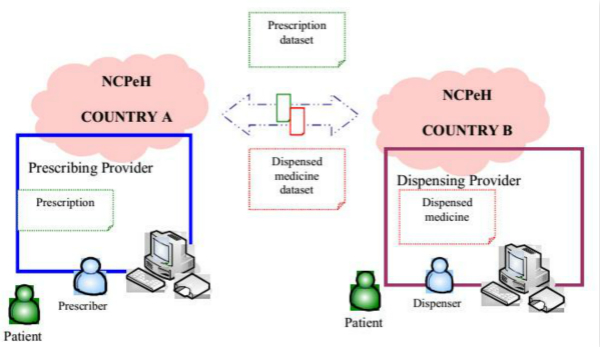
Situations that may occur within the scope of this document include: a patient from Country A holds a prescription issued in Country A but has the medication dispensed in Country B.
Country A: In this country, patients are easily identifiable, and their medical records are readily accessible.
Country B: In the country visited by the patient, if medical care is required, patient data must be obtained.
Background of Electronic Prescription Services
1. Policy
Member countries in the e-Health Network adopt policies such as:
Article 1: Objectives and Scope
(1). These guidelines are intended for EU Member States to guide the implementation of interoperable ePrescription services among Member States, thereby facilitating the recognition and dispensing of prescriptions in other Member States.
(2). In accordance with the primary responsibilities of Member States in healthcare matters, as stipulated in Article 168(7) of the Treaty on the Functioning of the European Union, these guidelines are not legally binding. Nevertheless, adherence to these guidelines constitutes a crucial step toward achieving interoperability of ePrescriptions within the EU, which aims to establish the internal market under Article 114 of the Treaty on the Functioning of the European Union.
(3). These guidelines aim to support Member States in achieving minimum interoperability by defining the minimum requirements for exchanges between National Contact Points for eHealth and for exchanges between national and EU border regions, taking into account patient safety and data protection concerns.
(4) In particular, where the non-exhaustive list of elements included in the prescription has been established by Commission Implementing Directive 2012/52/EU, it is necessary to determine the electronic requirements applicable to the identification of patients, prescribing healthcare professionals, and healthcare products.
(5) These guidelines do not include medical devices; non-medical products are excluded.
Article 2: Basic Concepts
National eHealth Contact Points must establish a universal trust model with other Member States and, on this basis, create secure mechanisms for cross-border information exchange.
2. Functional Specifications and Semantic Specifications
"Electronic Prescription Dataset"
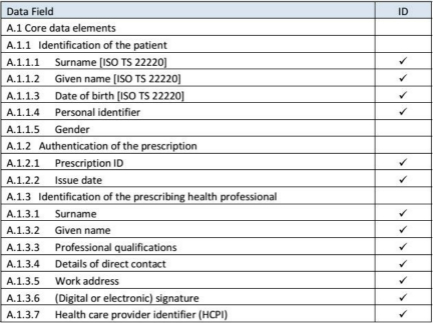
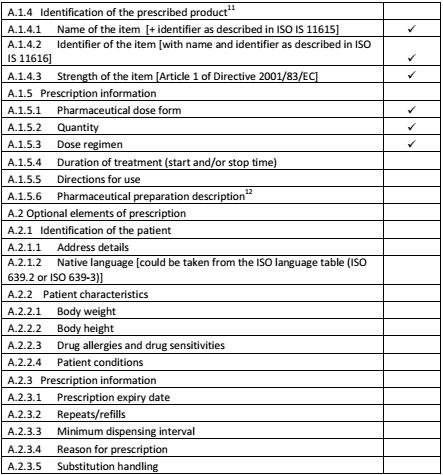
Table 1 presents the data elements of the dataset. The data elements are derived from Implementing Directive 2012/52/EU and Draft International Standard 17523. Additional relevant standards are also referenced, including the International Organization for Standardization (ISO) Identification of Medicinal Products (IDMP) standards related to the implementing standards. Data elements marked with a checkmark in the second column are mandatory; all others are optional.
Table 1. Electronic Prescription Dataset
3、TechSurgical Regulations
Minimum Technical Requirements for Cross-Border Electronic Prescriptions: Member States may freely implement the electronic prescription data set. In cross-border exchanges, the file formats used must be based on international standards.
Minimum Technical Requirements for Data Security:
Member states shall adopt secure communication and end-to-end protection measures to ensure the security of cross-border personal health data exchanges within their respective countries.
Member States shall ensure the security of cross-border access and the lawfulness of such access, for instance, when health professionals seek to obtain their patients' health information.
4. Legal Regulations
As per Article 13: Ensure Assessment Value and Quality
To ensure the secure implementation of electronic prescriptions, particularly with regard to patient safety, data security, and the long-term development of cross-border eHealth services, Member States shall:
(a) Consider establishing a mechanism for cross-border electronic prescription services to evaluate progress in quality and safety, benchmarks, and legal, organizational, technical, and medical semantic interoperability aspects, so as to ensure the successful implementation of cross-border electronic prescription services.
(b) Assess the potential benefits and risks, including economic benefits, risks, and cost-effectiveness, of evaluating the quality and quantity of e-prescribing services.
“Guidelines for Electronic Prescription Datasets”: Supportive Recommendations on Implementing Cross-Border Electronic Data Exchange
The Guidelines provide supporting information and explanatory text to help understand the rationale behind the guidelines and recommendations. Preliminary work in the eHealth field, particularly the large-scale European pilot project epSOS (European Patient Smart Open Services),The eHGI (Electronic Health Governance Initiative) and STORK (Secure Identity Across Borders Linked) projects provide guidelines for the implementation of cross-border electronic prescriptions.
1. Establishment of the Electronic Prescription Database
Semantic interoperability, or the standardization of clinic information, enables both humans and computers to interpret the same clinical data identically. One of its inherent principles is that communication mechanisms convey both meaning and text.
This Guideline, together with the Implementing Directive (2012/52/EC), constitutes the initial framework for prescription and medication dispensing databases across the European Union. The database aims to facilitate cross-border healthcare. Its promotion requires efforts and support from individual countries; while some Member States have already established more advanced and precise electronic prescription databases, eHealth Network has agreed to regard this Guideline as a common benchmark for electronic prescriptions at the national level.
Regulation 57 provides Europe-wide references and terminology for medical treatments (including therapeutic indications, treatment intensity, dosage forms, and methods of administration), which may facilitate the standardization and exchange of such information in cross-border electronic prescriptions. Member States should utilize the database under Regulation 57 in collaboration with European medical associations to ensure the implementation and integration of relevant strategies, thereby addressing legal and regulatory issues that may arise in cooperation with the European Commission. The EU’s Horizon 2020 programme supports research in this field, contributing to the resolution of these issues.
In the future, the international standardization of medical treatments mentioned in Directive 2012/52/EU will further benefit the commercial development of cross-border e-prescriptions.
2. Use of the Main Directory
Europe has different languages, standards, and coding systems. Two main master files are primarily used in electronic prescription information: the Master Value Catalogue (MVC), which is uniformly used by all member states, and the Master Translation/Transcoding Catalogue (MTC).
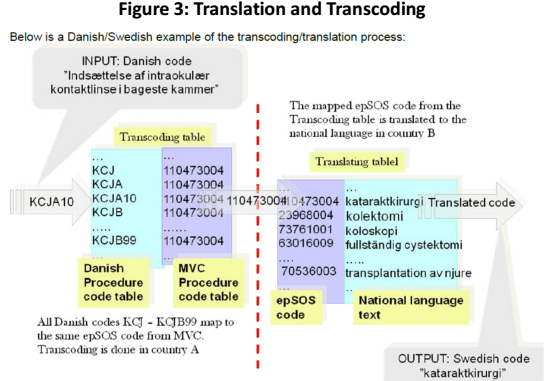
Conversion and Transcoding
A single code element shall adopt only one coding system, as there is no unified method for developing different coding systems. Therefore, only one coding system can be adopted within the same domain. While the terminology used for value quantities in the cross-mapping methods adopted by a member state is limited in number, it aims to cover the broadest possible medical scope. Consequently, each code element adopts only one coding system and is displayed exclusively in English. The terms within the value quantities are incorporated into the terminology management system.
3. Prerequisites and Responsibilities
Each Member State shall establish a National Contact Point for eHealth (NCPeH), forming an integrated technical and organizational framework to ensure cross-border interoperability among Member States and decompose domestic eHealth infrastructure.
The National eHealth Network Access Point under the electronic prescription information framework provides transmission services by transmitting semantic copies of original electronic prescriptions that comply with the laws of the transmitting country, and by facilitating the signing of electronic agreements through the National Network Access Point to ensure consistency in document content between both parties. The National eHealth Network Access Point executes core functional directives related to security management, health professional authentication, patient identification, patient consent management, document exchange, login verification, as well as cross-border semantic document transmission, coding systems, and language and document exchange formats within the “Core Document” framework.
Member States shall, in accordance with the eIDAS Regulation on electronic identification and trust services adopted in June 2014, consider their national approaches to implementing electronic signature services at the level of e-government or e-health services.
In electronic prescriptions, health professional identification and data access (e.g., confirming patient consent) are associated with prescribing authority. Some member states have access to databases in this area, but obtaining broader access requires member states to have specialized institutions supporting cross-border electronic prescriptions.
The guidelines stipulate that healthcare professionals have (basic) access to information such as verifiable patient identities, expert identities from (trusted sources), and support programs for local health experts’ prescribing privileges for electronic prescriptions.
Patient identification systems are essential, as they link patients to their medical records. In cross-border care, specialized patient identification systems are required to connect each patient with their medical records in their country of origin. Data analysis indicates that most member states already have effective national patient identification numbers, while some member states employ regional patient identification numbers.
4. Minimum Technical Requirements for Cross-Border Electronic Prescriptions
In accordance with Article 11 of Directive 2011/24/EU, the application of eHealth in the field of public health shall adhere to guidelines that are as open as possible. The foundational requirement for information exchange is the use of standardized methods for recording information. Based on the clinical fundamentals applied in the database, semantic processing personnel select the standard principles governing the transmission mechanisms for their data transfer.
For security reasons, login operations (such as health professionals requesting access to patient information) are critical. When logins are permitted, requests for unauthorized access to personal medical information should be detected or blocked. In most cases, login credentials include:
· Who accessed the information
· When the information is accessed
· What information is collected
Most member states employ tools based on effective login data to identify suspicious or anomalous requests. Misuse of personal medical data can be detected or even prevented through such tools.
5. Legal Aspects
(1) Data Protection
The greatest challenge facing electronic prescription information is the diversity in the implementation of data protection guidelines across member states. It is essential to establish a “common trust mechanism” under a unified set of privacy, preventive, and security policies adopted by health authorities in all member states.
The establishment of health center data requires a clear legal basis. In the absence of such legal support, two explicit consents must be obtained from patients: one for full participation and the other for accepting consultations with health experts.
Under national law, data controllers processing cross-border data must notify the relevant regulatory authorities; cross-border data includes patient data from the country and another member state, as well as data from data controllers in other member states.
(2) Retention Period
There is no EU-wide minimum requirement for the retention period of electronic prescriptions and dispensing records. The following proposal may be considered: for example, a minimum retention period of 24 months for personal data related to electronic prescriptions and dispensing records.
The maximum retention period for the data mentioned in the above article shall not exceed 10 years, unless required by individual request or legal provisions, such as when personal data forms part of a patient’s electronic health record, particularly for the purpose of establishing an individual electronic record, or for initiating or defending legal claims. For experimental or litigation purposes, data contained in log files may be retained for up to 10 years.
All member states shall establish emergency management systems incorporating service desk functionalities. The service desks of individual member states may vary. Emergency management is critical for both individual member states and cross-border contexts. Member states shall exchange information on technical and organizational issues.