

MedBohui Files IPO Prospectus: Empowering Grassroots Healthcare with Internet+ Solutions
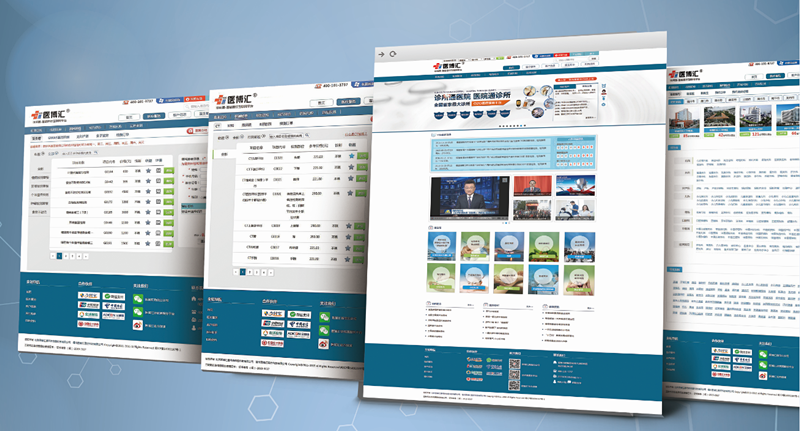
Yi Bo Hui Project
Among primary healthcare service providers, Yibohui was the earliest to enter the field and has gained profound insights.
In 2013, Jie Yebing, Chairman of Fuzhou Yi Bo Hui Medical Technology Co., Ltd., had a strong passion for the internet. Although he had consistently attempted to launch “internet-enabled” initiatives, these efforts lacked clear strategic direction. He began his career as a medical equipment technician, later venturing into the medical caster industry, and founded Fujian Skryi Medical Technology Co., Ltd. The company achieved an annual production capacity of 2 million units, captured a 60% market share across China, and was listed on the National Equities Exchange and Quotations (NEEQ).
Thanks to medical casters, Jie Yebing had the opportunity to connect with entrepreneurs in the healthcare sector. He has always firmly believed that “healthcare is an evergreen industry that demands focus and dedication.” With over two decades of immersion in the healthcare industry, he aims to leverage the momentum of the internet to extend healthcare benefits to all regions, particularly those with inadequate medical infrastructure, hoping to drive change at the grassroots level.
Driven by the original aspiration to transform primary healthcare, Jie Yebing founded the Yi Bo Hui platform. Over the past three years, approximately 12,000 primary healthcare institutions have joined the platform across 11 provinces and municipalities, including Fujian, Jiangxi, Hunan, Hubei, Shaanxi, Henan, Hebei, Anhui, Shandong, and Zhejiang. The Yi Bo Hui platform currently hosts 20,000 physicians and has served over 250,000 patients.
Primary healthcare, often seen as a “chicken rib”—of little value yet too costly to abandon—has long been overlooked by entrepreneurs. Due to the substantial capital investment required and the extended payback period, most digital health founders have been reluctant to wade into the chilly waters of primary care. How does Yi Bo Hui operate? What are its keys to success? What drives its commitment to rooting itself in primary healthcare? Yang Xiao, General Manager of Yi Bo Hui, sat down for an exclusive interview with VCBeat (WeChat ID: vcbeat), sharing the trials and tribulations of their journey in primary care.
Yang Xiao, General Manager of FUZHOU YI BO HUI MEDICAL TECHNOLOGY CO.,LTD, previously worked in the education sector. Due to his recognition of Chairman Jie Yebing, he chose to join him in providing services for primary healthcare. As Yang Xiao gained a deeper understanding of primary healthcare, he discovered that it suffers from numerous pain points.
First, large hospitals are overwhelmed, leading to a waste of medical resources! Regardless of whether the illness is serious or minor, patients flock to major hospitals. Urban tertiary hospitals are overcrowded, yet most patients suffer from common conditions, resulting in significant waste of medical resources and placing an excessive burden on these institutions.
In recent years, medical demand in China has surged dramatically, with outpatient and emergency visit volumes at major hospitals repeatedly hitting record highs. Many large urban hospitals remain in a perpetual “state of emergency,” where medical staff work extended overtime hours under chronic fatigue. It is not uncommon for specialists to see up to 100 patients in a single outpatient session, refraining from drinking water, eating, or using the restroom, yet still failing to meet patient demand.
Secondly, it is time-consuming and labor-intensive for patients at the primary care level to visit hospitals for medical treatment!
In China, 80% of patients are concentrated at the primary care level. Residents seeking medical consultations and diagnostic tests must travel to large hospitals to obtain physician orders before proceeding to the laboratory department, enduring queueing for registration and repeated trips. This process is not only time-consuming and labor-intensive but also risks delaying diagnosis and treatment. Due to the scarcity of high-quality medical resources in primary healthcare settings across various regions, some primary care institutions have even developed a tendency to “prioritize public health services over clinical care” in practice, leading to a decline in their medical service capabilities.
Finally, primary healthcare institutions suffer from severe resource constraints and limited capabilities! Although these facilities are geographically accessible to the general public, they are restricted to managing minor ailments and prescribing essential medicines. Due to scarce medical resources, limited diagnostic capacity, and a lack of testing equipment and supply channels, they fail to meet public healthcare needs. Furthermore, the shortage of qualified healthcare personnel at the grassroots level further restricts the quality of primary care services.
Yang Xiao believes that primary healthcare institutions must undergo a comprehensive adjustment in terms of mindset, strategy, systems and mechanisms, organizational structure, personnel composition, production methods, management practices, operational models, profit models, and corporate culture.
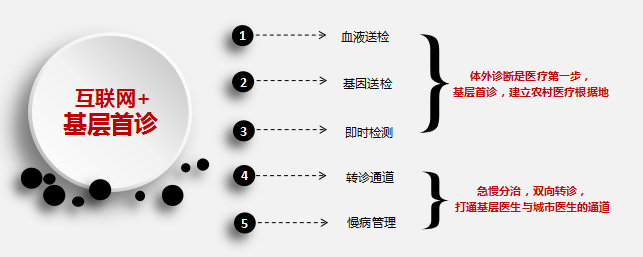
To address the pain points of primary healthcare, the following service offerings were established during the initial design of the Yibohui platform’s product categories; these services are available to all clinics registered on the platform.
First, implement initial diagnosis at the primary care level by building an internet-based ecosystem platform that provides one-stop services for laboratory testing and medical imaging. This platform will facilitate patient health management, effectively optimize the allocation of medical resources, improve the efficiency of medical resource utilization—particularly that of high-quality medical resources—and enhance the service capacity of primary healthcare institutions.
Second, referral testing: Primary care facilities are connected to hospital networks, enabling the issuance of diagnostic orders and telemedicine services; Remote consultations: Online “face-to-face” consultations with specialists for precise symptom inquiry and diagnosis/treatment, enhancing the service level of primary healthcare providers; Pharmaceutical and medical device procurement agency: Connecting with manufacturers to provide procurement and agency purchasing services for drugs, health supplements, and medical devices.
Third, remote monitoring connects to smart blood pressure monitors and glucometers to enable chronic disease management within a 1-kilometer radius. Appointment-based referrals connect patients with hospital physicians for precise transfers to hospitals and accompanied medical visits. Online training facilitates the exchange of medical knowledge and skills, helping to enhance the professional competencies and standards of primary care physicians.
“We have established ‘Yi Bo Hui’ as our service brand and registered its trademark, developing a suite of Web systems and mobile applications centered around the ‘Yi Bo Hui’ platform. Through this platform, we integrate grassroots medical institutions across China, such as clinics and pharmacies, introducing them to various testing agencies, physicians, hospitals, healthcare services, and products, thereby serving residents in local communities and rural areas,” Yang Xiao told reporters.
In fact, in the field of internet healthcare, platforms represented by Chunyu Yisheng, DXY, and Guahao.com—which integrate online consultations, e-commerce, and patient services—still require patients to visit hospitals for laboratory tests. This sector is characterized by scarce resources, intense competition, a highly concentrated market at the top of the pyramid, and significant operational challenges. Meanwhile, traditional third-party medical laboratory providers, represented by KingMed Diagnostics, Boao Biopharma, and Adicon Clinical Laboratories, operate within independent medical testing segments. They rely on conventional, single-service outsourcing models and lack comprehensive one-stop medical service capabilities. Their market focus remains primarily on urban hospitals, where competition is equally fierce.
According to Yang Xiao, the Yibohui platform is pursuing a regional O2O strategy, leveraging an online-offline integrated approach to penetrate the market of 927,000 primary healthcare institutions. With significant growth potential, it offers a one-stop medical service model that is closest to the public, achieving a 70% success rate in on-the-ground contract signings!
According to statistics from the National Health Commission and the National Bureau of Statistics, as of June 2016, China had 927,000 primary healthcare institutions, serving approximately 800 million primary care patients, with an annual consultation volume reaching 3.96 billion visits and rural primary healthcare consumption nearing RMB 500 billion.
In the vast grassroots healthcare consumer market, what is Yi Bo Hui’s core competitive advantage in the face of numerous internet healthcare entrepreneurs?
From a marketing perspective, Yang Xiao told reporters that the Yibohui platform has two approaches to external expansion: one is the direct operation model, and the other is the agency model.
The direct-operation model involves the company headquarters directly overseeing clinic development, management, specimen logistics, physician training, dissemination of information policies, and customer relationship maintenance. Representative regions include Anhui, Tianjin, and Fuqing in Fujian Province. Under the agency model, the company assigns personnel to train agents, assists in clinic development, and implements strict performance evaluations and management for agents. The agents are responsible for clinic development, specimen logistics, information dissemination, and customer relationship maintenance. Representative regions include Hebei, Shaanxi, Jiangxi, and Quanzhou in Fujian Province.
Yi Bo Hui is currently recruiting provincial-level distributors across China. The first batch includes Shandong, Henan, Anhui, Jiangxi, and Hunan provinces. Candidates with medical resources such as hospitals and clinics are welcome to join.
Furthermore, the Yi Bo Hui platform is building its own database to enable intelligent order placement by users and provide disease assessments. By leveraging a "platform + big data mining" approach, it facilitates online intelligent ordering and diagnostic evaluations, thereby constructing a one-stop internet ecosystem service platform. Capitalizing on the transparency of internet information, the platform helps distribute high-quality medical resources to grassroots levels. For instance, rural clinics often lack advanced medical conditions and equipment for blood tests. Through the Yi Bo Hui platform, these clinics can connect with superior hospitals or third-party medical examination institutions to outsource such services. This enables direct interaction between both parties, with payments processed through the Yi Bo Hui platform.
In the tiered diagnosis and treatment system, the Yibohui platform collaborates with numerous major hospitals across China. The company’s network platform directly interfaces with the systems of primary care hospitals, enabling seamless referrals. For instance, if certain medical tests are unavailable at a lower-level hospital, patients can schedule appointments at superior hospitals through the Yibohui platform, thereby reducing the time and financial burdens associated with seeking medical care.
In the e-commerce sector, Yi Bo Hui has adopted a model featuring an independent e-commerce platform and self-built logistics: it offers an open, autonomous online ordering and procurement platform, supported by a secure and efficient pharmaceutical logistics system that it has developed in-house. Leveraging a "1-kilometer chronic disease management" model enabled by wearable devices and smart hardware, Yi Bo Hui connects these devices to third-party platforms to establish a grassroots-level chronic disease management ecosystem within a 1-kilometer radius, thereby enhancing patient engagement and loyalty to physicians.
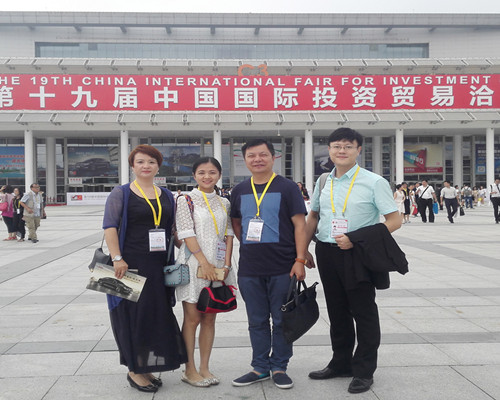
Yi Bo Hui Team
Regarding profitability, Yang Xiao told reporters that Yi Bo Hui is not yet profitable, as the upfront costs for market expansion are extremely high. “Our team negotiates with clinics on a one-on-one basis; only those meeting our criteria can join the Yi Bo Hui platform. Our market operations staff visit each clinic individually, going door-to-door across towns and villages.”
According to the team at FUZHOU YI BO HUI MEDICAL TECHNOLOGY CO.,LTD, staff once traveled a round trip of 70 kilometers just to receive a single blood specimen. In their view, although serving grassroots-level healthcare facilities yields limited profits, their commitment to service is unwavering and complete.
Currently, the platform’s revenue is primarily derived from its testing platform, referral platform, purchasing and sales agency services, and chronic disease management. The testing platform generates revenue through profit-sharing arrangements, covering blood tests and other diagnostic orders, by integrating third-party laboratories and hospitals. The referral platform earns service commissions by facilitating hospital referrals and referrals to renowned specialists, connecting with over 100 hospitals and thousands of experts across China. For instance, when primary care physicians are uncertain about certain conditions, they can seek assistance from specialists at higher-level hospitals via remote consultations, enabling face-to-face interactions between experts and patients.
Regarding the consignment and agency sales segment, profits are derived from the price differential on product sales. The platform has onboarded over 200 manufacturers and provides free training, installation, and after-sales services to primary healthcare providers. Although some medical devices can be purchased online, buyers may not necessarily know how to use them properly. If patients purchase medical devices through the Yibohui platform, primary care physicians will guide them on proper usage. Furthermore, all medical device products on the platform are 100% authentic and sourced from reputable manufacturers.
Chronic disease management primarily generates revenue through health service fees, based on backend precision health services and other services derived from remote monitoring data.
According to Yang Xiao, the company currently has a team of approximately 50 people, with a core team of nine members, each possessing over ten years of experience in the medical industry. The company is seeking RMB 30 million in financing in exchange for a 10% equity stake. The funds will primarily be used to develop partnerships with 20,000 clinics, expand the team through recruitment, upgrade the B2C platform system and www.medO2O.com, secure market presence in seven provinces across China, develop hardware products (wearables), and launch version 2.0 of the APP Order Assistant.
The Yibohui Platform aims to cover the entire country within five years, reaching 150,000 to 200,000 primary healthcare institutions and achieving a business volume exceeding RMB 4 billion.
According to 2014 statistical data, China's population aged 60 and above reached 212 million. With the advent of an aging society in China, enormous medical demand is poised for explosive growth. Yibohui has precisely targeted the emerging opportunity of "Internet + Primary Care at the Grassroots Level," unlocking vast market potential.
During his three years at Yibohui, Yang Xiao’s most profound reflection has been: “I find this work highly meaningful. As I frequently visit grassroots communities, I observe that most young adults have migrated elsewhere for employment, leaving behind elderly individuals and children who face significant challenges in accessing adequate medical care.”
For this group of people in urgent need of medical care, without platforms like ours, accessing healthcare would indeed be a painful ordeal for ordinary residents at the grassroots level. Moreover, since these local residents speak only dialects, they are unable to communicate effectively with doctors at major hospitals, leading to mutual incomprehension. As a result, many diseases go undiagnosed and untreated. Alternatively, even when they do visit large hospitals, they may encounter cold and indifferent physicians. After staying for two days and incurring substantial expenses, they ultimately receive nothing but a cold diagnostic report. The doctors then advise them to return home for observation for another two days or to come back in a week for further tests.
We perform the most frequent and routine tasks, yet every time we see grassroots patients have their medical challenges resolved, we often feel that all the hardships and fatigue are well worth it.