

Xinmai Technology Files for IPO: Pioneering the Global First Health-Focused Smart Ring with Big Data and Intelligent Jewelry
In June 2015, Xinmai Intelligence pioneered the launch of the first health-focused smart ring, with cumulative shipments exceeding 100,000 units to date. On October 29, Xinmai Technology’s new product, the “Happy Band,” debuted on Taobao Crowdfunding. Within just three days, its crowdfunding proceeds surpassed RMB 300,000, achieving over 300% of its funding goal.
Since Apple launched the Apple Watch, competition in the wearable device market has become extremely fierce. A search for “smart bands” on JD.com yields more than 6,000 products. In such a highly competitive landscape, why has Xinmai Smart gained popularity? VCBeat (WeChat ID: vcbeat) conducted follow-up reporting on this question.
Shanghai Xinmai Intelligent Technology is a high-tech company specializing in smart wearable products and big data health analytics, dedicated to integrating the internet, smart hardware, big data, jewelry, and health services. The founder, Xu Xinyi, is the former head of Baidu’s Mobile Application Division. The core team comprises hardware experts from Baidu, Samsung, and HP, as well as medical doctors from Fudan University and Shanghai Jiao Tong University.
Last year, Xinmai Technology and Jinyi Culture jointly launched the world’s first health-focused smart ring, named “acare.” Unlike typical wearable devices that primarily focus on monitoring fitness data, this smart ring emphasizes cardiovascular health monitoring for middle-aged and elderly users. Huang Yu, Vice President of Xinmai Intelligence, told reporters that there is a strong demand for health-related features among jewelry and accessory consumers, and the maturity of mobile internet technology has made this possible. Therefore, the company chose to enter the market by offering comprehensive physical and mental health management capabilities.
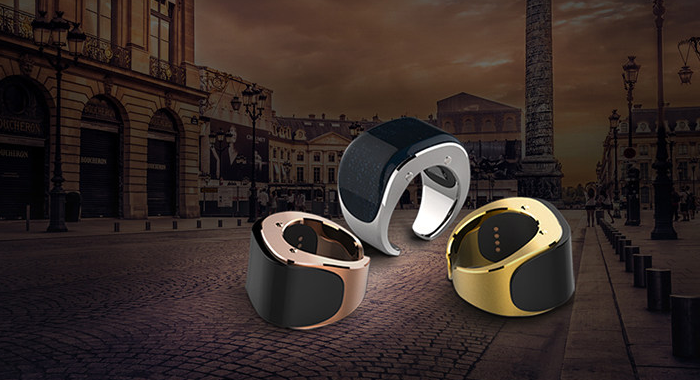
acare continuously monitors heart rate, HRV, pulse wave characteristics, body water content, and blood pressure trends around the clock. By integrating big data-driven health services, it analyzes users’ disease risks, fatigue levels, mental stress, emotions, sleep quality, and vascular health, provides continuous tracking, and offers tailored recommendations to improve overall health.
Compared to wristbands, rings fit snugly against the finger, avoiding the issue of loose wristbands slipping off the wrist and causing inaccurate monitoring data. Meanwhile, the index finger houses major arteries, providing a stable measurement site with a simple physiological structure that facilitates analysis.
The rapid development of smart wearable devices has significantly impacted the jewelry industry, with young consumers increasingly opting for smart bands over traditional bangles and smart rings over conventional rings. In response, traditional jewelers are seeking innovation. Huang Yu stated that while jewelry design is highly fashionable, wearable devices offer practical utility; combining the two can meet the needs of a broader consumer base. Developed in collaboration with the traditional jeweler Kingee Culture, this smart ring is available in three variants: fine silver, 18K gold, and pure gold, with prices ranging from RMB 999 to RMB 5,999. Since its launch, more than 100,000 units have been sold.
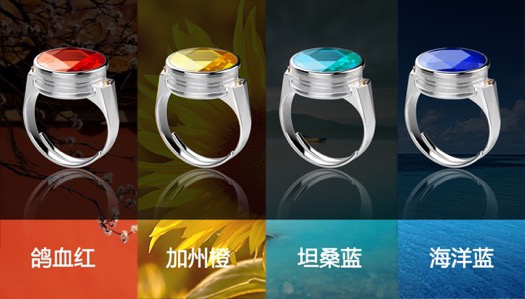
Huang Yu revealed that, in the near future, Xinmai will launch new products integrating jewelry and fashion accessories, such as smart rings and necklace pendants of various designs. For instance, some devices can monitor spinal movement trajectories and impact exposure, providing analysis of spinal health—a feature highly appealing to urban office workers who spend long hours sitting.
Recently, Xinmai Technology’s second product, the Happy Band, launched on Taobao Crowdfunding. Within just three days of its release, the crowdfunding campaign for the “Happy Band” surpassed RMB 300,000. Huang Yu stated that the popularity of this wristband is primarily attributable to the following reasons:
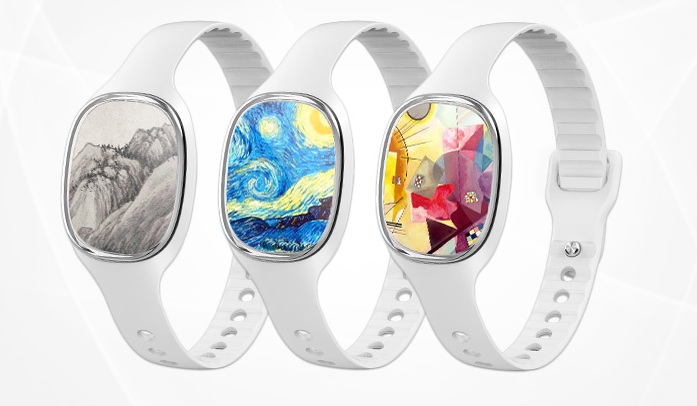
First, comprehensive management of physical and mental health is essential. Most wristbands currently on the market are fitness trackers that monitor only exercise-related metrics, whereas true health requires holistic management. The “Happy Band” not only provides real-time monitoring of physiological indicators such as heart rate, blood pressure, sleep, and physical activity, but also collects psychological status data to deliver precise mental health analyses, helping users mitigate negative emotions. Furthermore, by integrating various metrics with vast amounts of big data and medical algorithms, it offers comprehensive health guidance.
Second, it is ultra-thin and ultra-light, offering a virtually imperceptible wearing experience. With a thickness of only 0.7 cm and a weight of 5.3 g, the wristband ensures comfortable wear. It features an IP67 waterproof rating. Third, the aesthetic and structural design of the wristband sets it apart. The display uses famous paintings as backgrounds, with LED dot-matrix visuals shining through a semi-transparent film, creating a highly futuristic look that distinctly differentiates it from the homogeneous designs prevalent in the market. Its recognizability is exceptionally high. It is understood that the panel of this wristband can be customized, allowing users to freely swap out different appearance patterns as needed.
In this era where data reigns supreme, Xinmai Technology has also recognized the value of data. Huang Yu stated that as the company’s user base grows, it collects tens of thousands of monitoring data points from each user daily. This big data constitutes the company’s core competitiveness and holds substantial market potential.
The company’s big data technology can be divided into two parts. One part is the preprocessing technology on the ring, which extracts several valuable parameters from complex physiological information with large data volumes and stores them, while minimizing power consumption as much as possible. This places high demands on both algorithms and sensors.
Xinmai Technology employs ADI’s flagship sensors, integrated with its proprietary analytical algorithms, significantly enhancing accuracy and analytical capabilities while consuming only a fraction of the power required by competing products. The company’s R&D team has spent nearly three years developing algorithms for data preprocessing, transmission, and storage. This synergy between software algorithms and hardware is key to achieving a device that is “compact yet precise” and ultra-low-power.
Another aspect lies in cloud computing, where real-time data is compared with information from the past week or month based on various AI-driven health analysis models to mitigate certain errors. Furthermore, benchmarking against large population cohorts enables the extraction of valuable health insights. This is a process requiring long-term data accumulation and robust technical support. Huang Yu stated that the company’s founding team is among the top domestic experts in big data analytics, with many years of technical expertise.
Regarding future development, Huang Yu stated that in addition to launching a series of innovative smart health products, the company will focus on developing big data-based health management services. From monitoring and data analysis to disease prevention and management, as well as integrating with health services, Xinmai aims to perfect its industrial closed loop.
Currently, Xinmai Intelligence has completed two rounds of financing, with investors including Jihe Venture Capital and the Jewelry Industry Fund.