

Peking University Health Science Center and Mayo Clinic Jointly Discuss the Future of General Practice Medicine
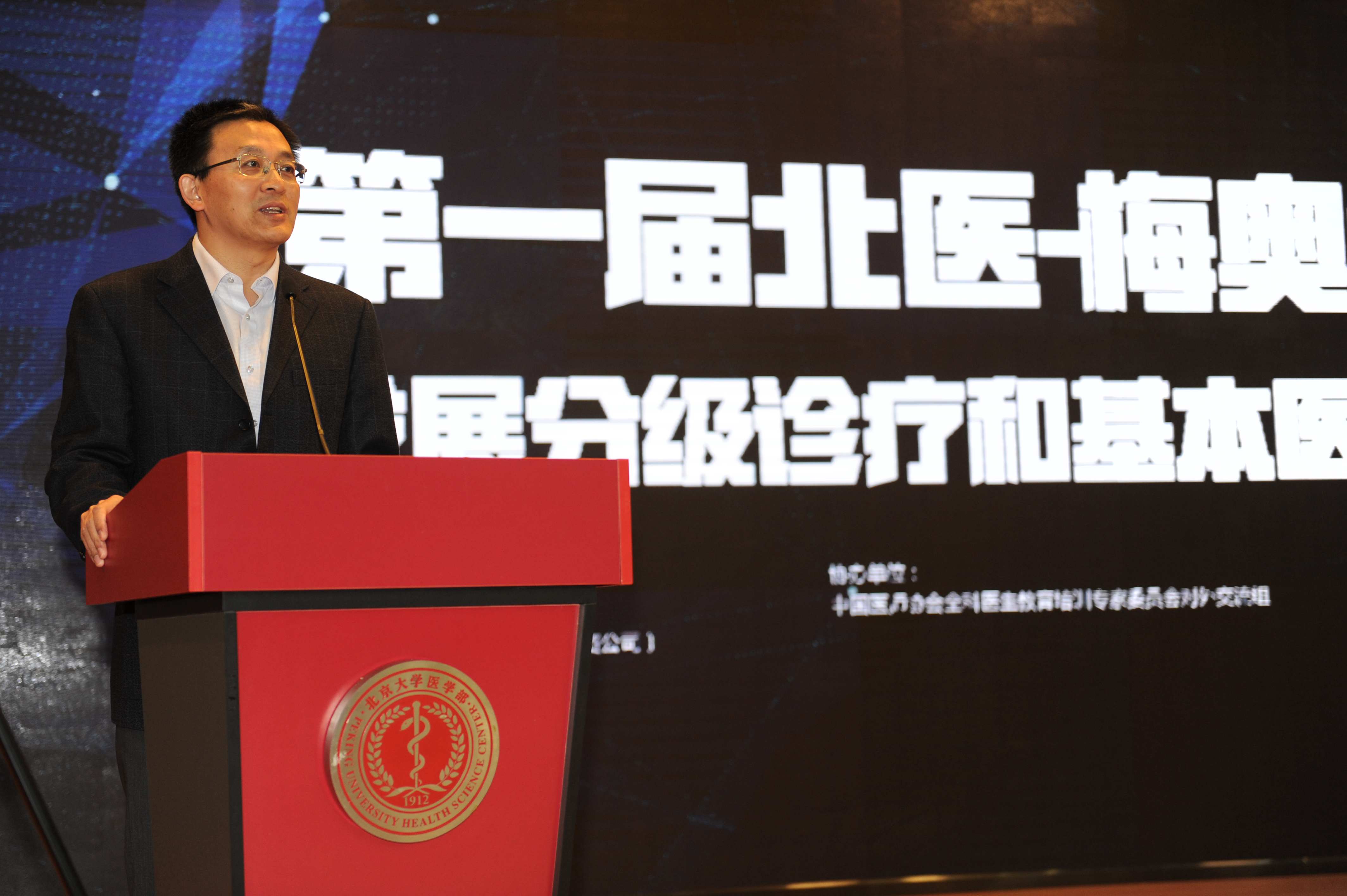
On November 8, 2016, the inaugural Peking University Health Science Center–Mayo Clinic China Huimei Healthcare General Practice Forum was held in Beijing. As a comprehensive medical specialty that integrates clinical medicine, preventive medicine, rehabilitation medicine, and related humanities and social sciences with a focus on communities and families, general practice holds profound significance in China’s healthcare sector, particularly in the development of the tiered diagnosis and treatment system.
General Practice Faces Numerous China-Specific Challenges
Wang Weimin, Deputy Director of Peking University Health Science Center, pointed out in his opening remarks at the forum that collaboration in general practice medicine in China is becoming increasingly diverse and in-depth in both content and form. In line with this development trend, Peking University Health Science Center is implementing comprehensive medical education reforms to substantially improve the current state of general practice education. From platform development and interdisciplinary curriculum design to conferences and forums, the institution has consistently taken a pioneering role.
However, despite the rapid development of general practice in China in recent years, it still faces numerous problems and challenges compared with the well-established departments of general practice abroad. “In China, the development direction, positioning, and even some of the most basic concepts of general practice need to be re-examined and clarified. At present, at least in terms of national policy, we observe that the development of general practice appears to conflict with the redevelopment of large hospitals in our country,” pointed out Dr. Wang Weimin in his opening remarks.
The root cause of the conflict lies in the immaturity of China’s tiered diagnosis and treatment system. With economic development, China’s average life expectancy has been continuously increasing, and the aging process has been accelerating. This has led to a year-on-year rise in the incidence of chronic diseases, expanding medical demands, and a sustained increase in outpatient visits, thereby heightening the country’s reliance on general practice. However, as Director Fu Wei from the Development Research Center of the National Health and Family Planning Commission described in his forum speech, “China’s medical resources are not only insufficient but also unreasonably utilized. Although the bed occupancy rate in tertiary Grade A hospitals has reached 100%, the utilization rate in primary care hospitals is merely 60%.”
In addition, inadequate training of general practitioners and limited collaboration between general practitioners and specialists are also major challenges facing general practice in China.
Training and Education of General Practitioners Is Imperative
In terms of system construction and physician training in general practice, Mayo Clinic, as a globally leading healthcare institution, has achieved notable success. According to Ms. Gabrielson, Mayo Clinic employs an administrative triad structure to effectively implement corporate-style general medical services, with physicians serving as the cornerstone of care teams, administrators handling business operations, and patients placed at the center of decision-making. Dr. Bruhl provided a detailed introduction to Mayo’s physician training program. Under this innovative model and training system, Eric Klavetter, Administrative Officer for Clinical Operations in the Department of Family Medicine at Mayo Clinic, stated, “Previously, one physician was responsible for 1,000–2,000 patients, but now that number has increased to 2,000–3,000. Most patients have received effective indirect care through the new operational model.”
The secret to Mayo Clinic’s success lies in its model, the core of which is the robust professional competence of general practitioners and their efficient collaboration with multidisciplinary teams. Cultivating competent general practitioners is one of the major challenges facing medical education in China, and Peking University Health Science Center (PUHSC) bears a significant responsibility in this regard. Director Zhang Jun stated, “Peking University Health Science Center is a comprehensive institution integrating teaching, scientific research, and clinical care.” Similarly, Dean Liu Xinmin remarked, “PUHSC was founded for education, and it will assume greater responsibility in training general practitioners and various other healthcare professionals.”
A comparison between China and foreign countries indicates that cultivating qualified general practitioners is a crucial step in promoting the tiered diagnosis and treatment model in China, making it an imperative task.
General Practice Medicine Awaits Holistic Advancement in the Future
At the forum, Dr. Huang Guohan from Peking University stated that China’s healthcare issues are, at their core, deeply entrenched medical practices that are difficult to change. “While hardware equipment and examination tables are easy to replace, adjusting habitual medical behaviors requires a long period of gradual accumulation and change.” The leading position of Mayo Clinic is attributed to what Luo Rushu, Senior Investment Officer at Mayo Clinic Investments and CEO of Huimei Healthcare, described as its comprehensive education and training system. It is also based on the six core principles of Mayo Clinic introduced by Peter Streit, Executive Director of Global Business Development and Partnerships at Mayo Clinic: teamwork, respect, innovation, culture, quality, and scholarship. How to leverage international experience to enable Chinese general practitioners to adhere to these advanced concepts and become the foundation for the comprehensive advancement of general practice in the future is a highly challenging issue. The solution may lie in the points raised by Professor Zheng Jiaqiang during his speech at the conference: correctly positioning the functions of hospitals, prioritizing patient-centered care, and thoroughly integrating scientific research into clinical medicine.
About Huimei Medical
Huimei Healthcare Management Consulting (Beijing) Co., Ltd. (hereinafter referred to as “Huimei Healthcare”) is a healthcare services company jointly invested in by the Mayo Clinic and Hillhouse Capital, integrating medical investment, management, consulting, and training. Huimei Healthcare has comprehensively introduced the Mayo Clinic’s knowledge, technology, management, and training systems applied across all levels—including hospitals/clinics, physicians/nurses, patients, and administrative personnel—to establish an information, medical, and technological platform for health management in China. This initiative aligns the Mayo Clinic’s premier resources with the developmental needs of China’s healthcare system, aiming to create a superior healthcare experience for both physicians and patients.