

Smart Medical Hardware: 14 Companies Secured Funding in 2016, Poised for Breakout Growth | Annual Review
As 2016 draws to a close, VCBeat’s flagship annual event, the “Top 100 Future Healthcare Companies List,” is arriving as scheduled. While the selection process is currently in full swing, the excitement extends far beyond this alone. Prior to the unveiling of the Top 100 list, VCBeat has meticulously curated a series of year-end reviews focused on specific healthcare subsectors. Targeting the hot-button niche areas of healthcare in 2026, these articles systematically examine the current state of enterprises, highlight key events, and analyze development trends within each field over the past year, offering readers a rich and engaging feast of content.
Smart hardware is a new technological product concept that has emerged after smartphones. It upgrades traditional IT hardware by integrating hardware with software, thereby enabling intelligent functionalities. The rise of smart hardware has been driven by the maturation of sensors, networking, and cloud technologies. Products in this field feature significant functional innovation, with rapid progress and frequent updates. Smart medical hardware, a branch of smart hardware, refers collectively to smart hardware applications in the healthcare sector. It monitors human physiological data, stores it in the cloud, and provides users with real-time data feedback services of medical and health value through analysis.
Prior to the emergence of the concept of smart medical hardware, the medical device market was exclusively dominated by interactions between hospitals and medical device manufacturers. Suppliers were concentrated among large multinational corporations, such as GE, Siemens, Philips, Johnson & Johnson, and Hitachi. However, with the introduction of intelligence into the medical hardware sector, significant changes have occurred in both supply and demand dynamics.
First, on the equipment manufacturer side, thanks to the maturity of sensors, Internet of Things (IoT) technology, and semiconductor solutions, more startups have entered the smart healthcare sector. The rapid growth of the smart hardware market has driven the intelligent transformation of traditional medical devices. Smart medical hardware may involve adding intelligent features to traditional medical devices, or it may refer to entirely new hardware inventions designed for medical environments. The supply side has evolved from being dominated solely by large medical device companies to a coexistence of large medical device enterprises and startups. Moreover, the products introduced by these startups often do not directly compete with traditional medical devices but instead offer greater innovation, such as various smartwatches, fitness trackers, and motion-sensing devices.
Secondly, on the user side, by leveraging the integration of “cloud computing + big data + the Internet,” intelligent devices can provide monitoring, test results, and recommendations to individual consumers (C-end users). Traditional medical equipment primarily serves business clients (B-end users), such as healthcare institutions and physicians, with only a small proportion of individual users. In contrast, smart medical hardware is more oriented toward individual consumers, while also attracting new B-end users. During use, smart medical hardware collects precise medical big data, which can facilitate subsequent R&D and enhance services for pharmaceutical companies, healthcare institutions, and insurance providers. These entities—pharmaceutical companies, healthcare institutions, and insurance providers—are the new customers willing to pay for the big data generated by smart medical hardware.
Data source: VCBeat, VCBeat Research Institute database
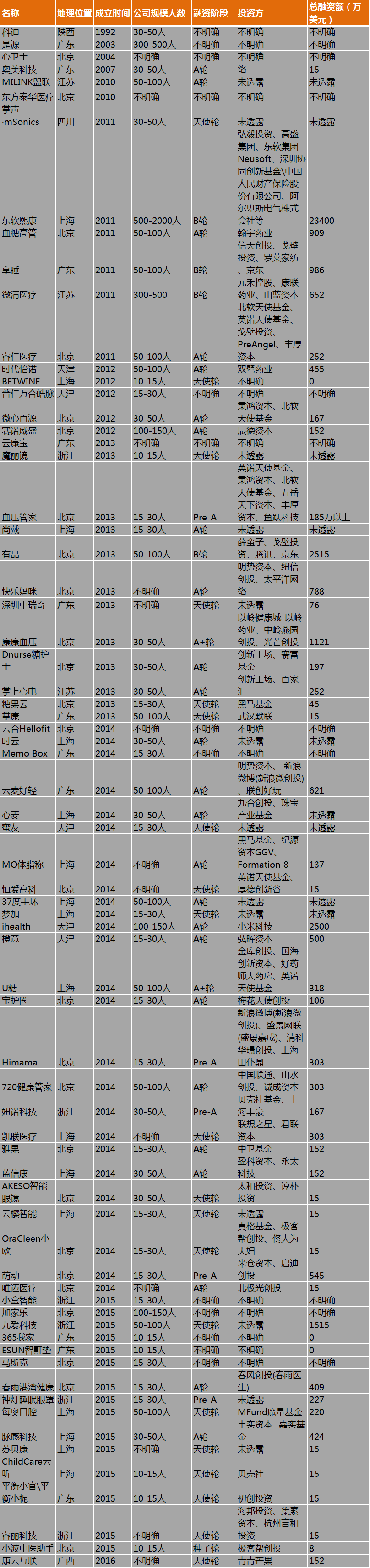
The rapid development of smart medical hardware has spawned a large number of startups. We have compiled an overview of 70 smart medical hardware manufacturers, categorized by project name, founding date, geographic location, and financing history.Data as of November 2016, these 70The company's total financing volume reached $411.94 million.
1
Timeline for the Development of Intelligent Medical Hardware Enterprises
Data Source: VCBeat, VBInsight Database
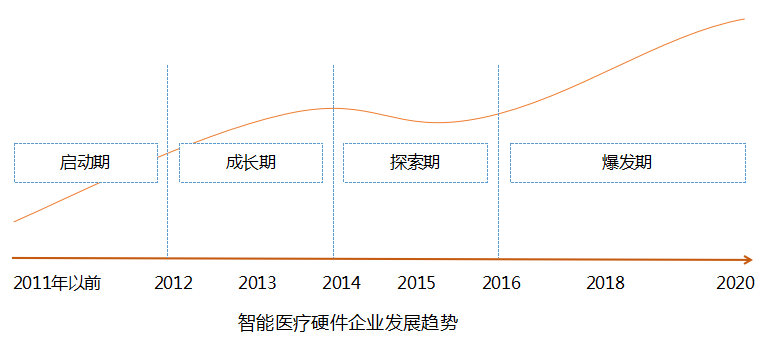
Around 2011, the smart wearable device market was still in a nascent stage. Smartphones had just become widespread, and the concept of intelligence had not yet extended to other hardware sectors. Among the companies we surveyed, six were established before 2011, and six were founded in 2011. Most of these enterprises were previously medical information technology firms or traditional medical device manufacturers, which later transitioned into the research and development of smart medical devices as their businesses evolved.
Following the launch of smart wearable products such as Fitbit trackers in 2012, new global business opportunities emerged in the wearable device sector. These wristbands can monitor health metrics such as step counts and sleep patterns, but they have not fully penetrated the realm of genuine medical applications. It can be argued that from 2012 to late 2013, aided by advances in smart and information technologies, the smart hardware industry underwent an initial start-up phase. During this period, emerging concepts in smart wearables were introduced, yet their applications remained confined to the health and wellness domain.
After 2012, the number of startups gradually increased, reaching a peak in 2013 and 2014. Smart hardware truly applied to the medical industry emerged, marking the industry's entry into an exploratory phase. A wide array of medical application solutions, such as smart blood pressure monitors, smart blood glucose meters, and smart thermometers, proliferated. In addition to fitness bands, health-oriented products progressively expanded into areas including body fat scales, smartwatches, and air purifiers.
From 2015 to 2016, although the number of startups declined, product R&D accelerated, and the market entered a growth phase. As various companies matured and developed, new categories of smart medical hardware emerged. Products such as preconception care devices, anti-snoring aids, ECG monitors, emotion management tools, and smart medicine boxes have all appeared in the product portfolios of the companies we track.
2
Company sizes are generally small.
Data Source: VCBeat, VBInsight Database
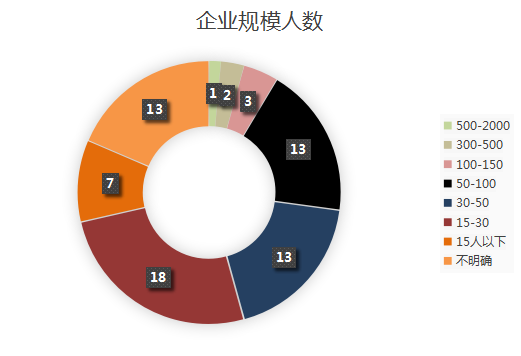
On November 16, 2016, Lifesense Medical, a leader among smart healthcare hardware companies, completed its listing on the Shenzhen ChiNext board, becoming an industry benchmark with a market capitalization of RMB 1.3 billion. Meanwhile, Xiaomi’s primary smart hardware product—a basic fitness tracker—was excluded from our statistical scope; instead, iHealth, invested in by Xiaomi and Andon Health, was included in the analysis.In addition to the above two companies,Domestic smart medical hardware manufacturers are generally small in scale. The rapid advancement of essential technologies for smart devices, such as sensors, ICs, and batteries, coupled with the high maturity of integrated hardware solutions, means that R&D investment requirements are relatively low. Smart medical hardware companies typically handle technological R&D and marketing internally, while outsourcing manufacturing to contract manufacturers. Consequently, most companies in this sector have a workforce of 15 to 30 employees. After developing and producing high-value products, larger enterprises begin to establish industry barriers by obtaining industry standard certifications, medical device qualifications, and patents, while also building ecosystems around healthcare informatization.
3
Geographic Analysis of Startups
Data Source: VCBeat, VBInsight Database
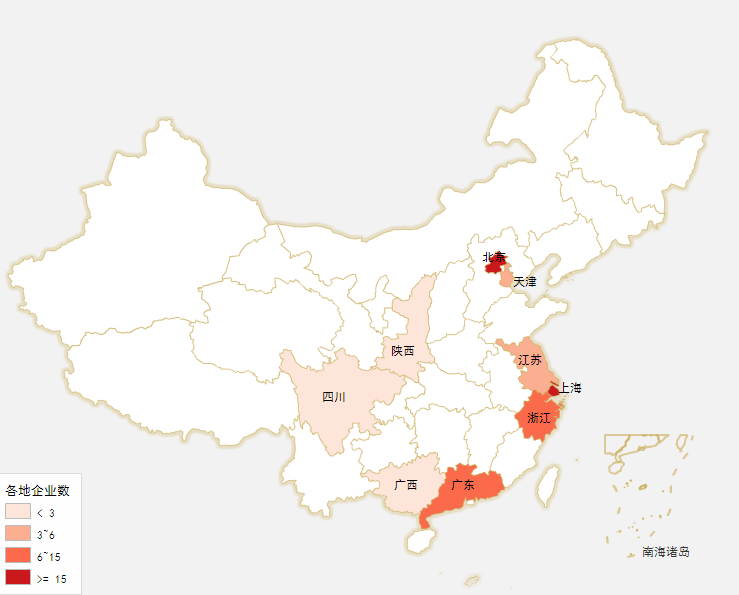
Among the regions where intelligent medical hardware companies are located, Beijing and Shanghai have the highest numbers, with 26 and 16 companies respectively. Guangdong and Zhejiang follow, with 11 and 6 companies respectively. The electronics manufacturing industry is relatively concentrated in China, as is the case for intelligent medical hardware companies. More than 80% of these enterprises are distributed across Beijing, the Yangtze River Delta, and the Pearl River Delta. Although Beijing has limited manufacturing capacity, it boasts a concentrated talent pool and a large number of startups. Companies in Beijing almost invariably opt for product outsourcing, relocating their manufacturing operations to the Pearl River Delta and the Yangtze River Delta.
4
Startup Financing Rounds
Data Source: VCBeat, VCBeat Database
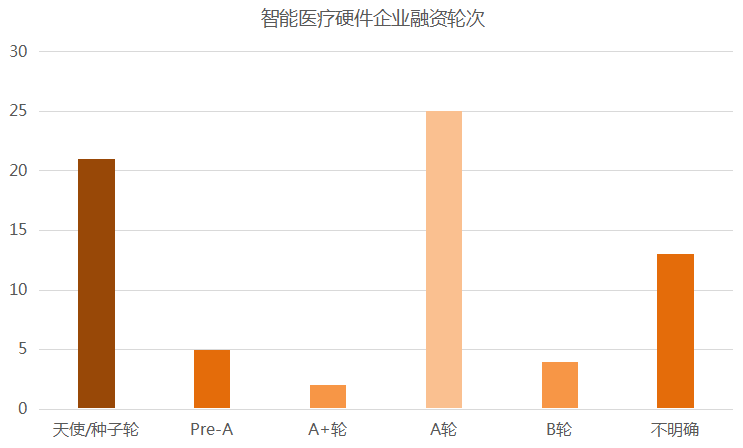
Among the companies included in our statistics, 52 have publicly disclosed financing and investment information. Of these, only four have reached Series B, 32 are at Series A, and 16 are at the angel stage. The total financing amount for these companies reached USD 407.39 million, with USD 95.46 million raised in 2016. In terms of financing rounds, no company has yet entered Series C, with the majority remaining at Series A. This indicates that most smart medical hardware companies are still in their early stages; due to challenges such as user habits, market size, and user education, the market has not yet achieved significant breakthroughs or produced unicorn enterprises. Among them, Neusoft Xikang secured the largest financing amount, totaling USD 234 million, accounting for more than 50% of the entire sector. Although Xikang’s financing amount and valuation are already substantial, its product recognition among users still needs improvement.
In January 2016, Xiaobo TCM Assistant secured RMB 500,000 in seed funding from Geekbang Ventures. The company primarily develops portable smart devices designed to help Traditional Chinese Medicine (TCM) practitioners record and quantify pulse conditions, with data transmitted to smartphones via Bluetooth.
In January 2016, NuoNuo Technology completed an angel financing round of several million yuan, invested by Beike Fund. The company is dedicated to the research and development of high-precision EEG-based intelligent wearable devices. It aims to explore human brain physiological states and cognitive conditions by leveraging real-time EEG monitoring technology. Built on a foundation of EEG technology, human bioelectric signal detection and processing technology, and human-computer interaction technology, NuoNuo Technology provides EEG solutions for wearable devices.
In March 2016, Keling Medical, a company specializing in big data services for chronic diseases, secured tens of millions of yuan in Series A financing from the listed company Yongtai Technology and Yinke Capital. Lanxinkang is Shanghai Keling’s mobile healthcare brand for chronic disease management in the pharmacy sector, encompassing hardware such as smart blood pressure monitors, glucose meters, spirometers, body fat analyzers, lipid profile analyzers, and HbA1c testers, along with cloud-based management software. This round of investment will be used to build a tightly integrated health management ecosystem connecting “users–cloud platform–healthcare professionals.”
In March 2016, Jiuai Technology announced the completion of its first round of angel financing, exceeding RMB 100 million. Investors included several publicly listed companies, leaders in the big health industry, and prominent venture capital firms. Jiuai Technology is a mobile internet company focused on the research and development of smart products, aiming to build an “Smart Community” internet-based familial care ecosystem.
In April 2016, 720 (Beijing) Health Technology Co., Ltd. announced the completion of its RMB 10 million Series A financing round, led by Chengcheng Capital. The investment will be used for the research and development of intelligent health environment monitoring devices. Following this Series A funding, 720 Health Technology launched the third generation of its smart hardware product, “Huanjing Bao,” which is designed for comprehensive environmental monitoring.
In May 2016, Kangkang Blood Pressure, a manufacturer of smart blood pressure monitors, secured tens of millions of yuan in Series A financing from Beijing Zhongling Yanyuan Venture Capital Center. Following this investment, Kangkang Blood Pressure continued to strengthen its efforts in building an integrated hypertension management ecosystem. The most notable achievement was its partnership with ZhongAn Insurance, China’s first internet insurance company, to establish a collaborative model integrating “smart hardware + blood pressure management + financial insurance.”
In May 2016, ChildCare Cloud Stethoscope, a manufacturer of smart stethoscopes, secured millions of yuan in angel-round investment from Beike She. Its smart stethoscope is dedicated to providing cardiopulmonary health monitoring and management for children aged 0–5 years. Following this round of financing, ChildCare Cloud Stethoscope will continue to enhance its R&D capabilities, consolidate its technological advantages, and strengthen its core competitiveness.
In June 2016, Gangwan Health secured RMB 15 million in Series A financing, primarily allocated to the research and development as well as the promotion of its smart pillboxes and smart blood glucose meters. By leveraging smart hardware devices for patient monitoring and management, and incorporating an endocrinology team from Chunyu Doctors, the company provides chronic disease management services for diabetes.
In June 2016, following its angel investment round in January, Nuonuo Technology secured a tens-of-millions-yuan Pre-A financing round led by Fenghao Venture Capital. With this funding, Nuonuo Technology will focus on building its sales and marketing team, completing technological upgrades, and signing pilot hospitals.
In August 2016, Neusoft Xikang secured $64 million in its Series B financing round from strategic investors including PICC Property and Casualty Company Limited and Alps Electric Co., Ltd. Neusoft Xikang stated that this round of financing targeted strategic investors in the commercial insurance and wearable health technology sectors, aiming to advance its strategic deployment integrating health management with commercial insurance and sensing technologies.
In August 2016, U Tang, a mobile health platform focused on chronic disease management, announced the completion of its Series A+ financing round, raising tens of millions of RMB from Jinku Capital. Building on its intelligent data-collection hardware, U Tang has engaged more than 300 endocrinologists across China. Following this round of financing, the company will prioritize expanding offline channels and upgrade its existing U Tang Remote Management Platform after September this year, unveiling the U Tang Telemedicine Platform.
In September 2016, Kangkang Blood Pressure secured its Series A+ financing. Yiling Pharmaceutical announced that its subsidiary, Yiling Health City Technology Co., Ltd., would subscribe to Kangkang Shengshi with RMB 30 million in self-owned funds, accounting for 20% of Kangkang Shengshi’s registered capital after the capital increase. Following this round of financing, Kangkang Blood Pressure will focus on developing its internet hospital for chronic diseases, which will be China’s first internet hospital dedicated to chronic disease management.
In September 2016, Nanjing Xijian Company completed a Series A financing round worth tens of millions of yuan. Its flagship product is the mobile smart cardiac monitoring device “Pocket ECG,” with Baijiahui Precision Medical Holding Group Co., Ltd. as the investor. Xijian positions itself to provide users with mobile healthcare services, building localized health services through mobile applications and smart hardware devices. Currently, it primarily focuses on cardiac diseases, with plans to launch health management solutions for various chronic conditions in the future.
In September 2016, Subeikang, a subsidiary of Shanghai Fengneng Pharmaceutical Technology Co., Ltd., secured millions of yuan in angel investment. The company is set to launch an intelligent medical hardware device focused on home health monitoring. This product performs urinalysis to detect 12 common indicators, including urinary protein, urinary ketones, urinary glucose, ovulation, and blood pressure. Upon completion of the test, users can access their data via the cloud or transmit it to physicians for diagnosis, recommendations, and alerts.
In October 2016, Haopengyou (Shenzhen Zhongruiqi Technology), a provider of remote cardiac management solutions, completed its angel round of financing, raising RMB 5 million. The investors were not disclosed. The funds from this round were primarily allocated to the research and development of smart electrocardiogram (ECG) devices and the development of remote cardiac management solutions, aiming to build an integrated hardware-software-network service platform based on traditional ECG machine hardware.
In November 2016, Kangyun Interconnect, a company specializing in intelligent chips for in vitro diagnostics, secured tens of millions of RMB in angel-round financing from Qingqing Mango Asset Management Co., Ltd. Following this round of funding, Kangyun Interconnect will accelerate the development and market promotion of its applications in the broader healthcare sector. This includes providing “medical + internet” solutions for primary care, telemedicine, and chronic disease management, covering areas such as routine urinalysis, routine biochemistry tests, and immunoassays.
Data Source: VCBeat, VCBeat Research Institute Database
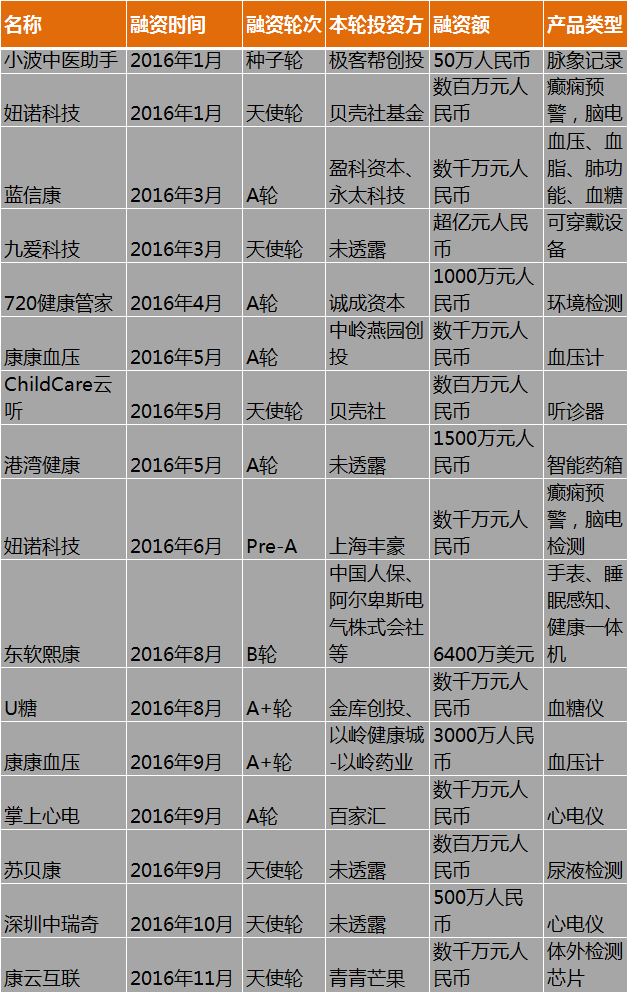
Based on our statistics above,In 2016, there were a total of 14 companies in the smart medical hardware sector, with 16 financing events occurring (Kangkang Blood Pressure and Nuonuo Technology each secured funding twice). The total amount raised was $97.13 million, of which Neusoft Xikang alone accounted for $64 million.Therefore, after excluding the investment and financing figures of Neusoft Xikang, it becomes evident that while there have been numerous investment and financing events in the smart medical hardware sector, the financing scale has remained relatively small, with an average amount of approximately $2.2 million. Companies securing larger financing rounds typically leverage smart medical hardware as a foundation to build an ecosystem by integrating medical big data, healthcare informatics, and hardware products, thereby garnering greater favor from capital markets.This year, all companies that secured funding were developing medical-grade smart hardware. It has become extremely difficult for health-grade products such as fitness bands, smartwatches, and body fat scales to attract investment this year. The three major challenges facing the development of health-grade smart hardware enterprises are market expansion difficulties, lack of product innovation, and absence of technological breakthroughs.
Driven by “Made in China 2025” and healthcare reform, a host of favorable policies have been introduced to support industry development. However, policies and industry standards related to medical-grade smart hardware still need to be improved as soon as possible to shorten product review timelines and reduce R&D costs for enterprises.
In September 2016, the Ministry of Industry and Information Technology issued and implemented the "Special Action Plan for the Innovative Development of the Smart Hardware Industry (2016–2018)." Centered on enhancing innovation capabilities in key smart hardware technologies and products, and strengthening the industrial foundation, the Special Action Plan was guided by the optimization of the policy environment, the flourishing of the industrial ecosystem, and the enhancement of public services. It defined three-year development goals, five key focus areas, six categories of core key technologies, and four priority application fields. The initiative aimed to address issues such as insufficient supply of key technologies and high-end products, an incomplete innovation support system, weak interaction between production and application, and ecosystem fragmentation, thereby promoting the advancement of China’s smart hardware industry toward high-end, innovative, autonomous, ecological, and service-oriented development. The goal of the Special Action Plan was to achieve a global market share of over 30% for Chinese smart hardware products and an industry scale exceeding RMB 500 billion by 2018. Intelligent applications, which drive model innovation and efficiency improvements, will also provide significant support and impetus for China’s medium- to long-term economic growth and sustainable development.
The primary objective of this policy in the healthcare sector is to promote the development and construction of healthcare informatization. Intelligent medical health devices are primarily targeted at the medical and health industry, focusing on the development of medical-grade intelligent hardware devices and their large-scale commercial deployment, ensuring they meet the requirements for data credibility, product quality, and safety in medical applications. In terms of industrial support, the plan emphasizes the integration of interfaces, protocols, and data between devices and platforms, thereby laying the product and technological foundation for the subsequent application and promotion of intelligent medical health devices across the industry. The introduction of this policy aims, on one hand, to advance the widespread adoption of intelligent medical health devices throughout various stages of medical care; on the other hand, it seeks to strengthen the construction of medical data cloud platforms through computer science, modern network communication technologies, and database technologies, while promoting telemedicine models to address or mitigate issues such as difficulty in accessing medical care, strained doctor-patient relationships, and frequent medical incidents caused by the scarcity of medical resources.
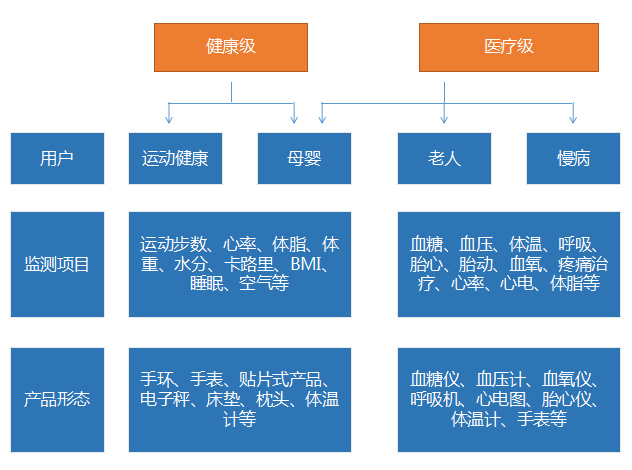
Manufacturers in the field of intelligent medical hardware primarily fall into two categories. One category comprises innovative smart health devices, mainly used to monitor health metrics such as step count, calories, heart rate, body fat, and sleep patterns. Representative products include various fitness bands, pedometers, and smart scales. The primary users of smart health products are individuals focused on fitness and wellness. These products feature fashionable designs, and the vital sign data they measure is not intended for disease diagnosis. Targeting the healthy population, these devices primarily address needs related to exercise, sleep, and maternal and infant care. In July 2015, the China Food and Drug Administration (CFDA) issued a notice stating that products such as those measuring physical activity and blood oxygen saturation are not regulated as medical devices. Consequently, these products do not require medical device certification, and the data collected cannot be used as a basis for clinical diagnosis or treatment.
Another category involves the intelligent transformation of traditional medical devices, with products primarily designed for medical-grade applications that monitor indicators such as blood pressure, blood glucose, body temperature, fetal heart rate, fetal movement, and blood oxygen saturation. Examples include smart glucometers, sphygmomanometers, thermometers, and electrocardiographs. The primary users of these products are physicians, pharmacists, and patients. Aimed at disease monitoring, these devices require Class II medical device certification from the China Food and Drug Administration (CFDA). By collecting data, they facilitate disease intervention and help patients with chronic conditions achieve self-management. The target user groups primarily include individuals with chronic diseases, maternal and infant populations, and the elderly.
Let’s examine the market conditions of the smart healthcare industry from another perspective. According to a report by IC Insights, the compound annual growth rate (CAGR) for medical semiconductors was 6.9% from 2008 to 2013. From 2013 to 2018, the CAGR for medical semiconductors is projected to reach 12.3%, with sales revenue hitting $8.2 billion in 2018. This significant growth is primarily driven by the rise of smart wearable devices after 2013. Solid-state sensors and optical imaging components required for smart hardware are all classified as medical IC devices. Whether medical-grade or health-grade, smart hardware has generated substantial demand for medical IC devices.
Since 2013, sales of smart hardware have experienced explosive growth. In 2014, the market size for smart hardware in China reached RMB 10.8 billion, with sales volume hitting RMB 42.4 billion in 2015. It is estimated that the smart hardware market will maintain a high growth rate in the coming years. Smart hardware related to healthcare and medical services (excluding fitness-oriented products such as activity trackers and smartwatches) accounts for approximately 5% of the market, with its market share projected to reach RMB 2 billion in 2016.
User Usage Patterns
Data source: VCBeat, VCBeat Research Institute Database
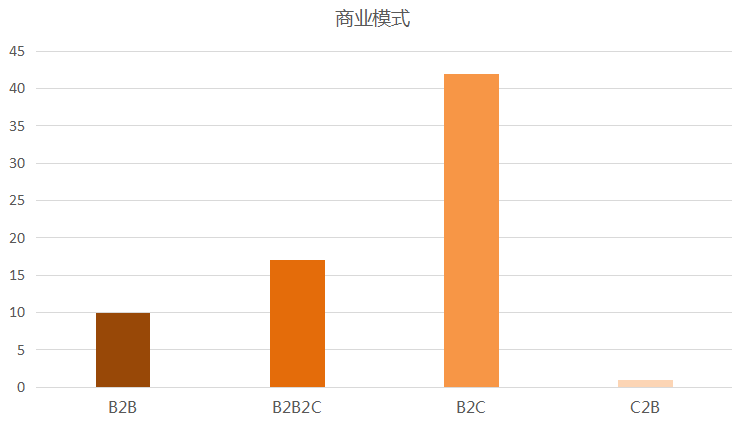
Based on user usage patterns, smart medical hardware companies can be categorized into three types: those addressing C-end user product demands, B-end user product demands, and B-end user service demands.
Types of Product Requirements for Consumer-Facing Users: Products targeting consumer-facing (C-end) users are categorized into two main segments: Sports and Health (primary products: fitness bands, smartwatches, and body fat scales) and Chronic Disease Management (primary products: thermometers, blood glucose meters, and blood pressure monitors). These products are developed to meet individual consumer needs, with corporate revenue primarily derived from product sales and consumables. Consequently, there is a high demand for effective product marketing and promotion. Sales of smart medical hardware for consumer-facing users are predominantly conducted through online channels, while offline distribution channels remain underdeveloped, making it difficult to achieve economies of scale.
Types of Product Requirements for B-End Users: Products designed for B-end users are primarily focused on chronic disease management and acute disease treatment. The research and development (R&D) of these products targets the needs of pharmacies, physicians, or healthcare institutions. Most involve intelligent upgrades of existing medical device products, such as smart glucometers and electrocardiographs. Enterprises in this segment are relatively few, accounting for approximately 25%. Meanwhile, R&D enterprisesBy collaborating with physicians to understand the needs of patients with chronic diseases, we develop intelligent products tailored to individuals with various conditions. These solutions also provide clinical decision support and diagnostic assistance to doctors, enabling them to efficiently and rationally monitor patients’ continuous disease progression.
B2B User Service Requirements: For B2B clients, we provide intelligent hardware and software service solutions, collect medical big data to offer chronic disease management services, thereby enhancing the service capabilities of healthcare institutions and enabling assisted diagnosis and treatment. While providing products to B2B users, these enterprises also assist in data collection and organization, building information databases by integrating hardware and software, thus offering basic information products and services for hospitals to manage discharged patients. This enhances patient stickiness and improves the quality of consultations.
B-end users in this sector may include insurance institutions, pharmacies, and pharmaceutical companies. Through collaboration with insurance institutions, insurance sales can be facilitated. Meanwhile, large volumes of patient data collected via smart devices help insurers achieve precise pricing and refine their risk control models. Pharmaceutical companies are the primary consumers and payers for the big data gathered by smart hardware. The collaboration between pharmaceutical companies and smart hardware enterprises is multifaceted: first, it enables targeted marketing of indication-specific medications by identifying patient populations through smart hardware sales; second, it supports drug R&D efforts by collecting patient data. As for pharmaciesBy collaborating with smart hardware companies, we can engage patient populations and fulfill pharmaceutical marketing objectives.
Main Product Types
Among smart products, the hottest segments are smart bands and smart watches. If a product merely provides functions such as step counting, sleep monitoring, and heart rate monitoring, it is not included in the statistics for smart medical hardware companies. In health-gradeAmong smart medical hardware, wristbands, watches, and body fat scales are also the three most important product categories.
Among medical-grade smart hardware, the primary product categories are smart blood glucose meters and smart blood pressure monitors. The high prevalence of diabetes and hypertension within the field of chronic diseases has driven substantial demand for such devices. In particular, the high gross margins associated with diabetes testing equipment, coupled with the increasing maturity of blood glucose monitoring technologies, have established smart blood glucose meters as the dominant products in the smart medical hardware sector. In 2014, the market size for smart blood glucose meters in China reached RMB 59.4 million; by 2015, it had approached RMB 200 million.The domestic smart blood glucose meter market is expected to maintain rapid growth in the coming years. Although smart blood pressure monitors for the medical sector do not involve recurring consumable supplies, the large user base and broad market have attracted a significant number of manufacturers.
Enterprise Issue Analysis
Despite several years of development, the smart medical hardware industry remains in an immature stage. From the perspectives of manufacturer R&D and investment, the sector appears vibrant; however, actual market sales remain lukewarm. First, to achieve “smart” functionality, various front-end sensors must collect data, which then undergoes “intelligent” processing to provide users with recommendations and predictive outcomes. Second, regarding its “medical” utility, the collected data must be precise enough to enable accurate diagnosis. Finally, smart medical hardware must be rationally designed, user-friendly for wearability and operation, and capable of delivering tangible benefits to users.
Developing smart medical hardware is more challenging than developing ordinary smart hardware, and since most companies entering this field are startups, it is not easy to truly excel in the three aspects mentioned above.Currently, the domestic smart medical hardware sector is in its market cultivation phase. Most companies are startups that encounter considerable challenges in research and development, production, and market expansion.
First, in the R&D phase, due to the technical characteristics of smart medical hardware products, technological R&D investment is substantial and the development cycle is relatively long.
Secondly, in terms of funding, smart hardware companies face significant financial pressure and often lack project capital. The founders of these enterprises are mostly from technical backgrounds, with weaknesses in financial operations, requiring them to spend considerable time and effort seeking investors. Additionally, the valuation of smart hardware companies is challenging, making it difficult to assess their value accurately.
Furthermore, in the production phase, achievable product costs are difficult to estimate, manufacturability is hard to predict, and both production yield rates and product quality cannot be guaranteed. Enterprises lack control over supply chain platforms and have limited awareness of them, leading to blind spots in both supply chain platform utilization and component sourcing.
Finally, in terms of sales, the current sales of smart medical hardware are mainly concentrated online, with a lack of offline sales channels, making it difficult to achieve scale. In terms of promotion channels, smart hardware products come in diverse forms, and existing internet-based promotional methods are not entirely suitable for promoting smart medical hardware products, leading to difficulties in marketing. Additionally, user after-sales service needs cannot be adequately met, making it challenging to provide high-quality post-purchase support.
Currently, China is actively strategizing its layout in the broader health industry. The adoption of new technologies such as electronics, software, and big data has ushered in development opportunities for the smart medical hardware sector. While the medical device industry was previously dominated by large foreign corporations, domestic enterprises and startups are now gaining significant growth opportunities. Furthermore, with the rapid momentum of the domestic smart healthcare market, investment from hospitals themselves, along with venture capital (VC) and private equity (PE), in addition to funding from the new healthcare reform, will drive the rapid development of smart medical hardware and healthcare informatization. It is projected that by 2020, the market size of smart medical hardware in China will exceed RMB 4 billion.
Another important factor influencing smart medical hardware is the development of the electronics industry.Smart hardware relies heavily on advancements in hardware technologies such as sensors, chips, and batteries; achieving portable and user-friendly product forms will inevitably depend on progress in these electronic components.
Advancements in data service models will also facilitate the development of smart medical hardware.Based on the data collected from users’ smart medical devices, real-time analysis and feedback on their conditions can be provided as a chargeable service. Meanwhile, companies can also sell medical big data to pharmaceutical firms and insurance companies for new drug development and actuarial services. Additionally, solutions for assisted diagnosis can be offered to medical institutions to enhance post-diagnosis management.
Copyright Notice
This report is produced by VCBeat. All text, images, and tables contained herein are protected by applicable trademark and copyright laws. Portions of the text and data have been collected from publicly available sources, with ownership retained by the original authors. No organization or individual may reproduce or distribute this report in any form without prior written permission from our company. Any unauthorized commercial use of this report shall constitute a violation of the Copyright Law of the People's Republic of China, other relevant laws and regulations, and applicable international conventions.
Disclaimer
This research report is based on information that VCBeat considers reliable and currently publicly available. VCBeat strives to, but does not guarantee, the accuracy and completeness of such information. Due to limitations in research methodologies, sample sizes, and the scope of data collection, the data presented herein only reflects the basic conditions of the surveyed population during the survey period and serves solely for the current research purposes, providing a general reference for the market and clients. Furthermore, VCBeat does not guarantee that the views or statements contained in this report will remain unchanged. At different times, VCBeat may issue reports with information, opinions, and projections inconsistent with those contained in this report.
VCBeat does not consider recipients of this report as clients merely by virtue of their receipt thereof. This report is distributed only where permitted by applicable laws and regulations, solely for informational purposes, and shall not constitute any form of advertising. Under no circumstances shall the information contained herein or the opinions expressed herein be construed as investment advice to any person. Where permitted by law, VCBeat and its affiliated entities may hold equity interests in the companies mentioned in this report and may provide or seek to provide capital raising, financial advisory, or other related services to such companies.
Note: I am Liu Zongyu, an author at VCBeat. If you are an investor interested in the smart medical hardware sector, or an entrepreneur in this field seeking media coverage, please feel free to contact me. We also welcome any leads on relevant companies. WeChat: q19930797; Email: liu.zy@vcbeat.top