

Ava Raises $9.7M to Advance Fertility-Tracking Wearable for Ovulation Prediction
Ava, a manufacturer of wearable devices for female reproductive health, announced on November 15 (local time) that it had secured $9.7 million in Series A financing. The round was led by venture capital firm Polytech Ventures, with participation from Blue Ocean Ventures, Global Sources, and existing investors Swisscom and ZKB. Following this round, the company’s total funding raised will reach $12.3 million.
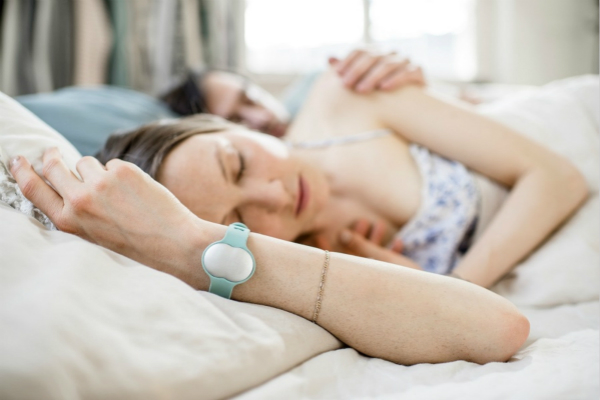
In July this year, Ava officially launched its first Ava Fertility Tracker in the United States. Priced at $199 and cleared by the FDA as a Class I medical device, it can track women’s menstrual cycles in real time and accurately predict ovulation dates. According to Lea von Bidder, co-founder of Ava, the company has sold out all existing inventory since the product hit the market. The funds raised in this financing round will be used for further product development (including clinical studies) and scaled-up production, while also laying the groundwork for entry into the European market.
For couples hoping to have children, infertility can be deeply distressing. Currently, preconception testing methods are either traditional approaches, such as urine tests and basal body temperature monitoring, or they are costly and invasive, such as in vitro fertilization (IVF), which often costs between $10,000 and $20,000.
The Ava bracelet can resolve the aforementioned issues, though it requires overnight wear. Unlike most conventional fertility-tracking hardware, which typically performs only simple temperature measurements (such as basal body temperature thermometers), the Ava sensor continuously measures and records nine physiological parameters—comprising 3 million data points—including pulse, respiratory rate, sleep quality, and temperature. These parameters accurately reflect the rise in hormones associated with ovulation. Each morning, the data is synchronized via a mobile app (available exclusively for iOS).
For most women, approximately every monthOnlyThere is a possibility of conception within a six-day window, which in some cases may be as short as three days. Even under the most favorable conditions, a young, healthy couple has only about a 25% chance of conceiving within one month when engaging in unprotected intercourse. According to a one-year clinical study conducted by Ava at the University Hospital of Zurich, led by Dr. Brigitte Leeners, a leading expert in mathematical modeling of the menstrual cycle, data tracking enabled the identification of an average fertile window of 5.3 days per cycle with 89% accuracy among 41 participants, and helped eight women achieve successful pregnancies. This demonstrates that, in terms of effectiveness,Ava wristband indeedIt can improve pregnancy rates. The results of this clinical study were presented at the Swiss Society of Gynecology and Obstetrics Annual Meeting in June this year, with sponsorship from Bayer, a leading women’s health company.
On this basis, the company has initiated a second clinical study with another hospital, featuring a larger sample size (approximately 200 participants) and more comprehensive test data than ever before, including hormones such as urinary luteinizing hormone and estradiol-3-glucuronide.) andPhysiological data (such as bioimpedance, pulse rate, respiratory rate, sleep, physical activity, heart rate variability, skin temperature, heat loss, and perfusion). This will help the company enhance the predictive capabilities of its devices.
Beyond normal product development, the majority of Ava’s funding will be allocated to clinical research. To date, Ava has generated findings on the correlation between body temperature, heart rate, and the fertile window, which are slated for publication in relevant medical journals. Although Ava has not disclosed precise sales figures for the U.S. market, Lea von Bidder stated, “Our product has received a strong market response, with users conceiving for the first time after using this tracker. In the U.S. market, we have achieved sales of at least tens of thousands of units.”
“When we first entered this industry, we aimed to develop a device specifically for women that could support them through various life stages, including pregnancy, childbirth, menopause, and even contraception. Interestingly, the data we collected revealed that women seeking contraception constitute a significant portion of our user base. In the future, we plan to develop a physical contraceptive device, which will certainly require more targeted audience research,” said Lea von Bidder.
At the user level, accuracy is somewhat compromised among college students due to their tight schedules and irregular dietary habits. However, for older women with stable lifestyles, Ava can essentially track their menstrual cycles and fertility rates. Although it remains far from achieving 100% precision in fertility planning and contraception, Ava is currently collaborating with data scientists and obstetrician-gynecologists to conduct post-hoc structured processing and analysis of the data.
Regarding the company’s future development, it has recently obtained the CE mark, meaning that it can now begin selling its products in the European Union. In early 2017, Ava made its product available to users in the United Kingdom, Germany, Austria, and Switzerland. Lea von Bidder stated, “There is significant market potential in women’s health and reproduction, and we have only begun to understand this demographic. In the future, we aim to create a solution that everyone will want to use.”