

Genome Pioneer Hao Xiangwen and GenoCloud Health Aim to Deliver the Best Whole Genome Data Analysis and Interpretation Solutions
The greatest appeal of genetic technology lies in its ability to transform every aspect of life, thereby improving and optimizing people’s quality of life. Examining life’s challenges from a genetic perspective can yield many new discoveries.
—— Hao Xiangwen, Founder of Jiyun Huikang
Jiyun Huikang is a startup founded in 2014, specializing in the storage, interpretation, and application of human whole-genome data. The company focuses on the analysis and interpretation of personal whole-genome data. Its independently developed Genome Analysis and Interpretation in Cloud (GAIC) service enables faster and more cost-effective analysis and interpretation of human genomic data. Jiyun Huikang has been certified as both a Zhongguancun High-Tech Enterprise and a National High-Tech Enterprise, and has successfully participated in China’s national “Precision Medicine” initiative.
Before founding Jiyun Huikang, Hao Xiangwen gained work experience at two of the world’s most renowned genetics companies—BGI and Illumina. In 2003, fresh out of university, Hao joined BGI. Recalling that period, he said, “I had been closely following BGI since my student days, so I felt very fortunate to join the company and benefited greatly from the experience.” He told a reporter from VCBeat (WeChat ID: vcbeat) that his years at BGI not only deepened his understanding of genetic technologies but also allowed him to meet many like-minded friends.
In 2014, driven by his longstanding position at the forefront of the genomics industry and his personal interest, Hao Xiangwen conceived the idea of starting a business. His work experiences at BGI and Illumina gave him profound insights into the industry. He clearly recognized that genomic technology had become highly standardized at its current stage of development. While it is difficult to achieve differentiation in genomic technology itself, advances in sequencing technologies and reduced costs would inevitably increase the complexity of data processing. Consequently, he proposed focusing on the broad direction of whole-genome data.
Hao Xiangwen told a VCBeat (WeChat ID: vcbeat) reporter, “My background is in biotechnology, but I lack experience in big data processing, so I was looking for a co-founder.” It was during his tenure at Illumina that Hao met his current partner, Wu Jinyu from the Beijing Institute of Life Sciences, Chinese Academy of Sciences. Prior to their partnership, Wu had been conducting research on autism, dedicating substantial effort and resources to whole-genome data analysis. The two quickly found common ground, leading to the establishment of GeneCloud Health.
At its inception, Jiyun Huikang launched the “100-Person Genome Project.” The project was completed last June and comprised three components: whole-genome sequencing, routine physical examinations, and wearable devices. Its aim was to validate the integration of genomic sequencing data with physical examination data and wearable device data. Hao Xiangwen disclosed to a reporter from VCBeat (WeChat ID: vcbeat), “Although the analysis and interpretation of testing data have been technically achieved, validation is still required before practical application.”
This event helped raise awareness of Jiyun Huikang among a broader audience, during which time the company also gradually completed the establishment of its foundational technological infrastructure.
The company completed its angel financing round in May 2015. Reflecting on the fundraising process, Hao Xiangwen considered it quite serendipitous. At that time, the internet industry was rapidly ascending, and Hao sought to identify investors with an internet background to gain insights into internet-driven thinking and operational models.
Zheng Jie, the first investor, introduced Wang Gang, a new investor. Coincidentally, Wang Gang was also keen to invest in frontier technology companies such as those specializing in gene technology. The two hit it off during their meeting, and the financing process proceeded smoothly. Later, Hao Xiangwen joined the “Winners’ Alliance” initiated by Wang Gang, deepening his understanding of the internet industry through exchanges. “What Ji Yun Hui Kang is doing is inherently cross-industry, making communication and collaboration with the internet sector even more essential,” said Hao Xiangwen.
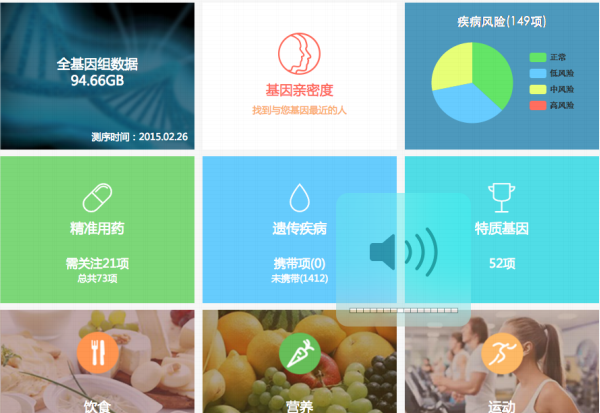
Currently, the company’s business primarily focuses on genomic data processing and interpretation, as well as the development of gene-based applications. Interpretation services cover genetic diseases, trait-related genes, and genetic similarity testing, mainly serving B2B clients. By leveraging genomic data processing and genetic testing analysis, the company helps clients gain insights into their genetic data. Through advanced data processing and analysis, test results are translated into user-friendly formats accessible to the general public. Additionally, Jiyun Huikang adopts mobile internet thinking to develop a gene-focused app, enabling users to easily and quickly access desired information without needing to understand sequencing techniques or analytical methods.
With the current advancement of genetic technologies, relying solely on biotechnology is no longer sufficient to effectively address challenges. Regarding the ongoing integration of biotechnology and information technology, Hao Xiangwen stated, “At this stage, BT (biotechnology) and IT (information technology) can be assessed individually, yet in essence, they are already integrated.”
At its most basic, a biological laboratory requires a laboratory management system to conduct experiments; to achieve process management, it also needs a backend management system. In specialized fields such as gene sequencing, the generation of genomic data, particularly the massive volumes of whole-genome data, necessitates reliance on software and algorithms. Biotechnology (BT) and information technology (IT) are inherently inseparable.
Hao Xiangwen told a reporter from VCBeat (WeChat ID: vcbeat) that the challenge at the current stage is not one of integration, but rather how to better construct a new mindset at a new level to achieve more effective application of IT tools.
The bioinformatics cloud platform is a typical case of the integration of biotechnology and information technology. Hao Xiangwen introduced the three tiers of the cloud computing platform to a reporter from VCBeat (WeChat ID: vcbeat).
The bottom layer consists of public cloud platforms such as Alibaba Cloud, Baidu Cloud, and Huawei Cloud, referred to as Infrastructure as a Service (IaaS). Consumers can access services from robust computing infrastructure via the Internet. The most prominent feature of these cloud platforms is that they are not domain-specific, catering to a broad user base.
The middle layer is known as Platform-as-a-Service (PaaS), which delivers specialized services tailored to the characteristics of specific domains. The platform establishes an environment based on its service domain, enabling companies in niche sectors to adopt it rapidly. For these niche companies, this eliminates the time and costs associated with building their own platforms. Such platforms are prevalent both domestically and internationally. Many providers focus specifically on serving gene sequencing companies; notable international examples include 7Bridge Genomics, Illumina BaseSpace, and DNAnexus, while domestic counterparts include BGI Online, Judo, Huadian Cloud, and WuXi AppTec’s Mingma Yun.
Another category is SaaS (Software-as-a-Service). In this model, software is delivered over the Internet. Vendors centrally deploy application software on their own servers. Customers can subscribe to the required application software services from vendors via the Internet based on their actual needs, pay fees according to the volume and duration of the subscribed services, and access the services provided by the vendors through the Internet.
Jiyun Huikang provides a SaaS-based service built on Alibaba Cloud, offering faster and more cost-effective optimization solutions for whole-genome data. The bioinformatics sector encompasses various subfields, including DNA, RNA, epigenetics, microbiology, animal, and plant genomics, with diverse analytical applications. Jiyun Huikang is specifically focused on the processing and interpretation of human whole-genome data.
Hao Xiangwen also revealed to a reporter from VCBeat (WeChat: vcbeat) that, as a next step, the company will further upgrade its existing technologies and application development. Additionally, it hopes to collaborate with health management firms, insurance companies, and medical service providers to enhance the service value of genetic testing.