

Modoo Aims to Replace Doppler Home Fetal Monitors with Breakthrough Passive Technology, Backed by BYD
Nowadays, people are under great work pressure, and the childbearing age of Chinese people is getting older and older. Especially for women who have a second child, 60% of them are over 35 years old, which increases the risk of complications during pregnancy, possibly causing fetal hypoxia, intrauterine distress, or even asphyxia with no fetal heartbeat. Compared to ordinary pregnant women who are already very sensitive during pregnancy, elderly pregnant women should strengthen fetal monitoring. VCBeat (WeChat ID: vcbeat) reporter exclusively interviewed Ma Jiliang, founder of Chuanshi Future, and conducted follow-up reports on Mengdong, the world's first passive fetal heart rate and movement patch.
Ma Jiliang graduated from the University of Wisconsin–Madison. During his senior year, he joined a startup founded by former Google scientists as a core founding member. He not only participated in the development of the company’s AI-powered voice search products but also helped secure tens of millions of dollars in financing from Sequoia Capital and SIG.
When it comes to the original intention behind founding Chuanshi Weilai,Ma Jiliang told reporters,After graduation, drawing on his prior knowledge and study of hardware, he intended to continue working in the hardware industry. At that time, hardware held development potential in smart homes, the automotive industry, and healthcare, but he had not yet determined a specific direction. During this period, an incident occurred: a friend of his, at 36 weeks of pregnancy, experienced sudden fetal demise just before delivery, resulting in the loss of the baby. Subsequent analysis suggested that excessive stress, potentially triggered by prenatal anxiety, was likely the primary factor contributing to this tragedy.
Affected by this, he reviewed extensive literature and discovered that prenatal anxiety is prevalent among pregnant women. While expectant mothers are highly attuned to every movement of their fetuses, frequent hospital visits for check-ups are impractical. Additionally, pregnant women actively join numerous WeChat groups to share experiences and seek advice, forming a high-frequency, highly engaged community. Consequently, he decided to found Transcend Future, a life sciences and digital health company, driving innovation through the interdisciplinary integration of “smart hardware, mobile internet, and medicine.”
“Mengdong Intelligent Pregnancy Assistant” (hereinafter referred to as “Mengdong”) is a commercially available, passive fetal heart rate and movement monitoring patch independently developed by our team. The core team includes CTO Willian, formerly of Nokia, with 20 years of hardware development experience; Chief Architect Rambo, a former senior system architect at Tencent and Alibaba, who has served over 300 million users and handled data mining and recommendation algorithms for product catalogs exceeding 6 billion items; and COO Nicky, a founding member of Qunar.com.
The fetus is located within the uterus and cannot be observed with the naked eye. Therefore, apart from medical ultrasound examinations, changes in fetal movement are the most intuitive indicator of fetal health. Unusual changes in fetal movement are often caused by intrauterine hypoxia; if medical attention is not sought promptly, this may lead to stillbirth. Additionally, clinical evidence indicates that decreased fetal movement may also result from placental insufficiency or chronic fetal hypoxia. Only pregnant women who regularly count and monitor fetal movements can detect these abnormalities in a timely manner.
Most hospitals currently use Doppler ultrasound monitors for fetal monitoring. This equipment, widely used in prenatal checkups and validated by the market, is proven to be safe and accurate. However, pregnant women typically undergo prenatal examinations only once every seven days or more, providing only a snapshot of the fetus’s condition at that specific moment without predicting subsequent safety. Given the many variables affecting fetal health, this frequency is too low. Most expectant mothers desire continuous awareness of their fetus’s intrauterine status.
However, home Doppler ultrasound fetal heart rate monitors are not suitable for use as home monitoring devices. They actively emit ultrasound waves to “illuminate” the fetus’s beating heart and then receive the reflected signals.
As early as December 16, 2014, the U.S. FDA pointed out that ultrasound can slightly heat tissues and, in some cases, produce tiny vacuum bubbles (cavitation) within the tissue. Since home-use devices cannot control the number of scans or the duration of each scan, excessive use increases the risk of harm to the fetus and even the pregnant woman. Therefore, the promotion of home Doppler ultrasound fetal monitors is prohibited.
In a 2006 publication, researchers from the National University of Singapore, Ang et al., reported that experimental findings indicated excessive ultrasound exposure caused abnormal neuronal development in the brains of mice.
Pregnant women often worry about the safety of using home Doppler fetal heart monitors, hesitating to use them for extended periods and sometimes limiting measurements to just 1–2 minutes.
However, in clinical practice, 1–2 minutes of fetal heart rate data lack medical significance, as physicians must review a 20-minute fetal heart rate tracing and analyze trends in numerical changes to make a diagnosis.
Since Doppler ultrasound devices are not suitable for home use, doctors have had to resort to asking pregnant women to count fetal movements at home starting from 28 weeks of gestation to monitor the condition of the fetus outside the hospital.
However, self-monitoring of fetal movements by pregnant women presents certain challenges. Individual factors, such as maternal subcutaneous fat thickness and gestational age, can affect the subjective perception of fetal movements. For instance, pregnant women may mistakenly count their own intestinal peristalsis as fetal movements, while some actual fetal movements go entirely unnoticed.
Some expectant mothers are unable to consistently monitor fetal movements. Although physicians recommend counting fetal movements for one hour each in the morning, afternoon, and evening, many women ultimately abandon this practice due to difficulties in performing the counts, lack of proper technique, or limited free time during work hours. They mistakenly believe that “simply feeling fetal movement is sufficient,” which can ultimately delay critical emergency interventions.
Most frustratingly, 70% of hospital visits prompted by perceived abnormal fetal movements turn out to be unnecessary. Aside from the time and travel costs involved, these visits needlessly exacerbate prenatal anxiety in pregnant women, offering no benefit to either the mother or the fetus.
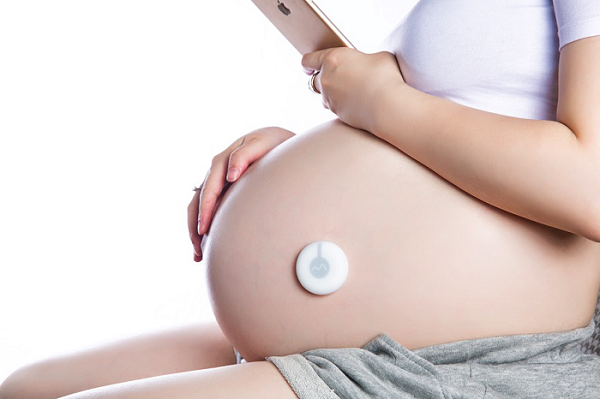
To address these issues, Chuanshi Future has developed the world’s first commercial passive fetal heart rate and fetal movement monitor—the Mengdong Smart Pregnancy Assistant. Weighing only 20 grams, this device is applied to the pregnant woman’s abdomen and connects to a mobile app via Bluetooth. Leveraging passive sensing technology rather than Doppler ultrasound principles, it enables safe, real-time, continuous monitoring of fetal heart rate and automatic counting of fetal movements, eliminating the need for manual recording. The app displays long-term fetal heart rate trend curves and also provides online consultation services for interpretation of fetal heart rate and movement patterns.
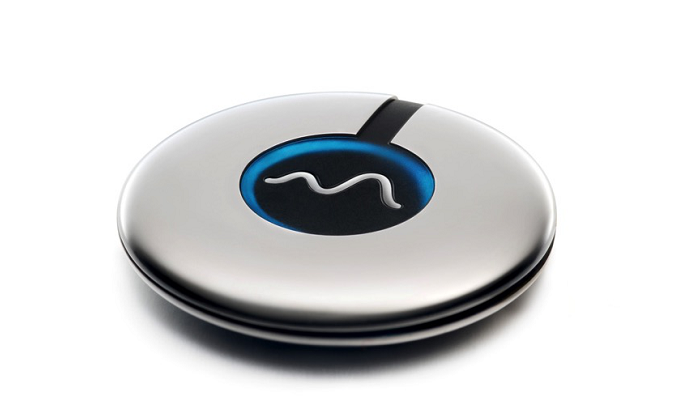
Mengdong Host
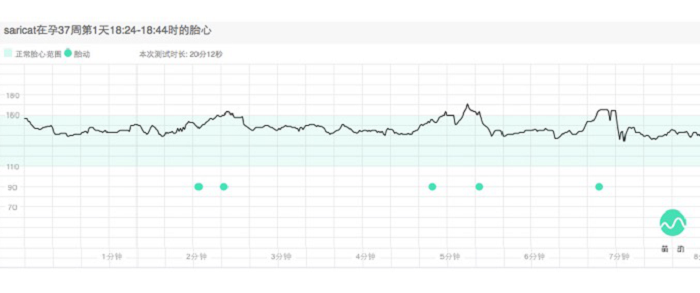
Sample Fetal Heart Rate and Movement Report for Mengdong Expectant Mothers
The passive principle is a core technology independently developed by the Chuanshi Future team. Compared with home fetal heart rate monitors based on the Doppler principle, Mengdong’s greatest advantages are safety and efficacy.
1. Safety. Mengdong employs a passive principle, emitting no ultrasonic energy to the fetus during fetal heart rate monitoring. This allows pregnant women to use the device for 20 minutes or longer without any safety concerns, obtaining curve graphs of both fetal heart rate and fetal movement. These data facilitate online physicians on the Mengdong platform in providing appropriate medical advice.
2. Effective. Mengdong utilizes a passive principle that eliminates the need for coupling gel. The device is compact and lightweight, allowing it to be secured to the pregnant woman’s abdomen using an abdominal belt or medical adhesive tape, thereby enabling continuous monitoring. The fetal heart rate (FHR) tracing obtained from at least 20 minutes of continuous monitoring aligns with physicians’ interpretation practices and meets the relevant requirements of cardiotocography. Fetal health status can only be assessed and understood through an FHR tracing of at least 20 minutes in duration. Comparative trials against large-scale hospital Doppler fetal monitors demonstrated an accuracy rate exceeding 99%.
3. Convenient. Mengdong weighs only as much as a pair of Apple EarPods and is slightly larger than a one-yuan coin. It does not require coupling gel, making it highly convenient and portable.
Additionally, Ma Jiliang stated that the product faces significant challenges in both hardware and software. To achieve a lightweight design with low power consumption, the hardware circuit design requires meticulous precision down to 0.01 millimeters. The core of the software lies in its algorithms; key technical hurdles for Mengdong include distinguishing fetal heart sounds from other maternal bodily sounds, and leveraging big data to optimize performance for users with varying physical constitutions.
Ma Jiliang stated that since the product’s official market launch in July of this year, no large-scale marketing promotions have been conducted. Marketing campaigns are scheduled to commence next year, with projected sales volume reaching 100,000 units. Further details regarding other business developments are currently undisclosed.
In addition to profits from hardware sales, the company’s software generates advertising revenue, charges service fees during online consultations, and plans to expand into the insurance business in the future.
In November 2015, Chuanshi Weilai secured tens of millions of yuan in Pre-A round financing from Tus-Holdings Venture Capital, and its smart hardware product “Mengdong” also established a strategic partnership with BYD.