

Biotech Titans Dominate the Industry with a Five-Year Startup Cycle
Failed entrepreneurs are all similar, but successful ones have their unique paths to success. Among them are academic entrepreneurs like Bob Langer, Lee Hood, and Tim Springer, who act as “catalysts” on this entrepreneurial journey; however, they do not quit their jobs nor fully tie their careers to small companies.
Yet there are also other entrepreneurs who have “bet the farm” on their ventures. These individuals, driven by entrepreneurial dreams, have grown into corporate leaders of the companies they strive to build, leveraging their early startup experience. Such “entrepreneurs-turned-CEOs” include John C. Martin of Gilead Sciences, Leonard Schleifer of Regeneron Pharmaceuticals, and Richard Pops of Alkermes.
There is another category of venture capitalists you might call “hands-on.” They provide foundational scientific platforms or promising assets, while also setting strategic direction and charting the course for startups. Examples include Alan Crane of Polaris Partners and Kevin Starr of Third Rock Ventures. This is highly valuable work, yet these venture investors are compensated by their respective VC firms.
Timmerman Report highlights 12 distinctive entrepreneurs of the year—a group of biotech founders willing to stake their entire fortunes, each with a unique track record of success. VCBeat (WeChat ID: vcbeat) has compiled and translated this report. These entrepreneurs join start-ups at their nascent stage and continue to drive value creation even during critical make-or-break periods. Typically, after about five years, they move on to their next venture to generate new value.

Michael Gilman is the co-founder and CEO of Padlock Therapeutics, based in Cambridge, Massachusetts. The acquisition of Padlock Therapeutics by Bristol-Myers Squibb for $225 million, with a total potential value reaching $600 million, marks a significant milestone. As recently as March of this year, the company had raised only $18 million in venture capital before it began developing PAD enzyme inhibitors for the treatment of autoimmune diseases. Previously, Gilman co-founded Stromedix, which was acquired by Biogen for $75 million, with a total deal value of $562 million, another landmark transaction.
Michael Gilman did not find his niche until the age of 50. A few years ago, he would never have imagined that he would go on to run a startup focused on research and development for idiopathic pulmonary fibrosis (IPF), and later transition into different areas of biology, such as PAD enzymes. He began his career as an academic scientist at Cold Spring Harbor Laboratory, where he concentrated on deepening his expertise in a specific field. All of this specialized knowledge broadened his industry understanding, paving the way for senior management roles at Ariad Pharmaceuticals and Biogen.
Startups do not expect Gilman to be an expert in any specific field, as no one can be an expert in everything. Recruitment is critical for a company with only five or six employees. “As a young person, it is easy to view your weaknesses as flaws,” Gilman said. “But sometimes, you need to learn to let go. I am no longer a subject-matter expert in any scientific discipline, but my scientific intuition remains intact. I can listen to a pitch and, although I may lack specialized knowledge in that area, I can still assess whether it is interesting and feasible by identifying logical flaws.”

Stagliano’s career has become the focus of widespread attention. Like many other entrepreneurs, she began learning the biotechnology business at Millennium Pharmaceuticals in the late 1990s. She is the co-founder and CEO of CytomX Therapeutics (based in South San Francisco) and a co-inventor of its foundational technology. She left CytomX in 2011; the company, now led by Sean McCarthy, went public last year with a market capitalization of $350 million.
Today, she is the CEO of iPierian (based in South San Francisco), an induced pluripotent stem cell company that has undergone several rounds of management turnover and required Stagliano’s “fresh leadership.” iPierian focuses on researching and developing treatments for diseases associated with tau protein aggregation. In less than three years, Bristol-Myers Squibb acquired iPierian for $175 million, with a total deal value of $550 million.
However, this transaction did not result in the leakage of iPierian’s proprietary platform information. Prior to the sale, Stagliano and the iPierian board had spun off assets related to classical therapies for rare diseases. These assets ultimately became True North Therapeutics. The company presented preliminary data from its first five patients at a scientific conference in June, which proved quite encouraging.
Like Gilman, Stagliano said she enjoys working at a small company like True North, where 17 people work together toward a unified goal. She is uncertain whether she would want to run a company with more than 50 employees. “I make rational, quick decisions and take swift action,” Stagliano said. “When it comes to something new, you get very excited and want to go all in, but I think I would face difficult choices in a larger organization, where things don’t move as quickly as your decision-making pace, because you can’t always live on the edge.”

Aragon and Seragon, two startups, were part of Rich Heyman’s serial entrepreneurial ventures. In July 2013, Rich Heyman (based in San Diego) sold Aragon Pharmaceuticals and its prostate cancer drug to Johnson & Johnson for up to $1 billion. Prior to the sale, Heyman was expanding the company’s reach by spinning off its breast cancer-related assets into a second entity, which later became Seragon Pharmaceuticals. Throughout this process, he kept the same team intact and maintained the original scope of work, then sold Seragon to Roche/Genentech just one year later for up to $1.7 billion.
Heyman is a quiet and thoughtful interviewee. Currently, he is considering establishing another company with renowned cancer researcher Charles Sawyers: ORIC Pharmaceuticals, based in South San Francisco. Now in his fifties, Heyman continues to work with startups because he enjoys shaping relatively nascent concepts into strategic directions for these ventures. “Your bloodline and genes determine the cause you are passionate about. I have a fondness for early-stage, immature technologies and high-quality science emerging from academic laboratories. At heart, I am also a scientist.”

Glaub oversaw financial operations at Genentech and Cell Genesys. Her first entrepreneurial success came at Plexxikon, based in Berkeley, California. As president of this small drug developer, she collaborated for over a decade with scientific entrepreneur Peter Hirth. Together, they developed Zelboraf, a melanoma treatment, and sold the company to Daiichi Sankyo in 2011 for up to $935 million.
She then embarked on a new management career at Afferent Pharmaceuticals, a company based in San Mateo, California. Afferent Pharmaceuticals is primarily engaged in the research and development of therapies for chronic cough associated with idiopathic pulmonary fibrosis, which have entered Phase II clinical trials. Last month, Merck & Co. paid a $500 million upfront fee, along with $750 million in milestone payments.
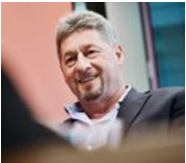
Peter Van Vlasselaer is a professionally trained immunologist who gained his initial startup experience at Dendreon in Seattle. He worked there for six years. In the 1990s, as an early employee and Vice President of Dendreon, he witnessed the failure of its prostate cancer immunotherapy. Subsequently, he joined InterMune, a small company based in Brisbane, California, where he served as Senior Vice President.
When he had the opportunity to become CEO of Avidia, a Mountain View, California-based company developing an IL-6 inhibitor for autoimmune diseases, he sold the company to Amgen for $380 million in 2006. This proved to be no fluke, as he achieved success again in his next entrepreneurial venture: Gilead Sciences acquired Arresto Biosciences, a developer of fibrosis-targeting antibodies, for $225 million.
During the turmoil at iPierian, he launched another entrepreneurial venture, Armo BioSciences, a biotechnology company based in Redwood City, California. Before the value of cancer immunotherapy assets surged, he and the Armo team were developing a recombinant IL-10 molecule from Merck, which researchers believed could activate cytotoxic T cells. Van Vlasselaer’s perspective on the evolving understanding of cancer immunotherapy is that “the entire field of immunotherapy has undergone so much transformation, and with new developments emerging today, I see this as a positive sign.”

Katrine Bosley is a family entrepreneur, so participating in startups and assuming related risks is commonplace for her. She began her career as a management assistant in the biotechnology division of a startup, gradually moved to a small company within the Boston biotechnology community (Alkermes), then joined the venture capital firm Highland Capital Partners, and finally settled at Biogen, a larger and more diversified mid-sized biotechnology enterprise.
Katrine Bosley has always been eager to grow. She began her career as Vice President of Business Development at Adnexus, a therapeutic company headquartered in Waltham, Massachusetts, until Adnexus was acquired by Bristol-Myers Squibb. Then, in April 2009, she took on her first CEO role at Avila Therapeutics, also headquartered in Massachusetts. The company had raised $21 million in Series A financing two years earlier and employed approximately 30 people.
In the post-financial crisis era, she helped the company secure its Series B financing. During this process, she inadvertently initiated the development of a covalent small-molecule inhibitor targeting Bruton’s tyrosine kinase (BTK). She led the company in collaborating with the Leukemia & Lymphoma Society on research and development, obtaining critical external validation from Clovis Oncology and Sanofi. Avila was ultimately acquired by Celgene in January 2012 for $350 million, including milestone payments of up to $575 million.
Like all entrepreneurs, Katrine Bosley is optimistic, but she is also unafraid to discuss risks and uncertainties. Life science startups must adapt to ever-changing circumstances. “You can’t just be comfortable with uncertainty; you must truly enjoy it,” says Bosley. “If there’s no rulebook or guide, do you know what to do? How do you build a team?” As a business strategist, she likes to organize her options into “tagged spreadsheets,” but Bosley notes that there is often more than one path to success for a startup.
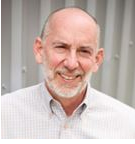
Randy Scott, co-founder of Incyte, Genomic Health, and Invitae, is one of the most respected entrepreneurs in the fields of genomics and genomic diagnostics. Incyte later evolved into a pharmaceutical developer, marking a significant shift from its original focus, and now boasts a valuation exceeding $16 billion. Randy Scott has demonstrated the capability to achieve such success, as work in genomics can generate immense value. His next venture was Genomic Health, based in Redwood City, California, which specializes in molecular diagnostic tests for breast cancer. Meanwhile, his recent joint venture, Invitae, headquartered in San Francisco, is conducting genomic testing for rare diseases, including cancer and cardiovascular conditions.
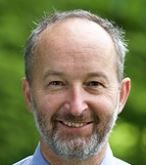
Dartmouth College Professor Gerngross established his reputation as a successful entrepreneur through the success of GlycoFi, a company primarily engaged in producing engineered antibody drug candidates in yeast. In 2006, Merck & Co. acquired GlycoFi for $400 million. Subsequently, Gerngross decided to pursue a different path to ensure that the antibody technology would not be sold off—a scenario that had occurred several times in the past. He co-founded Adimab, based in Lebanon, New Hampshire, with the vision of creating an independent antibody discovery company capable of developing its technology and licensing it to multiple partners.
It has now achieved this, establishing partnerships with more than 35 companies, and relevant reports have valued its market worth at over $1 billion. Gerngross also co-founded Arsanis and oversaw technology transfer initiatives at Dartmouth College to support academic laboratories.

Troy Wilson is a professionally trained chemist and lawyer, occupying a unique position at the intersection of science and business. In 2002, he realized his first entrepreneurial dream as a co-founder of Ambrx, a San Diego-based company. He spent four years there, leading Ambrx forward, and co-founded Intellikine, also based in San Diego, which was acquired by Takeda Pharmaceutical Company for $190 million in 2011. Today, he serves as the CEO of Kura Oncology, a cancer drug developer.
Troy Wilson stated that part of the enjoyment of running a startup stems from a passion for science, but identifying the right business opportunity at the right time is the key to entrepreneurial success. “Biotechnology is absolutely a team sport,” said Troy Wilson. “One of my strengths lies in recruiting top-tier talent, helping them set ambitious goals, and motivating them to meet or exceed those targets.”

Bruce Montgomery is a board-certified pulmonologist who, throughout his career, has primarily focused on developing therapeutics for cystic fibrosis. At Genentech, he contributed to the development of Pulmozyme. As an entrepreneur, he led a team in developing inhaled tobramycin. His company was acquired by Chiron Corporation (now part of Novartis) in 2000 for $700 million.
He was also the co-founder and CEO of Corus Pharma, another developer of inhaled antibiotics for cystic fibrosis. In 2006, Gilead Sciences acquired the company for $360 million. After serving in Gilead’s senior management for several years, Montgomery joined Cardeas Pharma to develop a novel antibiotic for ventilator-associated pneumonia. Clay Siegall, co-founder and long-time CEO of Seattle Genetics, once praised Montgomery as “Seattle’s top biotechnology entrepreneur.”
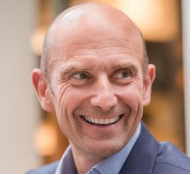
Philippe Dro has become one of Europe’s most successful serial biotechnology entrepreneurs. He served as Chief Financial Officer of Axovan, a Swiss company that developed endothelin receptor antagonists and was acquired by Actelion for $119 million in 2003. Subsequently, Philippe Dro joined Endoart, a developer specializing in remotely controlled implants for the treatment of morbid obesity.
As Chairman and CEO, Dro sold the company to Allergan for $97 million in 2007. Philippe Dro subsequently achieved greater success with Glycovaxyn, a conjugate vaccine company that was acquired by GSK last year for $199 million. He is now working at Themis Bioscience, an Austrian biotechnology startup specializing in the development of vaccines against infectious tropical diseases.
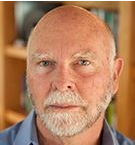
Sometimes, being a successful entrepreneur does not make one widely popular. Craig Venter is undoubtedly a titan in the field of biotechnology, yet he has many adversaries in academia. For instance, in the 1990s, he publicly criticized the National Institutes of Health for its inefficiency, asserting that the private sector could sequence the genome better, faster, and at a lower cost than government-funded projects. At Celera Genomics, Craig Venter first identified the initial genomics bubble, which generated substantial wealth for him and his company.
However, when Venter needed something different, he established his own research institute, the J. Craig Venter Institute in San Diego. Today, it employs 250 scientists and staff members. Meanwhile, he co-founded Human Longevity, Inc., a company that has set ambitious goals for the new era of genomic sequencing and is dedicated to applying this technology to longevity and health-related initiatives. In its Series B funding round this April, Human Longevity, Inc. raised $220 million.