

Robin Li Outlines Four Levels of AI Transformation in Healthcare at World Internet Conference
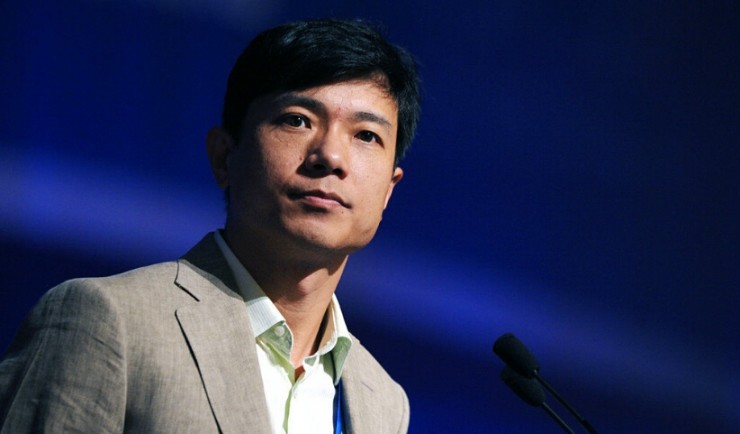
On November 16, at the 3rd World Internet Conference in Wuzhen, Baidu CEO Robin Li stated, “The era of mobile internet has come to an end... The next chapter of the internet will be artificial intelligence,” and added that every industry in the future will undergo tremendous changes due to the advent of AI.
In the healthcare sector specifically, he delivered a keynote address titled “Smart Healthcare: The Singularity Is Near” at the “Internet + Smart Healthcare” sub-forum on November 17, further elaborating on AI’s transformative impact on healthcare.
Li Yanhong pointed out that the development of artificial intelligence and big data in healthcare can be divided into four levels: intelligent triage through medical O2O, AI-assisted smart consultations, genetic analysis and precision medicine, and new drug development based on big data. He believes that from triage to new drug development, the singularity of AI-driven health big data is approaching.
Specifically, medical O2O primarily guides patients from online platforms to offline clinical settings.
Regarding intelligent medical consultation, Li Yanhong stated that Baidu previously collaborated with Peking University First Hospital, and the diagnoses provided by Baidu Doctor were 80% consistent with those of the hospital’s physicians. Furthermore, Baidu Doctor takes into account relatively rare conditions, which requires natural language understanding of patients’ descriptions.
In the healthcare sector, Baidu Doctor represents Baidu Brain’s application in health and medical services. In late September, Baidu launched Baidu Medical Brain, which uses machines to handle consultations for simple conditions and assists physicians in analyzing and organizing patient data.
Regarding gene analysis and precision medicine, Robin Li believes that this is the most exciting direction in the field of computer science in recent years. It is also the only area outside the IT sector that conforms to Moore’s Law, making it highly likely to yield revolutionary breakthroughs. Li pointed out that the biggest challenge in current gene-based therapies is that most diseases caused by known genes are monogenic disorders, which are rare diseases. In contrast, most common diseases are likely polygenic. Understanding which genes interact to cause these diseases requires substantial computational power. However, by leveraging artificial intelligence to analyze genomic and precision medicine data, and utilizing technologies such as gene editing, we can expect more significant breakthroughs in the treatment of common diseases.
Regarding new drug development, Robin Li expresses hope that artificial intelligence and big data can drive a transformation in the pharmaceutical industry. By leveraging big data and AI, computational simulations can model the drug development process, thereby reducing R&D costs and predicting drug efficacy.
Li Yanhong stated that he hopes to apply the computing power of hundreds of thousands of servers and the most advanced algorithms to the healthcare and health sectors.
Below is the transcript of Robin Li’s speech at the plenary session of the 3rd World Internet Conference:
Good afternoon, everyone! Today marks the 3rd World Internet Conference, and it is also my third visit to Wuzhen in recent years.
Since my last visit, I have felt that Wuzhen has undergone significant changes. The most noticeable one is the unusually warm weather this year; even outdoors, there is no need to wear a heavy coat. Of course, this is not a fundamental change. The fundamental transformation lies in the evolution of Wuzhen’s internet ecosystem.
Today, Wuzhen boasts ubiquitous, town-wide free Wi-Fi coverage, smart parking, intelligent healthcare services, and more. In just over two years, Wuzhen has transformed into a veritable “Internet Town.” Those of us working in the internet industry truly appreciate such rapid change and have grown accustomed to it.
In fact, during the decades of development in the IT industry prior to the internet era, rapid technological advancements and swiftly changing markets were constant companions. These changes brought all kinds of surprises to people, while also causing some degree of maladjustment. Some events might be perceived by many as black swan events, but I believe that there are certain inevitable factors behind their occurrence.
The two politicians mentioned earlier both discussed Trump’s election. While it may be regarded as a black swan event—an unforeseen occurrence—within the American elite, from the perspective of the internet, its outcome was in fact inevitable. On today’s internet and social media platforms, content that spreads most widely often includes conspiracy theories, fake news, and various forms of extreme emotional expression.
I believe Trump capitalized on the viral nature of internet communication, leveraging social media platforms such as Facebook and Twitter to garner substantial public support. These developments are, in fact, changes brought about by the internet, leading to what can be seen as an inevitable outcome.
I believe that U.S. internet and media companies have also recognized these issues, with many even joining forces to establish collaborative organizations and websites dedicated to teaching the public how to identify fake news online. For instance, a claim once circulated that “far more people attended Trump’s campaign rally than Hillary’s,” accompanied by a photo depicting a massive crowd. However, individuals familiar with internet tools could use a “reverse image search” to trace the photo’s origin, revealing that it was actually taken at a post-game gathering during a sporting event in the United States.
These changes in the Internet will profoundly impact our society and bring us many things we never imagined before. The topic I want to discuss today is that the Internet has entered a new stage. Two years ago, when I came to Wuzhen, I was still talking about how we adapt to the era of mobile Internet. Today, what I want to say is that the era of mobile Internet has come to an end.
My point is not that people will stop using mobile phones to access the internet in the future, but rather that if a company has not yet been established or scaled up today, it is no longer possible to become a unicorn by relying on the tailwinds of the mobile internet. This is because the market has entered a relatively stable phase of development, with internet penetration among the population already exceeding 50%.
When Baidu was founded, there were fewer than 10 million internet users in China. Today, that number has surpassed 700 million. We have been fortunate to grow alongside China’s internet market, evolving from a user base of minimal size to its current substantial scale. However, such opportunities will not be available in the future. So, where do the opportunities of the future lie?
I believe it lies in artificial intelligence.
Artificial intelligence has indeed surged in popularity since the beginning of this year, drawing widespread attention. Yet, what changes will it bring to each individual, every industry, and every nation? In my view, many people have not yet fully grasped these implications; however, whenever I contemplate these possibilities, I feel immensely excited.
For instance, Baidu’s autonomous vehicles are currently operating outside the Wuzhen Scenic Area, with multiple cars available for public rides and trial experiences. Just a year ago, these vehicles were merely displayed as static exhibits in showrooms; today, however, the public can experience the thrill of self-driving technology on open roads.
Take automatic translation as another example. Today, Baidu Translate already supports mutual translation among more than 20 languages across over 700 language pairs. In the coming years, it is easy to imagine that language barriers will be completely eliminated, potentially rendering current simultaneous interpreters obsolete.
There are many such possibilities, take the Internet of Things (IoT) for example. IoT was heavily hyped many years ago, but it has yet to truly take off. However, I believe its real breakthrough is just around the corner. In the near future, whether it’s your television or refrigerator at home, or even the chair you’re sitting on and the desk you’re using, you will be able to interact with them through natural language conversations. I feel that day is not far off either.
These are a few examples of B2C cases; in fact, there are greater possibilities in the B2B sector.
For instance, we can now leverage artificial intelligence to assist physicians in diagnosing a wide variety of patients. Some diseases are extremely rare, or under identical symptoms, there may be only a one-in-100,000 probability of a specific condition; in such scenarios, human doctors may not necessarily think as comprehensively as computers. Another example is the logistics system: currently, 40% of the large trucks on China’s roads are running empty. How can this efficiency be improved?
In fact, artificial intelligence and machine learning methods can provide significant assistance. For instance, customer service representatives in every company spend their days repeatedly answering a wide variety of questions. We can leverage AI-powered real-time speech recognition to identify customer inquiries and instantly prompt agents with the best practices demonstrated by top-performing customer service and sales professionals.
Therefore, whenever I contemplate these possibilities—whether in the consumer-facing (to-C) or business-facing (to-B) sectors—I feel a profound sense of excitement. This sentiment extends beyond myself; I believe that every individual present here, across every industry and every country, will witness transformative changes driven by the advent of the artificial intelligence era. We must reimagine everything—from each individual endeavor to every industry and market.
Thank you!
By Zhang Chi, Leiphone.com