

Wuhan Asia Heart Hospital: How a Private Hospital Drives Industry Collaboration

Legend Capital
Early-stage venture capital and growth-stage private equity investment institutions
On the afternoon of November 4, on the fifth floor of the Sheraton Wuhan Panhai Hotel, a group of people sat around a U-shaped table, all looking toward the speaker on the stage.
On stage, Ye Hong, CEO of Wuhan Asia Heart Hospital, was sharing with the audience the approaches and details of Asia Heart’s collaborations with innovative medical enterprises. His red shirt, worn under a black suit jacket, stood out prominently. On the table lay a product from Gairui, a partner company of Wuhan Asia Heart Hospital: Care U, a compact wearable ECG monitoring device.
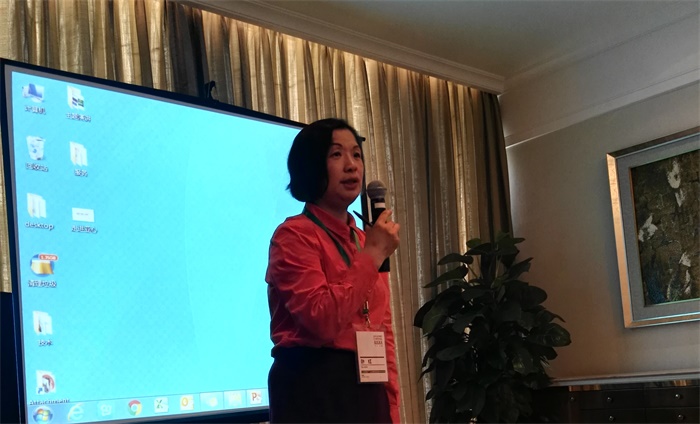
This is the “Into Asia Heart: Innovation and Collaboration Forum in Cardiovascular Care” hosted by Legend Capital. According to Ouyang Xiangyu, Managing Director at Legend Capital, the primary purpose of this event is to“Exploring the Possibilities of Collaboration Between Innovative Healthcare Enterprises and High-Quality Medical Service Providers”。
On November 11, 1999, Wuhan Asia Heart Hospital (hereinafter referred to as “Wuhan Asia Heart Hospital”) was officially established. With a strategy of “one platform, two core strengths,” the hospital has maintained its position among the top three in China for annual cardiac surgery volume for ten consecutive years since its inception, achieving a surgical success rate of 98%. Its annual volume of cardiac interventional procedures has ranked among the top ten in China for eleven consecutive years, with a success rate of 98.06%. These achievements have significantly enhanced the reputation of the Asia Heart brand.
Xie Junming, Chairman of Wuhan Asia Industrial Group, modestly stated, “Over the past 17 years, Asia Heart has achieved modest progress in the treatment of heart disease.”
“Close-Knit Collaboration”—How the Private Hospital Asia Heart Rose to Prominence
At its inception, although Wuhan Asia Heart Hospital established a leading disciplinary team known as the “Three Zhus,” comprising Academician Zhu Xiaodong, Director of Beijing Fuwai Cardiovascular Disease Hospital; Professor Zhu Guoying, a cardiology expert from Peking University First Hospital; and Professor Zhu Jiemin, an expert in cardiac imaging diagnosis from Peking Union Medical College Hospital, the hospital had virtually no recognition in Hubei Province at that time.
It was imperative to quickly raise awareness of Wuhan Asia Heart Hospital. At the time, large tertiary Grade-A general hospitals were skeptical about its prospects. Nevertheless, the hospital’s founding team persisted in visiting the directors of major university-affiliated hospitals across Hubei Province, ultimately earning their endorsement. The first batch of patients at Asia Heart Hospital were referred by these directors. This experience also led the hospital to recognize the importance of building relationships with physicians who directly manage patient care. Subsequently, the founding team, accompanied by President Zhu, visited and engaged with medical professionals in over 100 counties and cities throughout Hubei, establishing strong connections with doctors. In this way, Asia Heart Hospital’s inaugural external exchanges and collaborations were forged through these extensive outreach efforts.
If the collaboration at that time was “loose,” Wuhan Asia Heart Hospital has since found a more important “tight-knit” model of cooperation.
As a benchmark technology, technical research is being conducted in the departments of cardiology and cardiac surgery at nearly all Grade 3A hospitals. Furthermore, there exists a natural collaborative relationship between upstream and downstream entities within the public hospital system. Since all key resources are concentrated within public hospitals, Asia Heart Hospital must establish “close-knit” partnerships with these institutions, understand their organizational culture, and gain their recognition if it aims to achieve further growth.
Since 2007, Asia Heart Hospital has successively partnered with the School of Nursing at Jianghan University and Wuhan University of Science and Technology to establish the Asia Heart Hospital Nursing Branch, the “Asian Medical Center,” and the “Experimental Class for Undergraduate Cardiovascular Majors.” In 2014, it became the Asian Heart Clinical College of Wuhan University.
This “close-knit” collaboration is reflected not only in technology but also in operational management and service integration.
In December 2015, Wuhan Asia Heart Hospital and the First Affiliated Hospital of Shantou University Medical College jointly established a Joint Cardiac Surgery Center. The First Affiliated Hospital of Shantou University Medical College is a comprehensive Grade A tertiary hospital with strong capabilities in other disciplines; however, its Department of Cardiology performed fewer than 20 surgical cases annually. This collaboration aimed not only to secure technical support from Asia Heart Hospital but also to introduce its corporate management philosophy. A general manager and president responsibility system under the leadership of the board of directors was established: the president oversees medical quality, talent development, and disciplinary advancement, while the general manager manages hospital operations, resource allocation, and logistical support, with each party bearing distinct responsibilities while fostering mutual integration.
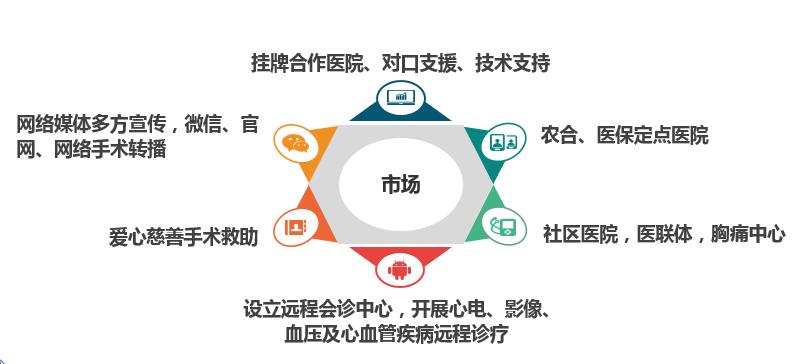
For Wuhan Asia Heart Hospital, it aims to expand its market influence through collaboration. This year,Wuhan Asia Heart Hospital alsoSigning Agreement with Dengzhou Central Hospital to Jointly Establish the Heart (Internal Medicine) Center, cardiovascular medicine and surgery departments in more than 40 hospitals in collaboration with Humanwell Healthcare Group, “Asia Heart Hospital hopes to establish close cooperation with lower-tier hospitals,” Asia Heart HospitalCEOYe Hong said, “Because we want to establish our own three-tier referral network platform to demonstrate the value of Asia Heart externally.”
Ye Hong stated that this year, Yaxin will accelerate its pace,Establish close partnerships with over 100 community health service centers in Wuhan, while also building self-operated clinics.. From close collaborations with secondary and tertiary hospitals to the “3+1” partnership model with family physicians at community health service centers, Asia Heart achieves win-win outcomes by continuously integrating resources and leveraging cooperative efforts. And in,2017In [Year], Yaxin Dunkou Hospital will also be completed and put into operation, with 1,200 beds.。
“Internet+”—What Drives Asia Heart Hospital’s Expansion?
Xie Junming said modestly,“17year,Asia Heart has accomplished two things: first, it has built its own brand; second, it has established a ‘medical translation platform’.
2Before the Chinese New Year,Yaxin purchased in Wuhan East Lake High-Tech Development Zone4Multi-story Factory Building,As the beginning of a medical translation platform.2Over the years,The Department of Surgery, led by Deputy President Tao Liang, has developed and manufactured the following products based on clinical experience: irrigated handheld monopolar high-frequency surgical electrodes, valved pulmonary artery conduits, and bovine pericardial bioprosthetic valves./Practical and user-friendly consumables such as patches.
“ThisPulmonary Artery Valved ConduitThat isBovine Jugular Vein Valved Conduit, with a morphological structure similar to that of the human pulmonary artery”Vice President Tao Liang“As I spoke, I unconsciously gestured with both hands, ‘It’s exceptionally easy to use. It can be employed as a valved patch or as a vascular conduit. It minimizes bleeding risk and can also serve as a patch material for repair.’”
Asia Heart via Medical Transformation PlatformCompletedAchieve cost reduction for low-end consumables; in the future, they hope to transition from low-end R&D to high-end mass production, building the platform into“Production, Education, Research, and Application”An integrated translational platform for cardiovascular medicine.
How Can the Research, Development, and Production of Medical Translation Platforms Gain Market Recognition? Wuhan Asia Heart Hospital Believes That It Is Essential to Leverage “Internet+”In fact, Wuhan Asia Heart Hospital has long been deeply engaged and strategically positioned in this area.。
2006Since [year], Wuhan Asia Heart Hospital has launched remote ECG and ambulatory ECG monitoring services, collaborating with institutions both within and outside Hubei Province.400Networked with multiple hospitals, with an annual volume of remote consultations reaching17000remaining cases; within and outside the province20We have partnered with numerous hospitals and institutions to provide remote imaging diagnosis services, and collaborated with Gairui Company to become a joint builder of the National Engineering Laboratory for Internet Medical Treatment Technology and Applications.
“Besides platform migration,We will seek collaboration in more areas in the future, such as insurance, tiered diagnosis and treatment, and primary healthcare services.”, Asia Heart HospitalCEOYe HongSay,“The road ahead is long, but we see great prospects.。”
Postscript
After the meeting, we visited Wuhan Asia Heart Hospital. In a corner of the clean and bright lobby, colorful floor mats had been laid out, with staff members arranging bedding. This area was deliberately set aside by the hospital to accommodate patients’ families from other regions and those unable to afford hotel accommodations. As we were leaving, a patient’s family member emerged after washing up and registered their overnight stay with the staff. Some individuals had already made their beds and settled down for rest, while a young couple cuddled beside a charging outlet. Several charging stations were available throughout the lobby.
Ample charging ports, an uninterrupted supply of hot water, and meticulously thoughtful details—these are enough to warm the hearts of patients and their families battling illness. The journey is long, the prospects are vast, yet we remain true to our original aspiration.