

DoctorHui Wang Jue: From Live-Streaming Doctor Community to Empowering Physician Productivity
From any perspective, Wang Jue should have experienced altitude sickness upon arriving in Silicon Valley. Although Palo Alto’s average elevation is only slightly over 1,000 meters, as one of the world’s fastest-growing hubs for internet development, it can still cause many entrepreneurs from traditional industries to suffer from “Silicon Valley Syndrome.” One manifestation is blind imitation, such as following Zuckerberg’s example by treating employees to pizza. The other is dismissive complacency, using news of Didi’s acquisition of Uber China to indulge in sentiments like “Only Chinese people truly understand Chinese people.”
Fortunately, Wang Jue recovered quickly. His residence in Palo Alto was not far from that of Lin Jun, editor-in-chief of Leiphone. On an evening during the National Day holiday, Lin Jun drove half an hour to chat with this group of entrepreneurs from China, focusing primarily on the development of artificial intelligence in Silicon Valley. Editor Lin, who spoke with great enthusiasm and fervor, clearly left a deep impression on Wang Jue. “When I returned, I told my team that we must definitely consider AI as our next direction.” He reached out to classmates and experts to explore the possibilities of medical AI. Two weeks later, his fever subsided.

“We still need to keep our feet on the ground and work pragmatically. Frankly speaking, this is somewhat distant from what we are currently working on.”
The “thing” Wang Jue referred to is the physician community they are currently building, with live streaming as its entry point. He began his career in pharmaceutical sales and once served as the head of Kunming Pharmaceutical Group’s Shanghai branch. This industry presents a stark contrast between external perceptions and internal realities: outsiders often assume that pharmaceutical companies reap huge profits, casually citing billions or even tens of billions in sales revenue. In reality, every single cent of that revenue is hard-earned by sales representatives and distributors. To cut costs and maintain confidentiality, many domestic pharmaceutical companies rent residential apartments in other cities for office use. As a result, Wang Jue was once suspected by his then-girlfriend—now his wife—of having joined a pyramid scheme, because he spent most of his time working from home and seemed never to have a proper office.
Wang Jue, who appears to be a down-to-earth grassroots entrepreneur, is in fact a graduate of prestigious universities and holds a master’s degree in economics from Boston University. He once studied under Zvi Bodie, a titan in the field of investment science. “My original dream was to make a mark in the financial sector, but due to a twist of fate, I ended up entering the pharmaceutical industry.”
Entrepreneurs from the pharmaceutical industry, like Wang Jue, are not in the majority in this wave of internet healthcare trends. In terms of recruitment and fundraising capabilities, industry insiders cannot compete with doctors and media professionals. Doctors who can write code are obviously more likely to attract investors' attention than pharmaceutical sales representatives. What people like Wang Jue understand best is still the logic they learned through years of hard work. Which links make money or lose money, on stage or off, these insights were ingrained into their subconscious during those years of bargaining.
For instance, drugs are sold to hospitals through distributors, and the inflated portion of drug prices has historically been covered by medical insurance. However, the primary challenge facing medical insurance today is cost containment. Consequently, the downward trend in drug prices has become inevitable, signaling that the traditional sales models of pharmaceutical companies are no longer viable. As a result, pharmaceutical firms are urgently seeking new approaches to influence physicians’ prescribing behaviors more broadly and at lower costs.
When this trend first swept into the pharmaceutical industry, Wang Jue had just extricated himself from a less-than-successful entrepreneurial venture. As his wife’s family owned the entire ceramic supply chain, her father urged him to return and take over the family’s ceramic business. Leveraging his ingenuity, Wang introduced 3D printing technology from Germany, enabling customers to design their own ceramic products. A single set of tableware could fetch prices as high as RMB 2,000–3,000.
“The failure wasn’t due to an inability to make money, but rather the inability to scale.” Caught between the disappearance of the demographic dividend and fierce price wars at the consumer end, the labor-intensive ceramics industry was inevitably incapable of supporting his ambitions. A year later, he resolutely decided to terminate this venture and returned to the broader health and wellness sector. “I once thought the pharmaceutical industry was tough, but in reality, the ceramics industry is even more challenging. The biggest lesson I learned from that entrepreneurial experience is that choosing the right industry is paramount. If you pick the wrong industry, no matter how talented or capable you are, your efforts will be in vain.”
The industry he spoke of so highly was internet healthcare. Another significant factor that prompted his entry into this field was finding a like-minded university classmate, Wang Siyang. Wang Siyang hails from a long-established private conglomerate in Hangzhou, and his family possesses substantial pharmaceutical industry resources within China. In March 2015, the two old classmates, having been out of touch for over a year, met in Shanghai. Over a hotpot meal and a few bottles of alcohol, they finalized their “grand plan” to jointly venture into the internet healthcare sector.
However, the two colleagues from industry did not choose to venture into business directly.“It took us six months just to conduct the research. We have been continuously exploring the optimal entry point. The key challenge lies in integrating the high-frequency, standardized nature of the internet with the highly regionalized and specialized characteristics of healthcare; thus, identifying the right entry point is critically important.”Finally, they chose to enter the market through a physician community focused on doctor-to-doctor communication.
In November 2015, Wang Siyang and Wang Jue launched their first product, “Medical V Live,” pioneering the concept of live-streamed professional exchanges among physicians within the industry. Capitalizing on the rising trend of live streaming and leveraging WeChat’s traffic dividends, they established a physician community spanning WeChat, PC, and mobile apps within a year. The platform has amassed over 400,000 registered physicians, ranking among the top in China in terms of both daily active users and total user base.
As their reputation in the industry has grown, many peers now immediately associate their product with a live-streaming communication platform for physicians. However, Wang Jue is reluctant to have his company defined merely as a live-streaming or educational platform. He believes that education runs counter to human nature, and live streaming represents a relatively burdensome requirement. While physicians do have some demand for video-based live communication with their peers, the frequency is unlikely to increase significantly—even once a week may be considered too frequent.
“The window of opportunity for live streaming will not remain open for long; we must pivot quickly.” Since April this year, Wang Jue has been contemplating the transition from a live-streaming platform to a content community. Doctors’ demand for live streaming is, at its core, a demand for medical content. While there are numerous competing products and no shortage of content in the market, the key differentiator lies in scenario-based content design. Guided by this insight, Wang Jue integrated essential content that physicians need to monitor closely—such as medical news, industry updates, and case studies—into his product according to usage scenarios. Operations during the morning and lunchtime hours were designed around lightweight content, while high-intensity live streams were scheduled for the evening. After nearly six months of transformation, Wang Jue’s platforms, “Doctor Hub” and “Medical V Live,” have fully evolved into comprehensive physician communities featuring live streaming as a distinctive characteristic.
“Our logic for internet healthcare differs from that of our peers: we do not view it from the demand side, but rather from the payer’s perspective.” In fact, the demand side (patients) and the payer side (insurance) in healthcare have always been separate, which is a highly distinctive feature of this industry. However, who ultimately pays for medical services is a question often overlooked by entrepreneurs in this field.
Difficulty in charging C-end users is a problem faced by both Chinese and American Internet healthcare companies.
Kurbo is an internet healthcare company in Silicon Valley, USA, invested in by Wang Jue’s investors. During this trip to Silicon Valley, Wang Jue made a special visit to the company. Founded in 2005, it initially provided weight-loss solutions for obese children. Through services such as short videos, meal plans, and meal replacements, it rapidly acquired a large user base. However, like other companies in this sector, it faced the challenge that users were accustomed to free content and were not easily converted into paying customers.
To this end, Kurbo took a different approach. The founders observed that military families in the United States often have a tradition of service inheritance: if the father served as a soldier, the son is highly likely to enlist as well. However, with the rising average weight among millennials, an increasing number of children are becoming ineligible for military service upon reaching adulthood. Consequently, the company partnered with the military to promote its product within military families through a B2B model, where the military covers the costs and provides subsidies.
“Consumer-facing services and business-to-business operations seem to be the norm in U.S. mobile health projects.”This logic also appeared to be validated during Wang Jue’s visit to another sibling mobile health company, Neurotrack. As a rising star among Silicon Valley’s mHealth startups, Neurotrack counts Peter Thiel—the renowned investor and author of *Zero to One*—as its angel investor, while its founding team includes former White House staff from the Clinton administration. In conversations with Neurotrack’s founders, Wang Jue discovered that even for a project like Neurotrack, which boasts breakthrough technology but has not yet been commercialized, the founders adhered to the “B2B business” logic in designing their business model, seemingly never considering charging end consumers (C-end users).
It is not only in the field of internet healthcare that Wang Jue has observed a shift; in fact, he has found that in Silicon Valley, companies previously well-known for their To-C (consumer-facing) services are gradually reverting to a To-B (business-facing) business logic. A prime example is Evernote. Compared to individual consumers accustomed to free services, enterprise users are more willing to pay for stable service. Consequently, while Evernote initially adopted consumer-oriented messaging in its product design and branding, it has continuously integrated more workplace-focused features with each version iteration, such as business card scanning, LinkedIn integration, the launch of smart scanners, and document sharing. If document organization merely manages “what you know,” then linking with LinkedIn allows Evernote to further manage “who you know.” This encourages individual users to introduce the product into their work environments, facilitating a transition from individual use to small-business adoption, and ultimately influencing entire organizations. After implementing this strategy, Evernote’s revenue quickly tripled.
“Many internet professionals, when entering the healthcare sector, initially apply a user-centric mindset: striving to provide exceptional service to users. However, no matter how well you cater to users, you cannot generate profits, because users are not the primary payers.”Wang Jue believes that a ToC-facing model with a ToB revenue structure will become a mainstream approach in internet healthcare. However, the challenge lies in clearly defining the logic that integrates ToC services with ToB payment mechanisms. Without clarity on this point, even if the solution addresses genuine needs, it will not evolve into a profitable company.
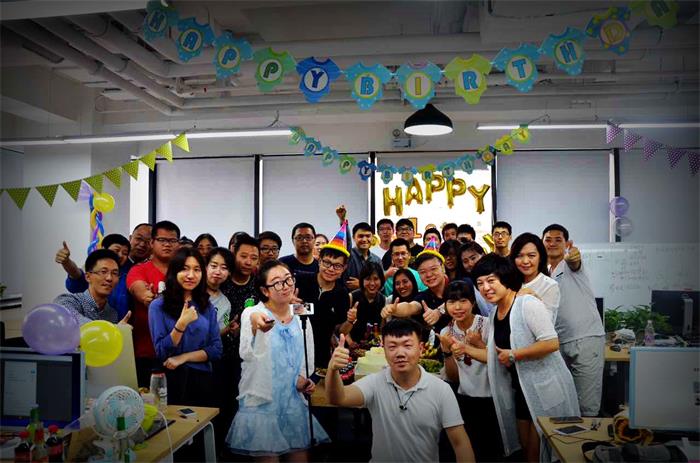
A month has passed since the trip to Silicon Valley, and the “syndrome” has gradually subsided, but Wang Jue has become even more resolute in his vision. Previously, when asked what the company did, most employees would say they were engaged in live streaming or building a medical content community. Upon returning from Palo Alto, he defined the company’s overarching mission: to liberate physicians’ productivity.
Of course, he would not give up any attempt made for this mission, even if it involves AI that is still far from their reach.
By Ji Wenyi