

Soaring Prices of Lifesaving Drugs and Pharma's Illusion of Discounts: Can Trump Deliver Real Solutions?
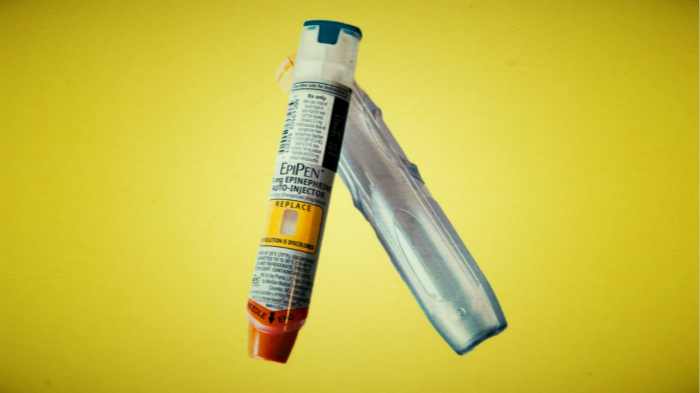
This September, Heather Bresch, CEO of Mylan Pharmaceuticals, and Doug Throckmorton of the U.S. Food and Drug Administration (FDA) testified under oath before the House Committee on Oversight and Government Reform at a hearing investigating drug pricing, specifically addressing the price increase of Mylan’s product, EpiPen. EpiPen, an epinephrine auto-injector, is an essential medication for individuals with severe allergies; however, its price surged from $56.64 to $317.82 over just nine years, representing a 461% increase.
This issue has recently drawn widespread attention because Heather Bresch, the CEO of Mylan Pharmaceuticals, is the daughter of Joe Manchin, a U.S. Senator from West Virginia. Moreover, Heather Bresch was exposed for significantly raising the prices of more than 20 drugs under her company’s portfolio, while her own compensation surged by 672%, thereby sparking public outrage across the United States.
Now, a growing number of people believe that Mylan has been leveraging its monopoly position to raise prices and stifle competition in the pharmaceutical market. Data from IMS Health shows that EpiPens accounted for 89% of the market share for epinephrine auto-injectors last year.
In response to this matter, Representative Elijah Cummings (D-Md.), a member of the U.S. House Committee on Oversight and Government Reform, stated that the hearing would have little practical significance in changing the status quo, and that Mylan was merely going through the motions and would soon revert to its previous practices.
The effect of Congress publicly pressuring pharmaceutical executives on the routine practice of high pricing has been no better than a placebo for the public; that is, while it may provide superficial reassurance, it fails to address the root cause of the problem.
AtOver the past two years, House and Senate committees have issued more than a dozen subpoenas to drug manufacturers responsible for price hikes., collected hundreds of thousands of documents, and conducted over 16 hours of public hearings with pharmaceutical company executives.
However, according to the Associated Press, data from Truven Health Analytics shows that among nearly 30 patented and generic drugs targeted for review by congressional investigators, most did not appear on the list of drugs with price increases since undergoing federal scrutiny. This data is sourced from Truven Health Analytics.
“They will never make changes on their own, but will continue to spare no effort in exploiting the American public unless Congress takes legislative action to control drug prices,” said Cummings.
According to the Associated Press, unlike most other countries in the world,U.S. authorities do not regulate drug prices. Although some members of Congress have exerted pressure, the actual measures they can take are very limited. This means that pharmaceutical companies, like other general enterprises, can essentially implement free pricing in line with market demand.
Since Congress cannot pass legislation to alter drug prices in accordance with the wishes of pharmaceutical lobbyists, lawmakers are left with no choice but to summon executives before committees.
With the assistance of Representative Cummings, Congress launched its latest round of scrutiny against pharmaceutical companies in the fall of 2014, issuing multiple letters to manufacturers whose drug prices had surged rapidly. However, these efforts yielded no tangible results in curbing price hikes. Since then, the Associated Press has tracked 29 drugs specifically cited in congressional letters or hearings. Of these, 22 showed no change in their list prices, two even increased, and only five saw price reductions—all of which were for medications with relatively low public demand.
In the face of public outcry, executives at these pharmaceutical companies have devised tactics that appear to quell public anger without actually lowering prices. In September, under questioning from Representative Cummings and other lawmakers, Mylan CEO Heather Bresch announced that the company would issue coupons to consumers, reducing the out-of-pocket cost of EpiPens for insured patients by up to $300. While these coupons lower patients’ out-of-pocket expenses, the amount billed to insurers remains $608 for a two-pack. Since 2007, the price of a two-pack of EpiPens has risen by more than 500%.
What is most infuriating is that after Turing Pharmaceuticals in the United States acquired the exclusive rights to Daraprim, a basic medication for treating parasitic infections in patients with AIDS, it raised the price from $13.50 per tablet to $750 per tablet, an increase of 5,456%. To quell public outrage, the company’s former CEO, Martin Shkreli, promised to reduce the pill strength and lower the price. However, not only did he fail to fulfill his commitment to lower the price of the anti-infective drug Daraprim after the 5,000% hike, but his company also offered hospitals sliding-scale discounts and introduced a new 30-tablet bottle priced at $22,500 to replace the original 100-tablet bottle priced at $75,000. In effect, the average price per tablet remained unchanged at $750.
Robert Weissman, president of the U.S. public interest advocacy group Public Citizen, stated, “The pharmaceutical industry has inadvertently created a highly complex and opaque pricing system. While they appear to offer discounts to consumers, creating the illusion of lower drug prices, this superficial price reduction does not actually impact manufacturers’ profit margins.”
Even though corporate leaders appear to pledge and vow to lower prices, this has never truly been realized.
Last April, U.S. billionaire investor Bill Ackman admitted in his testimony before a Senate committee that Valeant Pharmaceuticals had implemented a widely criticized strategic plan: acquiring drugs with market potential and then raising their prices by 3,000% for resale. After Michael Pearson, the company’s then-CEO, stepped down, Ackman pledged to leverage his influence on the board of directors to attempt reforming its pricing strategy.
Pershing Square, the fund under Ackman’s name, is Valeant’s largest investor. “Many things are going to change,” said Ackman. Price cuts are also imminent for Nitropress and Isuprel, two heart disease drugs acquired by Valeant that had previously seen price hikes of 525% and 212%, respectively. “You will see us take concrete action on the pricing of these medications within a few weeks, or hopefully sooner, and the prices will be significantly lower than they are now,” Ackman promised. However, reality fell far short of his promise: Valeant’s list prices remained unchanged, with the company merely expanding its existing hospital discounts to 40%.
“This sounds good, but when you raise the price by more than 500% and then offer a 40% discount, the profit margin is still shocking,” said Scott Knoer, Director of Pharmacy at Cleveland Clinic, sarcastically.
Valeant stated in a release that discounts recommended by its internal drug pricing committee had sparked public outrage over its prices. In response, Ackman’s spokesperson declined to comment.
The pharmaceutical company believes that,The prices on this list are artificially inflated; because insurers negotiate with manufacturers, discounts are granted to insurers, meaning the actual drug prices are not that high.. However, pharmaceutical manufacturers do not disclose specific discount amounts, making it difficult for the public to ascertain the actual drug prices.
Experts studying drug pricing state that offering discounts to insurers, rather than implementing steep price cuts, allows pharmaceutical manufacturers to retain greater market control and revenue.
Richard Evans, an analyst at Sector and Sovereign Research, believes that pharmaceutical companies set different prices for different customers based on their respective market shares, allowing them to subtly customize their pricing strategies. Evans further noted that while congressional scrutiny has prevented the most extreme price hikes (typically exceeding 100%) once planned by companies such as Valeant, the broader industry trend of annual price increases (usually over 10%) continues to drive inflation in drug prices, placing significant pressure on patients and hospitals.
Cummings and his investigative partner, Vermont Senator Bernie Sanders, unveiled a new strategy earlier this month that they believe would exert greater pressure, at least in cases where companies have engaged in illegal activities. Rather than launching yet another congressional investigation, the lawmakers are calling on the Department of Justice to investigate potential price-fixing networks among pharmaceutical companies.
According to Bloomberg, Bernie Sanders, in his latest crackdown on the pharmaceutical industry, has called on the Department of Justice and the Federal Trade Commission to conduct a thorough investigation into direct price-fixing collusion among the three major insulin manufacturers. Sanders and Representative Elijah Cummings (D-Md.) argue that the prices of insulin sold by Eli Lilly, Sanofi, and Novo Nordisk have been on a consistent upward trend for several years. They cited a recent analytical report finding that insulin costs tripled between 2002 and 2013, rising from $231 per patient annually in 2002 to $736. Meanwhile, the lawmakers presented 13 cases demonstrating that Sanofi’s and Novo Nordisk’s insulin brands have increased their prices in lockstep since 2009. They further alleged that Eli Lilly has engaged in similar practices, termed “shadow pricing.”Between 2002 and 2013, prices across the entire pharmaceutical industry rose by more than 300%.
Despite widespread calls for the U.S. Congress to enact legislation curbing drug price hikes and the proposal of new long-term strategies to prevent further increases in pharmaceutical prices, Congress has thus far failed to pass relevant bills amid intense lobbying by pharmaceutical companies. Statistics show that last year, drug manufacturers and related healthcare companies spent at least $235 million on lobbying efforts aimed at securing lawmakers’ votes, a figure that surpassed that of any other industry.
From another perspective, the outlook is also far from optimistic. Investors appear to believe that the victory of Donald Trump and the Republican-controlled Congress has made the prospects for drug price reform even slimmer. Although Hillary Clinton of the Democratic Party had vowed to curb rising drug prices before Trump took office, pharmaceutical stocks lagged behind the broader market throughout the year until the end of the general election. Amid the severe turmoil in global financial markets following the announcement of the election results, U.S. equities stabilized. Across various sectors,Biopharmaceutical Stocks Show Particularly Strong PerformanceOn the trading day following the announcement of the general election results on November 9, XBI surged by 10.76%. This indicates thatThe pharmaceutical industry has now clearly outperformed the market.
During the election campaign, Trump proposed “healthcare reform to make America great again” and pledged to repeal the Affordable Care Act introduced by Obama. In addition to planning to dismantle the existing Obamacare framework, Trump intended to introduce free-market mechanisms into the healthcare industry to drive reform. However, Trump did not elaborate extensively on controlling U.S. drug prices. He did suggest allowing American consumers to import cheaper medications from overseas, but pharmaceutical executives argued that this proposal would not work, as many foreign drugs fail to meet the safety standards required in the United States.
Going forward, lawmakers are expected to continue publicly criticizing pharmaceutical manufacturers, though likely merely to appease voter sentiment. According to a recent survey by the Kaiser Family Foundation, most Americans believe that lowering drug prices is the most critical healthcare issue that the next president and Congress should address.
Drew Altman, chairman of the nonpartisan Kaiser Family Foundation, stated that the most pressing question at present is whether efforts to lower drug prices will continue to rely primarily on discussions and hearings, or whether they will ultimately translate into concrete legislative action. At this stage, the pharmaceutical industry has adopted a Muhammad Ali-style “rope-a-dope” mentality, passively enduring the pressure while awaiting the outcome.