

Third Eye Health Secures $1M Funding to Expand Remote Emergency Care Platform
Third Eye Health is a comprehensive telehealth service provider founded in 2014. Headquartered in Chicago, it is a portfolio company of the local healthcare incubator Matter. The company specializes in applying its platform to use cases such as remote command centers and other remote diagnostics. Recently, it secured $1 million in funding from TLSG. The proceeds are primarily intended to expand its customer base, including hospitals and manufacturers of long-term care facility equipment, with the aim of reducing unnecessary hospitalization costs.
“Since receiving Healthbox’s seed investment last February, the company has been accelerating its sales and marketing efforts while seeking new strategic footholds in the delivery of new technologies,” said Daniel Herbstman, founder and CEO, in an interview with MedCity News.
Third Eye Health’s core technology leverages a HIPAA-compliant mobile platform to extend the reach of healthcare providers. By utilizing medical-grade smart glasses and other connected devices (such as watches), it enables the sharing of video, audio, and text data. As a pioneer in this field, the platform ensures real-time, secure, and rapid data transmission. Leveraging telemedicine technologies, it supports real-time online consultations for healthcare institutions, emergency medical service vehicles, and patients’ homes.
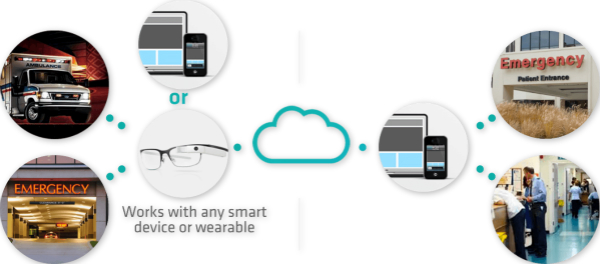
Third Eye Health Provides Comprehensive Telemedicine Solutions with Integrated Hardware and Software
What Are the Effects of Combining Telemedicine with Wearable Devices? Northwestern Medicine, a healthcare institution in the Chicago area, has equipped some of its frontline care providers with smart glasses installed with Third Eye Health software to enable rapid consultations with in-house specialists and determine optimal treatment plans for stroke patients. Dan Herbstman stated, “You can truly provide healthcare professionals with first-hand perspectives, all while keeping their hands free to deliver continuous, uninterrupted patient care.”
Harish Shownkeen, MD, Medical Director of the Northwestern Medicine Neurovascular and Stroke Program, explains that while emergency personnel use a triage system to assess stroke patients at the scene, neurologists employ a more detailed evaluation protocol. This allows for a more precise determination of the evolving severity of the stroke and the corresponding level of urgent care required.
The application of medical wearable devices has made a significant difference in improving the quality of healthcare services. For instance, while emergency responders are providing on-site care, neurologists at the hospital (away from the emergency scene) can conduct precise assessments, determine the severity of a patient’s stroke, and prescribe intravenous thrombolytic therapy. As the patient is being transported by emergency personnel, the thrombolytic medication is already prepared at the hospital.
The current situation is characterized by a shortage of specialists, hospitals’ inability to provide 24/7 emergency services, and relatively high costs. Consequently, it is difficult for patients to obtain timely on-site consultation during critical emergencies such as stroke, heart attack, trauma, and other urgent conditions that require immediate life-saving intervention.
Current solutions have limitations. Telephone diagnosis cannot replace visual patient assessment, and current emergency care telemedicine solutions are highly inefficient and costly. In most cases, use is limited to hospitals due to lack of mobility.
Daniel Herbstman stated: “Our inspiration stems from our experience and the providers we have encountered. We recognized the need for a private and secure platform that enables seamless consultation across medical facilities and data, both within and outside hospitals. We aim to connect emergency medical service vehicles, hospitals, and even patients’ homes, thereby breaking down the barriers imposed by hospital walls.”

Third Eye Health Founding Team
Third Eye Health’s private, secure platform enables healthcare providers to conduct real-time consultations both within and outside the hospital—including in emergency medical service vehicles and patients’ homes—thereby facilitating rapid treatment decisions, improving patient outcomes, and helping hospitals reduce costs while increasing revenue.
However, experts note that expanding the use of medical wearable devices beyond the testing and trial phase is no easy task, as their integration into clinical practice faces numerous challenges. Steve Collens stated that the first challenge is developing more technologies proven to be safe and reliable in real-world applications. Users must also ensure they have the necessary infrastructure to support wearable devices, such as secure Wi-Fi connectivity and sufficient bandwidth. The second major obstacle is the uncertainty over who will bear the cost of these new technologies.
“Previously, we primarily collaborated with hospitals, but moving forward, we will strengthen our partnerships with nursing homes to reduce the likelihood of patients needing hospital care. Any type of issue could lead these patients to seek hospital treatment, including chronic conditions such as congestive heart failure and chronic obstructive pulmonary disease (COPD). However, some conditions can be managed through telemedicine consultations and preventive care,” said Herbstman, CEO of Third Eye Health.
Third Eye Health plans to release data on research findings with its partners in the first quarter of 2017, Herbstman said.