Genalyte Secures $36 Million Series D Funding to Advance 'Drop-of-Blood' Diagnostic Platform Following Theranos Collapse
With just a small amount of blood, rather than several vials drawn via venipuncture, medical experts can perform dozens of tests and obtain results within minutes. This sounds familiar, as it was precisely the claim made by Theranos before its downfall amid widespread exposure. So, has this technology been completely relegated to the realm of fantasy?
Answer upfront: Its potential still exists.
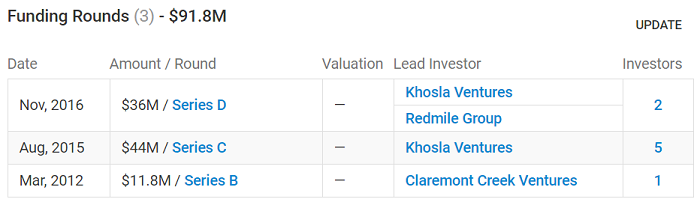
A San Diego-based company called Genalyte began working to bring this technology to fruition long before Theranos emerged. On November 21 (U.S. time), it secured $36 million in Series D financing, led by the prominent tech investment firm Khosla Ventures and Redmile Group, a hedge fund focused on healthcare investments.
It now appears that Genalyte will outlast the notorious, defunct unicorn Theranos; however, it is not merely the latest major investment from large venture capital firms that demonstrates Genalyte’s greater viability. In stark contrast to Theranos, Genalyte has never used “trade secrets” as a pretext to conceal technological shortcomings, boasting instead a robust medical background and having published tangible research findings.
The company’s vision is to condense the entire routine blood testing process into a 15-minute, painless procedure, allowing patients to receive results directly in the doctor’s office, thereby fundamentally transforming the interaction between patients and physicians.
“We deliberately decided to keep the company lean, focusing on overcoming technical challenges and only considering next steps once a problem was resolved. For medtech companies like ours, a major strategic mistake is rushing to expand the company’s size while key technologies fail to keep pace,” said Cary Gunn, Founder and CEO of Genalyte.
Gunn is so confident in this regard because their core technology has been refined over a long period, and the company’s business has grown steadily on this foundation. They spent nine years leveraging the company’s specialized electronic engineering expertise to develop a patented silicon wafer, known as the “Maverick Detection System,” which can detect macromolecules in crude oil.
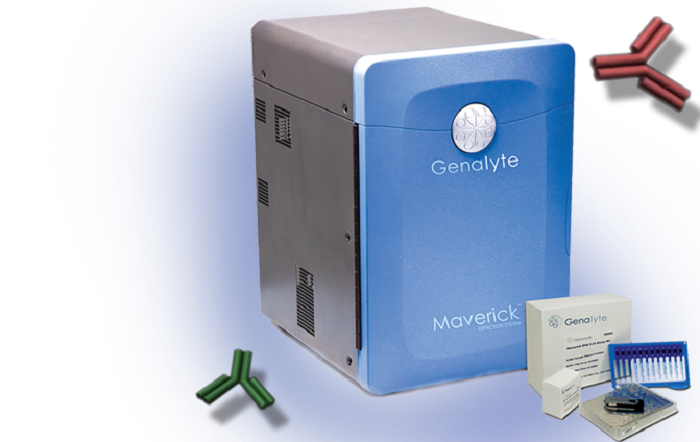
Maverick Detection System
And now, they have harnessed the ergonomic potential of this silicon wafer technology and are seeking U.S. Food and Drug Administration (FDA) clearance through the necessary clinical trials. The entire process may take several years, but early studies have already yielded promising results.
On November 12, Genalyte presented updates from two clinical trials at the American College of Rheumatology (ACR) Annual Meeting, comparing the diagnostic performance of its Maverick Detection System with that of standard laboratory tests. The data demonstrated that “Maverick’s blood test results showed high concordance with serological test results that have been widely used for many years.”
As the technical controversies surrounding Theranos came to a head, people couldn’t help but wonder: Is the appealing vision of performing multiple precise tests from a single drop of blood truly achievable? To some extent, this skepticism is well-founded. Gunn noted that the volume of blood obtained via fingerstick is very limited, and it contains a significant proportion of wound exudate and tissue debris, which can substantially interfere with blood test results. To ensure accuracy while minimizing blood draw volume, Genalyte’s goal is to complete testing using “10 drops of blood.”
Genalyte believes that 10 drops of blood are sufficient to dilute impurities in the blood sample. In fact, the Maverick system requires only 10 microliters of blood to activate all 128 sensing elements on a silicon chip. The Maverick chip is equipped with an array of photonic sensors capable of identifying various proteins or biomarkers through their unique mechanisms. “The silicon chip allows observation of chemical reactions as they occur, enabling monitoring whenever two molecules bind. Therefore, it is applicable to virtually countless types of assays.”
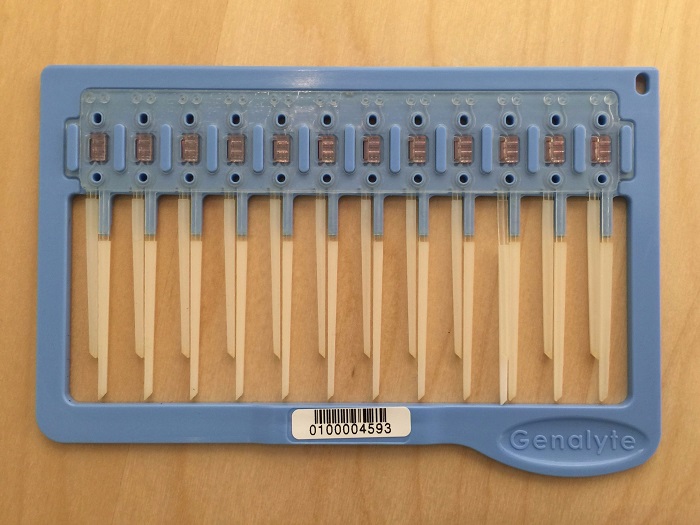
Multiple wafers are installed on the Maverick device, each capable of simultaneously measuring 128 parameters.
With only a small sample volume and multiple sensing elements capable of parallel detection of different analytes, the Maverick system can readily deliver results within 15 minutes. Furthermore, the Maverick system eliminates the need for additional steps to highlight specific proteins of interest, thereby avoiding the cumbersome procedures of adding reagents and labels required in conventional assays.
“The sensing elements are extremely small; twelve of them can fit on the cross-section of a single human hair,” Gunn explained. “This means we can perform tests using only minute amounts of protein and blood.”
The technology has already been applied in testing scenarios such as DNA sequencing, but Genalyte aims to address another unmet need: protein biomarker detection. Their primary focus is on rheumatology research, a field that has long lacked innovative technological advances and corporate support.
For patients with autoimmune diseases such as systemic lupus erythematosus and rheumatoid arthritis, all subsequent treatment decisions are based on complete blood count (CBC) results. However, patients face the inconvenience of having to make two separate visits to obtain these results. First, patients schedule an appointment with their doctor due to discomfort, which may be caused by a common cold or a flare-up of their autoimmune disease. They then undergo blood sampling and return home to await the results. Several weeks later, they must schedule a second appointment to receive the test results, at which point a treatment plan can finally be formulated. By this time, the management of their condition may have already been significantly delayed.
Gunn believes that while in-depth laboratory testing will always be necessary, it is entirely unnecessary for patients to make two separate visits for most such routine tests; why not have them completed in a single visit at the physician’s office?
Genalyte’s pioneering technology is designed for the detection of antinuclear antibodies (ANAs). ANAs are autoantibodies produced by the immune system when it mistakenly attacks the body’s own healthy cells, a process observed in several autoimmune diseases. Moving forward, Genalyte also plans to develop products to determine whether an autoimmune disease is in an active flare-up phase.
“We will start with rheumatology and immunology, but this is merely an entry point,” said Gunn. “What is destined to happen will eventually come to pass. Medical diagnosis will inevitably move toward decentralization; testing centers will not hold a monopoly forever. Routine laboratory tests will one day become simple tools used by physicians, helping to bridge the gap between doctors and patients.”
Genalyte has achieved numerous milestone accomplishments step by step, relying on its own capabilities rather than hype. In stark contrast, Theranos, a company with seemingly similar business operations, experienced a dramatic rise and fall under the spotlight. Although the Theranos fraud has eroded public confidence in “finger-prick blood testing,” Genalyte is confident in restoring trust in this technology and has shared its perspective on Theranos.
Founder Gunn stated that they believe “dried blood spot testing” technology holds promise because Genalyte has already demonstrated its viability. Today, anyone walking into Genalyte can provide a small finger-prick blood sample, and a comprehensive panel of tests can be completed within minutes. The remaining challenge lies in navigating the regulatory approval process and commercializing the product appropriately.
He also shared Genalyte’s insights drawn from the Theranos fiasco: all diagnostic services, and indeed all medical services, should be patient-centric rather than revolving around the deification of founders. When a company’s mission is to act in the best interests of patients, it will naturally also serve the interests of physicians, hospitals, and other stakeholders. This is the right approach to building a robust business framework.
Gunn stated that the company’s early financing came from angel investors in San Diego, but as its products gradually gained market validation, it attracted an increasing number of investors from Silicon Valley. He also revealed that the latest round of funding will be used to refine the company’s diagnostic technologies and drive the first batch of testing technologies toward FDA compliance.
Khosla Ventures and Redmile Group, which invested in Genalyte this time, both participated in the company’s $44 million Series C financing round in 2015. To date, Genalyte has raised a total of $91.8 million.