

Exclusive Interview with HeHuan Medical CEO Li Yu: Enabling Seamless Doctor-to-Doctor Collaboration Through D2D Platform
Currently, mainstream internet healthcare solutions are user-centric, whether they involve online medical consultations or offline medication delivery services. However, the entire healthcare system actually comprises three key components: physicians, patients, and pharmaceuticals. If patient needs are viewed as demand, then physician resources represent supply. Merely stimulating patient demand cannot resolve the shortage of medical resources; therefore, reforming the “supply side” is undoubtedly the optimal solution.
Hehuan Medical is doing precisely this: connecting high-quality expert resources with physicians at primary care hospitals. By providing remote expert consultations, it “empowers” and “extends trust” to primary care physicians, enabling patients to receive diagnosis and treatment for serious conditions and access specialist medical resources and treatment plans at their local primary care hospitals. This addresses the mismatch in medical resource allocation and achieves a “supply-side” reform in healthcare.
VCBeat (WeChat ID: vcbeat) conducted an exclusive interview with Li Yu, CEO of Hehuan Medical. A veteran of the internet industry who previously served as Executive Vice President of a Chinese company listed on the New York Stock Exchange, Li shared his unique insights into internet healthcare and mobile health. The Doctor-to-Doctor (D2D) mobile collaboration model represents both his solution to the current imbalance in medical resource distribution and the first step toward realizing his vision of fundamentally improving how patients access medical care.
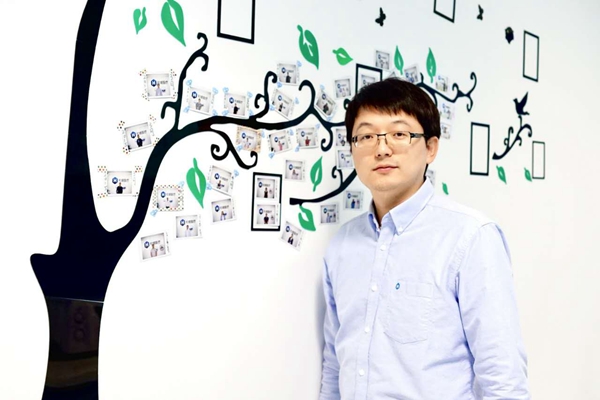
Li Yu, CEO of Hehuan Medical
Li Yu’s prior experience at internet companies has conditioned him to approach problems by focusing on market dynamics and the “pain points” of target users. Applied to the healthcare sector, the most prominent issue is the uneven distribution and misallocation of medical resources. “Ten percent of specialists handle forty percent of patient cases; everyone is vying for appointments with these specialists, leading to a shortage of specialist resources while primary care resources remain underutilized or even wasted.” The fundamental contradiction in healthcare is not merely the difficulty or high cost of accessing medical services. A wave of internet healthcare enterprises that emerged earlier has largely addressed how patients access care—for instance, through online medical consultations and appointment scheduling, pre-consultation guidance, and post-consultation follow-ups. More directly, some even offer medication delivery and online diagnosis and treatment, meaning minor ailments can be resolved without visiting a hospital. So why are higher-quality hospitals still overwhelmed by patients, and why do appointments with specialists remain scarce despite transparent and open booking systems?
The fundamental issue is that patients’ mindset toward seeking medical care has not changed. Internet-based healthcare serves to connect patients with medical resources, a linkage that should encompass both connections with specialist resources and those with primary care physicians or clinics. Hehuan Medical aims to address the mismatch between patients and providers by linking specialist resources with primary care physicians, thereby “empowering” and “accrediting” the latter. This enables patients to receive diagnosis and treatment at primary care institutions while gaining access to expert medical opinions.
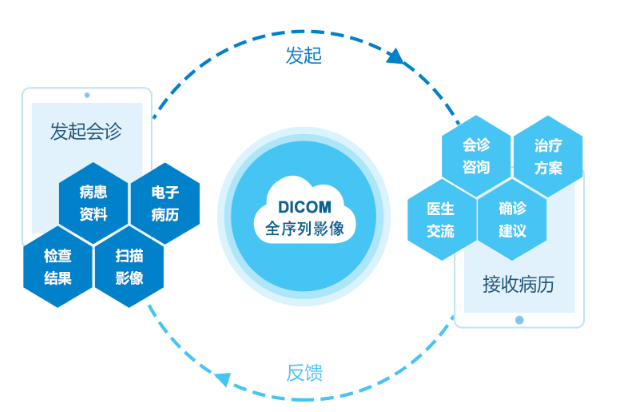
The specific approach involves integrating primary care physicians at grassroots hospitals with specialists from upstream tertiary hospitals. Patients first register and seek consultation at their local grassroots hospital, where they undergo necessary laboratory tests and medical imaging examinations. The primary care physicians then initiate upward referrals for remote consultations. Through the software platform built by Hehuan Medical, materials such as patient data, electronic medical records (EMRs), medical images, and test results can be uploaded. Specialists review the medical records, and multiple exchanges between the attending physicians and specialists enable them to provide recommendations on treatment plans and confirm previously established regimens.
This approach offers several benefits. First, it significantly reduces the travel burden on patients, sparing them the hassle of shuttling between different hospitals and thereby alleviating their overall burden. Furthermore, since initial screenings and consultations are conducted at primary care institutions, medical equipment and personnel resources at these grassroots facilities are utilized more effectively, which helps relieve the consultation pressure on large hospitals and renowned specialists. Additionally, because primary care physicians organize and summarize patient records before making upward referrals, the need for duplicate tests and repetitive consultations is eliminated, thus improving the efficiency of diagnosis and treatment using high-end medical resources. Most importantly, specialist diagnoses and treatments are delivered in collaboration with primary care physicians. After several such collaborative efforts, the clinical capabilities of primary care physicians are effectively enhanced; they gain experience in managing similar cases in future practice, thereby improving their professional competence. Li Yu describes this process as “mentoring and guidance,” which is somewhat analogous to the training of medical students and continuing education in academic settings, allowing primary care physicians to learn through practice and improve through real-world cases.
This explains why Hehuan Medical was able to onboard 1,000 hospitals, 1,000 specialists, and over 10,000 primary care physicians within just one year. The “D2D” model initiated by Hehuan effectively addresses the challenges faced by these three stakeholders. Li Yu shared a case study: previously, when collaborating with a hospital, the administration noted that numerous internet companies had approached them for partnerships, yet none had resolved the strain on the hospital’s medical resources. After clearly explaining Hehuan’s model, the hospital agreed to collaborate. Over time, the benefits became evident, as the remote collaboration provided through the Hehuan Renowned Physicians Platform effectively alleviated the institution’s shortage of medical resources.
Furthermore, Hehuan has established an Internet Academy to support the professional development of primary care physicians. Experts compile their clinical experience into manuals and courses for dissemination to these practitioners. Positioning the academy akin to formal academic institutions, Hehuan addresses the strong learning needs of junior primary care physicians by providing specialized education across various medical disciplines. Physicians can seek one-on-one consultations with experts when managing patients, and review previous case studies and expert opinions during downtime, thereby enhancing their clinical competencies.
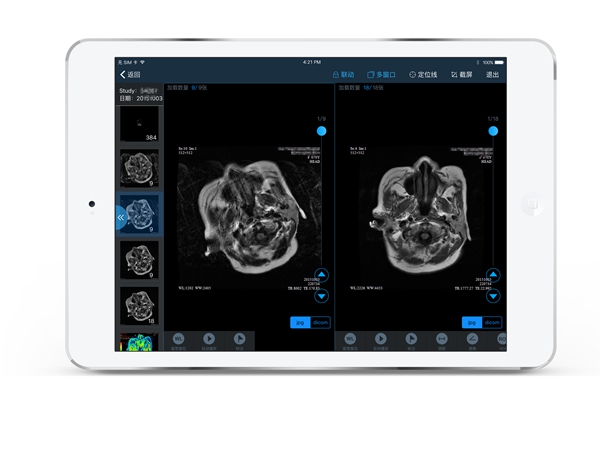
Hehuan Renowned Doctor Interface Diagram
This is “empowerment,” while “credit authorization” refers to second medical opinions. Since the consulting experts have no financial interest in the patient’s treatment, their diagnostic opinions and treatment plans serve as independent third-party assessments. By having experts endorse primary care physicians, the credibility and effectiveness of primary care diagnoses and treatments are ensured. Previously, patients with serious or critical illnesses were more inclined to seek care at tertiary hospitals rather than at primary care institutions, largely due to greater trust in the diagnostic conclusions and treatment plans provided by specialists. Through the Hehuan model, expert opinions are effectively conveyed to primary care physicians, thereby reassuring patients and encouraging them to seek medical care at primary care facilities.
The business model is an unavoidable issue for startups. In Hehuan Medical’s remote physician collaboration model, primary care physicians, patients, and specialists all benefit: patients are spared the hardship of seeking care through multiple referrals, primary care physicians gain diagnostic and learning opportunities, and specialists improve their consultation efficiency. Specialists’ expertise and capabilities are delivered to patients through primary care physicians, creating mutual benefits for all three parties.
Beyond the superficial “D2D” collaboration, there is actually a hidden “D2P (Doctor to Patient)” model, with costs borne by patients. Regarding pricing, Li Yu told VCBeat (WeChat ID: vcbeat) that single consultation fees for Hehuan Mingyi mainly fall into two tiers: 399 yuan and 699 yuan. This fee is shared among Hehuan, primary care physicians, and specialists. Since its launch, Hehuan Mingyi has completed over 30,000 transactions.
Compared with popular medical consultation and appointment registration platforms currently on the market, where single-appointment fees for specialist resources generally exceed RMB 1,000, the pricing set by the Huanhe Mingyi Platform is more affordable and acceptable to patients.
Li Yu explained that patients first register at their local hospitals, after which primary care physicians consult with specialists via the Hehuan Mingyi online platform. Since many patients are uncertain about which department to visit or which renowned specialist to see, the oversight provided by primary care physicians enables them to consult the most appropriate specialists at minimal cost—including time, effort, and financial expenses. Compared to these costs, the fee for online remote collaborative registration through the Hehuan Mingyi platform is very low. This approach allows patients to receive expert-level care close to home at a lower cost, delivering high-quality services at minimal expense.
What impressed me most is that Hehuan Mingyi does not offer a patient-facing app. This means that patients seeking remote consultations with renowned specialists must go through primary care physicians, which also reflects Li Yu’s strong control over the entire diagnosis and treatment process. If patients were able to seek medical care on their own, the platform would find itself in direct competition with traditional online appointment registration and telemedicine platforms. It is well known that business models relying solely on appointment registration and consultations have inherent flaws. Hehuan Mingyi’s decision to bypass this segment was a wise move.
In terms of operating costs, Hehuan Mingyi provides free tablets and a collaboration platform to primary care physicians and specialists who join its network. Li Yu offers two explanations for choosing Apple iPads: first, the future of healthcare will be mobile-centric; second, the Apple iPad has received U.S. FDA clearance, making it a device that can be directly brought into operating rooms, ensuring safety and stability. The company deploys hardware first and recoups costs through revenue sharing from subsequent operations, expecting to break even within one year. Li Yu compares this approach to the telecom carrier model, where hardware is offered at low cost or even for free as a customer acquisition strategy, with costs gradually recovered during ongoing operations to ultimately achieve profitability.
Drawing on his experience as Executive Vice President at a Chinese company listed on the New York Stock Exchange, Li Yu has witnessed the full internet cycle, from the desktop internet era to the mobile internet era. The essence of the internet lies in enhancing efficiency and reducing costs. In the context of Hehuan Medical’s model, improved efficiency is realized by utilizing idle medical resources in primary healthcare institutions. Primary care physicians organize and structure patient cases, thereby eliminating the need for specialists to repeat initial assessments, saving their valuable time, streamlining the consultation process, and boosting specialists’ diagnostic efficiency. Cost savings are achieved in two areas: referral costs and the deployment costs of remote diagnosis equipment. By leveraging low-cost tablet devices, the platform facilitates communication and case discussions between primary care physicians and specialists, while also accumulating case data. This enables primary care physicians to repeatedly review and learn from these cases, thereby enhancing their professional competencies.
“Closed-loop” is Li Yu’s strategic blueprint for Hehuan Medical’s entire business ecosystem. Hehuan Mingyi aims not only to bridge primary care and specialized care but also to integrate the key stakeholders—patients, hospitals, and physicians. Rather than serving merely as a platform for information exchange and a physician community, it treats diagnosis and treatment as service transactions. Hehuan seeks to control both information and capital flows: patients pay to access specialists, who deliver services online within a defined timeframe, thereby completing the entire transactional closed loop.
The expert-led treatment model still holds significant potential for application. A similar model abroad is known as “The Second Opinion,” which primarily aims to control costs and prevent over-treatment. Remote consultation services provided by renowned physicians can also explore opportunities in this area. Furthermore, with the future liberalization of commercial health insurance, there is potential for integration with commercial insurance products.
Currently, the business models for expert second-opinion services in China primarily involve directly engaging retired specialists from major hospitals to provide second opinions or “re-diagnosis of serious illnesses,” without venturing into telemedicine. Another approach is the “team-based care” model, which bundles physician resources under the leadership of a renowned specialist. After patients register, they are assigned to other physicians within the team. This model also aims to address the imbalance in doctor-patient allocation and the tiered demand for medical resources. However, current challenges include limited access to physician resources and opaque allocation mechanisms. It is difficult for such models to simultaneously integrate both primary-care physicians and specialist resources, as Hehuan Medical does, while also guiding patients toward paid services. This is precisely why Li Yu confidently proposes a “closed-loop” system. In the Hehuan model, some parties pay, some serve as an intermediary platform, and others provide services. This approach addresses practical issues for patients, physicians, and hospitals alike, enabling all three stakeholders to remain engaged within the system, thereby enhancing the sustainability of the business model.
As the healthcare industry is heavily policy-driven, the government has prioritized initiatives such as “Internet Plus” telemedicine, tiered diagnosis and treatment, and internet hospitals since last year, with pilot programs being launched one after another. However, the actual impact on the healthcare system has been quite limited. A primary reason is that medical resources, particularly physicians, are not mobile; tiered diagnosis and treatment can only be achieved through patient flow. Yet, without improving the diagnostic capabilities and service quality of primary care institutions, patients will continue to flock to large hospitals and high-end medical resources. The only viable solution is to enhance the professional competence of primary care providers. Since primary care physicians cannot leave their posts for training, the model offered by Huanmingyi—learning through practice and training via hands-on operations—is the most reasonable and worthy of widespread adoption. When physicians improve their skills and patients can receive effective treatment at the primary care level, the root cause of the problem will be addressed, and the goals of tiered diagnosis and treatment will naturally be realized.
In this regard, Li Yu believes that since the policy on tiered diagnosis and treatment was issued in mid-last year and only gradually implemented at the local level in the second half of the year, public hospitals have just begun to open up for collaboration. This means there is still significant room for private enterprises to engage in partnerships. Furthermore, Hehuan Medical’s model does not infringe upon the interests of hospitals or physicians, allowing for faster and more efficient implementation due to the lack of resistance.
Hehuan has established an integrated system combining hardware, software, and networking to enable seamless connectivity across medical systems. It has proposed a solution for tiered diagnosis and treatment that minimizes costs and facilitates easy adoption, ensuring the replicability of this model. Looking ahead, Li Yu stated that after accumulating more experience, the platform will onboard additional doctors and hospital resources and collaborate with commercial health insurers to provide multi-tiered, efficient medical services. We will continue to monitor its progress.