

DeepMind and NHS Finalize Five-Year Partnership to Deploy Streams App for Acute Kidney Injury Intervention
Recently, DeepMind signed a new agreement with the NHS, finally formalizing its five-year partnership with the Royal Free London NHS Foundation Trust. An investigative report by New Scientist revealed that Google had freely accessed large volumes of patient data without explicit patient consent, potentially violating NHS information governance principles. Consequently, in February of this year, a review was conducted regarding the quantity and types of patient data Google would access. With the latest announcement, DeepMind is taking steps to avoid a recurrence of such issues and has implemented numerous new data protection measures.
Under the agreement, they will deploy DeepMind’s Streams app to help doctors access information on patients with acute kidney failure—including blood test results—more quickly, thereby facilitating faster diagnosis in emergency situations. The app alerts physicians when a patient is at risk of acute kidney injury. According to the NHS, acute kidney injury accounts for 20% of hospital emergency cases, and approximately one-quarter of these cases are preventable.
Once the application is approved by the Medicines and Healthcare products Regulatory Agency (MHRA), which is similar to the U.S. FDA, DeepMind plans to launch it in NHS hospitals in early 2017. If all goes well, they will then begin expanding the application’s scope beyond just acute kidney injury.
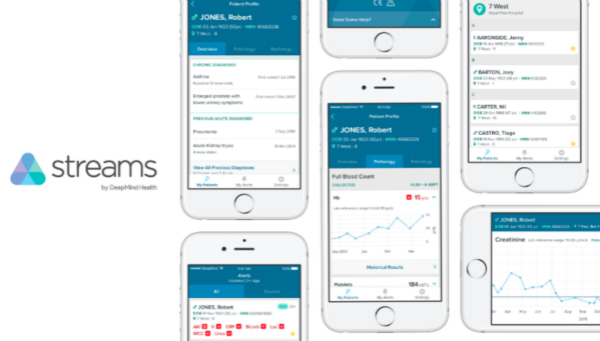
“Over the next five years, we will expand the scope of Streams to cover other conditions where early intervention is critical—making the difference between life and death—as early detection and intervention can significantly influence disease outcomes.” Mustafa Suleyman, Head of DeepMind AI, expressed high expectations for the collaboration. “We believe Streams can also help patients with sepsis and organ failure due to other causes, where signs of deterioration are often difficult for clinicians to detect. We also plan to add additional features requested by clinicians, such as information and clinical task management, to support better care.”
To address data access and security concerns, DeepMind will document all data collected and used, subject to review by a panel of nine independent reviewers. Additionally, Ben Laurie, co-founder of the Open Lars project, has been hired to build a system that enables London’s Royal Free Hospital to continuously audit Google’s use of patient information.
According to a TechCrunch report, transparency levels gradually improved during the partnership, with various FAQs and documents made available on the Streams website. However, these changes do not necessarily address the core data security concerns from the past: the sharing of large volumes of patient data unrelated to direct medical care with third parties without patient consent.
What remains unclear is whether DeepMind intends to launch a commercially viable AI product in the future. Although Streams enables more innovative use of data, it remains a foundational clinical application.
“Once fully implemented, we believe the Streams program can reduce the time it takes to alert doctors and nurses about patient conditions from hours to seconds,” said Suleyman. “By freeing up clinicians’ time and liberating them from cumbersome pagers, computer-based systems, and paper documentation, the Royal Free Hospital in London alone can save 500,000 hours annually.”
This is not the first collaboration between DeepMind and the NHS, nor has it been free from controversy, particularly concerning data privacy and security. As early as May this year, Google had already obtained approximately 160 patient records from the NHS. However, the previous data-sharing initiative by the NHS did not obtain prior consent from patients. In light of the “awkward” experience stemming from that prior partnership, different data protection measures have been adopted for this current collaboration. These data form the foundation of Streams, an early-warning system designed for individuals at high risk of acute kidney injury.
Both parties have also established collaborations at the level of clinical diagnosis in the application of AI for cancer treatment. On August 30 this year, DeepMind announced a research partnership with the UK’s National Health Service (NHS) to leverage deep learning for designing radiotherapy plans for patients with head and neck cancer. In the UK, there are 11,000 new cases of head and neck cancer annually, representing a 92% increase compared to the 1970s. DeepMind and the NHS will jointly conduct research by analyzing anonymized data from over 700 head and neck cancer patients, in compliance with the University College London Hospitals (UCLH) data privacy policy, using deep machine learning to explore the potential for reducing radiotherapy planning time. In clinical practice, physicians must first obtain detailed scans of the patient’s head to delineate the target volume for radiotherapy while minimizing damage to healthy tissues. Due to the complex anatomy of this region, the segmentation of anatomical structures requires exceptional care and precision during radiotherapy planning. Even at top-tier cancer centers such as UCLH (University College London Hospitals), this process takes an average of four hours.
Leveraging artificial intelligence, intelligent algorithms are being introduced to design radiotherapy regimens for head and neck cancer patients, with DeepMind reducing the segmentation planning time from four hours to one hour. This advancement not only frees up physicians to devote more time to patient care, education, and research, but also holds the potential for these big-data algorithms to be applied to other cancer types, pending successful clinical validation of the head and neck cancer radiotherapy planning algorithms.